The history of the creation of the game "Rock n' roll racing" (12 photos + 1 video)
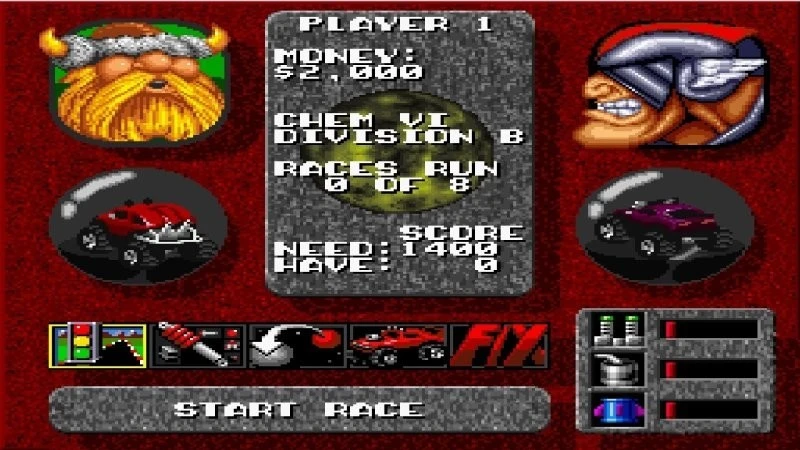
In 1993, one of the most popular arcade racing games of the time was released for the Sega Mega Drive and Super Nintendo consoles: Rock N' Roll Racing. In the cult game we need to take on the role of an alien racer who, of course, must defeat his rivals. 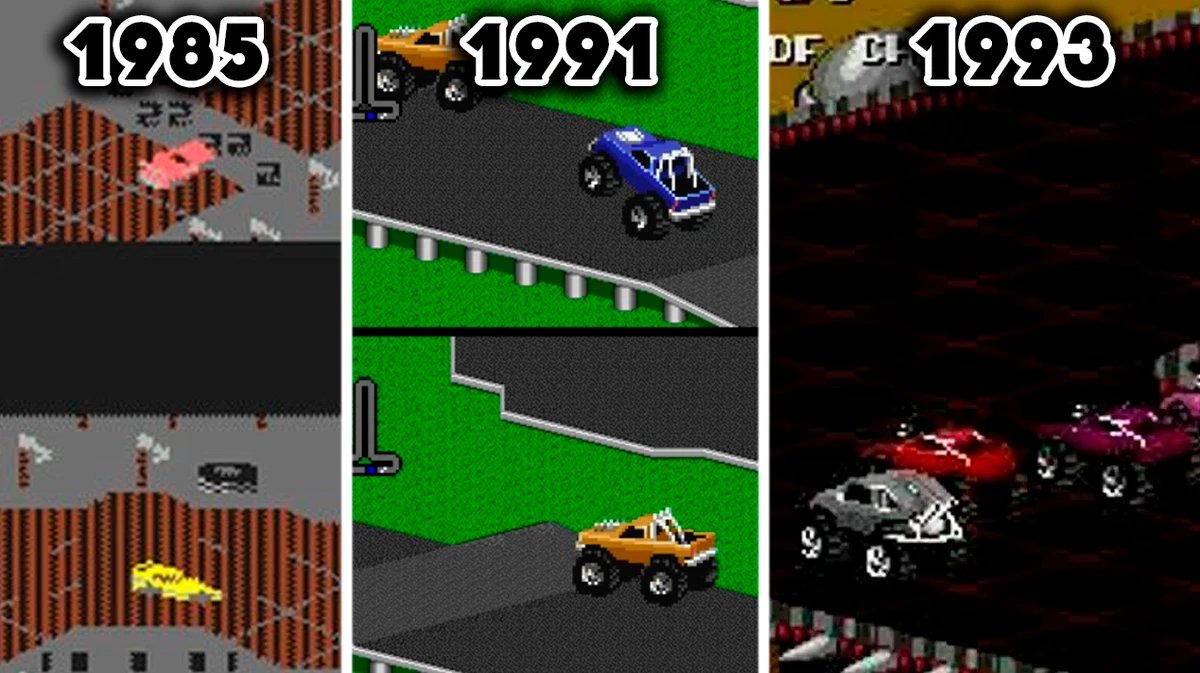
Perhaps this game would not have gained such wide popularity if not for its gameplay, which consisted not only of standard races in an isometric style, but also shooting at opponents, upgrades, and a variety of interesting tracks. And all this to the accompaniment of cheerful music from iconic rock bands. In this post you will learn about exactly how this game was created, because the history of the creation of “Rock n roll racing” is really very interesting and dates back to 1985.
History of creation
It all started back in 1985. No, there was no talk about Rock n roll Racing yet, but it was then that the game “Racing Destruction Set” was released, which essentially preceded the release of the cult rock n roll racing.
The game "Racing Destruction Set" was released by "Electronic arts" for the Commodore 64 console and was a simple isometric racing game. 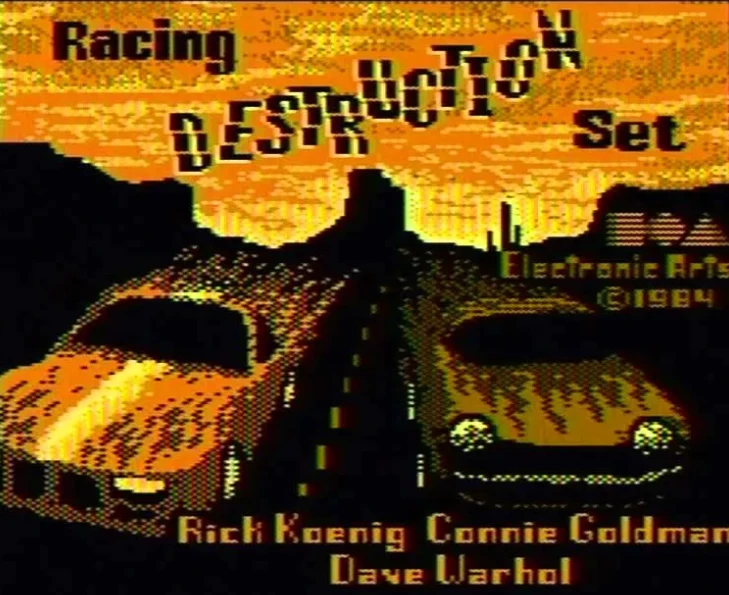
The game was designed for 1-2 players, and only 2 cars took part in the race. But no matter what mode you chose, the game always took place in split-screen mode, that is, it is divided horizontally. One part of the screen focused on the player, and the other on the second player or the computer. 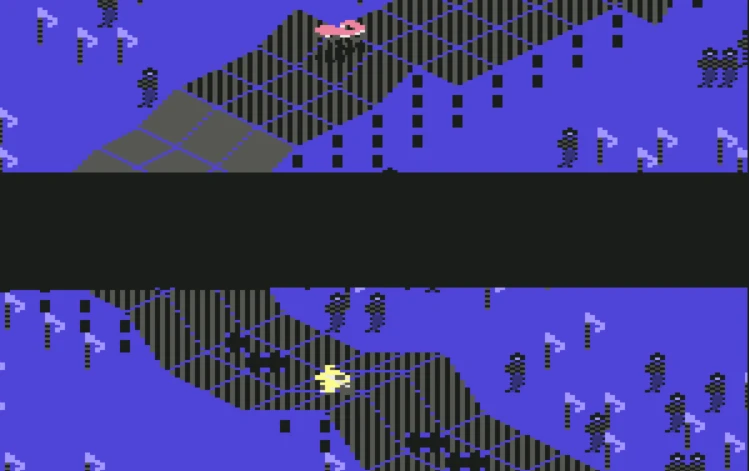
Also, it is worth noting that the game had 2 modes, namely racing mode and destruction mode. In racing mode, the player just had to finish first, but in destruction mode, we could throw out mines and spill oil to hinder our opponent. This theme would later be picked up by “Rock n roll racing”. But it was still a long way off.
Well, one cannot fail to note another feature of the game, namely the ability to create your own race tracks. 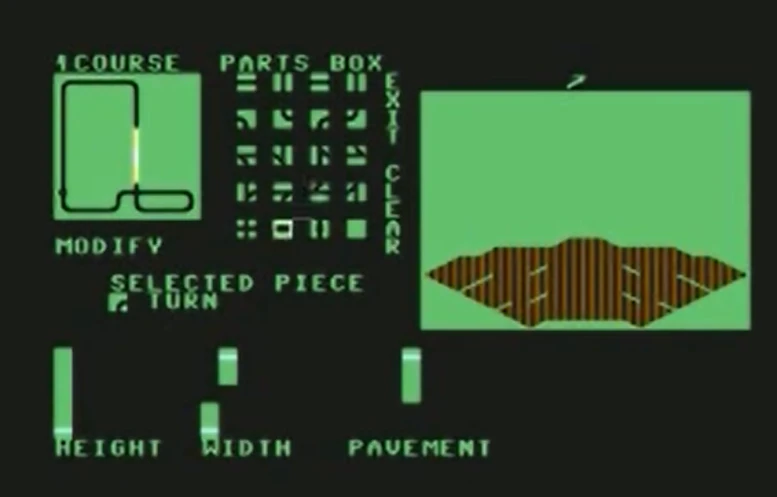
As a result, the game "Racing Destruction Set" gained wide popularity, becoming one of the most sold games of that time, and the magazine "Zzap!64" gave the game a rating of 95%. 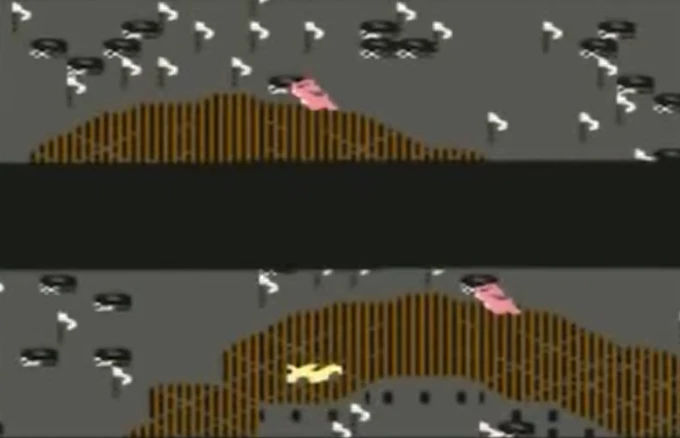
Naturally, such popularity could not leave the game alone and already in 1991 it was decided to create a modern remake for the 16-bit SNES (Super Nintendo) console. The development of the game was entrusted to the young company "Silicon and Synapse", which had just been born and did not yet have a single game in its arsenal. It took 4 months to develop the game and already in the same 1991 the remake was released, but only under a different name, namely “RPM Racing” (Radical Psycho Machine Racing). The publisher of the game was the company "Interplay production". 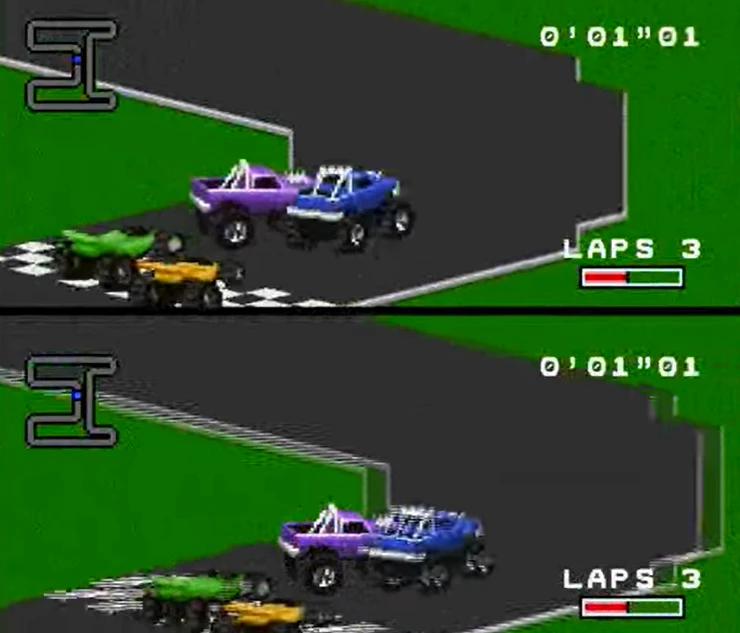
The game was still an isometric race along winding terrain, but of course the graphics were much better, and 4 cars took part in the race, and some other innovations appeared. But the split-screen mode and the track designer remained in the same place, as did the choice of car and the purchase of components. 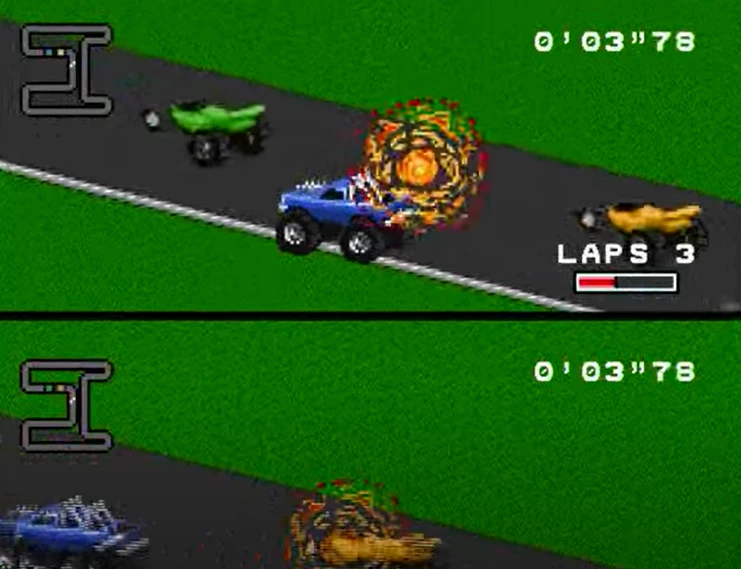
But due to the fact that the creators wanted to achieve the highest level of detail, they had to sacrifice colors and varied graphics on the tracks, which is why the locations seem empty and boring. 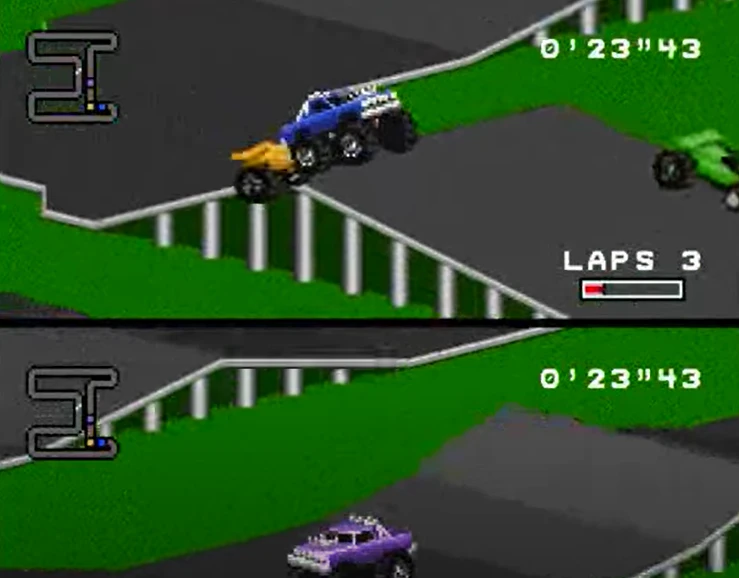
But despite this, the game "RPM Racing" turned out to be commercially successful, and the creators had no doubts about developing a sequel. But before that, the company "Silicon and Synapse" took on the development of a new multi-platform game called "The Lost Vikings", where we had to play as three kidnapped Vikings with different abilities. This game was released in particular on the Sega mega drive 2 and Super Nintendo consoles. The game is incredibly interesting and exciting.
Nevertheless, no one forgot about the game "RPM Racing 2". Work on it was in full swing and the company "Silicon and Synapse" was also involved in its development. But already at the final stages of development of the game, the company "Interplay productions" (Publisher) received the rights to use several iconic rock and roll songs, so it was decided to use them in the sequel being developed "RPM racing". Specifically in the game you can hear the following tracks:
George Thorogood - "Bad to be bone" (many remember this composition from the film "Terminator 2");
Black Sabbath - "Paranoid";
Henry Mancini - "The Peter Gunn Theme";
Deep Purple - "Highway Star";
Steppenwolf - "Born to Be Wild";
Golden Earring - "Radar love".
Well, since the sequel began to include iconic rock and roll compositions, it was decided to revise the concept of the game, focusing specifically on rock and roll. Thus, instead of the game "RPM Racing 2" we got a separate independent game called "Rock n roll racing". 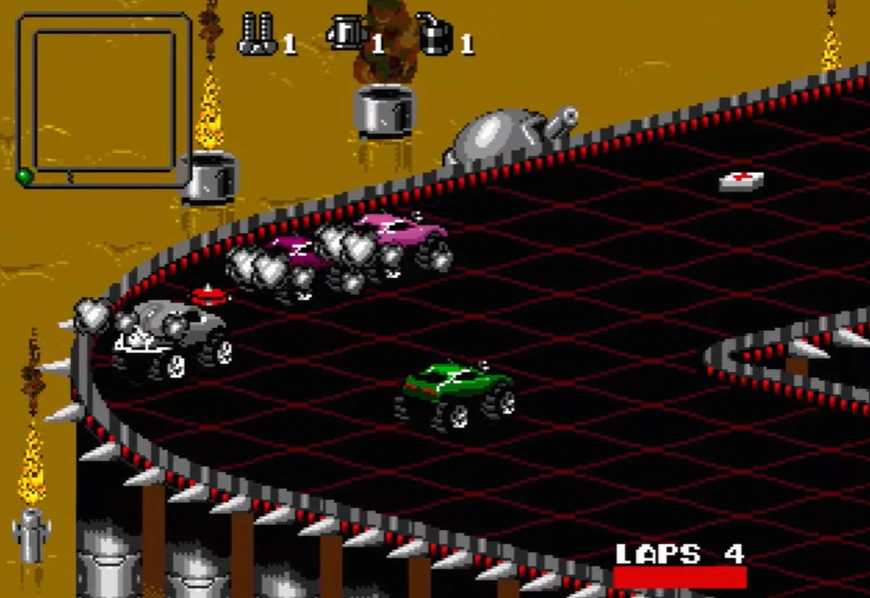
But this time the developers decided not to focus on detailed graphics, so as not to spoil the atmosphere of the game, which is why the game turned out to be so bright and rich.
Among other things, the game was distinguished by various types of weapons, the presence of an announcer who cheerfully commented on the game, challenging and varied tracks, etc. 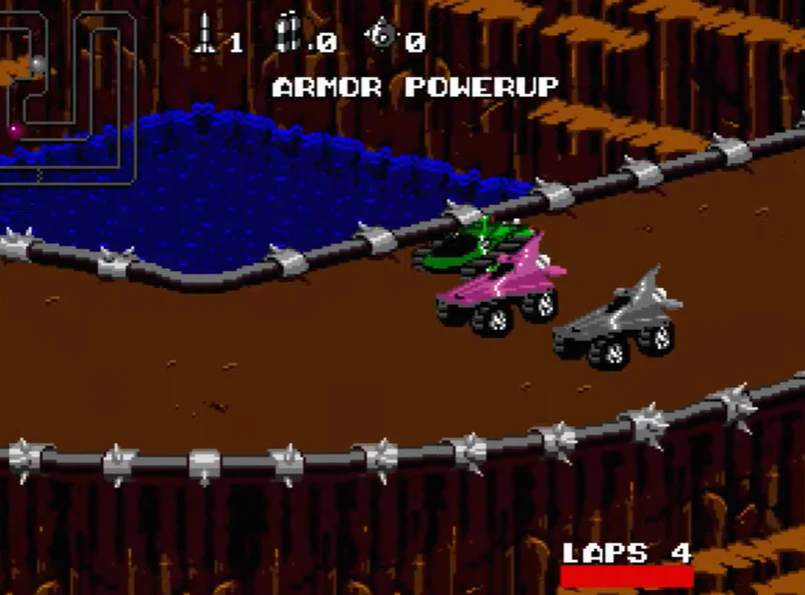
And of course, it should be noted that during the development of the game, the company "Silicon and synapse" also changed its name to "Blizzard Entertainment". Yes, yes, the same “Blizzard” that would later create such hits as “Warcraft”, “Starcraft”, “Diablo” and some other cult games.
The game "Rock n roll racing" was released in 1993 and was released on only two consoles, namely "Sega mega drive 2" and "Super Nintendo". In general, these two versions are not particularly different, except that the Nintendo version has slightly better graphics and a more spacious sound. But shogi also has its advantages. So, for example, the Sega version has a little more tracks and one more composition in its arsenal. Yes, yes, the Nintendo version does not contain the song "Radar Love" by the group "Golden earrings". 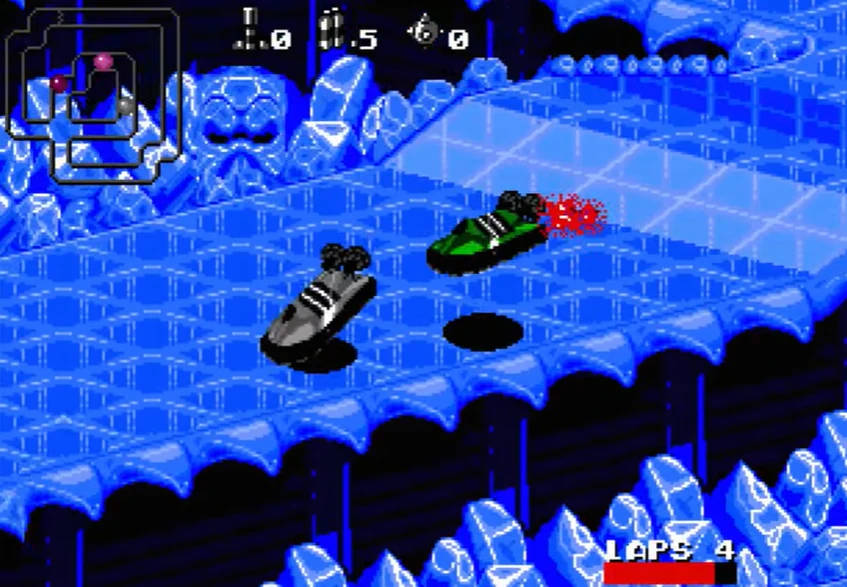
And of course, we can’t help but remember that Blizzard Entertament put an Easter egg into the game. If you type a certain combination on the character selection screen (Up Right, Up, Right, Down, Left, Down, Left, Right), then the character Olaf will be available to you, that is, the same plump Viking with a shield from the game "The Lost Viking". What makes it unique is that it has three additional features instead of the standard two.