For what purpose do tarantula spiders keep “pets” in their burrows (4 photos)
In general, first it must be said that symbiotic relationships of various kinds in different animals are an ordinary and completely natural thing. However, in some cases these relationships look peculiar. 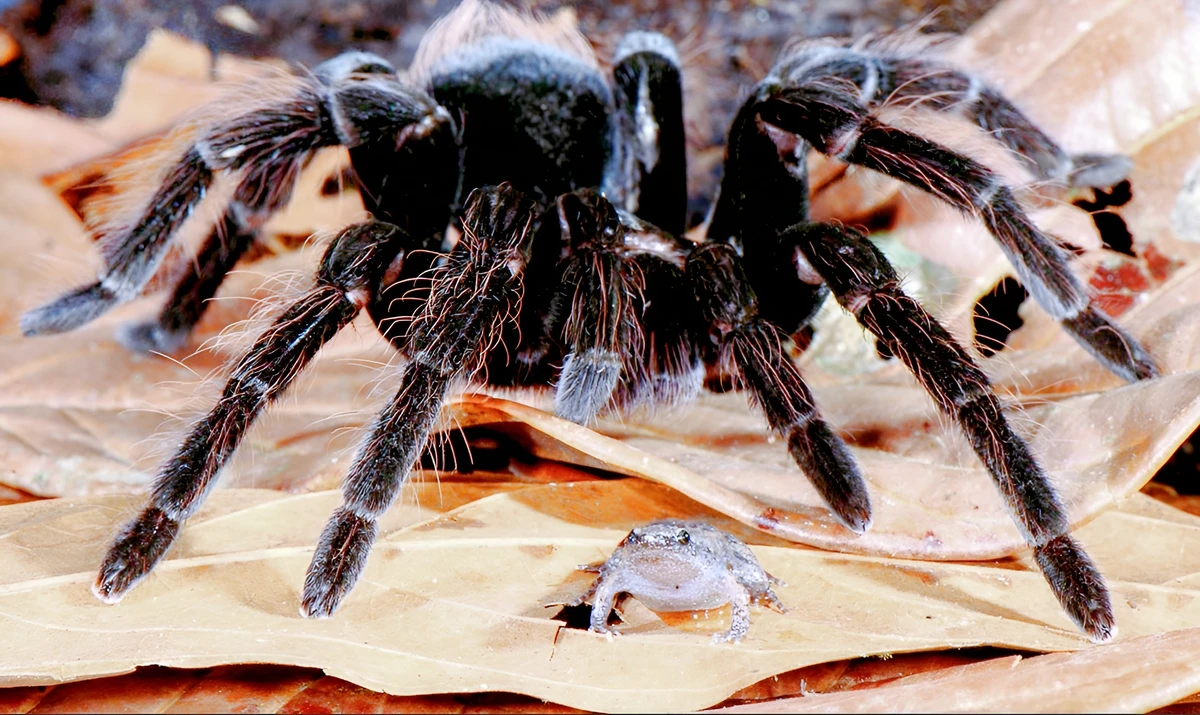
This is either the coexistence of species in the same area, or a smaller animal lives on the body of a larger one. Thus, it receives food and cleanses the large animal of parasites where it is difficult to reach. 
Amazing views of Peru.
However, our case is special. The fact is that Peru is home to very interesting tandems of tarantula spiders and frogs of the narrow-mouthed family. At first glance, this is very similar to the relationship, for example, between crocodiles and their little winged helpers. But it's not that simple.
Firstly, scientists have noticed that narrowmouths live calmly and without any fear with spiders in their burrows. They climb up their paws and even move on them. The spiders themselves protect these frogs, which themselves are extremely small and pose a danger to them from many predatory animals.
While studying these pairs, scientists noticed that the spider not only protects its frog from predators, but also clearly distinguishes it from many others. This happens in a very interesting way: the spider grabs the frog and brings it to its mouth, then it feels it with its mouth limbs and puts it back on the ground. There was fierce debate regarding why this was needed and what the tarantula was studying in the frog. But over time, scientists came to the conclusion that the spider perceives toxic secretions on the skin of the amphibian. 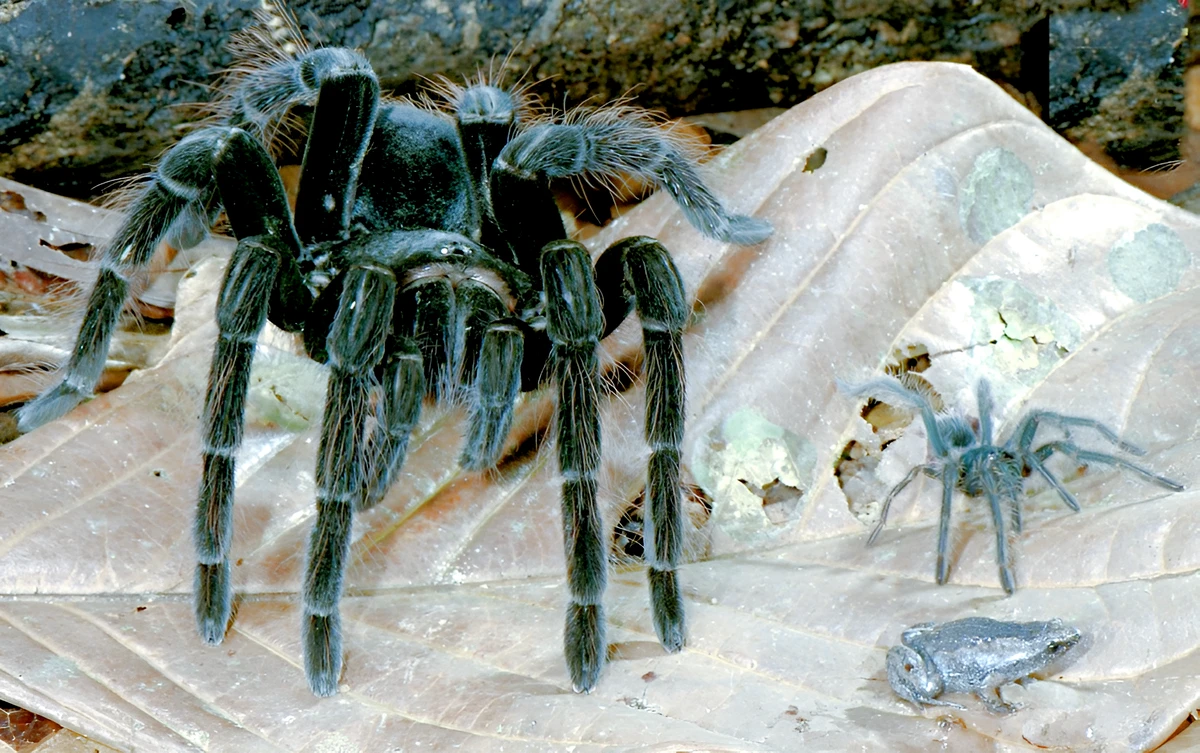
The tarantula protects its friend no worse than its offspring,
And here the most important question arises: what is the symbiosis of these two representatives of the fauna of Peru? The tarantula, for example, can easily feed on the remains of some animals consumed by the tarantula. But then it is not entirely clear why the spider needs this frog.
The answer turned out to be quite simple. The fact is that the tarantula spider is quite large in itself and it hunts mainly for larger prey. It is practically incapable of catching small fry, but tarantulas have dangerous natural enemies. These are Peruvian ants that have acquired the unpleasant habit of eating spider eggs.
The predator itself is completely unable to defend itself from the attacks of small creatures, which is why the tarantula’s clutches are often completely destroyed, leaving it without offspring. And this is where the narrowmouth comes into the picture. Just as cats tamed by humans protect the house from mice and rats, so the frog protects the spider’s house from the invasion of small parasites. Thanks to its small size, natural talents and agility, the narrowmouth deftly eats ants and protects clutches from pests. Actually, this is why spiders have some kind of tender feelings for frogs. 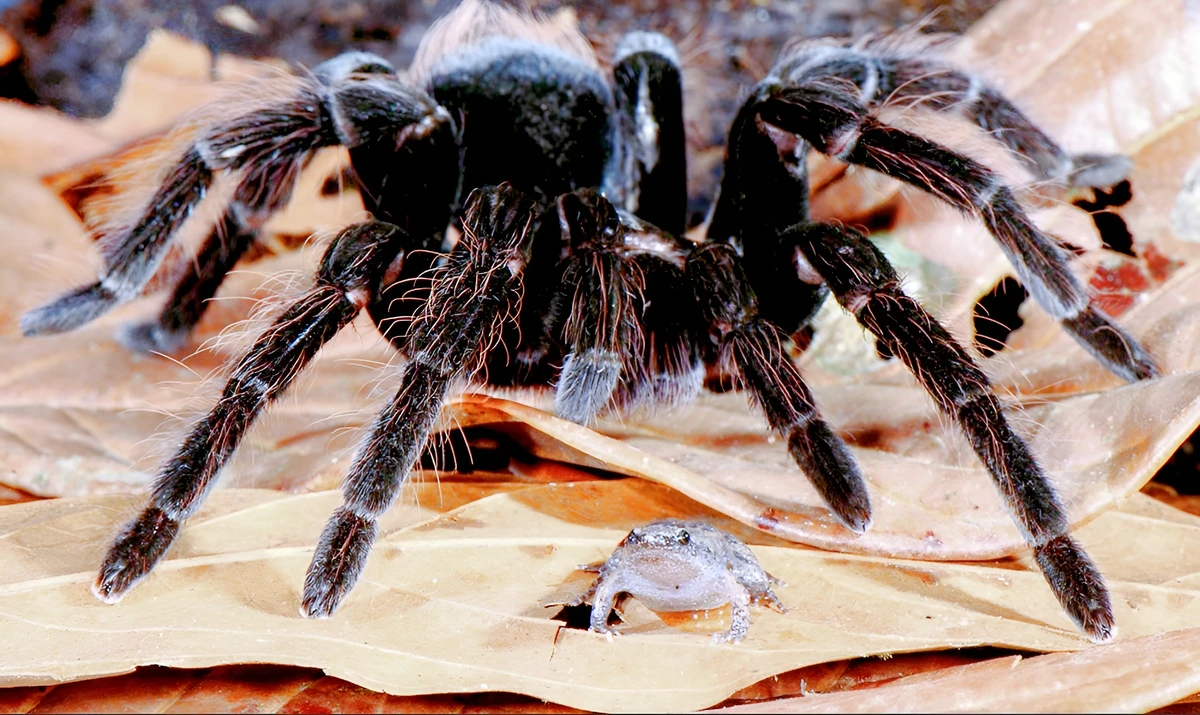
As noted above, the spider easily recognizes its frog and it looks very strange. After all, a tarantula can easily snack on other short-mouthed frogs, but he will never touch his particular friend. Why his personal frog is important is still not clear to scientists. Maybe the fact is that the spider easily remembers the chemical markers of the skin secretions of its frog. And the rest simply cause the usual reactions in him: “prey” and “food”.