Giant forest ant: Code of honor for warrior ants. These huge super soldiers have learned to respect their opponent! (11 photos)
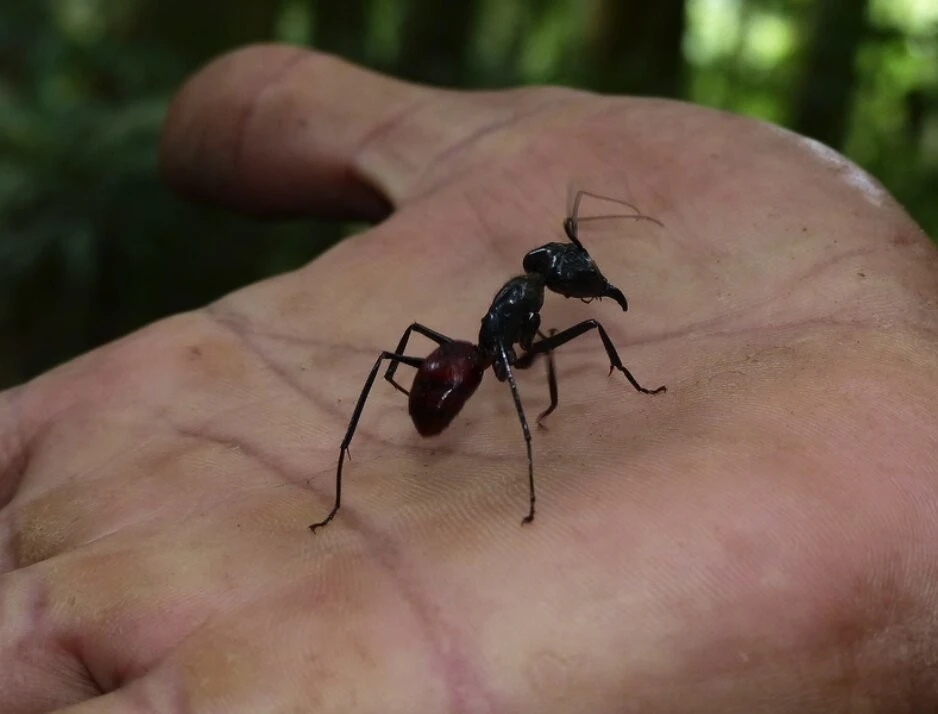
Have you seen a red forest ant? This is a hard worker, 7-8 millimeters long, on which the forest ecosystem rests. He is food of many types, and a protector of trees, and a pest all in one. An almost identical ant lives in South-West Asia. Only he is 4 times larger and loves ritual fights!
1. 
2.
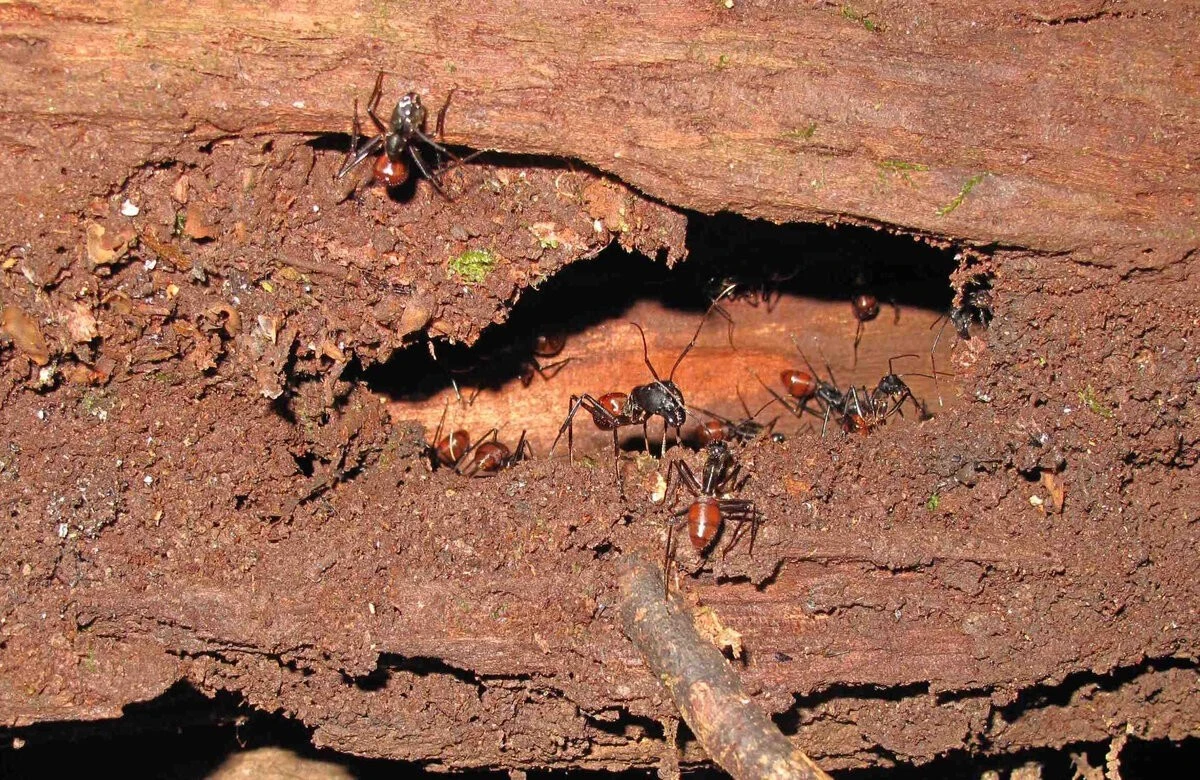
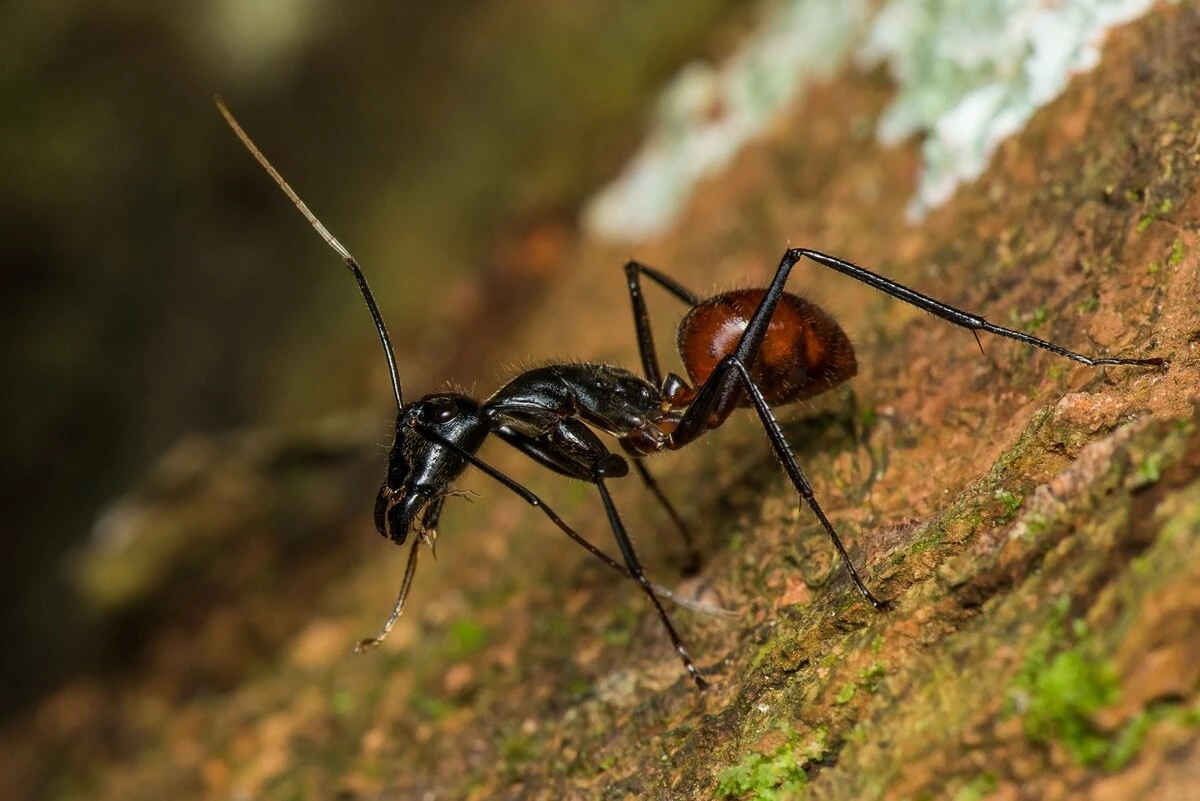
The giant forest ant occupies almost the same ecological niche as our saffron milk caps. In Thailand, Malaysia, Indonesia and the Philippines, it can be found in any type of forest - from cloudy mountain forests to low-lying peat swamps. There are also plenty of differences from insects, and they are all associated with their enormous size. The giant wood ant is one of the largest ants in the world.
3. 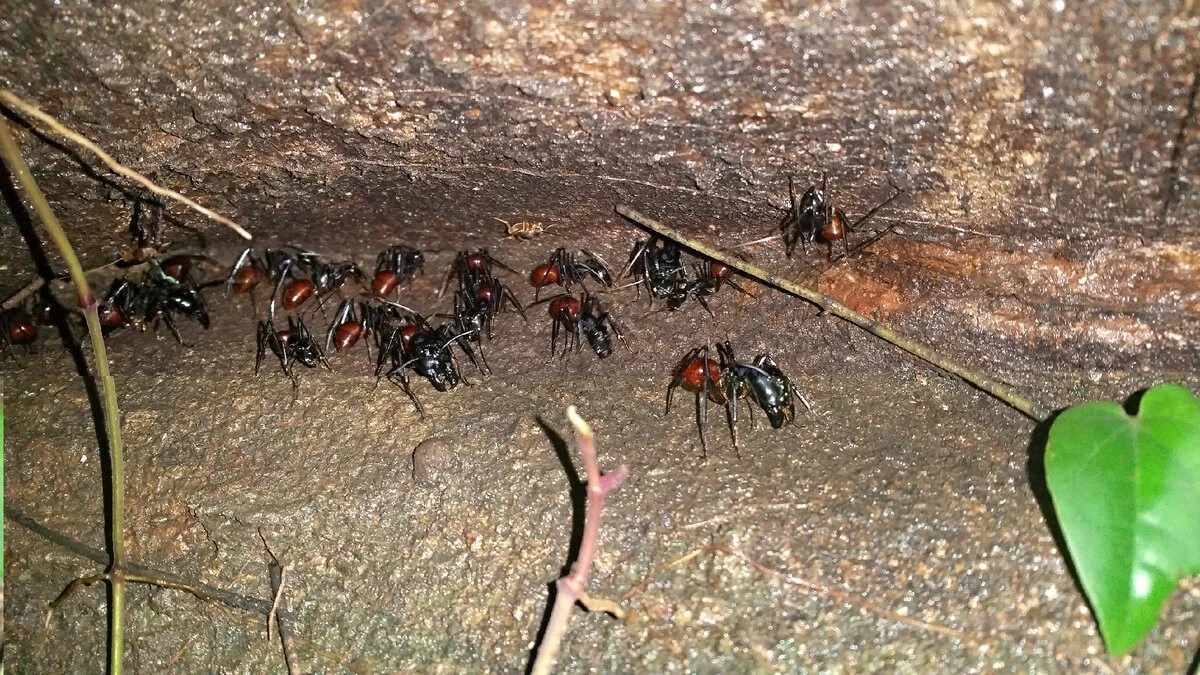
Before going out in search of food, insects hang out for some time at the entrance to the anthill. The reason for this is still unknown. Battle formation?
4.
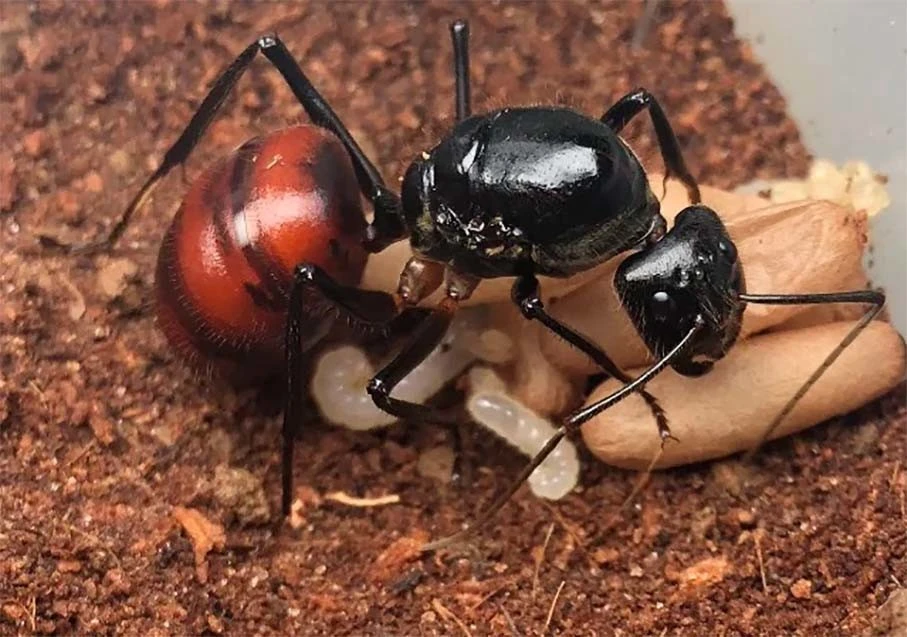
The uterus is at least 3 centimeters long. She is purely physically unable to fit into the narrow tunnels of an anthill made of earth and sand. Therefore, immediately after fertilization, the female hides under stones or in rotten wood.
5. 
6.
Having found a secluded place, the queen lays the first batch of eggs; she will have to care for them herself. In the first generation, only workers appear - relatively small ants. The growth in them is “only” 2.2 centimeters. When the first generation of insects grows up, it will go in search of food. Namely: to search for pets!
7. 
8.
In our latitudes, ants usually feed from plantations of aphids and scale insects. But big ants have big pets! The giants take care of wax cicadas, the size of which is comparable to the size of the ants themselves. In the future, cicada herds will provide about 95% of the colony's food needs. The remaining 5% comes from meat of any origin. But it goes to the queen, larvae and young individuals.
9. 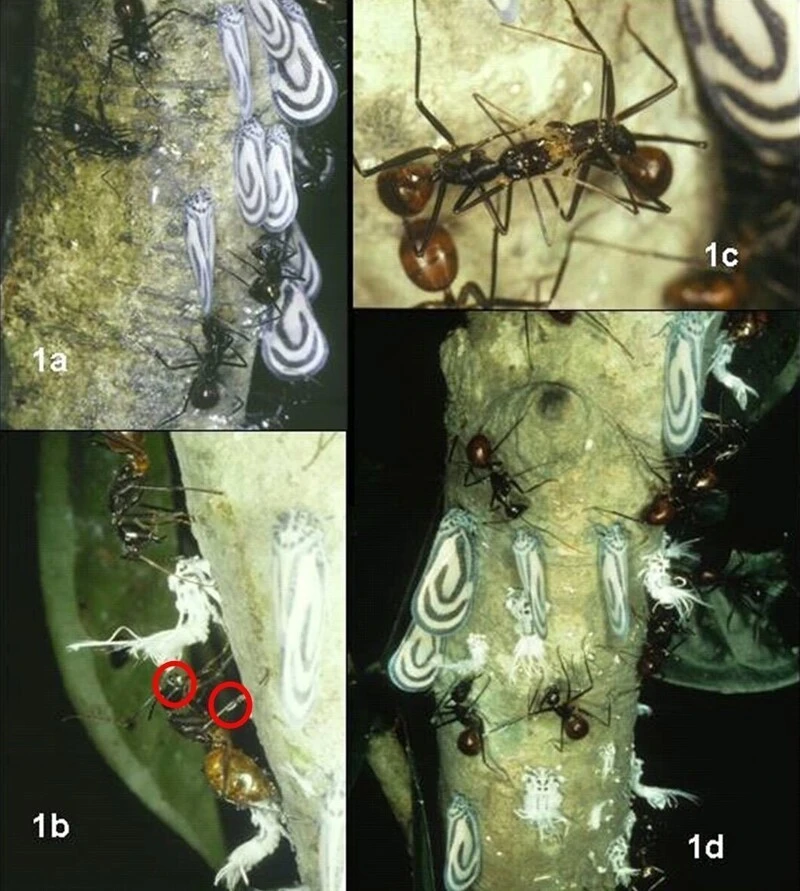
Ant industry for sugar extraction.
10.
When the anthill gets stronger and is able to produce excess food, another type of ant will appear in it - soldiers. These are muscular and dangerous fighters, larger than even the uterus. Their jaws are so sharp that they can cut through human skin! What can we say about insects of comparable sizes!
eleven. 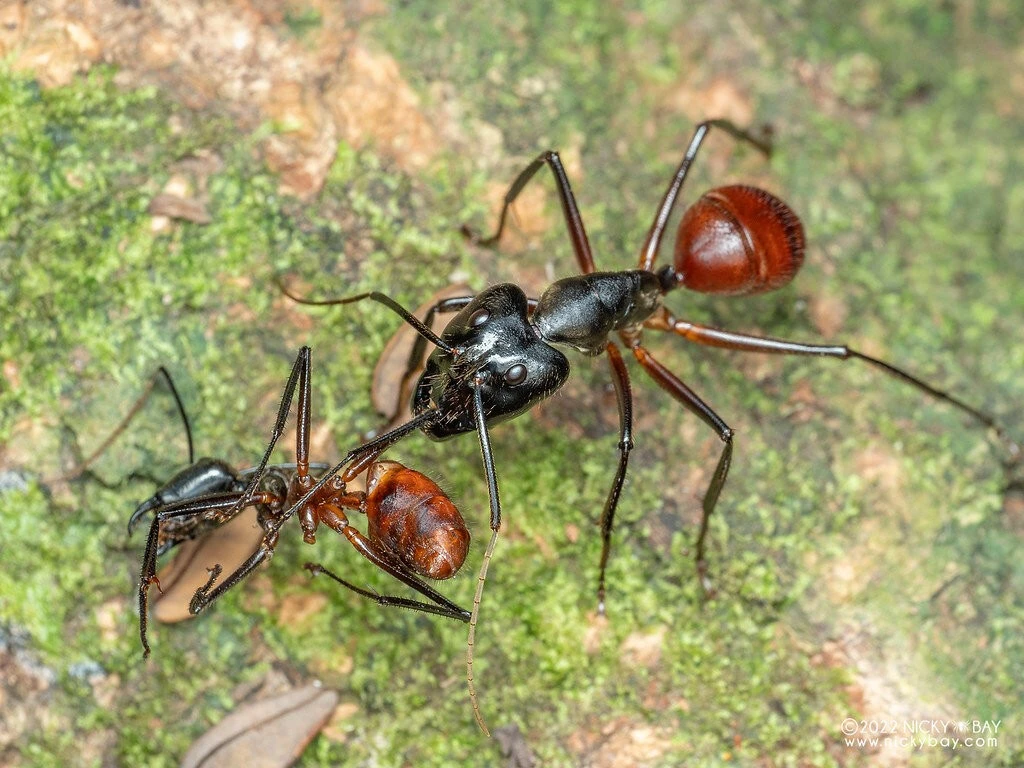
12.
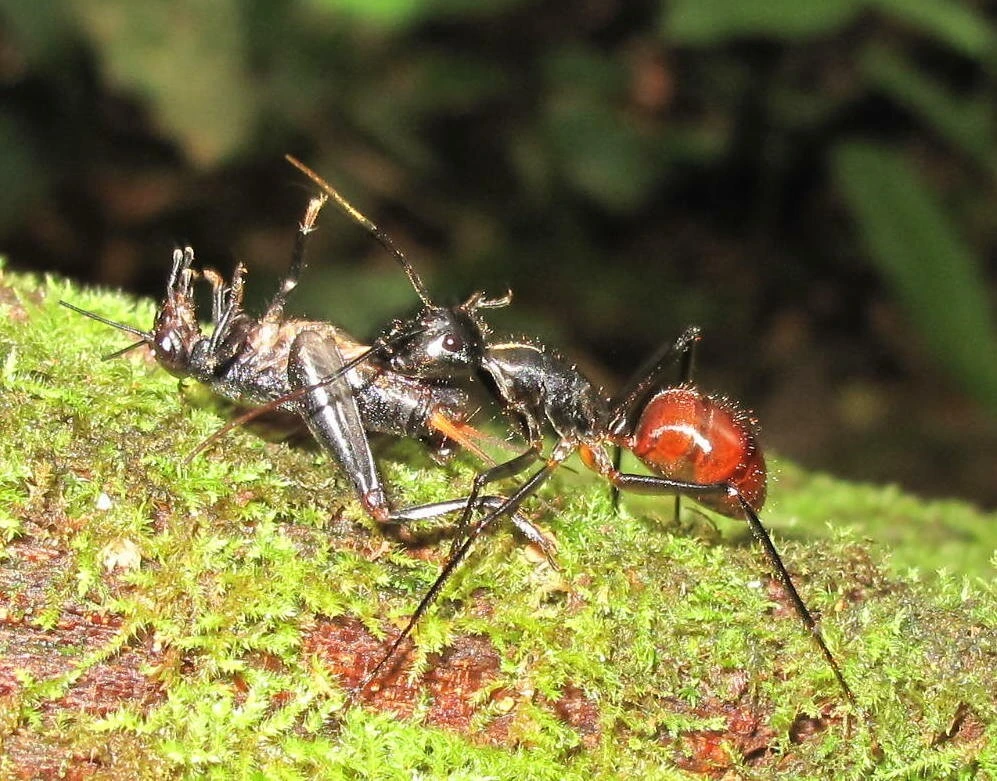
The task of the military is to protect the workers and expand the territory of the colony. They do not stand on ceremony with beetles, spiders and hard workers of other species: they are consumed with the help of high-quality mandibles. But they are almost always able to come to an agreement with representatives of their own species. No bloody fights, only ritual duels.
13. 
14.
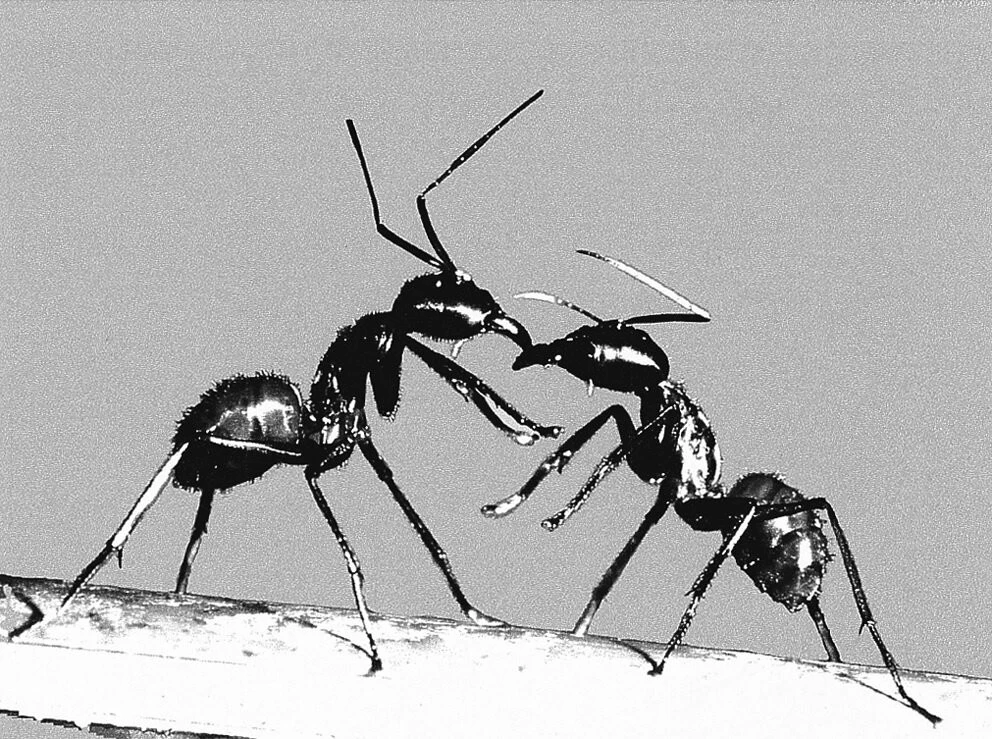
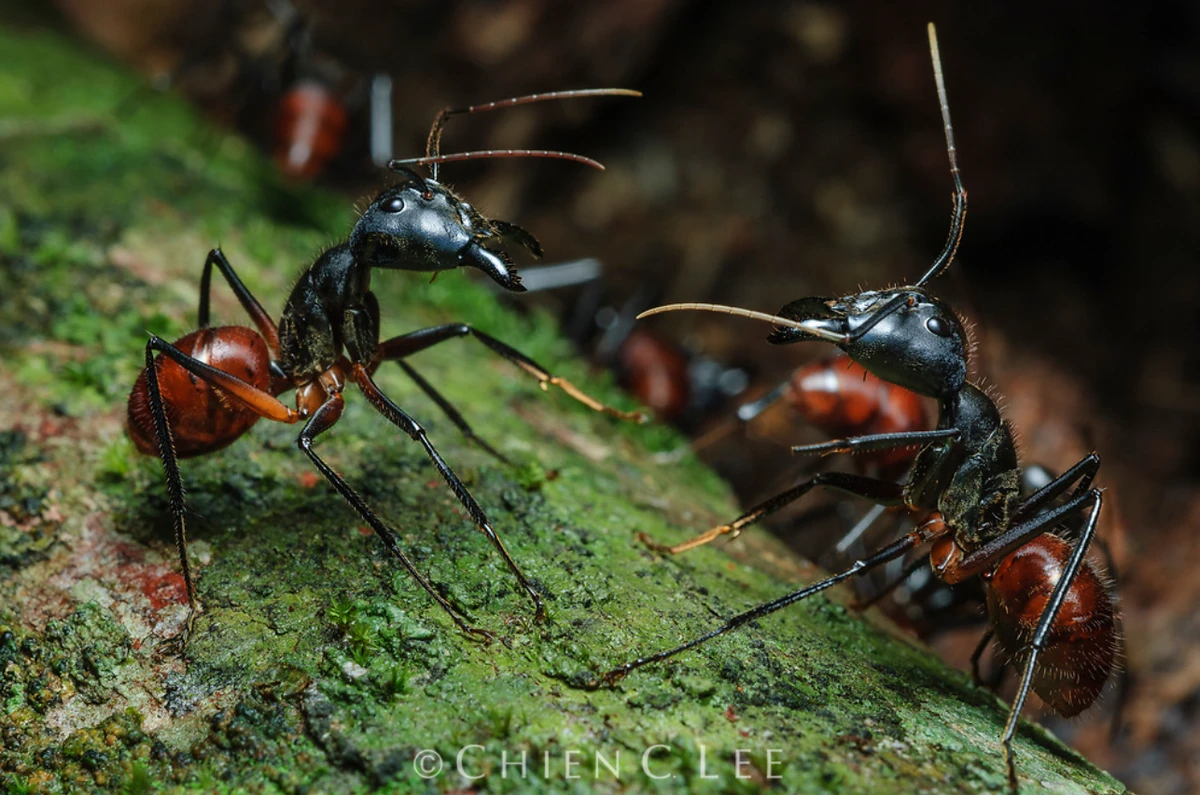
When two squads of soldiers meet in neutral territory, they choose a fighter from each side. The chosen warriors act very carefully: they box with their front paws and try to crush the enemy under them. If the fight drags on, they grab each other wherever they can and drag the enemy to their side.
15. 
16.
If this does not solve the problem, then another pair of ants enters the ritual duel, and then a third, and so on. The fight can last a month, but even during such a long period no one dies. Giant forest ants respect an unspoken code of honor and do not cause unnecessary damage. After one side wins, the other will calmly leave, leaving the disputed territory to the opponents.
17. 
18.
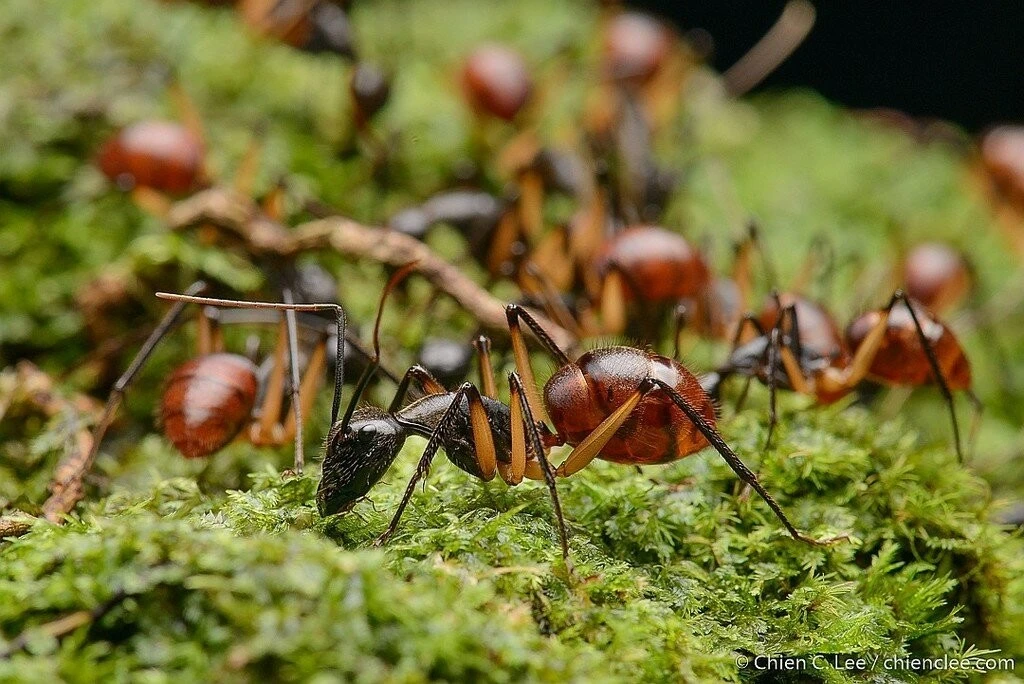
The reason for caution is the cost of the life of one fighter. The largest colonies of giant wood ants consist of more than 20 anthills, but the total population does not exceed 7 thousand inhabitants. And soldiers among them are about 12%. The same red forest ants calmly create colonies in which more than 10 million insects live!
19. 
20.
Our heroes also have problems with recovering their losses: there is only one queen in the entire society, and her ability to bear children is limited. A dead soldier or worker will be replaced by an inexperienced newcomer in a month at best. To avoid unnecessary losses, they even switched to a nightly mode of searching for food. Now birds and mammals bother them much less.
21. 
22.
The moral of the story is: even ants can negotiate if the stakes are high enough!