Where is everyone? (8 photos)
What the “Fermi paradox” is in general terms is probably known to everyone. There are a lot of galaxies in the Universe, in each galaxy there are darkness and darkness of stars, many of them have planets suitable for life, many of these planets probably have life. Most likely, on at least some of the inhabited planets, life developed so much that it gave rise to intelligent beings. 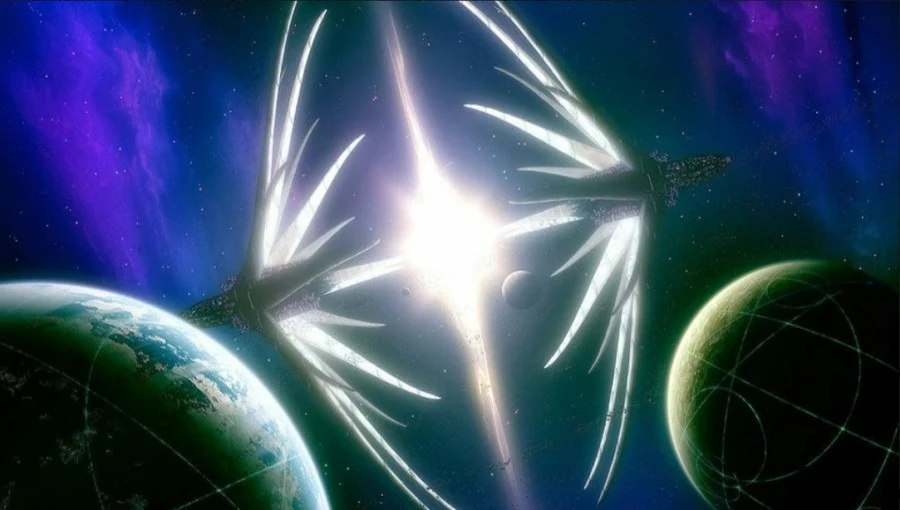
And if this is so, then why don’t we see traces of their activities, why don’t they visit us, don’t try to contact us, in the end?
It is believed that the first person to ask this question was the American-Italian physicist Enrico Fermi. According to legend, in 1950, Fermi, Edward Teller and a couple of other scientists sat in a cafeteria and discussed what UFOs were. And they came to the conclusion that although there are some real phenomena behind the “flying saucers,” they clearly have nothing to do with aliens. Then Fermi exclaimed: “Where is everyone?” This question, in fact, meant: if there are extraterrestrial civilizations, then why don’t we see them? 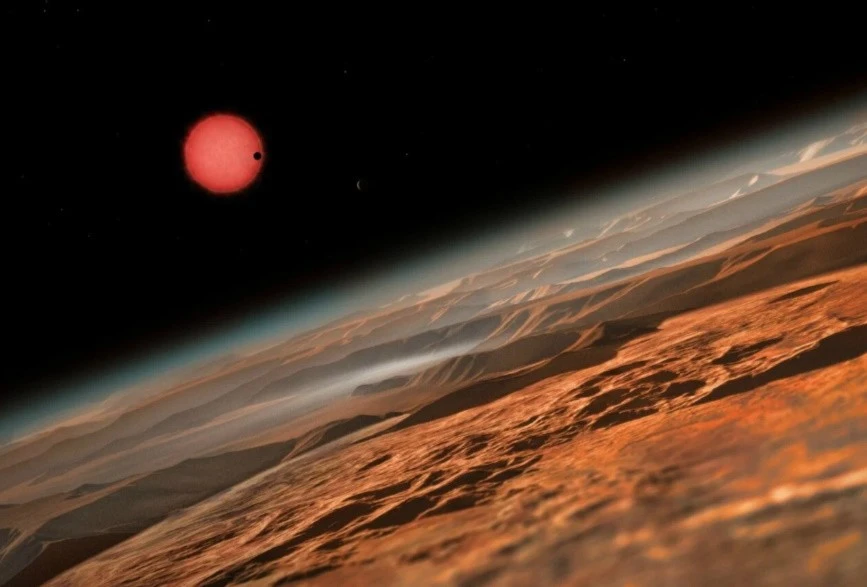
So how much to hang in pieces?
Actually, the first attempt to calculate how many “civilized” planets there should be in the Universe is the famous Drake equation. Actually, it is a product of more or less speculatively estimated factors, of which we can now reasonably estimate only the number of planets suitable for life.
But even such an estimate shows that there are a lot of such planets in our Galaxy - at least 50 billion. And in the literal sense, you don’t have to go far - even Proxima Centauri has a potentially habitable planet.
It’s worse, of course, with the probability of the emergence of life, because unlike just planets, which are discovered in abundance, we still know only one inhabited planet, and that’s ours. But considering that on Earth, as far as we know, life arose almost immediately - in the very first hundreds of millions of years after the appearance of the Earth itself, this probability is also not too small.
In any case, according to the most pessimistic estimates, hundreds of thousands, if not millions of civilizations could exist at different times in our Galaxy alone. So Fermi’s question is “where are they all?” seems quite justified, although Enrico himself never gave an answer to it. And several possible answers are offered to it at once. 
"The Great Filter"
The most popular answer is that there is a certain “Great Filter” - a certain law or process that simply does not allow civilizations to develop to such an extent as to become noticeable on a cosmic scale - either civilizations simply degrade before they reach galactic scales, then or even destroy themselves altogether. In general, both options have a right to exist, but there are some “buts”. 
Self-devouring?
One of the rather simple answers to Fermi’s question “where is everyone” is that no one cares, they periodically simply degrade, slide into the “new Middle Ages” and are too busy with their own survival.
It would seem that there are analogues of such degradations in earthly history; many ancient cities - Angkor Wat, Chichen Itza, Babylon, Pompeii - were abandoned by the population for various reasons. It can be assumed that something similar could happen to extraterrestrial civilizations if their population grows so quickly that its supply requires infinite resources in a finite time.
However, all these cities, with rare exceptions, were abandoned due to wars, and the cities of the victors were at least in no way inferior to the vanquished, and the decline of individual cities did not at all mean the decline of the entire civilization.
Well, in the end, there are great doubts about the comparability of ancient civilizations, at best the Iron Age, and a highly developed technical civilization. If we look at the modern countries of the “golden billion”, we may be surprised to find that over the past 50 years the amount of resources spent per capita has noticeably decreased, but the lives of this same population have become much better.
If we take the United States, for example, the acreage per capita there has halved since 1970, and in absolute numbers it has also decreased. At the same time, the United States also exports food, and the problem for them is overeating, not undernutrition. With energy consumption, the picture is approximately the same - although it has increased in absolute numbers, it has again decreased per capita.
By the way, the same effect is observed on a planetary scale - the maximum radiation of the Earth in the radio range occurred at the end of the 1980s, then it began to decline. Despite the fact that the 1980s in terms of communications are like the Stone Age. This is understandable - heating space is not the most rational investment of resources.
And, in fact, the Earth can feed many more people than it does now. In 1972, at the Krasnoyarsk Institute of Biophysics of the Russian Academy of Sciences, they proved that three people in a sealed volume of 315 cubic meters can fully provide themselves with air and food for as long as desired. Moreover, without noticeable loss of water and without sunlight. Despite the fact that these three not only grew food there, but also lived there.
That is, it turns out that with 40 trillion square meters of agricultural land (and there is more on Earth), it is theoretically possible to feed a trillion intelligent individuals. In addition, there is no need for everyone to crowd on the planet - no one has canceled the possibility of building space settlements.
And by the way, the population in the countries of the “golden billion” is falling, not growing. And by the end of the 21st century, the population of the Earth as a whole will also decline. So a shortage of resources is unlikely to destroy humanity, and it is unlikely that it is so unique in this regard. 
Self-destruction?
Another type of “Great Filter” is a certain hypothetical event that destroys civilization itself. The mechanisms of destruction can be different, but basically a war is assumed, during which an intelligent species destroys itself.
This may seem to make some sense. However, in practice, nuclear weapons cannot destroy humanity, nor even kill the majority of the population of countries participating in a nuclear war. Theoretically, of course, it is possible to create a weapon that will kill all people, but this is not very practical from any point of view.
Yes, and such weapons need to be used in a narrow range of time - when such weapons already exist, but there are no interplanetary flights or orbital settlements yet. That is, a group of colonists will not be able to escape from a war of destruction to another planetary system or to another planet of the same system.
Moreover, oddly enough, in earthly history the percentage of people dying in wars does not increase as the power of weapons increases, and global wars lose their practical meaning. So if we expect the death of all alien civilizations in a global war, we will have to consider ourselves the smartest in the Universe, which is clearly somewhat arrogant. 
"Space Zoo"
In fact, the “Fermi paradox” was first noticed not by Fermi, but by Konstantin Tsiolkovsky, and in 1933 he dedicated the article “The Planets are Inhabited by Living Beings” to him, in which, unlike Fermi, he proposed its solution, now known as the “cosmic hypothesis.” zoo."
Firstly, even there are a lot of extraterrestrial civilizations, it is not at all necessary that they immediately rushed to visit us. After all, there are billions of Earth-like planets even in the Galaxy, but our species is only 200,000 years old. The Australian aborigines lived on their continent for 50,000 years before contact with Europeans, but this does not mean that all this time there were no people other than Australians on Earth.
Secondly, it is not a fact that we do not observe signals and traces of alien activity. It is quite possible that we simply cannot recognize them as such, especially if they are not intended for us at all. Just as Amazonian Indians, who have no idea about the existence of other people, can mistake an airplane for an outlandish-looking bird.
One should not discount the conscious reluctance of highly developed civilizations to contact less developed ones due to the understanding that this may not benefit them at all. We know many similar examples in the history of the Earth.
The desire of aliens to take over the Earth should also, in general, be considered unlikely. There is nothing on Earth that does not exist on other planets, but simply for colonization there are plenty of planets on which life is somewhere at the stage between the Archean and Miocene, which can be populated without having to deal with the objections of intelligent inhabitants.
Tsiolkovsky makes a simple conclusion: “Can we have reasonable relations with dogs and monkeys? Likewise, higher beings are still powerless to communicate with us.” 
"Dark forest"
In artistic form, a solution to the “Fermi paradox” was proposed, in some way the opposite of Tsiolkovsky’s “cosmic zoo”, the Chinese writer Liu Cixin.
According to his hypothesis, between civilizations of different planets, in principle, neither trust nor mutual understanding is possible. If they themselves are not too xenophobic, then they have absolutely no reason to assume that their “brothers in mind” are not xenophobic.
And from this, of course, it follows that a civilization that has made itself felt should be destroyed simply preventively, before it itself has undertaken anything aggressive. Because of this, everyone who is in the Universe simply sits quieter than water, lower than the grass and does not stick out. And those who stick their heads out are quickly and decisively destroyed. The picture is gloomy, but, it should be noted, it is also quite plausible.