5 true stories and facts about everything in the world (5 photos + 1 video)
About ant death carousels, the unique city of Pullman, the tragedy of the Swedish flagship, the mystery of Skeleton Lake and the terrible training of an American swindler. 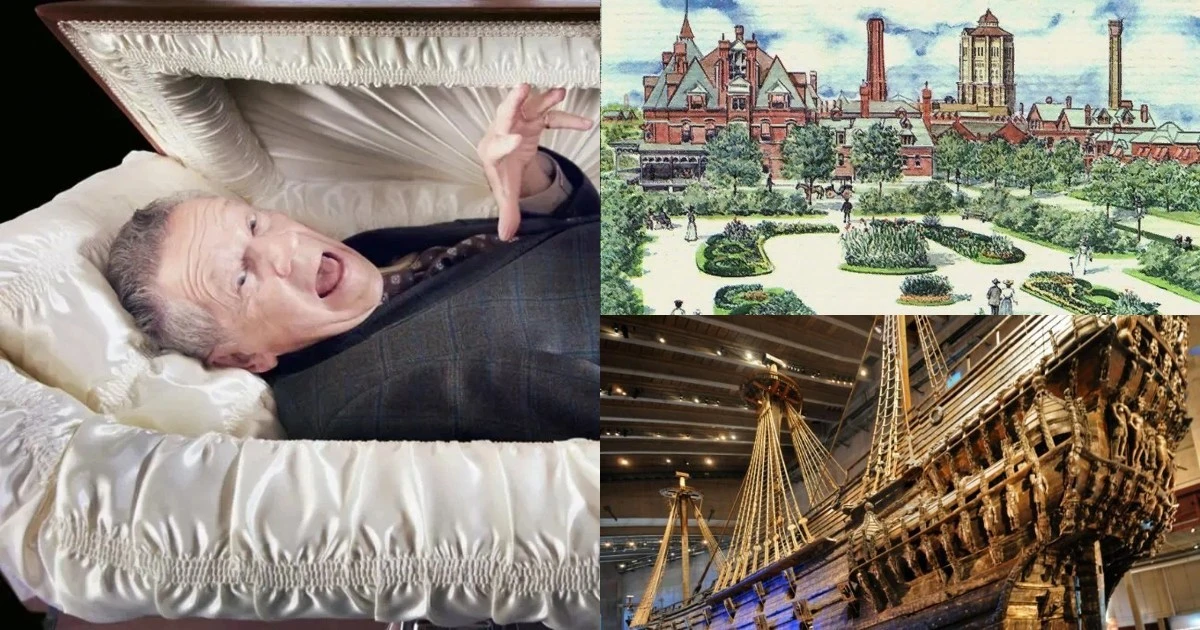
Skeleton Lake 
In the Himalayas, at an altitude of 5 thousand meters above sea level, there is a small lake called Roopkund. For just one month a year, the lake thaws, and then bones and skulls become visible in the clear water. The remains of hundreds of people can also be easily found around the lake.
There is a legend that a long time ago, a king and his family went on a pilgrimage, and in the mountains they were caught by a sudden and strong hailstorm. They had nowhere to hide, so they were all killed by huge hailstones. Only in 1942 was it possible to verify this legend. The skeletons of several hundred people were actually found in the lake and on the shore. Some of them still had clothes and equipment. Over 80 years of research into Roopkund, nicknamed the Lake of Skeletons, it was possible to find out that the people who found peace there were indeed killed by something round that flew into them at high speed from above. Scientists have determined that there were several groups, the oldest of which has been there since the 9th century AD. Moreover, some people came to the Himalayas from the shores of the Mediterranean Sea. What did they forget there?
Well-preserved remains provide researchers with a lot of useful information about the lives of people of the past. Working with Skeleton Lake is complicated by overly curious tourists. For those who conquer the Himalayas, Roopkund is almost as interesting as the Dyatlov Pass for TV viewers. Only, unlike the famous pass, there are still bones scattered around the lake, and in the water, if you’re lucky, you can find something even more interesting. In short, tourists often take souvenirs with them from there.
The tragedy of the royal "Vase" 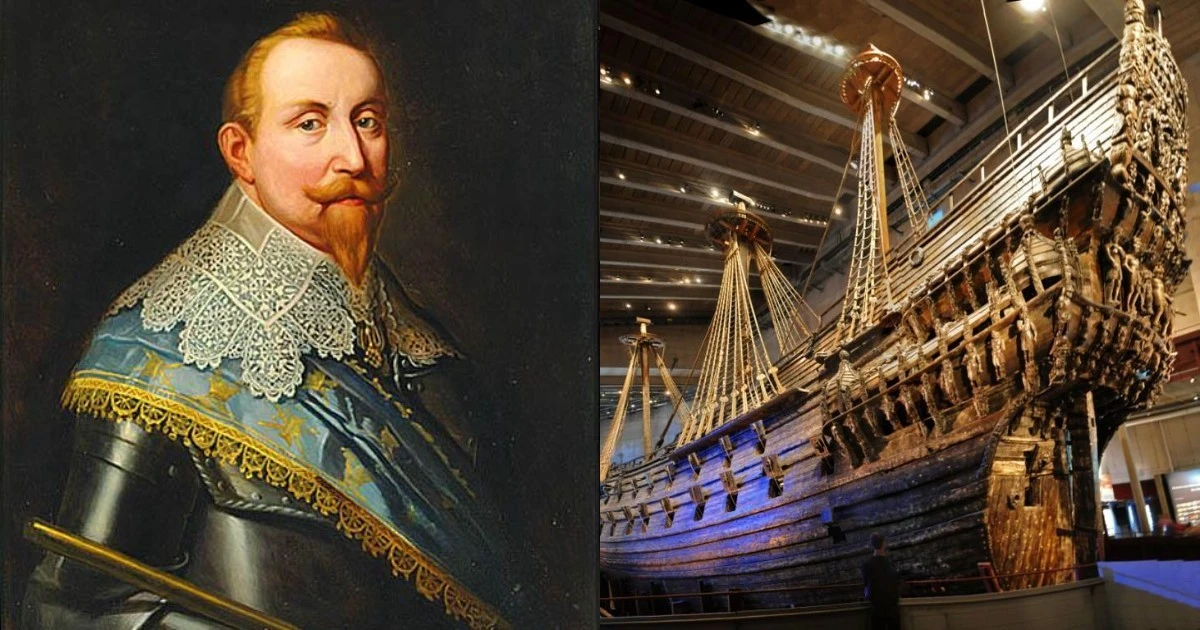
The Swedish king Gustav II Adolf dreamed of having the most powerful fleet in Europe and dominating the Baltic Sea. In the 1620s, he ordered the construction of a flagship - a symbol of the greatness and strength of Sweden and, of course, Gustav himself. The king took an active part in the construction of the ship, which was named “Vaza” in honor of the ruling dynasty. He personally approved the size, number of cannons, as well as various decorations - statues of gods, kings and, of course, Gustav himself.
On August 10, 1628, the “Vase” was launched. The ship was to make a demonstration voyage from the royal palace to the Elvsnabben military base. The weather for the swim was perfect, the Swedes were jubilant, seeing off the most combative and most beautiful ship in the world. There were 100 crew members on board with their families, which they were allowed to take with them in honor of the long-awaited event. As soon as the flagship sailed from the shore, a gust of wind tilted it so that it began to fill with water and sink. A great day for the Swedish fleet ended in tragedy - about 50 people drowned. The ship sank with dignity - its keel stood at the bottom, so that for some time the masts were visible above the surface of the water (remember the first appearance of Sparrow in "Pirates of the Caribbean"). It was later discovered that the ship sank due to too many bronze cannons and heavy decorations. The king's demands on the size and number of cannons led to the sinking. Of course, no one dared to contradict the king.
In 1961, the “Vase” was raised from the bottom and restored. Now it's in a museum.
Ant's curse
Some species of ants are blind, and those with eyes, as a rule, see very poorly. Different species navigate the terrain differently. Some can count steps, others use an internal compass. But mostly ants use smell as a guide. They leave a pheromone trail behind them, along which they then return home. Sometimes pheromones can play a cruel joke on ants. If the ant is delayed in its hunt for prey and the trail has time to disappear, then it will be difficult for a blind ant, for example, a nomadic ant, to find the anthill. He may get lost, start walking in circles, spraying pheromones, and will continue to walk like this until he dies.
The most interesting thing is that other ants get into his deadly dance. Deceived by a fresh trail of ants, they curl into a trap. The carousel of death stops when all participants die. True, sometimes one of the ants manages to bring a group of relatives out of the spiral for procreation. Scientists don't know why anyone manages to get out.
Ant gates can reach tens and hundreds of meters in diameter. In 1921, an American naturalist observed a death spiral in South America that continued for two days. In this carousel, the ant furthest from the center made a full circle in 2.5 hours.
Pullman City
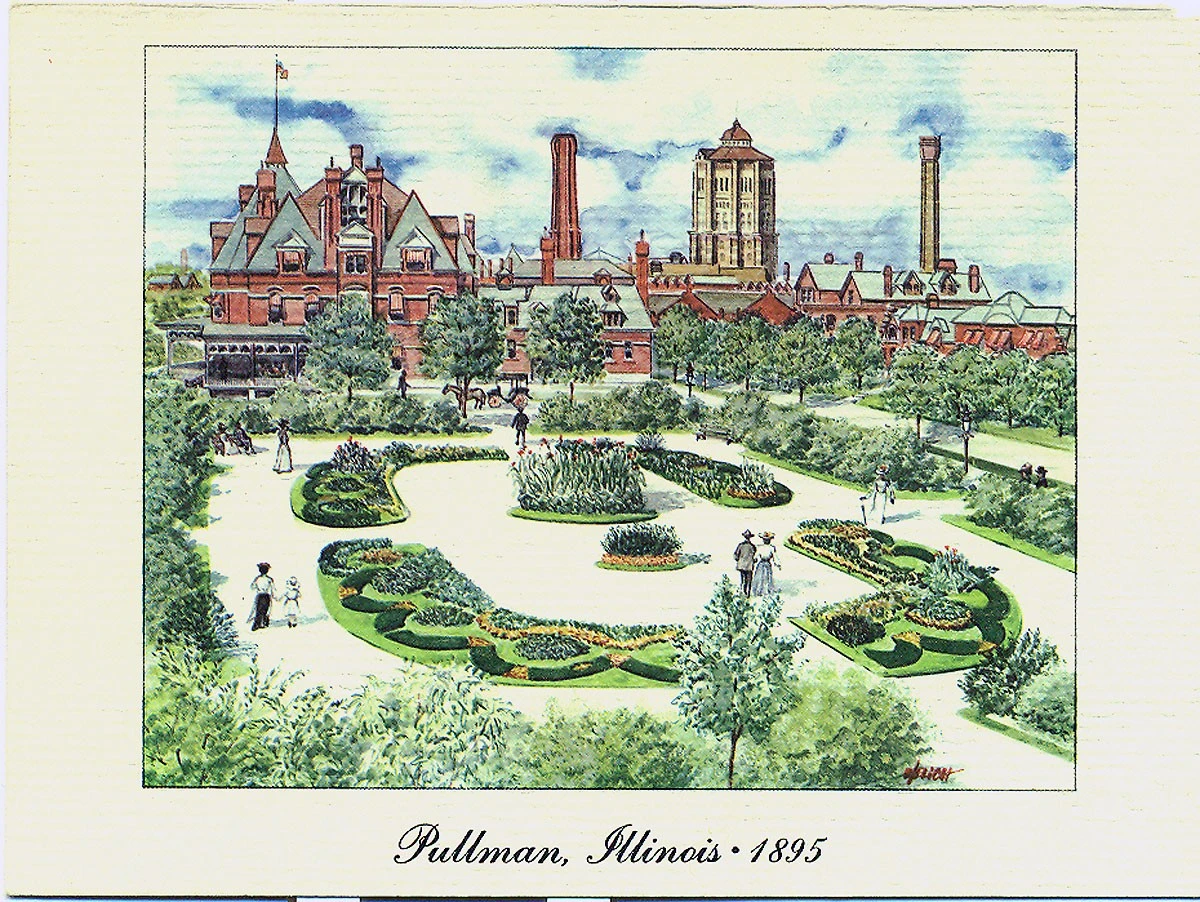
George Pullman made his fortune in sleeping cars. And he became famous throughout the country thanks to the death of Lincoln. The Pullman funeral train carrying the president's coffin traveled all over the country, and everyone knew who made it. In 1880, the railroad king purchased a piece of land south of Chicago for Pullman City, a town for his mill workers. There was everything for an honest working life: houses, shops, theaters, parks, libraries, the Florence Hotel (named after Pullman's daughter) and a man-made lake. The city did not have anything that, according to Pullman, disturbed the workers: bars, brothels, casinos, and most importantly, trade unions. Houses could not be purchased from the owner of the plant; rent for housing and utilities was deducted from wages.
In 1894, as a result of the economic crisis, the demand for carriages fell, and Pullman cut wages by 30%. At the same time, he left the rent for houses the same. For a month, an ordinary worker began to receive $18.1, and $18 was deducted from him for his house, leaving only 10 cents for food for the whole month. The workers went on strike. Pullman refused to comply with the strikers' demands, collected his savings and left the city, and the strikers were brutally dispersed by the National Guard. The state took his personal city from Pullman and annexed it to Chicago. The Carriage King died three years after the strike that cost him his reputation. Fearing retaliation from the workers, the relatives placed the deceased in a lead coffin and filled the grave with concrete.
Ironically, the Florence Hotel was home to the largest brothel in Chicago in the 1930s.
Climb into a coffin and become successful
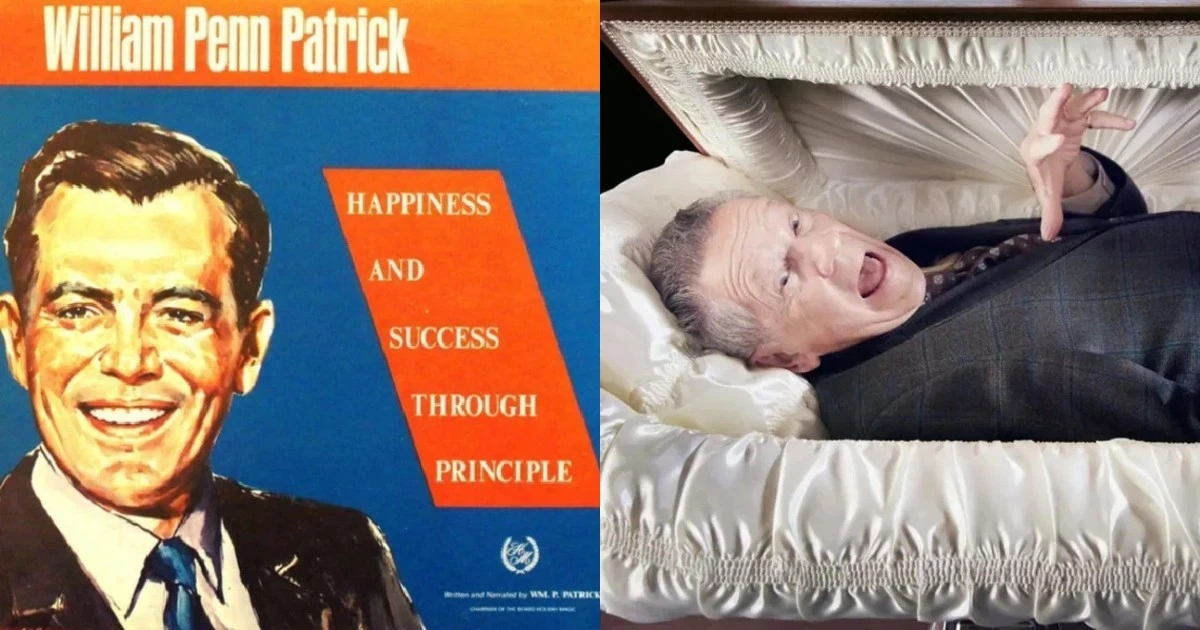
William Penn Patrick made a fortune by combining network marketing with a pyramid scheme.
In strict accordance with the American Dream, he left home at age 15 with 15 cents in his pocket. Then he served as a pilot and studied at the university. As he later said in an interview, education was not useful to him, because at universities they teach you to be afraid of life. Patrick was not afraid of life and dreamed of getting rich. However, every business he did failed. After 12 unsuccessful attempts, he finally found a gold mine. He bought a small cosmetics company and turned it into a multi-million dollar pyramid scheme. Having earned a very large sum, the businessman went into politics. Patrick was popular among ultraconservatives, but he didn't have enough dollars to overtake Reagan.
He then founded the Leadership Dynamics Institute, essentially a cult where people were taught to be successful. For $1000 you could buy a ticket to a two-day seminar, after which the client was supposed to become a money magnet, increase IQ and get rid of fears. At the seminars, people lay in coffins, were tied to crosses, beaten with whips, humiliated, beaten, forced to eat all sorts of disgusting things. As if with such power over people Patrick compensated for his political defeat.
LDS clients sued Patrick. At the trial, he defended his method and said that the coffins were the best. He also faced a large sentence for establishing a financial pyramid. William Penn Patrick did not have time to learn the verdict; he died in a plane crash in 1973. He was 43 years old.