A home away from home: how temporary settlements helped the Vikings achieve success (4 photos)
Over many years of research, archaeologists and historians have helped us expand our understanding of the dynamic world of the Vikings and dispel stereotypes of crazy barbarians who only cared about their own beards and bloodshed. One approach to understanding the Vikings is to study the camps they set up along the coasts and rivers of Western Europe. Thanks to them, the Vikings could easily exchange their ships for land when they were overcome by fatigue, hunger or bad weather. 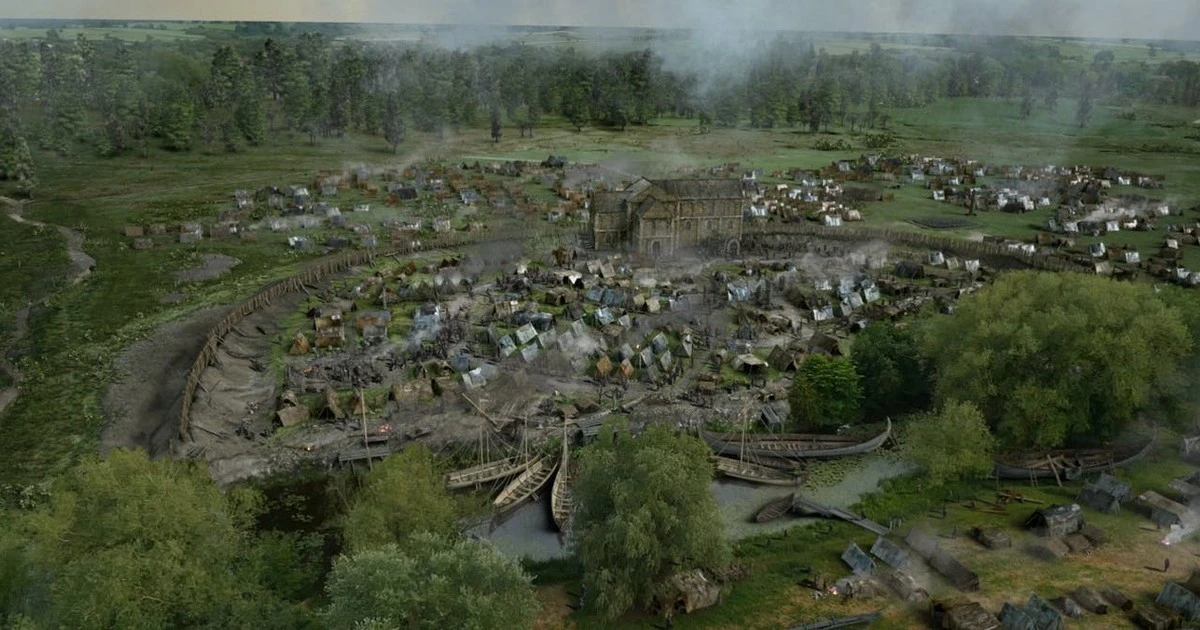
In the ninth century alone, more than a hundred such settlements, commonly referred to as "winter camps" or "longforts", were seen across the Atlantic archipelago and the European mainland, with remains found in places such as Repton and Torksey in England and Woodstown in Ireland. More recently, information has emerged that potential Viking camps could be located near Zutphen in the Netherlands, as well as in the Coquet Valley in Northumbria.
These camps were much more often studied in terms of their broader strategic functions, and much less time was spent on their day-to-day practical planning and operation. New research tying these disparate threads together now reveals a much more complex picture of the camp's logistics and challenges long-held ideas about Vikings simply biding out the winter, sheltered behind strong walls. 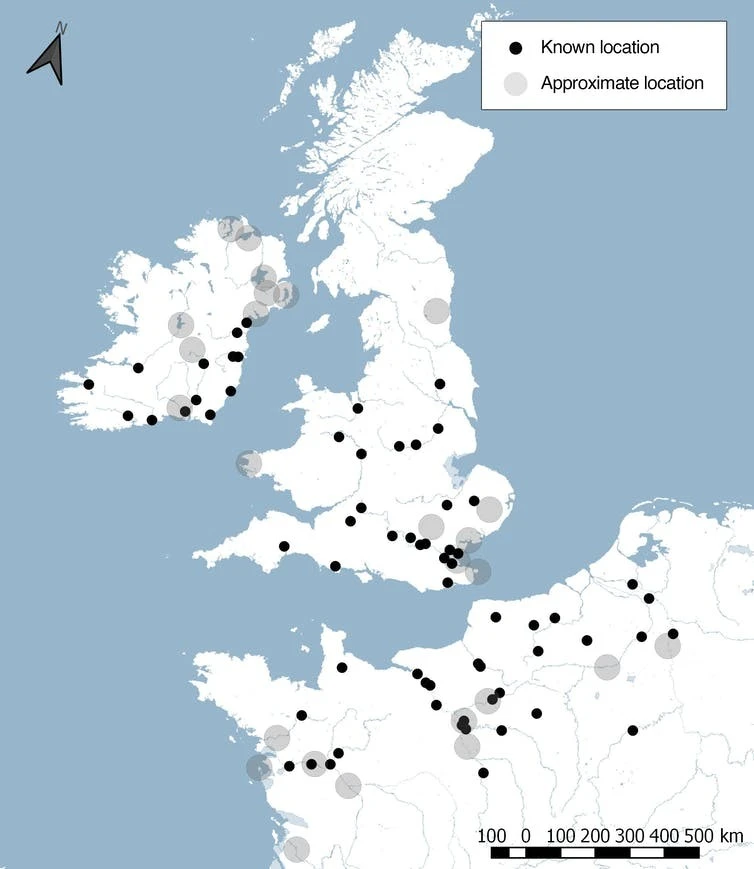
Sites of Viking camps of the 9th century according to written sources of that period.
Asylum
No Viking camp was an exact copy of another, and their existence could last from a few hours to many months or even years.
Because the camps were built in enemy territory, the Vikings took advantage of islands, marshes, and other natural defensive positions. Others occupied ready-made buildings: for example, in 880 the Vikings captured the Carolingian palace in Nijmegen, but burned it down the following year. Where necessary, the Vikings also built their own fortifications, as seen at Repton, where St. Wigstan's Abbey Church appears to have become part of the new perimeter wall of the settlement as a makeshift gatehouse.
But protection from attack was only half the battle, since the continued security of local food stores, livestock and civilians would be equally important to the viability of any such camp. 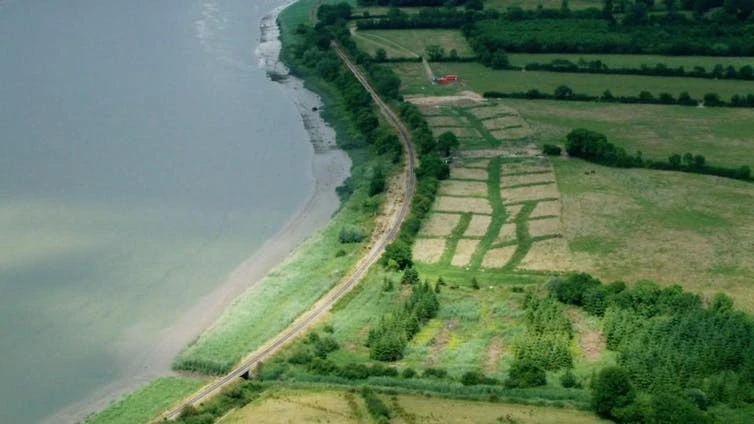
Work on the camp site in Woodstown (County Waterford, Ireland). Local studies were carried out from 2003 to 2007.
Local kitchen
Like any other army, the Vikings required constant and reliable sources of food and water to keep their camps viable. Under the threat of starvation and malnutrition, they diversified their methods of obtaining food as much as possible. There is evidence that the Vikings not only hunted, fished and gathered, but also grew their own crops and herded livestock.
Of course, the Vikings also obtained food through violence and threats. For example, warriors camped outside Paris in 885–86 took others' crops and herds, while others received flour, livestock, wine, and cider from the locals as partial payment of tribute.
Once returned to camp, this food had to be prepared for consumption and storage. Hand mills, used to grind grain into flour, have been found at Viking bases in both England and Ireland, and a number of iron cauldrons and other cooking vessels have been found at a supposed camp at Peran in Brittany. Written sources also mention the Vikings feasting on meat and wine within their camps.
Hustle and bustle
In their camps, the Vikings were engaged not only in self-defense and obtaining food: they built shelters, stables and workshops, repaired ships, made weapons, jewelry and other items. But in order for them to continue these activities, the camp had to have a constant flow of resources, including wood, stone and (precious) metals.
It is possible that such settlements were not completely closed to outsiders, and even provided opportunities for trade. For example, the ninth-century Annals of Bertin describe how the Vikings wanted to set up a market on an island in the Loire River (now France). The Fulda Annals also mention Frankish soldiers entering a Viking camp on the Meuse River (now the Netherlands) - not to fight, but to trade. Physical evidence of such trade—including coins, silver bars, and trading scales—has been found in areas such as Torksey and Woodstown.
Not only did this provide the Vikings with another way to obtain supplies, but it also allowed items that had previously been stolen or taken by force to be put back into circulation. 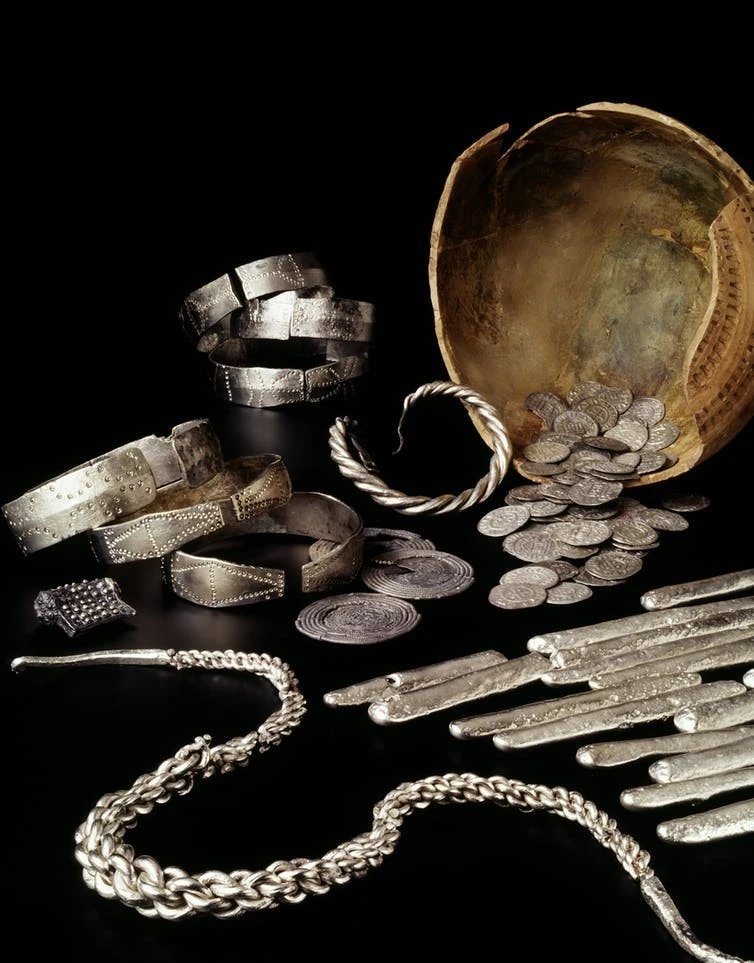
Silver treasures found on the former island of Wieringen (North Holland, Netherlands) indicate a possible Viking presence in the area.
There's a place for everything
To summarize, Viking camps were by no means inactive or disorganized, but were also used as command posts, armories, treasuries, granaries, prisons, workshops, markets, harbors and houses. They harbored diverse and dynamic communities of tens, hundreds, and sometimes thousands of people, some of which provided support to local Viking groups for much longer than a single winter.
Keeping such camps running would not have been easy and would have depended entirely on planning skills and discipline rarely associated with Vikings. The success of such camps therefore gives us a key insight into the Vikings, who were not at all haphazard and aimless when they landed on beaches throughout Western Europe.