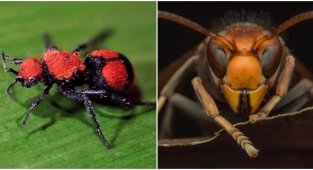
What is the difference between a bee sting and a wasp sting? (6 photos)
There is probably no person on Earth who has not been bitten by insects. Ants and mosquitoes are not so bad, but bees and wasps are found everywhere in the summer. Even those who have never been stung are afraid of them, and even those who have been hurt once are afraid of them. But how does this little buzzer cause so much pain? 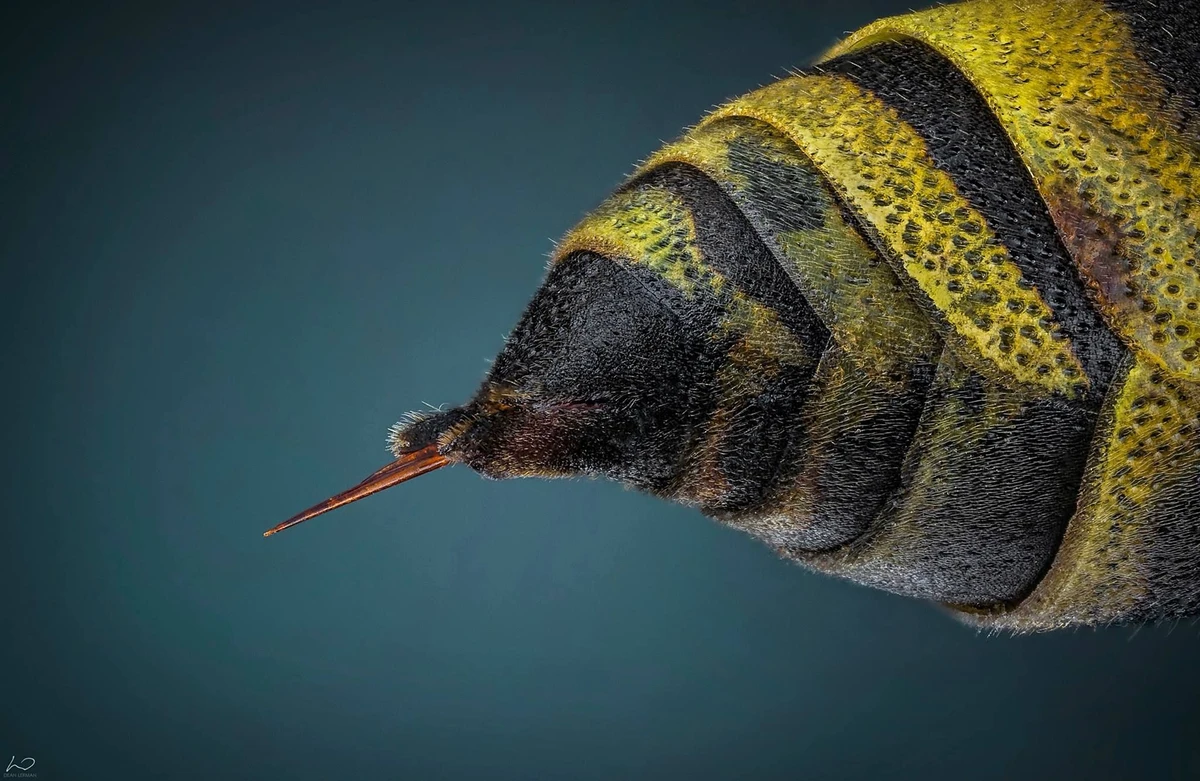
Already got goosebumps?
The cause of agonistic suffering lies in two things - the special structure of the sting and the composition of insect venom. Among all Hymenoptera, only females can sting. Not because they are feminists, it’s just that the sting itself is a modified ovipositor, which in working individuals has evolved into a bladed weapon as unnecessary. And each type of biting arthropod hurts in its own way, with a twist. 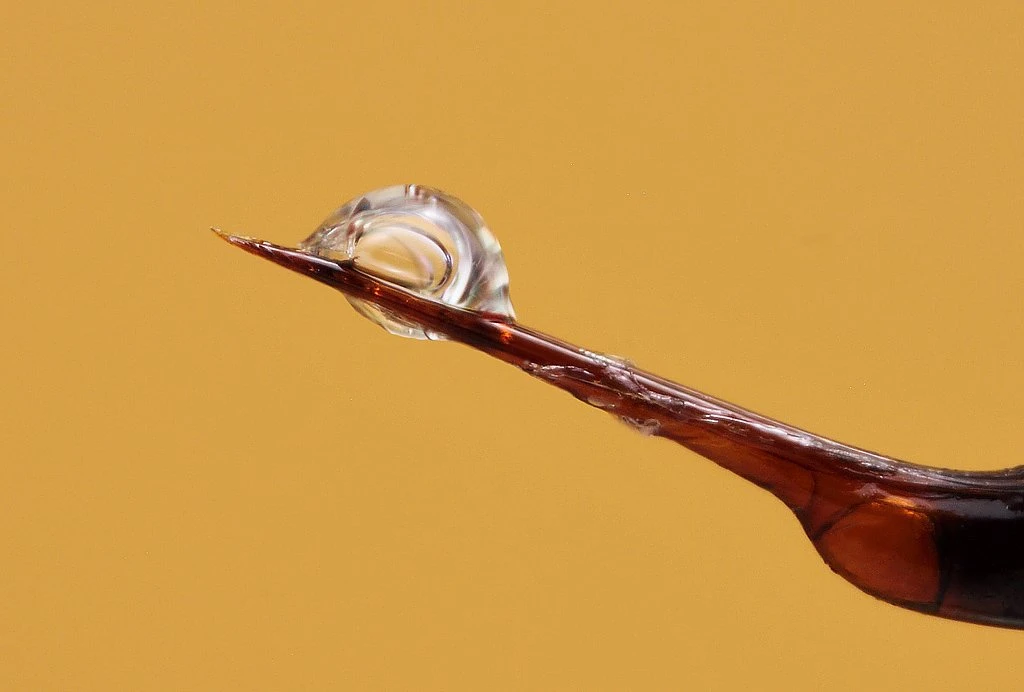
Bee venom can bring not only pain, but also benefit. Pain-relieving ointments are produced on its basis.
Working bees almost never attack first. Most often they sting in defense of themselves or their hive. The logic is simple: the closer you are to the bee house, the higher the likelihood that you will be kicked. The weapon of these insects is a sting with jagged teeth, like saw teeth. That is why, after an attack, you remain miserable, but the bee’s butt falls off. 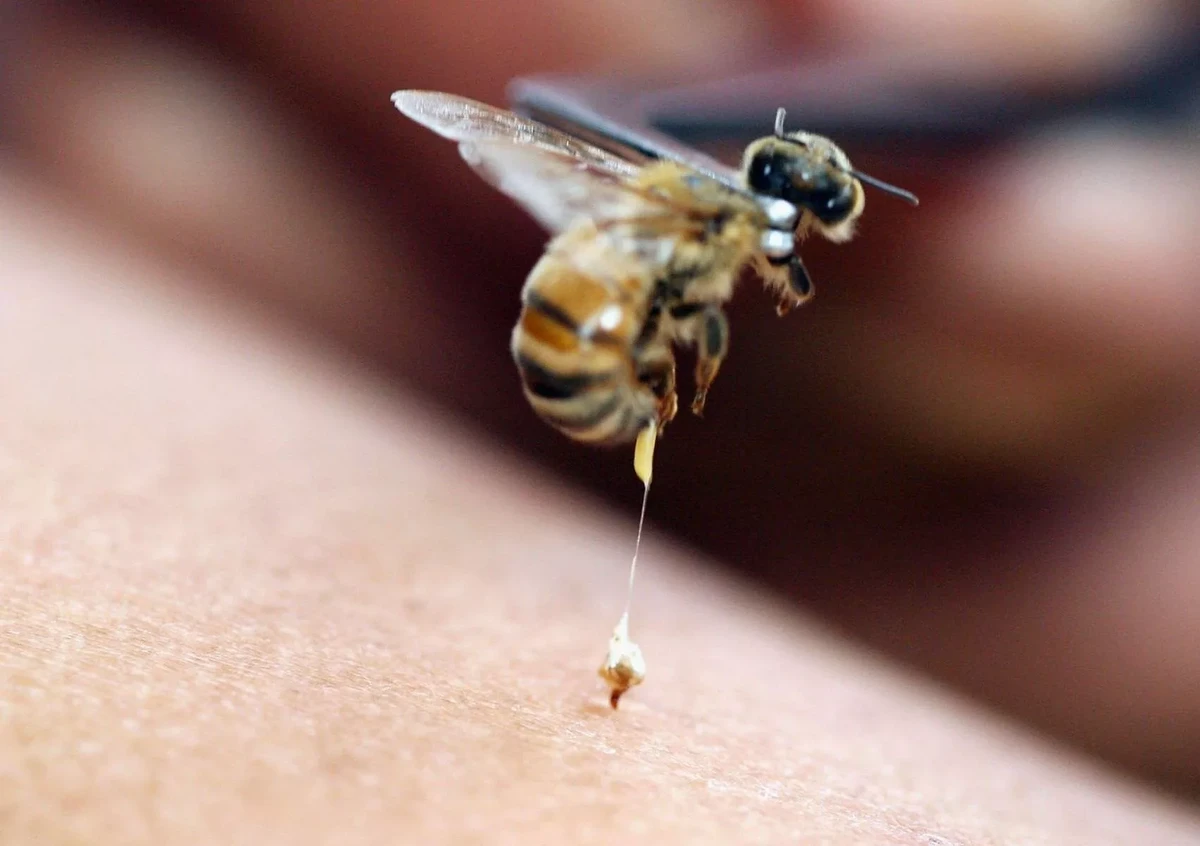
A little boring: to say that a bee stings is wrong. Because it strikes not with its mouth, but with its stinger. Therefore, it can only sting.
In addition to the coldest weapons, glands remain in the skin, which secrete poison for some time. Since the poor insect, defending its home, left a piece of itself in you, the bee heroically dies. You, too, can die, although less heroically - from anaphylactic shock. If you are allergic to the components of the poison. 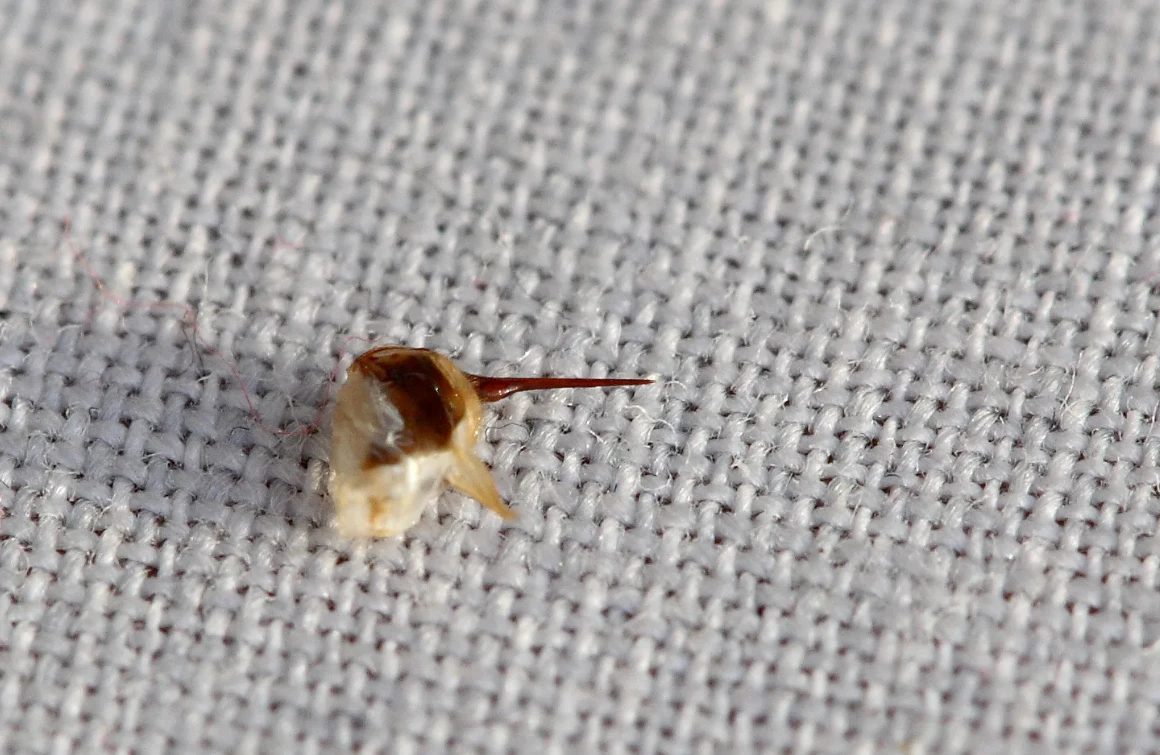
Sergeant, I can't feel my butt...
The main component of the poison that causes an allergic reaction is histamine. But in addition to this, a whole cocktail of chemicals enters your body along with the sting! The main active ingredient, melittin, causes pain by acting on the nerve endings of cells. Hyaluronidase and phospholipase help the poison penetrate deeper into the tissue, disrupting the cell membranes. And norepinephrine constricts blood vessels, which causes the toxin to concentrate at the site of entry, that is, all the pain is concentrated in one place. 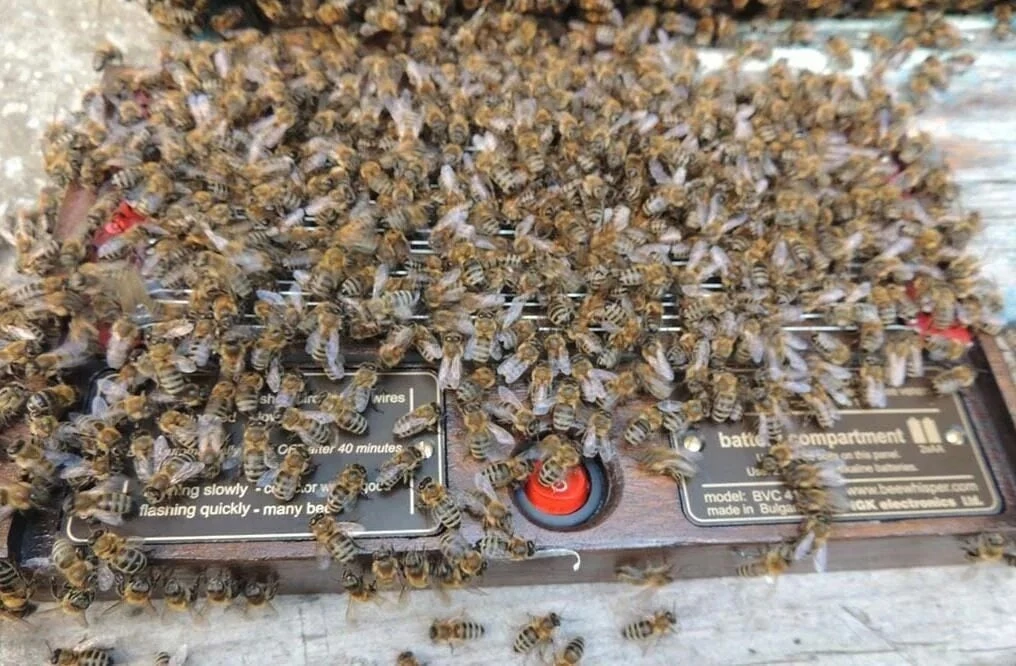
No, bees are not being weighed in this picture; this is a special plate for collecting bee venom. When insects are on it, a weak electric current stimulates the production of poison, which does not harm the bees.
But with wasps, things are a little different. These striped beasts can sting not only in defense, but also simply because they don’t like you. Their sting is smooth and sharp, which allows the wasp to use its weapon repeatedly. So one angry wasp can sting as many as 5 times! With each injection, about 0.3 milligrams of poison enters the human body - the dose, although not lethal, is very painful. 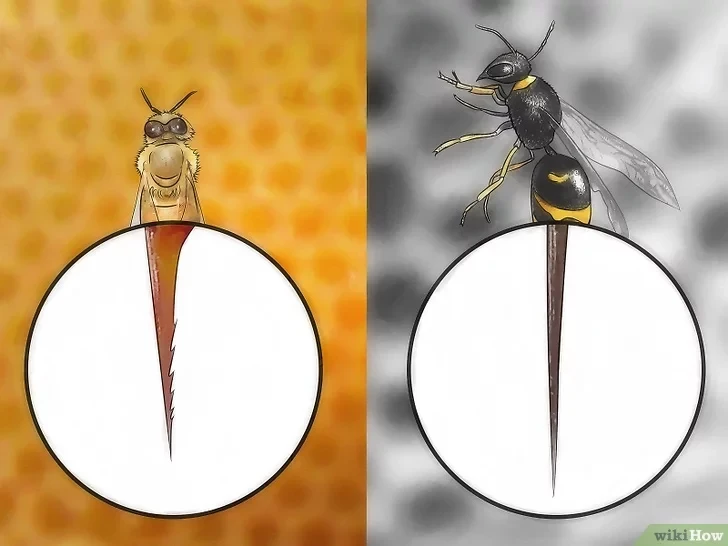
Difference between bee and wasp sting.
The composition of wasp venom is similar to that of bees, the difference is in the quantitative ratio of the components. Also, wasp venom contains a substance that affects the amount of sugar in the blood, which is quite poorly perceived by people with diabetes. But in addition to hitting you with its sting, the wasp can also bite you with its jaws - well, just to be sure.