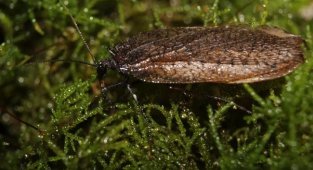
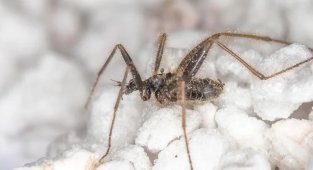
Mantophasmatodes: "Gladiator grasshoppers." With a sharp blow of their paw they end the life of their prey, but prefer to eat only the heads. Epic! (8 photos)
Today is a story about an extremely harsh representative of the animal world - the mantophasmatode. An ancient gladiator who pierces her victims right through and dines only on their heads? Sounds pretty brutal! 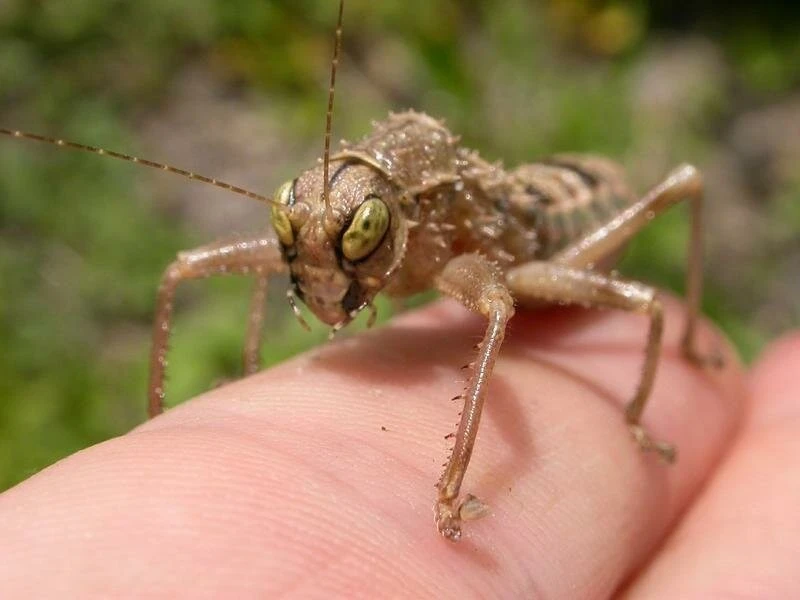
Such a complex and strange name appeared due to the fault of paleontologists. They discovered this group of insects back in the 1920s. Thanks to them, we know that in the past mantophasmatodes were found throughout the world. 160 million years ago they definitely lived in China, and 45 million years ago - in the Baltic states. But in later deposits they are not found, as if they had died out. 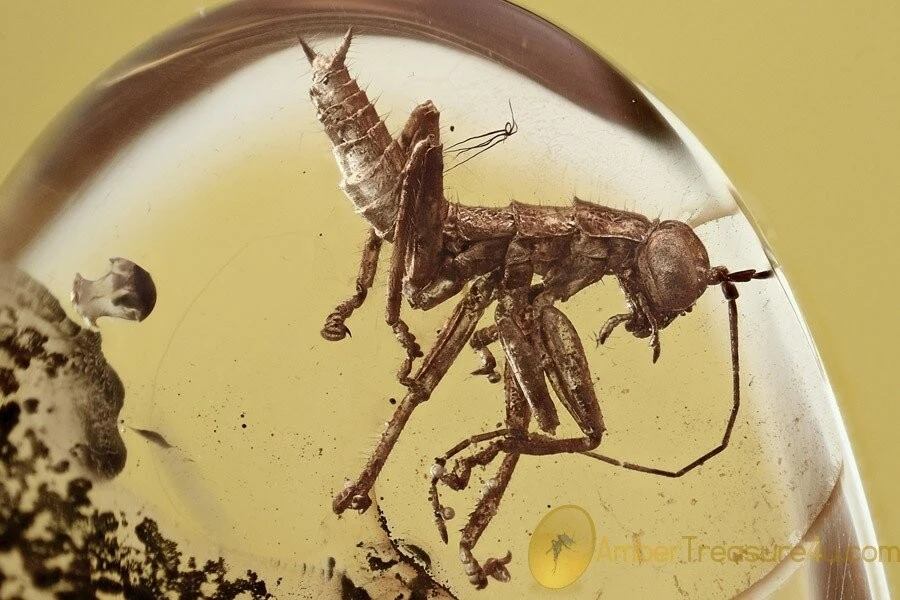
But not in the vicinity of the Namib Desert and on the mountain slopes of East Africa. The insects were found there in 2002, while studying local mantises. The animals are practically no different from their fossil ancestors: they are still the same wingless, grasshopper-like creatures ranging from 1 to 3.5 centimeters in length. 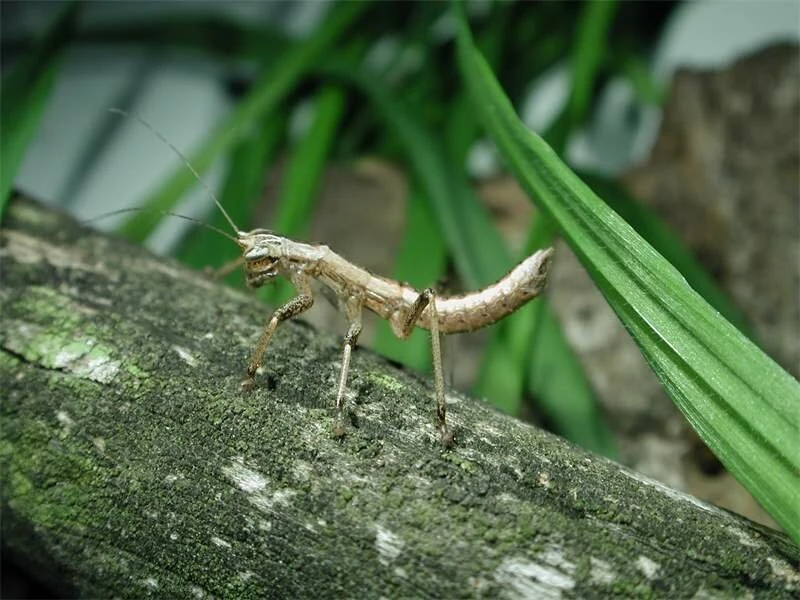
Throughout the daylight hours, insects look like convinced pacifists. They sit on the branches of a bush or tall grass and get stuck in the endlessly eternal. The only reason for movement: innate cleanliness. Once every few hours, mantophasmatodes lick themselves and remove the layer of dust brought by the wind. Gladiators easily reach their jaws even to the abdomen and carefully bite off every part of the body. 
A typical place for our heroes to live. There is nothing interesting there except the bushes.
Well, if at this moment they are threatened by some lizard or insectivorous bird, the mantophasmatoda will jump to the ground. They control their fall perfectly and always land on their six feet, just like cats. And then they give you a run for their money, of course! 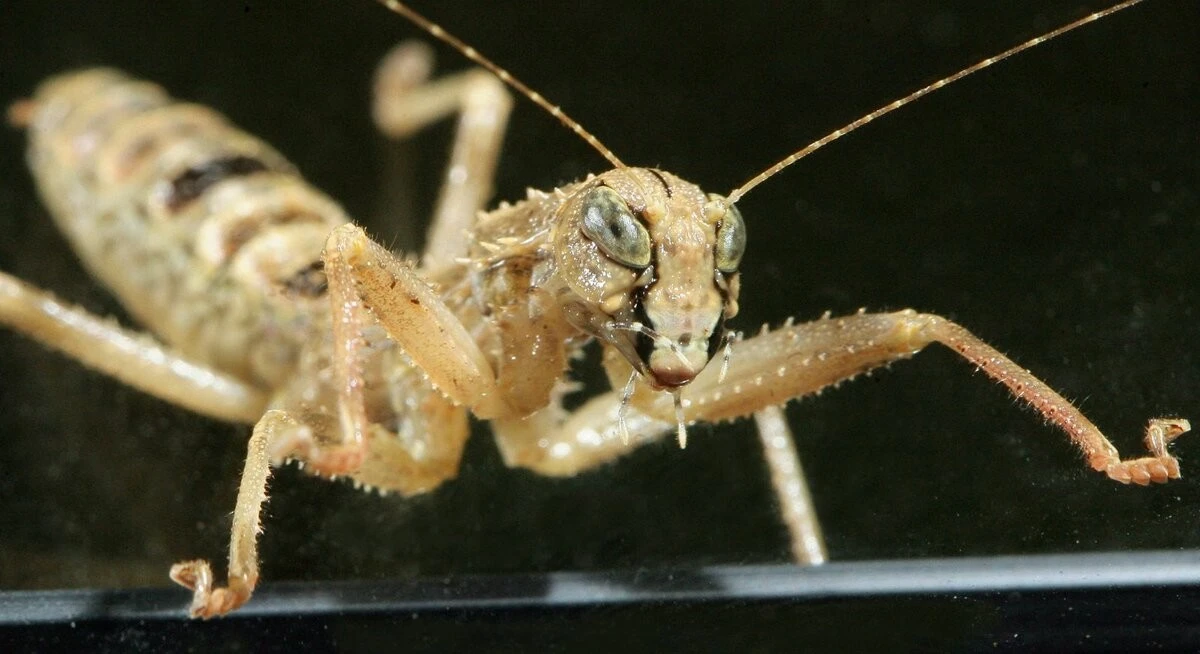
But with the onset of night, the mask of the harmless insect disappears. And the mantophasmatoda goes off to kill. Its diet includes all arthropods that can be found on the branches of its native bush. But most of all it is ants, caterpillars and spiders with flies. As soon as the gladiator spots potential prey, he begins to slowly creep up on the unsuspecting victim. If it is small, like a fruit fly, then the predator grabs it with its mandibles and chews the chitinous pistachio in a few seconds. 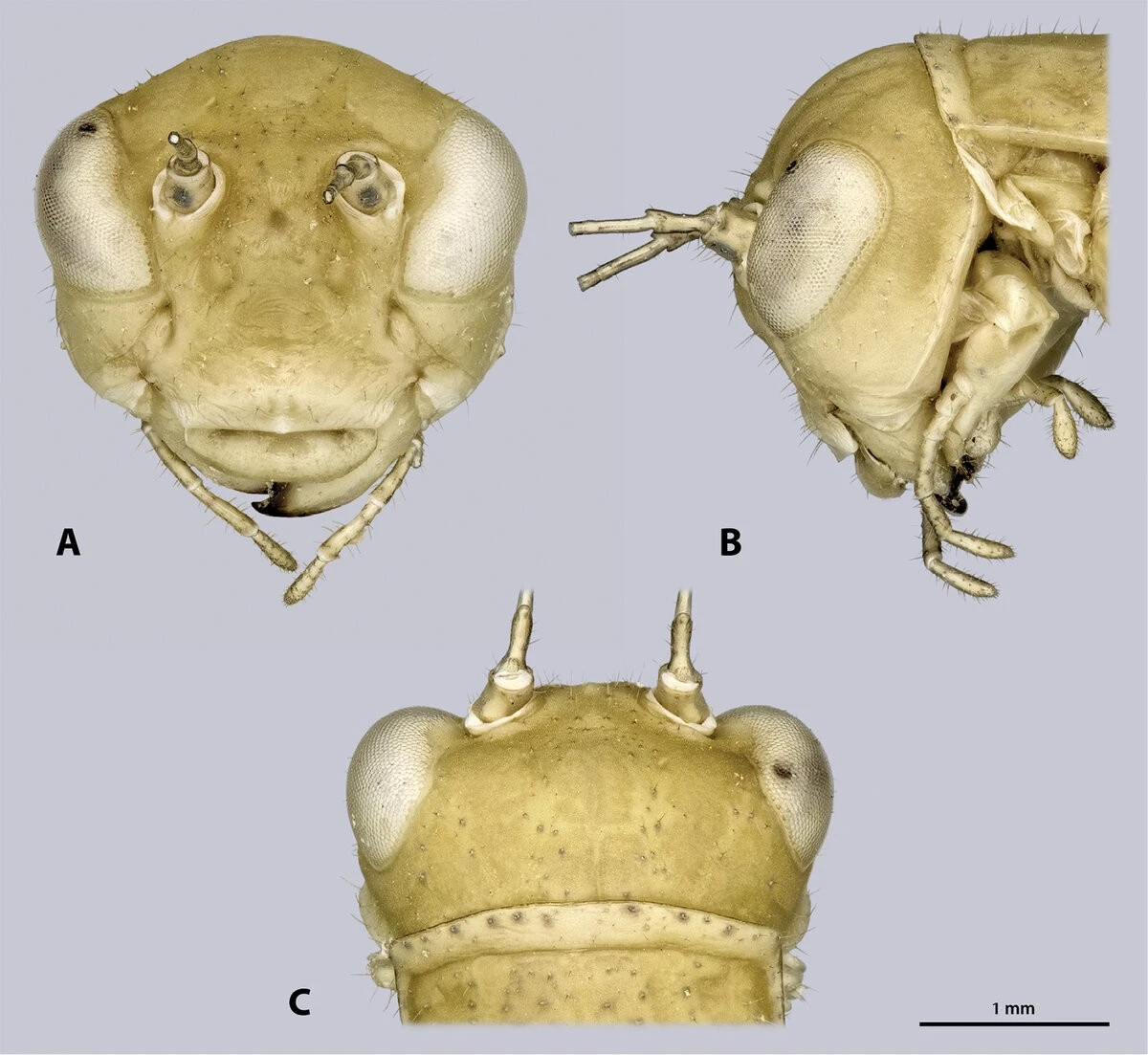
These are not lips, the mandibles are located slightly lower.
With larger prey the situation is more interesting. If the mantophasmatoda manages to get close enough, it will deliver a powerful blow with one of its spiked legs. The spines rip open the chitinous shell of the victim and cause damage incompatible with life. While studying mantophasmatodes in laboratory conditions, an incident occurred: one female decided to dine on another and gave her a good hit with her paw. An autopsy revealed that the ventral nerve cord, the equivalent of our spinal cord, was severed in a single blow. Now do you understand why these insects were called gladiators? 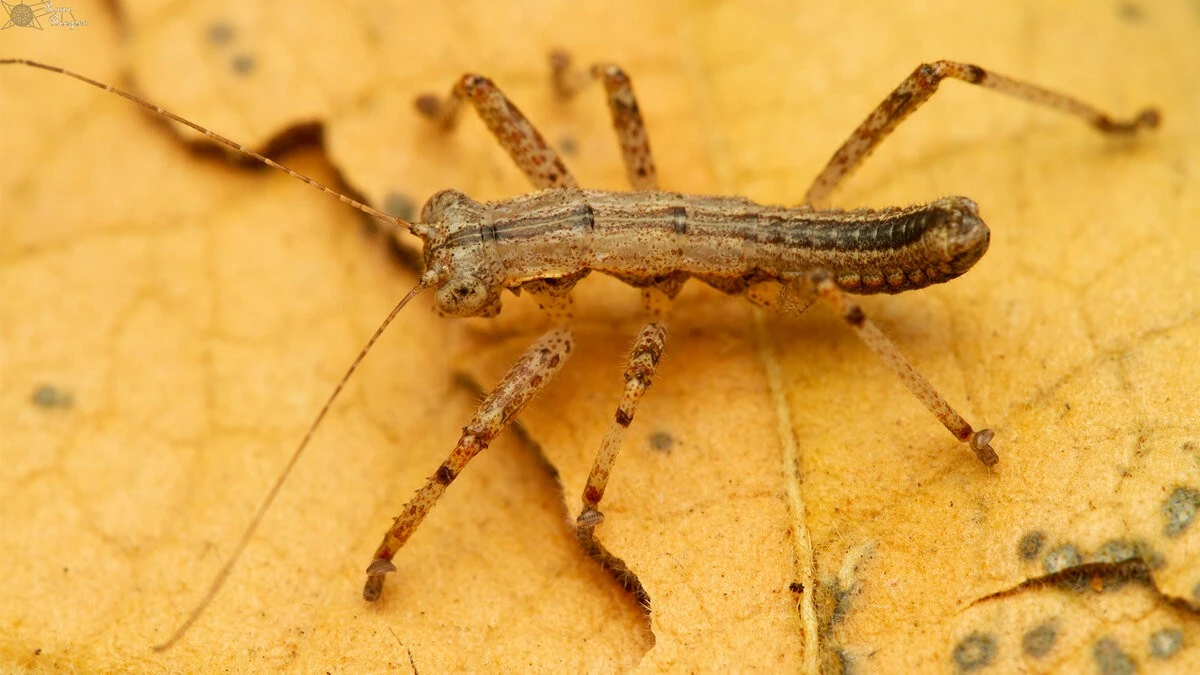
Notice how the front pair of paws are larger than the rest.
In order for the grasshopper-like fighters with a penchant for cannibalism to reproduce at all, they had to develop two-factor authentication. The mating movement is initiated by the male, he knocks his abdomen on the trunk with a certain frequency. If a female ready for breeding hears it, she will respond and release a cloud of pheromones that will lead the guy to the goal.
Upon approaching the female, the male will release his pheromones, and if the female is satisfied with the smell, reproduction will take place. Otherwise, the guy will receive a tasty slap in the face, and his head will go into his partner’s stomach. When there is an abundance of food, insects' inner gourmets come into play: they begin to feed exclusively on the heads of their victims. 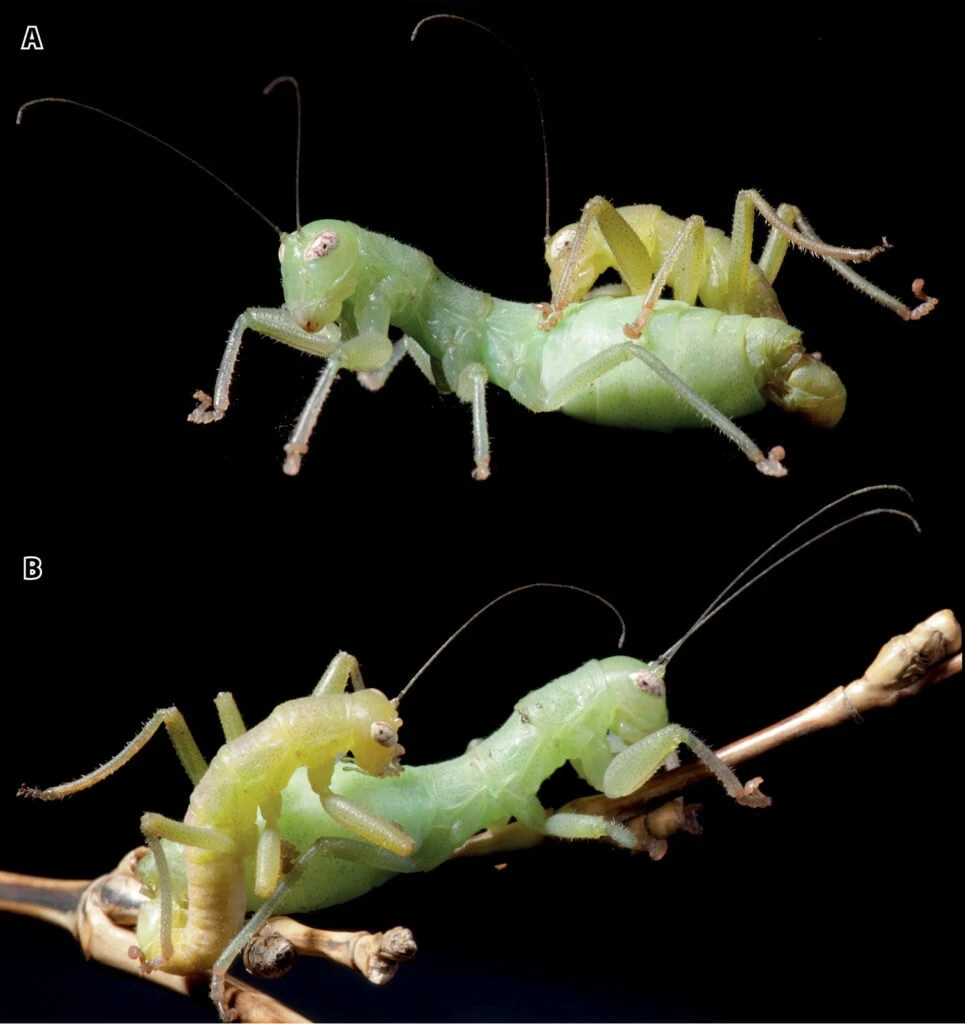
If the female has not killed the smaller male, then in a week or two, at the beginning of September, she will make 2 clutches of 8-15 eggs each. Each clutch is packed in a capsule, and the eggs are arranged in it like bottles in a beer case (this is a direct quote from a scientific article, if anything). The little thing will not hatch soon, only at the beginning of the rainy season. But in 3-4 months the young will grow into full-fledged gladiators who will fight each other in the desert steppes of Namibia.