25 strange, funny and bizarre creatures living on Earth (26 photos)
Nature has created so many different types of living beings that you can study them endlessly. Let's take a look at the most amazing, unusual, strange and charming animals on our planet with the Strangest Wildlife project. 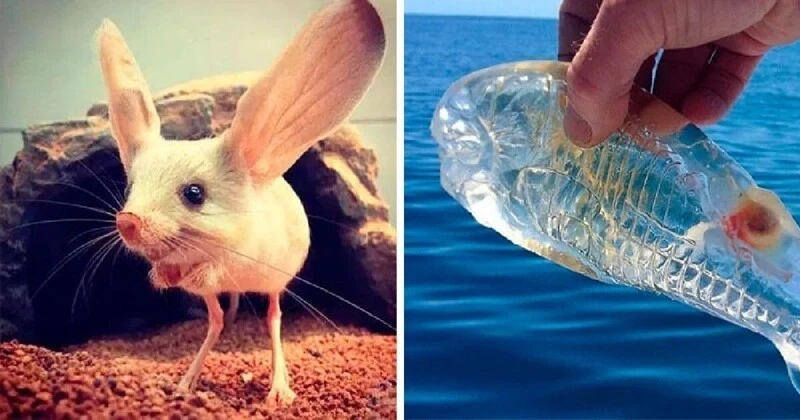
They clearly came from Mother Nature's secret laboratory!
1. Long-eared jerboa (Euchoreutes naso) 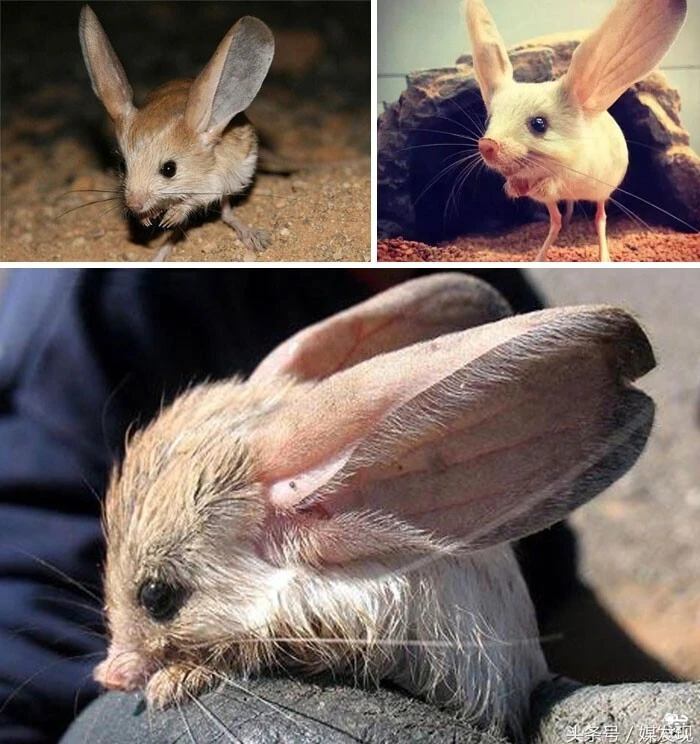
The long-eared jerboa is a nocturnal rodent. Mouse-like with a long tail, long hind legs for jumping, and exceptionally large ears. It lives in the deserts of Mongolia and China, feeding mainly on insects.
2. Quokka (Setonix brachyurus) 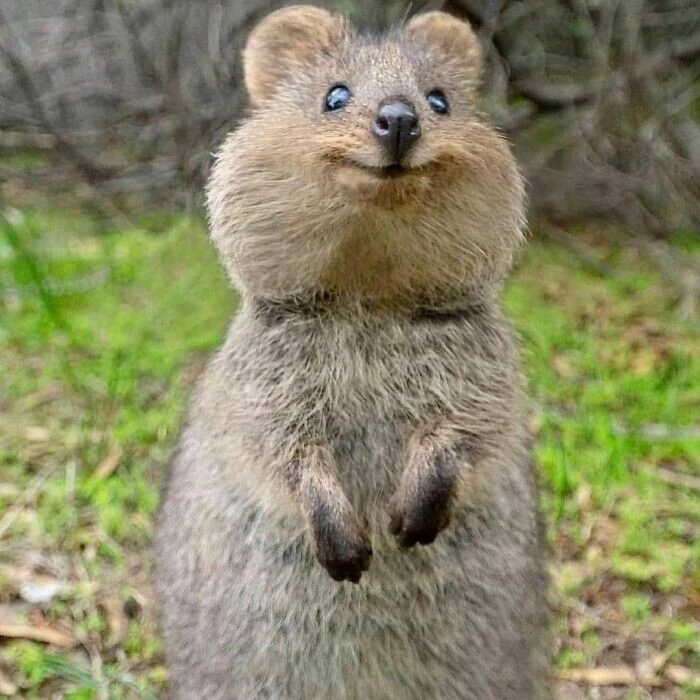
The quokka (also known as the short-tailed kangaroo) is considered the happiest animal in the world. This is a harmless herbivore that lives in Australia and walks mainly at night. It is defenseless against predators, is not afraid of humans and easily lets them approach. A smile on the face is a consequence of relaxation of the jaw muscles. When the quokka is not chewing, it "smiles."
3. Mary River Turtle (Elusor macrurus) 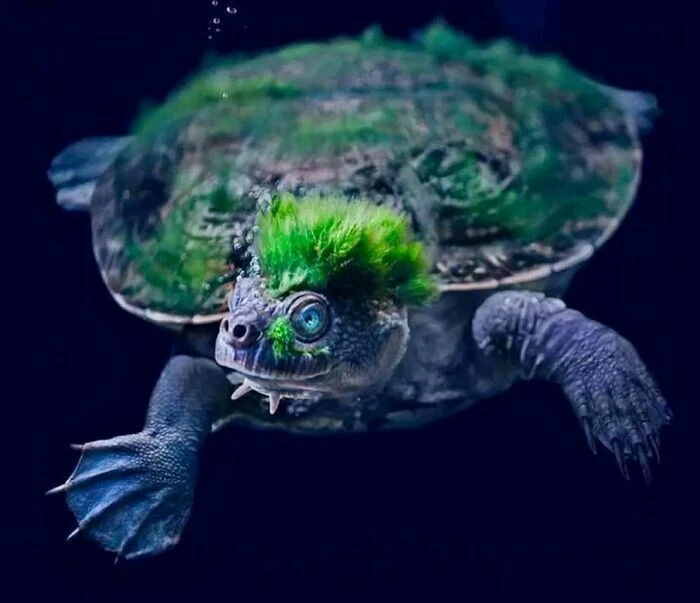
This turtle with a green "mohawk" on its head (actually a seaweed) is an Australian species that became isolated about 40 million years ago. This turtle has special organs in its cloaca that allow it to obtain oxygen from the water. It can remain underwater for up to three days.
4. Frogmouth (Podargidae) 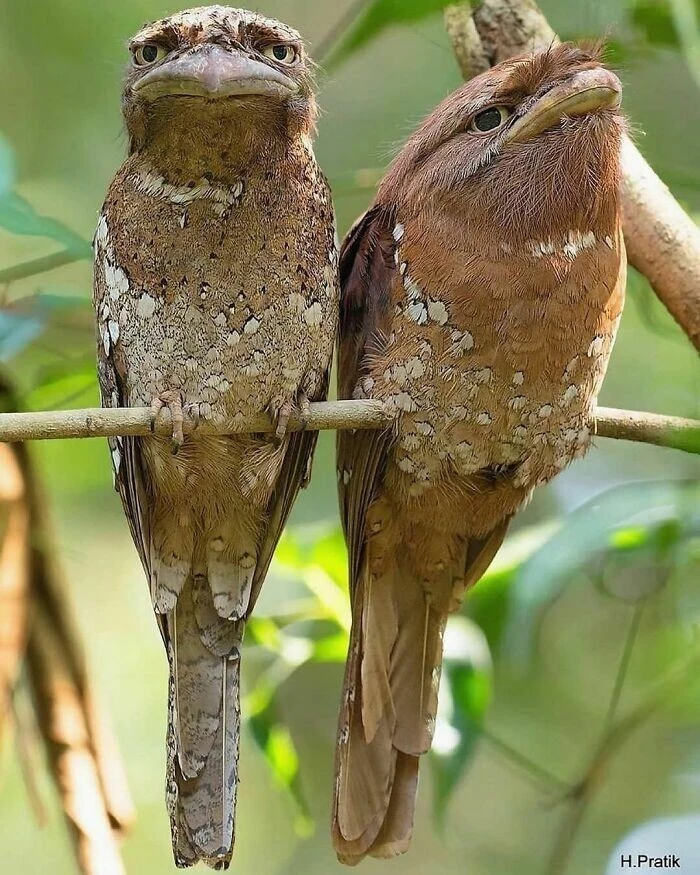
Frogmouths are named after their wide, flattened and slightly downturned beak. When they open it to catch insects, it looks like the open mouth of a frog. These birds are not very strong in flight. During the day they usually lie on tree branches, and their plumage camouflages them very well. Up to three white eggs are laid in the fork of a branch, which are incubated by the female at night and by the male during the day. Frogmouths inhabit South and Southeast Asia, Australia, Tasmania, New Guinea and the islands.
5. Pallas's cat (Otocolobus manul) 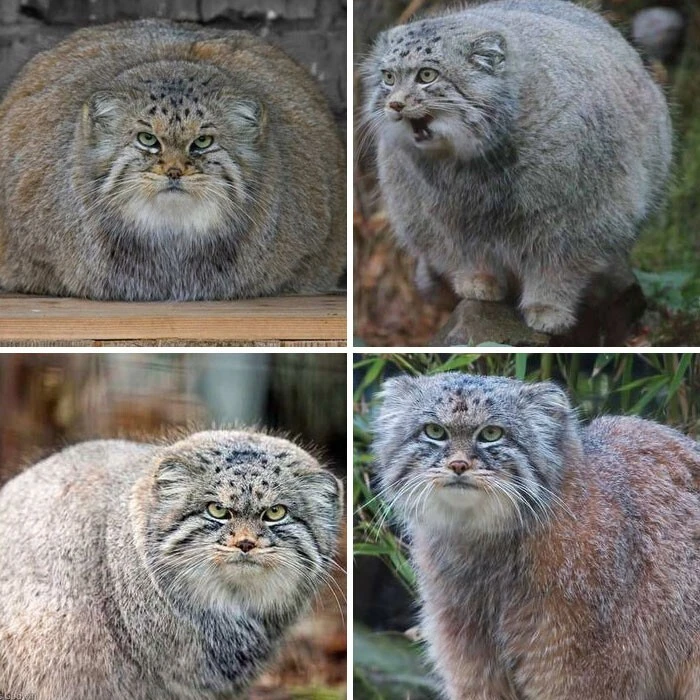
Pallas cat (Pallas cat) is a small wild cat the size of a domestic cat that lives in the grasslands and mountain steppes of Central Asia. Due to its massive body and long thick fur, the Pallas' cat looks thick and plush.
6. Peters's blenny (Rhynchocyon petersi) 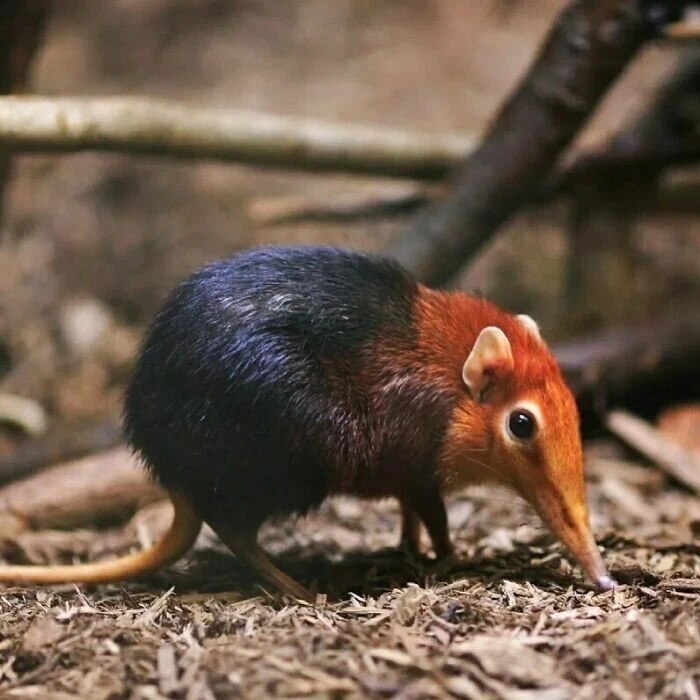
This cute guy with an elongated snout is a mammal from the family of jumpers. Lives in Kenya and Tanzania. The animal is named after the German zoologist Wilhelm Peters. Proboscis blennies live exclusively on the ground. They are active during the day and sleep at night in nests made in small holes.
7. Dumbo Octopus (Grimpoteuthis) 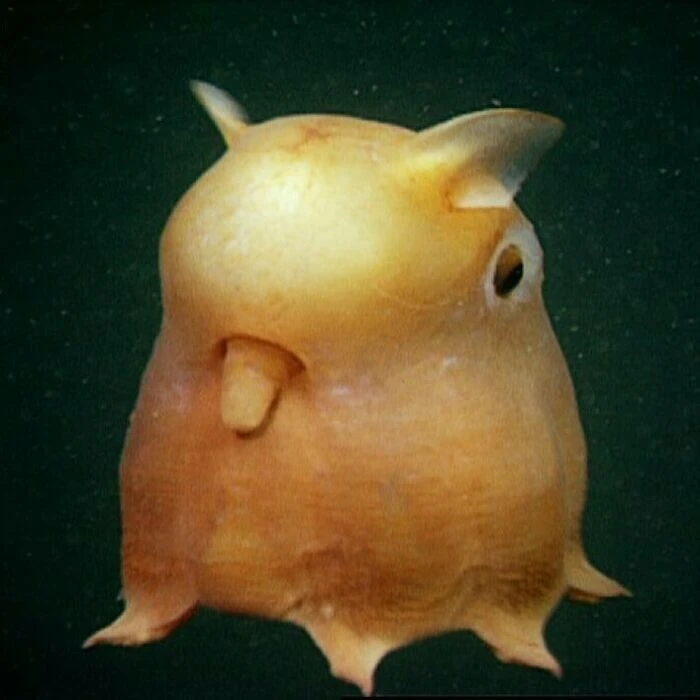
This is Grimpoteuthys, a deep-sea octopus that lives at depths of up to 7 kilometers. Adults reach a length of 20 cm, but there are also giants. Thus, the largest representative of this genus encountered by humans was about 180 cm long and weighed about 6 kg. Grimpoteuthis received the name "Dumbo" due to its resemblance to the baby elephant Dumbo, the hero of the 1941 Disney cartoon.
8. Pike blenny (Neoclinus blanchardi) 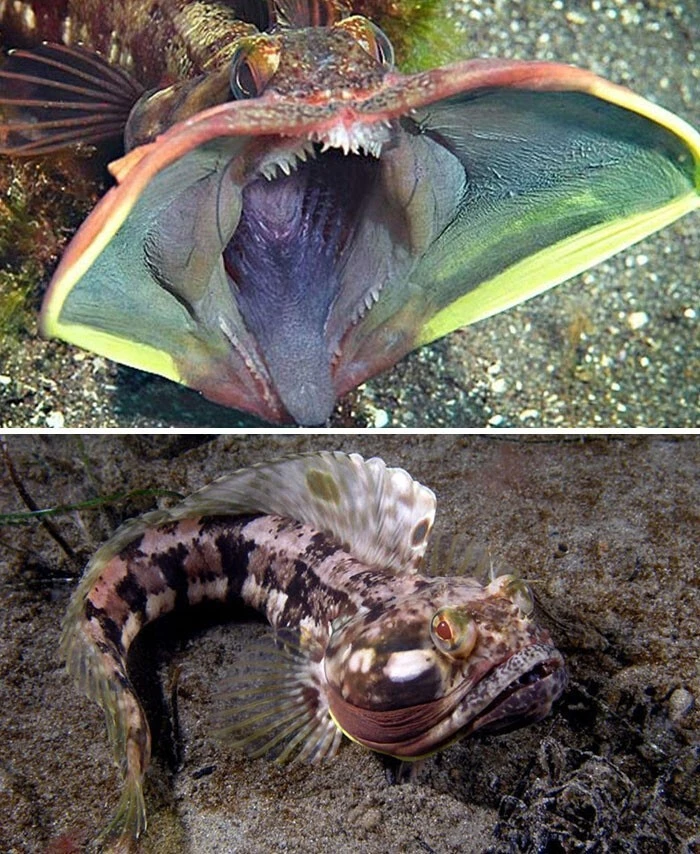
This ray-finned fish has a funny name in English - Sarcastic Fringehead. The species lives in the eastern Pacific Ocean off the coast of North America. It is a small but fierce fish with a large mouth and aggressive territorial behavior. When there is a battle for territory, the blennies fight by pressing their swollen mouths to each other as if in a kiss. This allows them to determine who is bigger and who is in charge.
9. South American Harpy (Harpia harpyja) 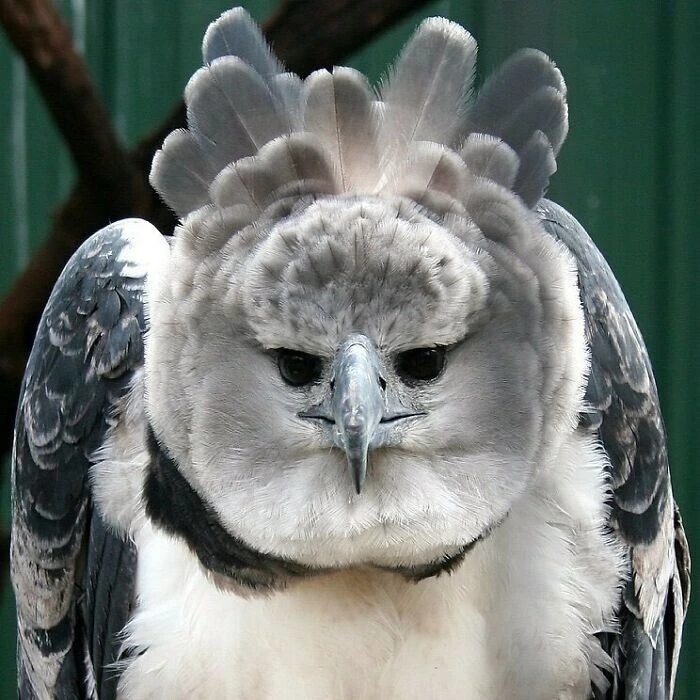
The South American harpy is a large bird of prey from the hawk family. It is also called the American Harpy Eagle. It is the largest and most powerful raptor found throughout its range, and one of the largest extant eagle species in the world. It typically inhabits tropical lowland rainforests in the upper (emerging) canopy layer.
10. Ili pika (Ochotona iliensis) 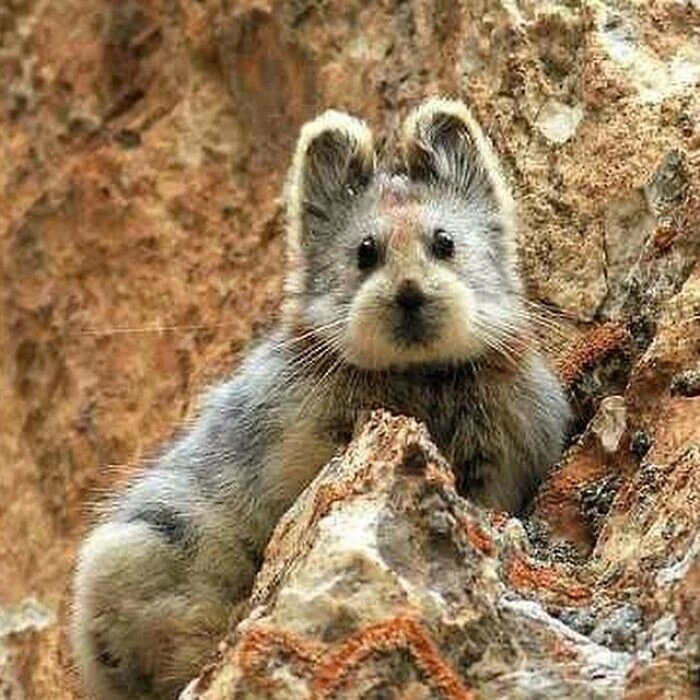
The tiny mammal, native to the mountainous region of northwest China, was discovered in 1983 and described as a new species in 1986. The Ili pika belongs to an endangered species. There are fewer than a thousand of these teddy bears left and the population continues to decline. This is likely due to the effects of climate change.
11. Kakapo (Strigops habroptilus) 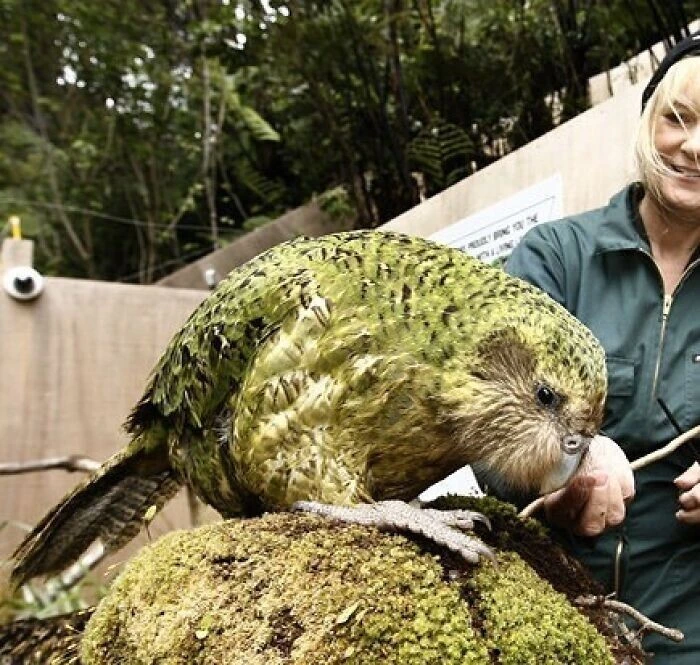
The kakapo (owl parrot) is an ancient New Zealand endemic species that is critically endangered (only about 125 individuals remain). It has finely spotted yellow-green plumage, a distinct facial disc of sensitive whisker-like feathers, a large gray beak, short legs, large feet, wings and a relatively short tail.
This is the only flightless parrot in the world, the heaviest parrot, and nocturnal. It is a parrot with a low basal metabolic rate and a lack of parental care from males. It is also possibly one of the longest living birds in the world.
12. Peacock mantis shrimp (Odontodactylus scyllarus) 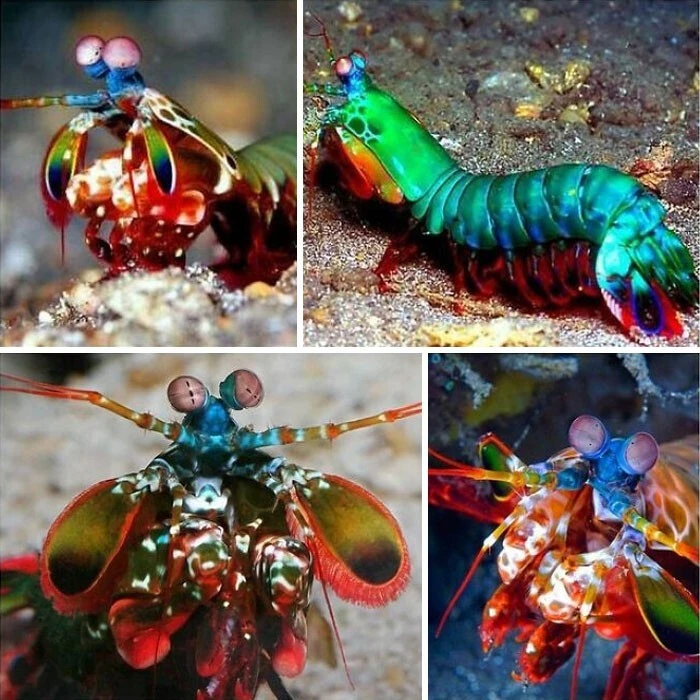
This species of crustacean lives in the Barrier Reef region of Australia. Males have a very striking appearance. They live at a depth of 40 meters in sandy burrows or in coral fragments. They are called praying mantises because they can instantly throw out their forelimbs to strike, and their strike is 50 times faster than that of a praying mantis! No other animal on the planet hits faster. Hence the other names of these beautiful shrimps - brawlers, terrorist crayfish, fighting crayfish.
13. Okapi (Okapia johnstoni) 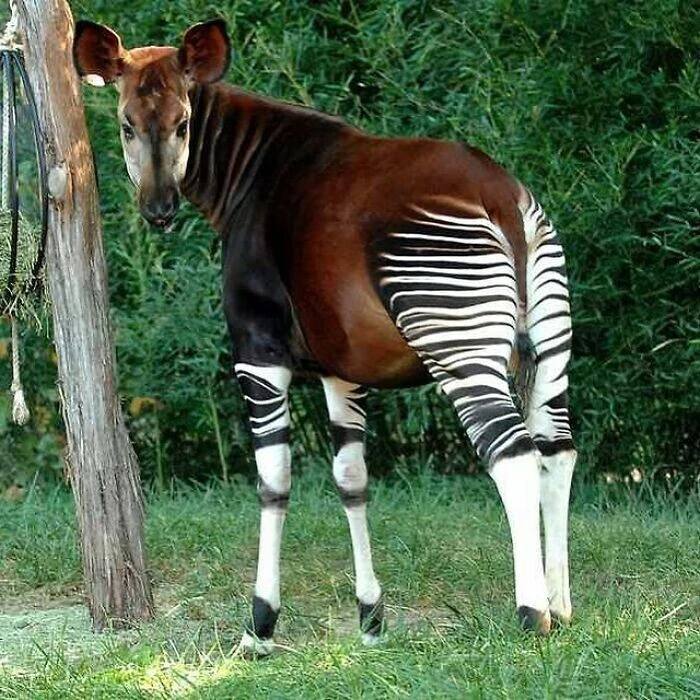
The okapi is an artiodactyl mammal native to northeastern Congo in Central Africa. Its color resembles that of a zebra, but this animal is closest to a giraffe. Okapi and giraffe are the only representatives of the giraffe family living on Earth.
14. Peacock spider (Maratus volans) 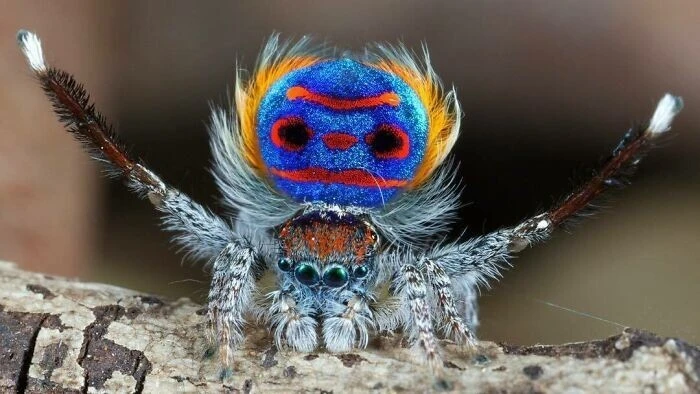
Like a true peacock, the male of this diminutive species raises a bright flap on his belly like a colorful fan and uses it to attract the attention of the female. And, for greater effect, it vibrates with its hind legs and belly. Another common feature of these two peacocks is that Maratus volans will sometimes court several females at the same time.
15. Troll larva, nymph of an insect unknown to science 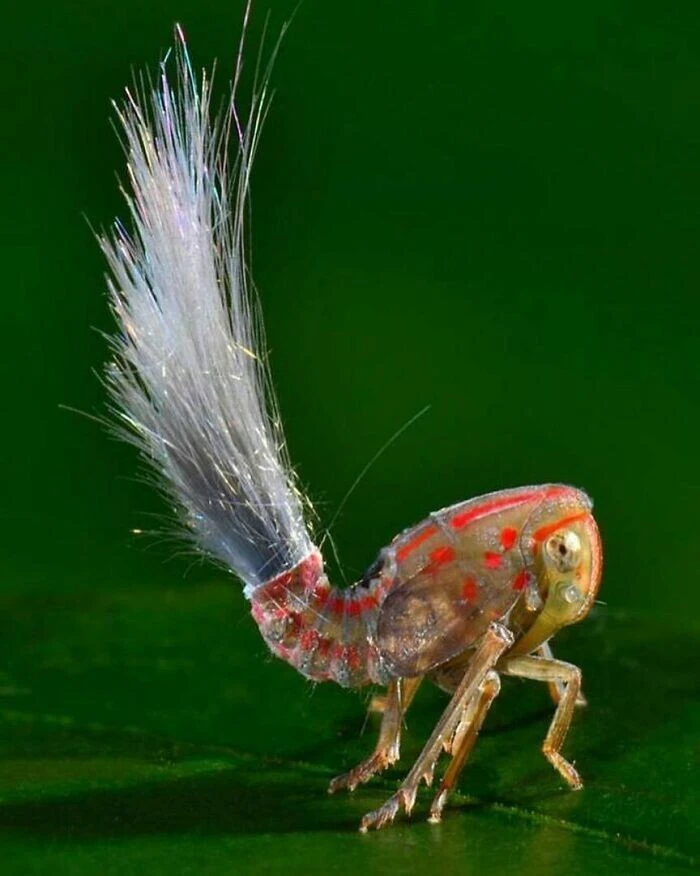
This troll-haired larva is one of the coolest creatures on the planet. The tiny unidentified creature, about 7 millimeters long, was found in the rainforests of Suriname by ecologists who discovered 60 new species during a research expedition in 2012. This photo was published in National Geographic magazine. According to biologist Trond Larsen, the wild hair is actually a waxy secretion from the larva's abdomen. Apparently, this is a defense mechanism to distract predators from its most vulnerable parts.
16. Striped tenrec (Hemicentetes semispinosus) 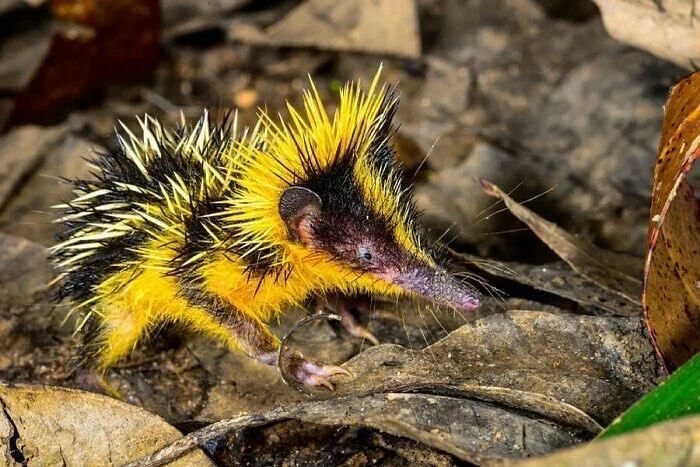
It is endemic to Madagascar and resembles a cross between a shrew and a hedgehog. The snout is long and pointed, and the fur has spikes. Striped tenrecs are distinguished by two main features: firstly, they have a rather long black nose, which is longer than that of other small insectivores, including hedgehogs, mice and shrews; another feature is a black coat with yellow stripes and bright yellow ridges on the spine, located above the head and acting as a means of self-defense against predators.
17. Big-eared fox (Otocyon megalotis) 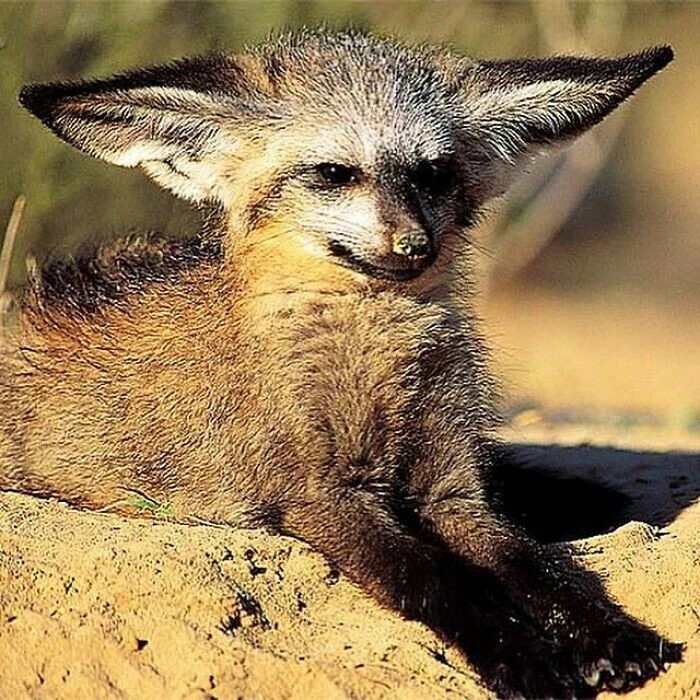
This species of fox lives in the African savanna. Their large ears are used for thermoregulation. Fossil studies have shown that the species first appeared in the Middle Pleistocene, about 800,000 years ago.
18. Capybara (Hydrochoerus hydrochaeris) 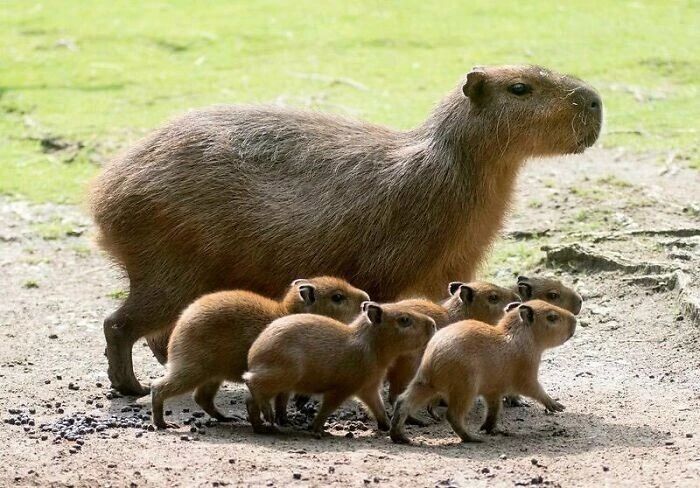
The capybara is the largest rodent in the world. Its close relatives are guinea pigs, and its more distant relatives are agoutis, chinchillas and nutria. The capybara is native to South America, inhabits savannas and dense forests and lives near bodies of water. They are a very social species and can be found in groups of up to 100 individuals, but capybaras usually live in groups of 10–20 individuals.
19. Axolotl (Ambystoma mexicanum) 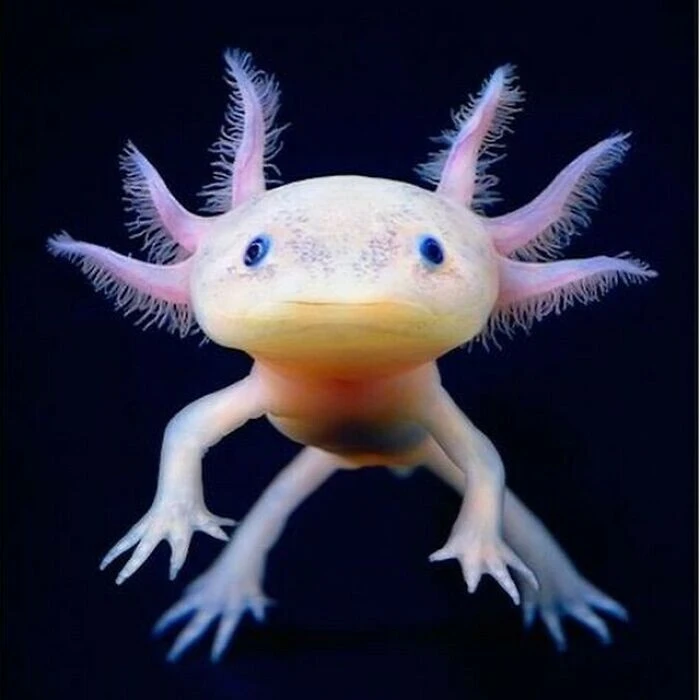
Axolotls are colloquially called “walking fish,” but they are not fish, but amphibians. More precisely, the axolotl is the larva of the Mexican or tiger ambystoma (Ambystomidae). The peculiarity of the axolotl is that it reaches sexual maturity and becomes capable of reproduction without turning into an adult form. It turns into an adult ambystoma when certain environmental conditions are met.
20. Emperor tamarin (Saguinus imperator) 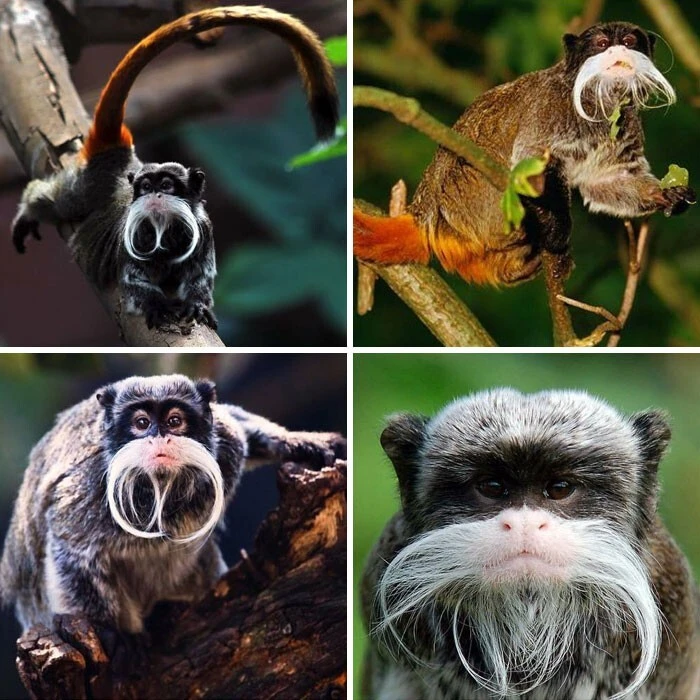
This species of primate is so named supposedly for its resemblance to the German Emperor Wilhelm II. It lives in the southwest of the Amazon basin, in the east of Peru, in the north of Bolivia and in the west of the Brazilian states of Acre and Amazonas. The fur of the imperial tamarin is predominantly gray with yellowish speckles on the chest. The paws are black and the tail is brown. Well, the most memorable feature is the long white mustache.
21. Salpa (Thaliacea) 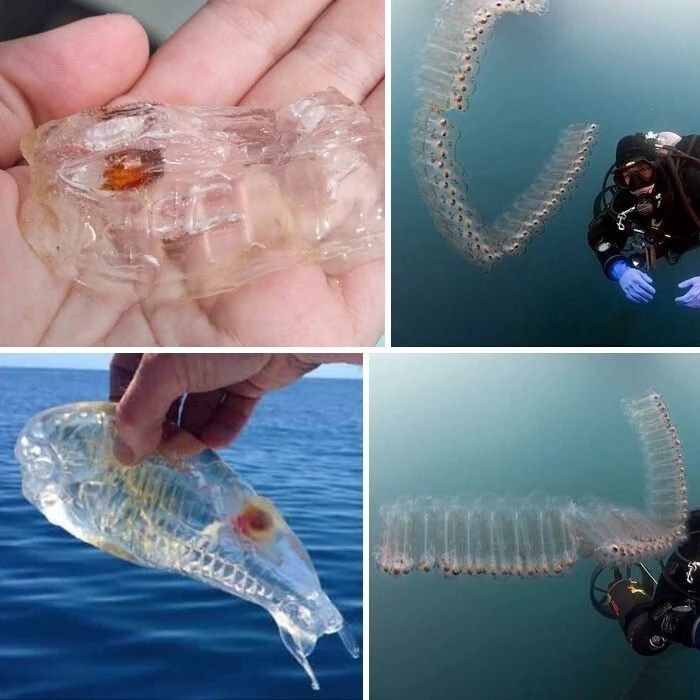
Salps belong to the class of tunicates, chordates that are found in seas around the world. They move by contracting and thus pumping water through their gelatinous body. The reactive movement of the salp is one of the most effective in the animal kingdom. The salpa filters the pumped water through internal feed filters, feeding on phytoplankton. These animals play a large role in the ecology of the sea.
22. Anglerfish (Lophius piscatorius) 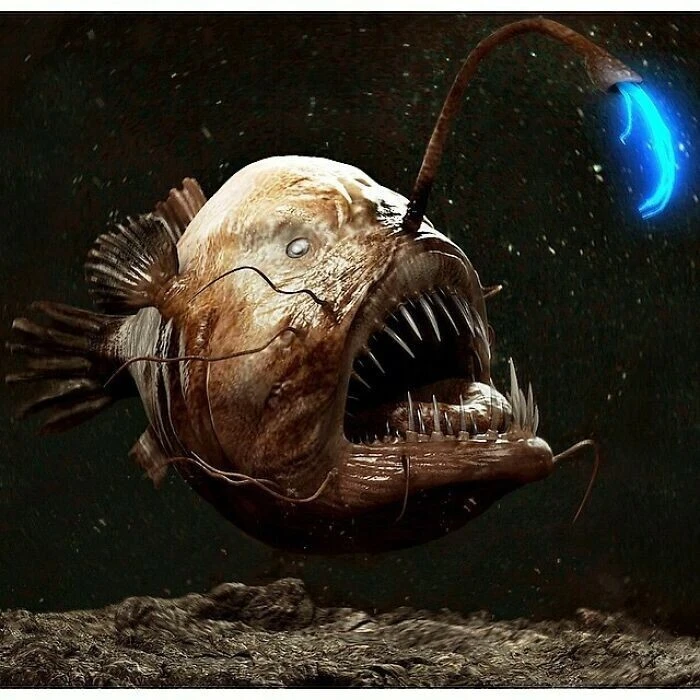
Anglerfish are perhaps one of the most fascinating and bizarre sea creatures known to man. This is an insidious predator, also called monkfish. They have quite unique mating habits. For example, when scientists first discovered anglerfish, they noticed that almost all of those observed were females... and that these specimens had what appeared to be a parasitic growth attached to their undersides. It turns out that these “parasites” were actually just greatly reduced male anglerfish. That is, the only goal of male anglerfish in life is to find a female and mate with her.
As soon as the males find a partner, they quickly dig into her skin and seem to merge with her, turning into a kind of growth. From this moment on, the male’s life literally depends on his mistress, since they have a common circulatory system. When the female is ready to mate, the male provides sperm for her to fertilize herself.
23. Darwin's pipistrelle (Ogcocephalus darwini) 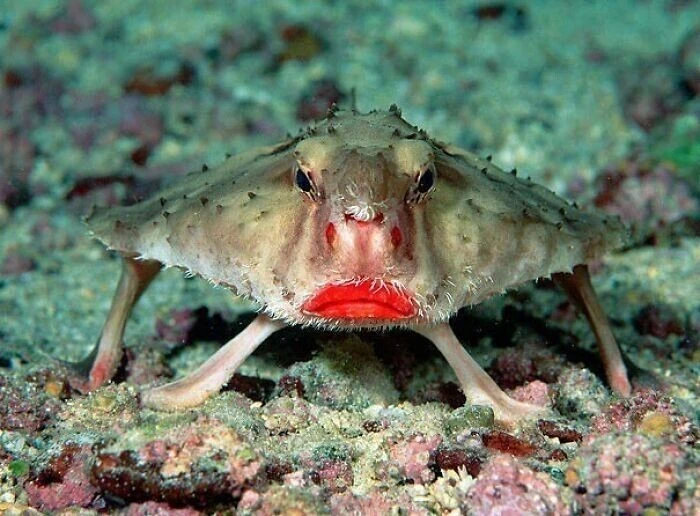
This fish lives off the coast of the Galapagos Islands at depths of 30 meters or more, and is mainly known for its bright red lips (hence why it is often called the red-lipped pipistrelle). Bats are poor swimmers; they use their well-adapted pectoral fins to “walk” along the ocean floor. When the pipistrelle reaches maturity, its dorsal fin becomes a single spine-like projection (thought to serve primarily as a lure for prey).
24. Venezuelan poodle moth (it has not yet been possible to identify the species) 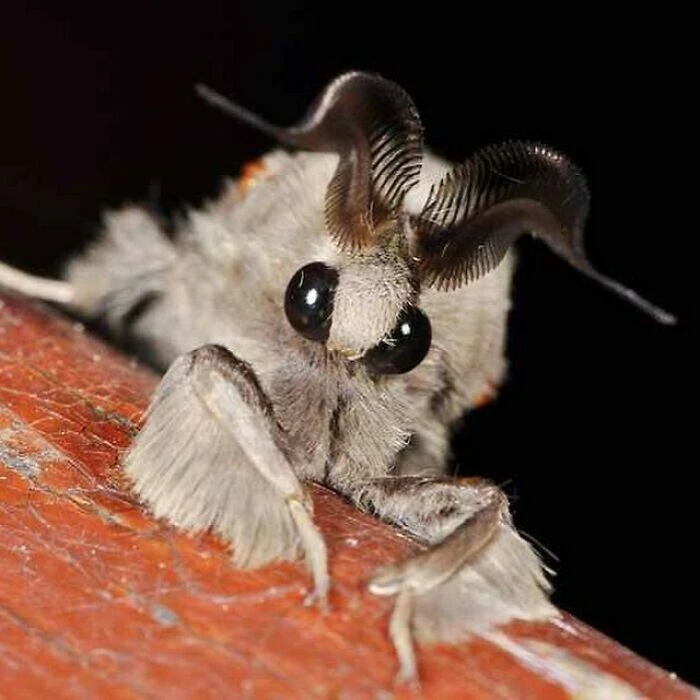
This photograph was taken in Canaima National Park in Venezuela and published by Kyrgyz zoologist Arthur Anker in 2009. Perhaps this is a new species of moth. It bears similarities to the muslin moth, but most likely belongs to the Lepidoptera genus Artace.
25. Madagascar bat (Daubentonia madagascariensis) 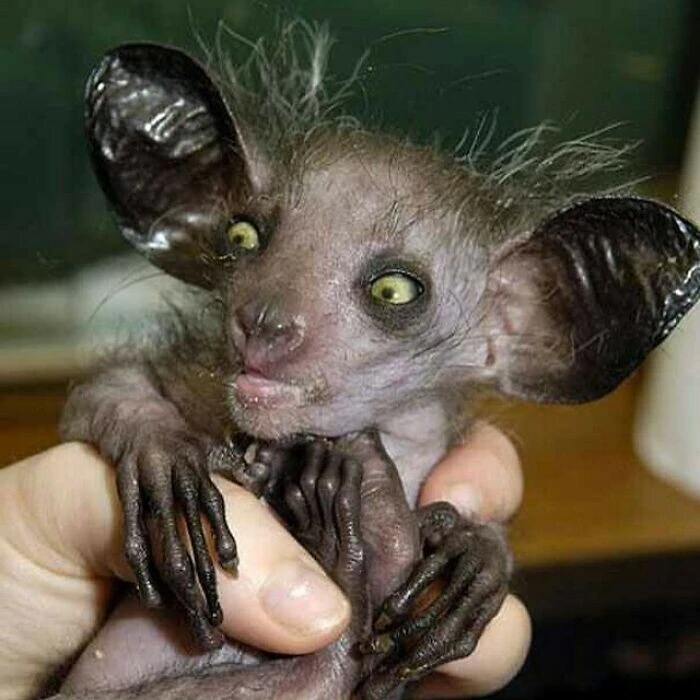
This primate is also called aye-aye or aye-aye. This creature, similar to a house elf, lives in the tropical forests of Madagascar and is nocturnal. The little arm has fluffy black-brown fur, a long tail and long thin toes. Why not Dobby?