10 incredible facts about the ocean (9 photos + 2 videos)
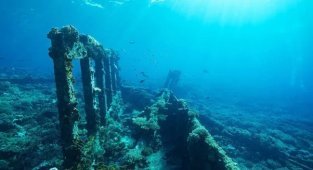
Since time immemorial, the ocean has played a key role in the course of human history, but despite this, much of the ocean depths remain unexplored - scientists believe that we have explored only 10% of the world's oceans so far. This fact leaves a lot to the imagination, but even the little that we already know and have seen is enough to inspire awe. 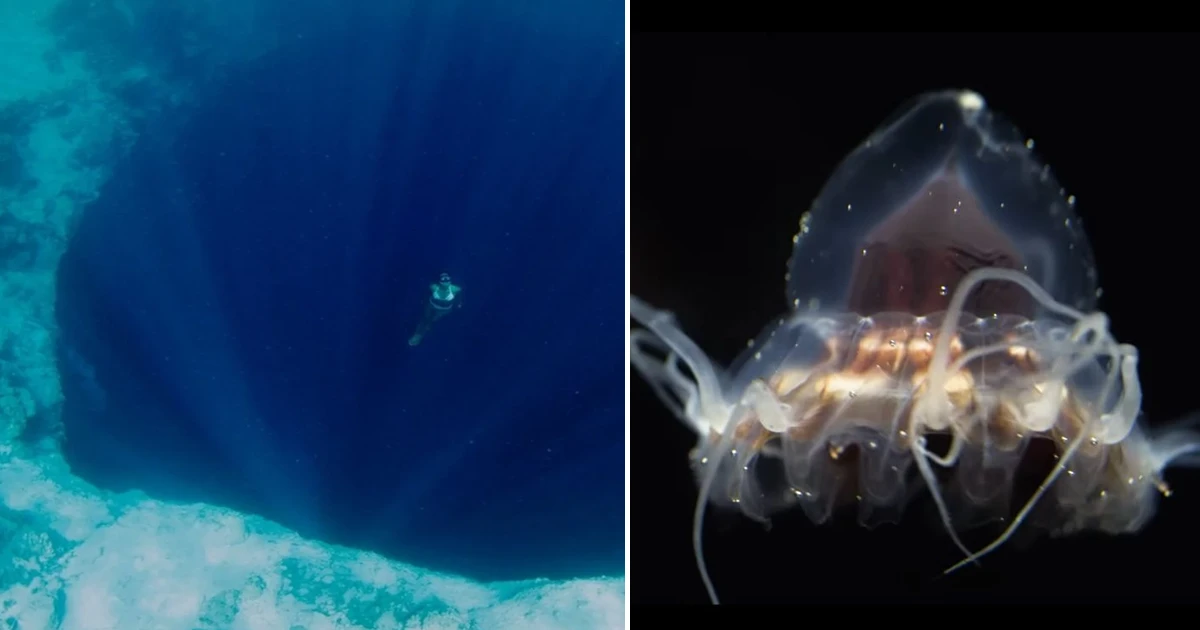
1. The Atlantic Ocean Continues to Rise 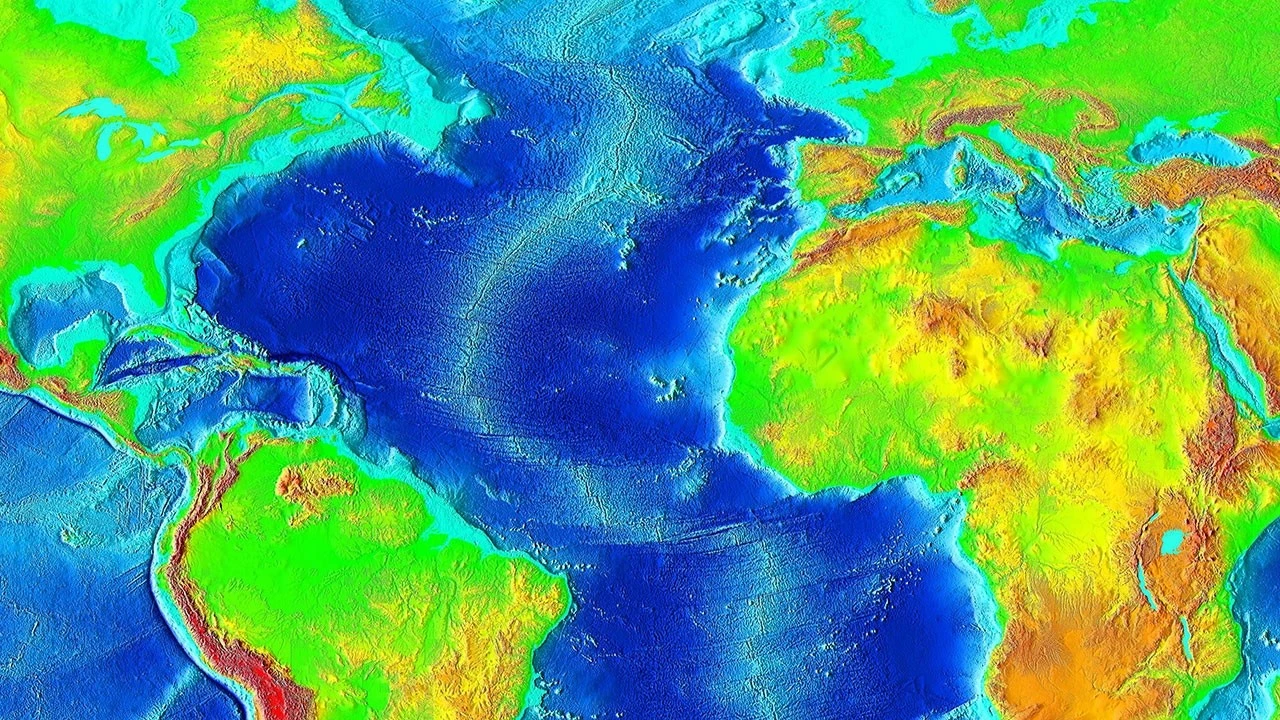
At the bottom of the ocean there is a huge crack in which the earth's crust is constantly renewed. Magma rises, then cools, pushing away older crust and leaving younger crust in its place. This rift is called the Mid-Atlantic Ridge, the separation point between the Eurasian and North American plates in the North Atlantic and the African and South American plates in the South Atlantic. Due to these divisions, the ridge expands up to 5 centimeters per year. And although the Mid-Atlantic Ridge boasts an impressive length (more than 16,000 kilometers!), it is only a small part of the global system of mid-ocean ridges. The system spans 65,000 kilometers, making it the largest geological feature on the planet and almost twice as long as Earth's equator.
In addition to volcanic eruptions and earthquakes, scientists have discovered extensive hydrothermal fields in the region with periodic releases of vent fluid that create underwater hot springs. Fortunately, parts of the Mid-Atlantic Ridge can be explored without diving to the depths. This mountain range sometimes reaches high enough to form volcanic islands - among them Ascension Island, Saint Helena and Iceland.
2. Challenger Deep 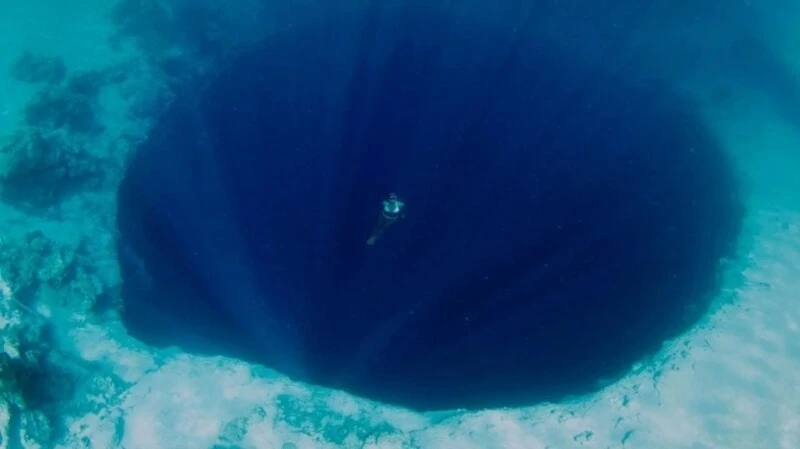
The Challenger Deep is located at the very bottom of the Mariana Trench. The maximum depth of the abyss is about 10,900 meters, which makes it the deepest point on Earth - the Grand Canyon and Everest combined could easily fit there. Until 2019, only three people had descended to the very bottom of the Challenger Deep. The first manned expedition took place in 1960; Then Don Walsh and Jacques Piccard became the first to conquer the Challenger Deep, and they spent about 30 minutes there. Fifty-two years later, James Cameron plunged alone into the abyss in the submarine he helped design. He explored the bottom for several hours and returned with a small sample of mud. More frequent expeditions began in 2019; including the dive by astronaut Catherine D. Sullivan and climber Vanessa O'Brien, who became the first women to descend to the bottom of the Abyss. The record for the number of dives into the Abyss belongs to Victor Vescovo, who made a total of fifteen descents. The most interesting fact that researchers have learned about the Challenger Deep is not the silent wasteland that Cameron described as featureless and devoid of life, except for small amphipods. In fact, as scientists have found, in the abyss there is constant noise from earthquakes, whales and ship propellers. And in its deep waters live very bizarre animals, such as dragon fish.
3. The ocean depths are scarier than infinite space 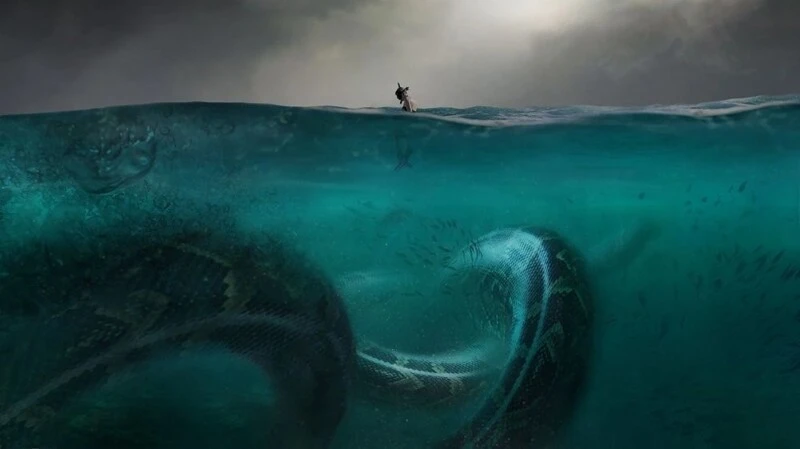
It’s not for nothing that almost 10% of the world’s population suffer from thalassophobia, the fear of the ocean: after all, the dangers that the ocean conceals can be literally under your feet. But are the ocean depths really scarier than space? According to experts... Yes, much worse! Summer Ash, an astrophysicist at Columbia University, said: “The ocean is much scarier! In space it’s only physics that wants to kill you, but in the ocean it’s about physics PLUS biology!” The pressure at the deepest part of the ocean is 1086 bar, more than 1000 times the standard atmospheric pressure at sea level. In simple terms: imagine a giant elephant and put all its weight on your thumb. And even if you remove the pressure, something else will definitely kill you in the ocean depths: you can’t drink the water, it will cause hypothermia, and most marine life will easily send you straight to a watery grave. To sum it up, space is deadly and will kill you instantly; but the ocean can kill you either quickly or slowly, first by sadistically giving you false hope.
4. Secret underwater rivers
Imagine your surprise if you came across a real river underwater while scuba diving. And this is exactly what happened to Anatoly Beloshchin and his friends when they were diving in Mexico. Dubbed the Cenote Angelita, this underwater river is located near Tulum, Mexico, and believe it or not, just like a real river, it flows along the seabed and is filled with trees and leaves. And this is not the only case: divers around the world have found underwater rivers, from the coast of Portugal to Australia. For example, a team of researchers led by Dr Dan Parson from the University of Leeds also discovered a similar river at the bottom of the Black Sea.
5. Twilight Zone in the Ocean
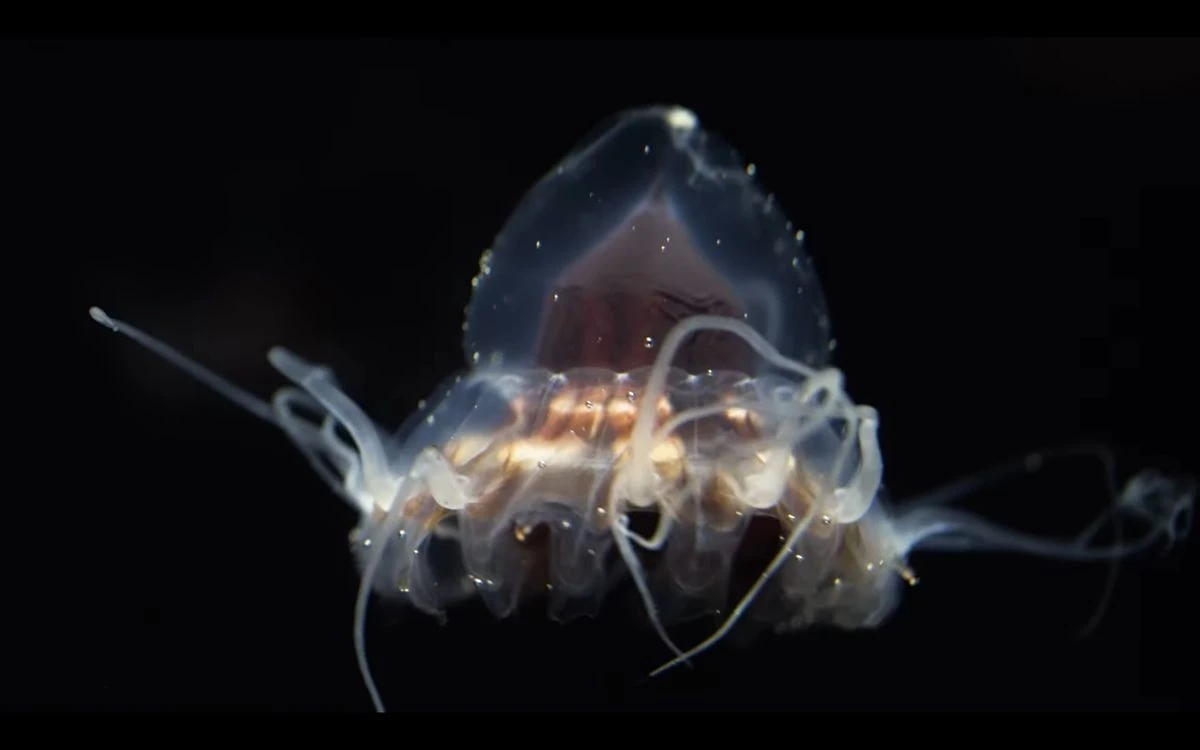
Between 200 and 1070 meters below the ocean surface is the true “twilight zone.” It is a dark and cold landscape where sunlight fades and secrets thrive. The Ocean Twilight Zone Project attempts to unlock the secrets of this oceanic zone that showcases nature's ingenuity. Because there is so little light here, many native creatures create their own light to attract food, as in Finding Nemo; others use bioluminescence for protection, and some species have evolved counter-illumination to avoid being noticed. According to some studies, this "twilight zone" may contain more fish biomass than the rest of the ocean combined. The twilight zone is an important part of the global climate process, and studying it can shed light on the cycling of water, nutrients and carbon.
6. The ocean is the largest thermostat in the world
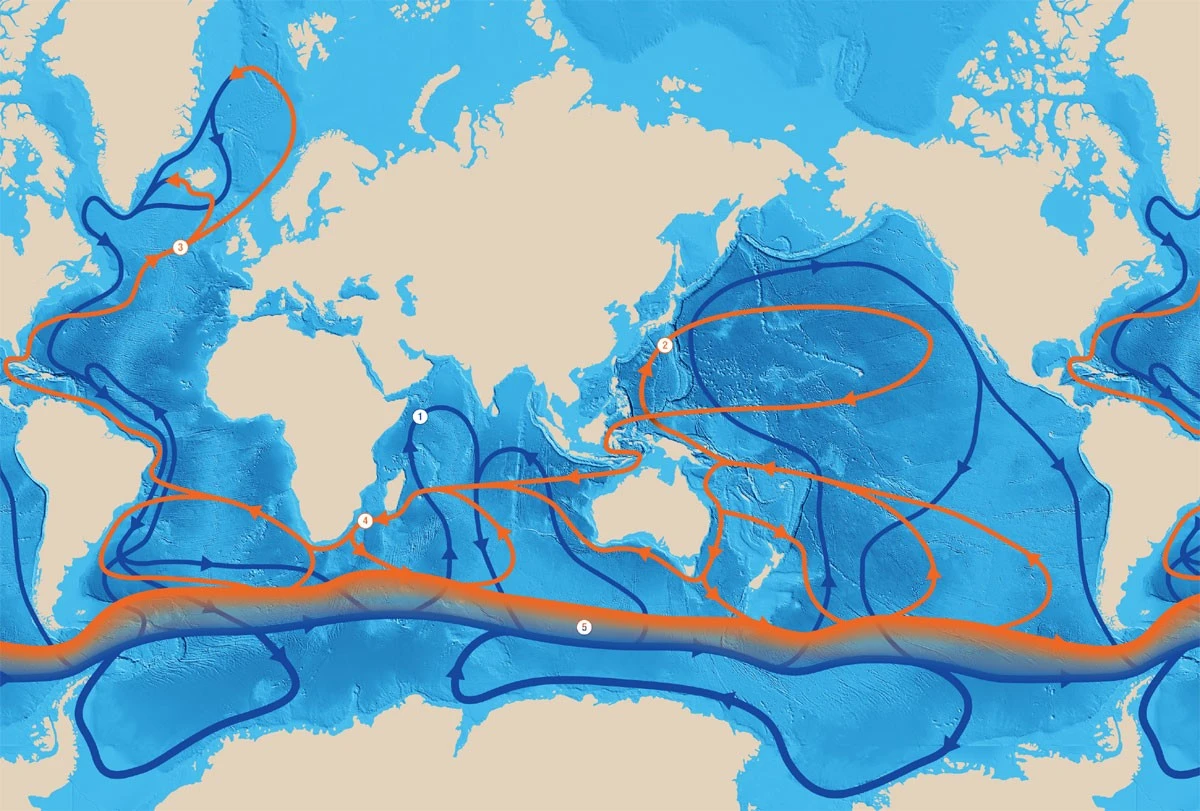
The ocean plays an incredibly important role in maintaining the Earth's temperature. Think of the water as a huge heat-storing solar panel, absorbing and dissipating solar energy, especially in tropical waters along the equator. Meanwhile, the earth and atmosphere help retain heat, preventing it from escaping into space after sunset.
But the ocean doesn't just store heat like a giant water furnace—it's a master at sharing it with the world, since almost all rain begins its journey as ocean steam. It's no wonder that the tropics receive so much rain - this is where ocean heat absorption and evaporation peaks.
Ocean currents, in turn, play a central role in shaping weather conditions. These currents are caused by surface winds, temperature differences, the Earth's rotation, and even the Moon's gravity contouring coastlines. Acting like a conveyor belt, these currents carry warm water and precipitation from the equator to the poles, and return cold water back to the tropical regions to start the cycle again. Without these ocean currents, our world would be a realm of extremes, with scorching equatorial temperatures and icy polar cold that would render much of the Earth uninhabitable.
7. There is no one richer than the ocean
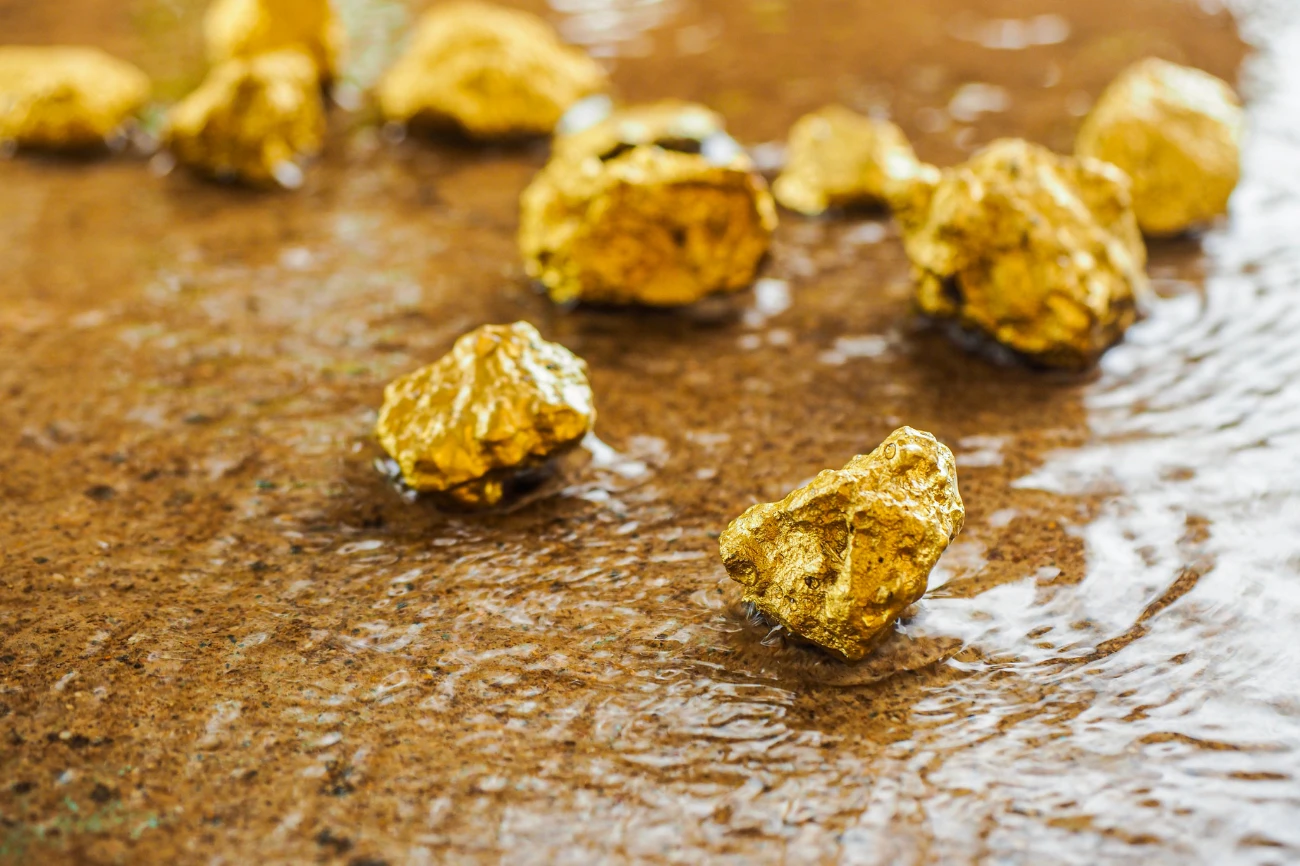
It is estimated that about 20 million tons of gold are hidden in the depths of the ocean. But before you start making plans for this fortune, keep in mind that getting it is not an easy job. If that were the case, every government in the world would have tried it by now. It's so difficult to access because the gold hiding in the ocean exists in minute concentrations on the part-per-trillion scale. By comparison, each liter of seawater contains only 13 billionths of a gram of gold. If this gold could be extracted and sold, it would be a staggering sum - something out of Scrooge McDuck's series of riches. But let's face it, none of us will get these ocean riches anytime soon.
8. Mysterious "bloop"
In 1997, researchers monitoring volcanic activity in the South Pacific using hydrophones located 3,300 kilometers apart detected an extremely loud and strange sound. This sound became known as the "Bloop" and left the scientific community both delighted and perplexed. The "Bloop" has sparked many conspiracies and theories, with some suggesting it was a secret underwater military exercise or the sounds of huge underwater ships. Others believe they were giant cephalopods or other undiscovered sea creatures. Scientists installed more hydrophones over the next eight years as they heard increasingly frequent sounds. Eventually, they tracked the Bloop, and the source turned out to be not mythical beasts or secret technology, but something completely natural - an icequake.
9. The Coriolis effect is not a myth
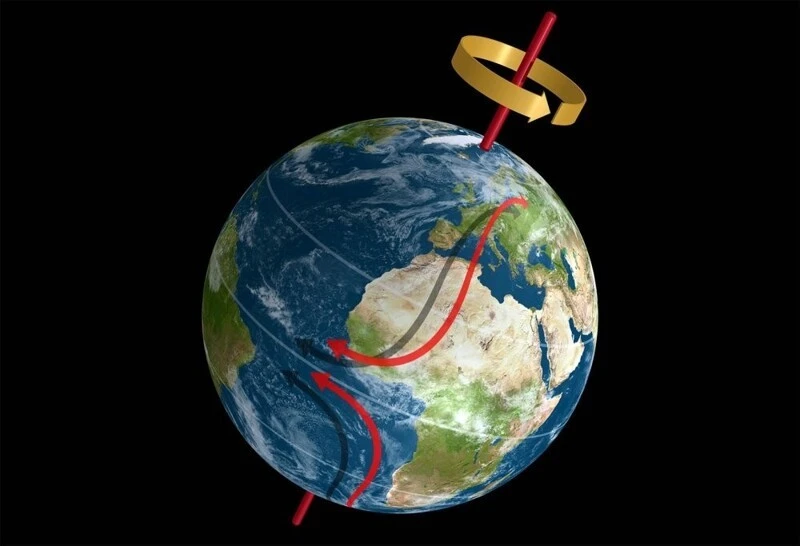
When objects such as air or water move across the surface of the earth, they appear to bend rather than move in a straight line. This happens because different areas of the earth's surface rotate at different speeds - essentially a merry-go-round effect on a much larger scale. In the Northern Hemisphere, objects moving north bend to the right, while in the Southern Hemisphere they bend to the left. The curvature is caused by their speed relative to the surface changing as the objects move across the rotating planet. This curvature is the Coriolis effect. The Coriolis effect has important consequences - it influences global winds by creating prevailing winds such as trade winds and westerlies. It also affects ocean currents and even the flight paths of aircraft. Understanding the effect helps us navigate the dynamic systems of our planet.
10. The ocean is a keeper of garbage
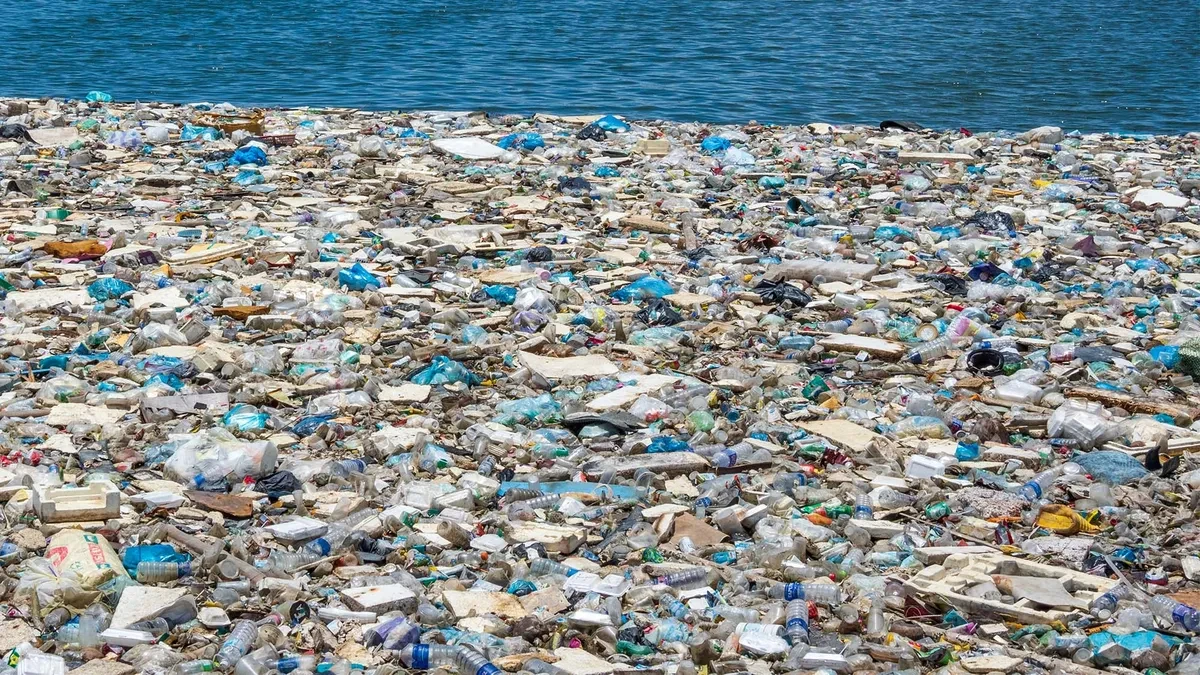
You've probably heard of the Great Pacific Garbage Patch (GPGP) between Hawaii and California, the largest of the five plastic accumulation zones found in our oceans. Every year, up to 2.66 million tons of plastic ends up in the sea, and more than half of it never makes it to the bottom. This debris floats slowly until it eventually joins a slow vortex of debris. The spot stretched over 1.6 million square kilometers, dwarfing the size of Texas and France combined. Many organizations are working to clean it up, but the amount of trash added every year makes it a never-ending battle. Luckily, earlier this year, scientists in Australia discovered a mold that can break down plastic in 140 days. I would like to believe that humanity will be able to use this discovery to benefit.