An asteroid with a diameter of 10 km fell on our planet approximately 65 million years ago. This fall sentenced the dinosaurs to death and radically changed the direction of earthly evolution. What if an asteroid crashes to Earth now? 
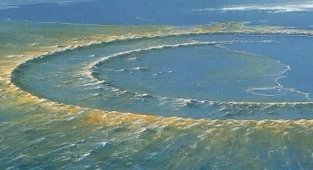
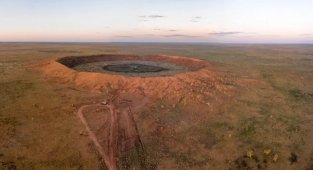
The same asteroid crashed where the Chicxulub impact crater (Mexico) is now located. The impact energy was 100 teratons in TNT equivalent. The heat generated as a result of this disaster evaporated not only part of the asteroid, but also part of the earth's crust, forming a crater 100 km in diameter. 
Chicxulub
About 15 thousand square km of rocks, sulfur compounds and carbon dioxide were released into the atmosphere. Forest fires started, resulting in large emissions of carbon monoxide and soot.
There was an earthquake all over the planet. Hundred-meter tsunami waves washed away coastal areas. But soot became the main problem - it completely obscured the Sun. On land, air temperatures dropped by 26°C, and in the ocean by 12°C. Global temperature on the planet has dropped to +2°C.
The almost complete absence of light led to the death of plants and a general decrease in oxygen concentration. Since plants and phytoplankton died, many herbivores died out first, followed by predators. That is, about 70% of animal species, including almost all dinosaurs and sea reptiles. 
Today, technology can calculate the probability of an asteroid hitting Earth several months before the event. This is enough for part of society to hide in “salvation capsules”, where there is a supply of seeds and food. It is possible that to prevent panic, data about the disaster will be hidden. Yes, amateur astronomers can spread this news via the Internet, but who will believe them... 
And only a couple of days before the disaster, people will be able to understand what threatens them when the asteroid is visible in the sky. Three hours before the collision, the asteroid will be visible not only during the day, but also at night.
When the asteroid hits the surface, those thousands of kilometers from the impact site will feel tremors. In a few hours there will be a roar twice the pain threshold. Then the hurricane will come. Tsunamis, forest fires, absolute darkness at night and harsh winters are what will happen in the coming years. Cities and villages with many people will most likely simply disappear.
Approximately 90% of the population will die from hunger and disease. But part of the population will be able to survive and return to civilization when the climate returns to normal. Animals and plants will live on the planet again. 
Still from the movie "Don't Look Up"
66 million years ago, about two-thirds of all species became extinct, but overall, only 18% of land animals died. The real catastrophe was the Permian Mass Extinction, which occurred 250 million years ago. On our planet, 73% of terrestrial and 96% of aquatic creatures then became extinct. 
Will the apocalypse come?
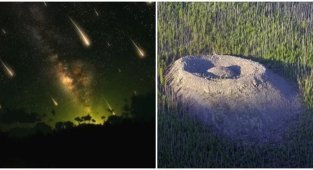
NASA employees claim that space objects fall to Earth every day - from very small grains of sand to meteorites with a diameter of about a meter. Approximately 30 celestial bodies reach the Earth's surface each year. Real asteroids that can cause problems, with a diameter of up to 20 meters, can fall no more often than once every hundred years. A recent example is the asteroid that fell on Chelyabinsk in 2013.
But objects up to 100 meters hit the Earth once every thousand years.
Well, those meteorites that can lead to a real apocalypse fall once every 100 million years. It turns out that the Earth and its inhabitants have about 30-35 million years. Even if this happens, we definitely won’t see it. And who knows what will happen to humanity there, because humanity already has pressing environmental problems that require solutions here and now.
0 comments