The rarest natural phenomena. Top 10 . Interesting facts (12 photos + 1 video)
Hi all!
The weather can be good or bad, or it can be amazing. Fire tornadoes, lunar rainbows and volcanic lightning are just some of the real-life phenomena that happen on Earth every now and then. We present to you the top 10 rarest natural phenomena that are found in different parts of our planet. 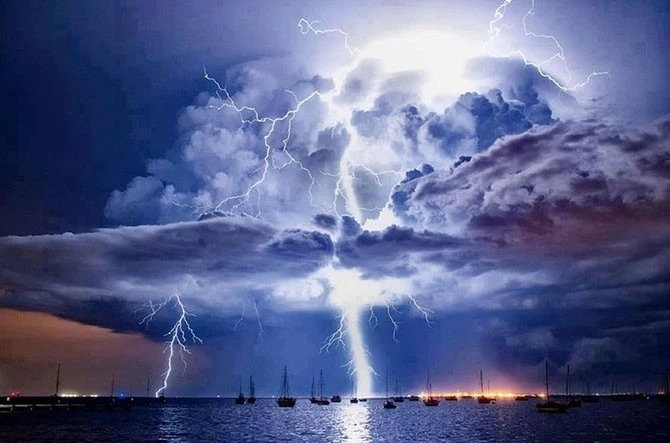
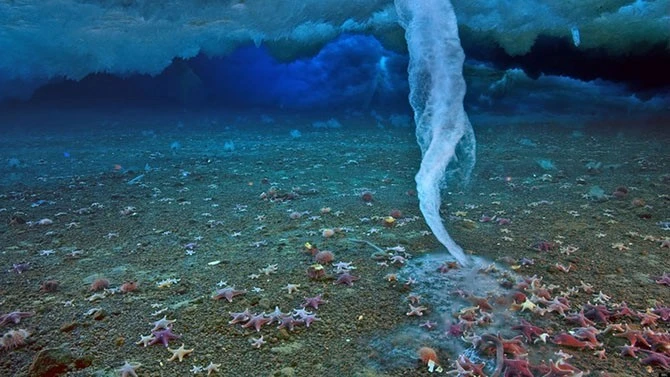
Brainicle (finger of death)
We are used to seeing icicles hanging from roofs. However, in the Arctic there are special icicles that hang under water and pose a mortal danger. This phenomenon was discovered almost 30 years ago, but the process of its birth was only filmed in 2011 by a BBC team.
Having reached the bottom, the funnel does not stop, but continues to spread along the bottom. In 15 minutes, such a structure is capable of destroying all living organisms over an area of several meters. This is why it was called the “icy finger of death.”
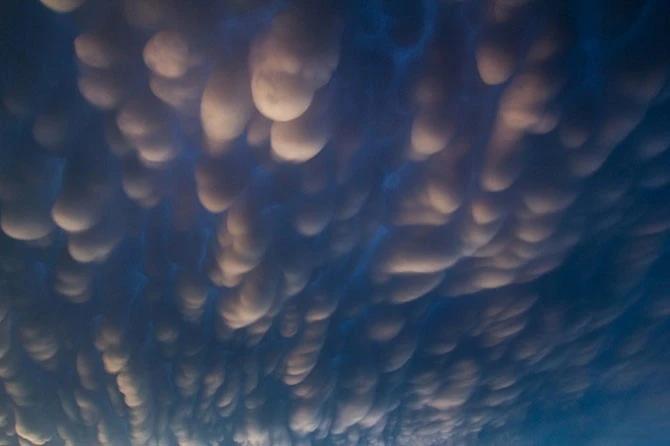
Tubular clouds
There are a large number of clouds that have a special shape and special reasons for their occurrence. Tubular clouds look strange and unusual. They look either like sections of pipes, or like many suspended balls, the shade of which varies from white to blue-gray. Cloud pockets begin to form in the atmosphere, filled with large droplets of water or even ice crystals, which literally fall into the clean air under their weight.
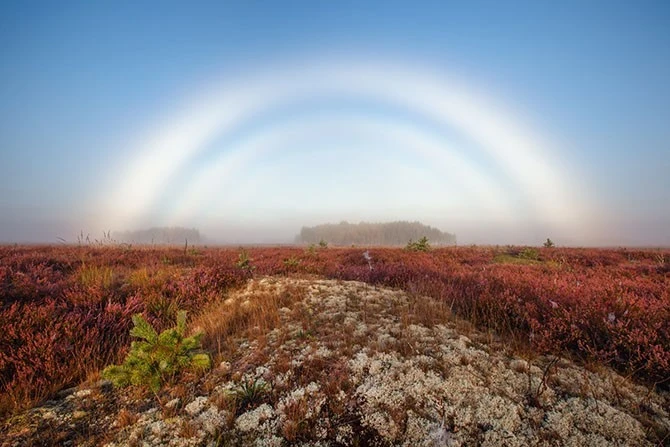
Misty Rainbow
A hazy rainbow is another optical phenomenon in the atmosphere, similar to the well-known rainbow. It is formed as a result of diffraction of light and water droplets measuring about 0.02 millimeters. Accordingly, it can only be seen during fog.
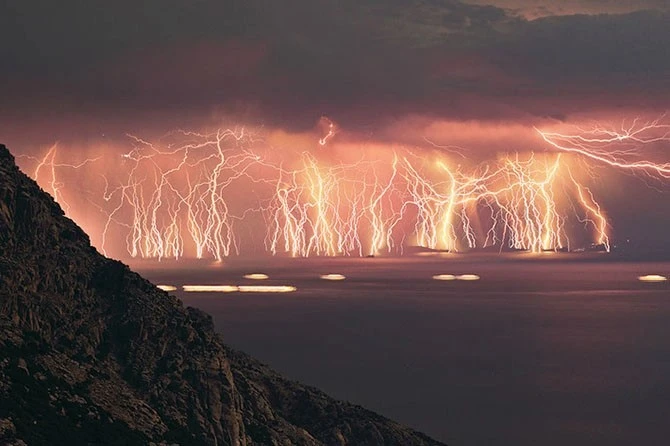
Catatumbo Lightning
Catatumbo lightning is a natural phenomenon that occurs in northwestern Venezuela, where the river of the same name flows into Lake Maracaibo. This is where warm Caribbean air meets methane from nearby swamps. As a result, lightning occurs, which strikes approximately 200 days a year, and continuous thunderstorm sessions last about 10 hours.
For a long time, this place served as a landmark for sailors - it can be seen from a distance of more than 400 kilometers. It is believed to be the largest natural ozone generator.
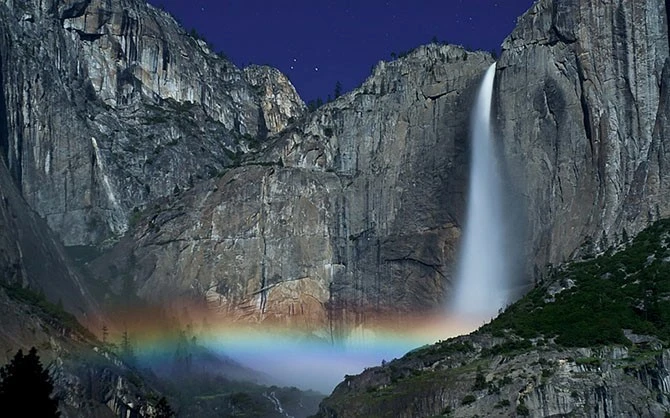
Moon Rainbow
This phenomenon is much easier to see in a fantasy quest than in reality. Many factors are required: the full Moon must be low, the sky must be dark, and a powerful waterfall must be located opposite the luminary. Due to human physiology, only a white rainbow can be seen. This is where a modern camera that shoots at long exposures can come to the rescue.
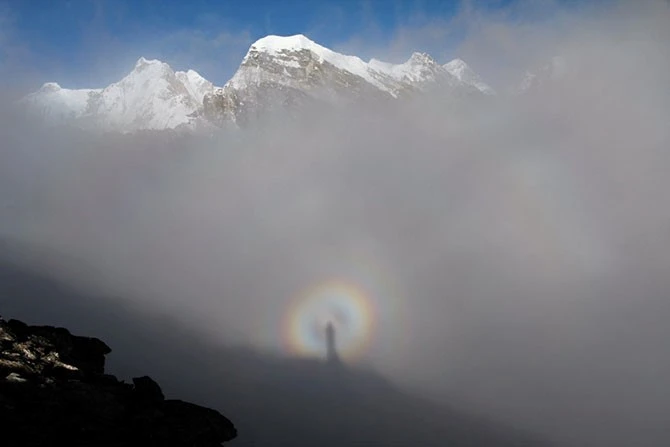
Gloria
Gloria is another phenomenon associated with the diffraction of light in cloud or fog droplets. This weather phenomenon can only be detected when the light source is behind you and the light reflected from the cloud returns directly to the observer.
The rainbow halo around one's own shadow was interpreted by Buddhists as the degree of human enlightenment.
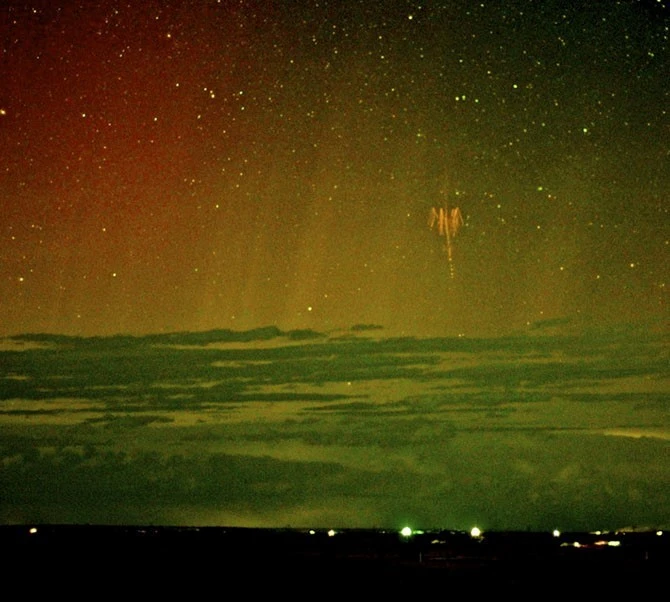
Heavenly Flares
In addition to the lightning that we see from Earth, powerful flashes directed into space occur above thunderclouds. They are characterized by a distinct blue or red color and cover distances of up to 100 kilometers in length.
From the ground, flares can only be observed at low altitudes. They are currently being studied from the ISS.
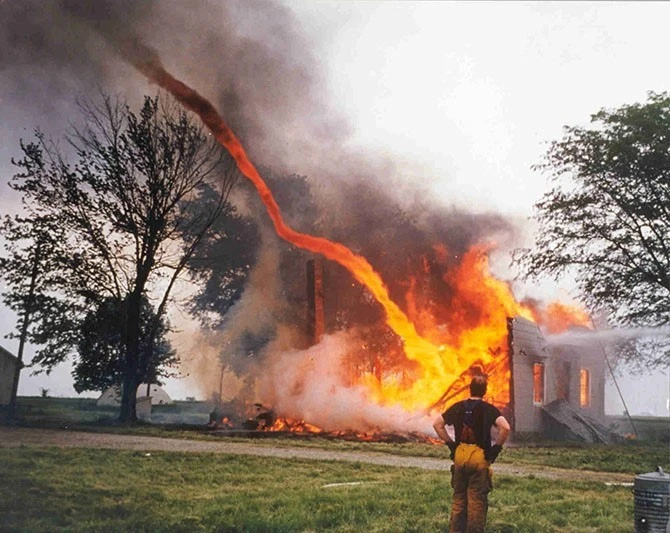
Fire tornado
This natural phenomenon occurs when a column of hot, rising air interacts with or causes a fire on the ground. A fire tornado is a vertical whirlpool of fire in the air.
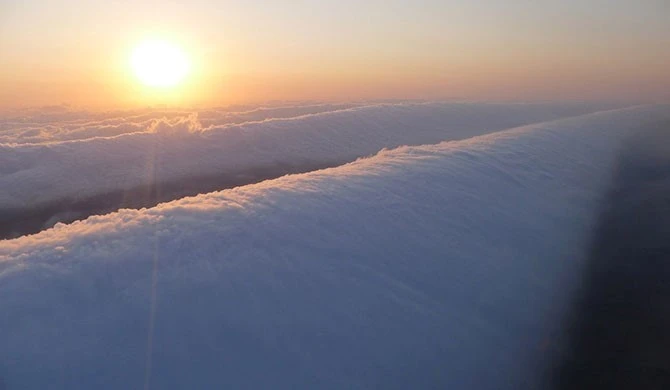
Morning Glory
Morning glory is a rare meteorological phenomenon that forms on the border of an advancing cold front. The cloud is up to 1000 kilometers long and rotates around a longitudinal axis. Its rolling speed can reach 60 kilometers per hour.
Morning Glory looks like a tornado that lies on its side.
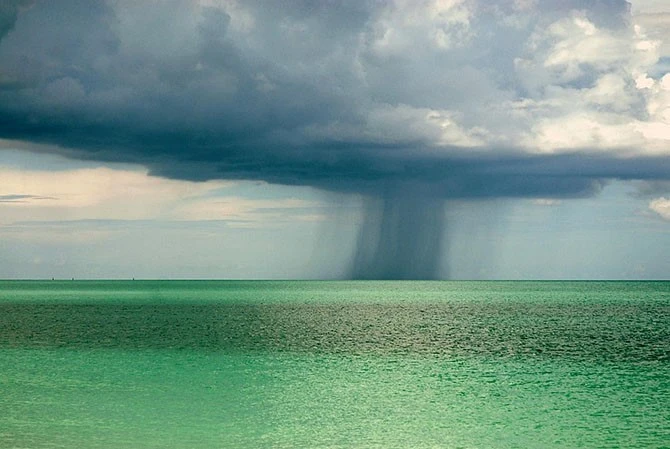
Waterspout
Waterspouts look like small tornadoes made of water. Although from the outside it may seem that liquid is literally being sucked out of the water, the tornado is located above the surface and consists of droplets of water formed by condensation.
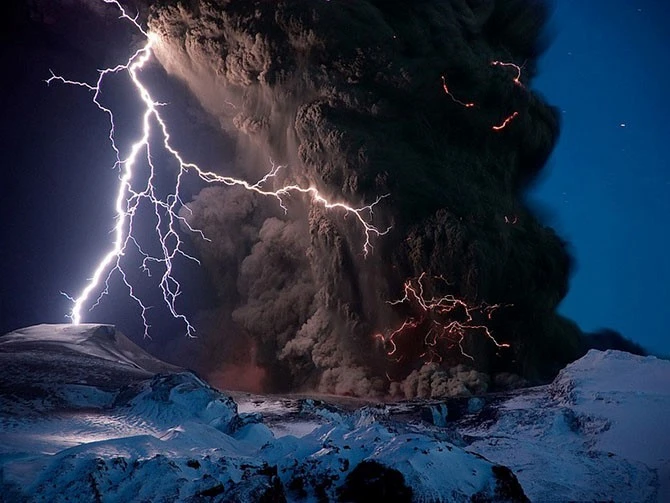
Volcanic lightning
Volcanic activity provides a very fertile environment for spectacular discharges, in several ways. Two types of such lightning are observed: 1) striking from the crater and associated with electrical processes in the magma, 2) occurring in the clouds and associated with the friction of volcanic ash.
Due to the large number of particulate volcanic ash particles, such thunderstorms are also called dirty thunderstorms.