The study of the ocean is one of the most interesting areas of science that humanity is currently developing. According to various estimates, scientists have managed to explore from 5 to 10% of the total area of the world's oceans, and so far people can only guess about who lives on the bottom of the ocean and how many new secrets we will have to study. 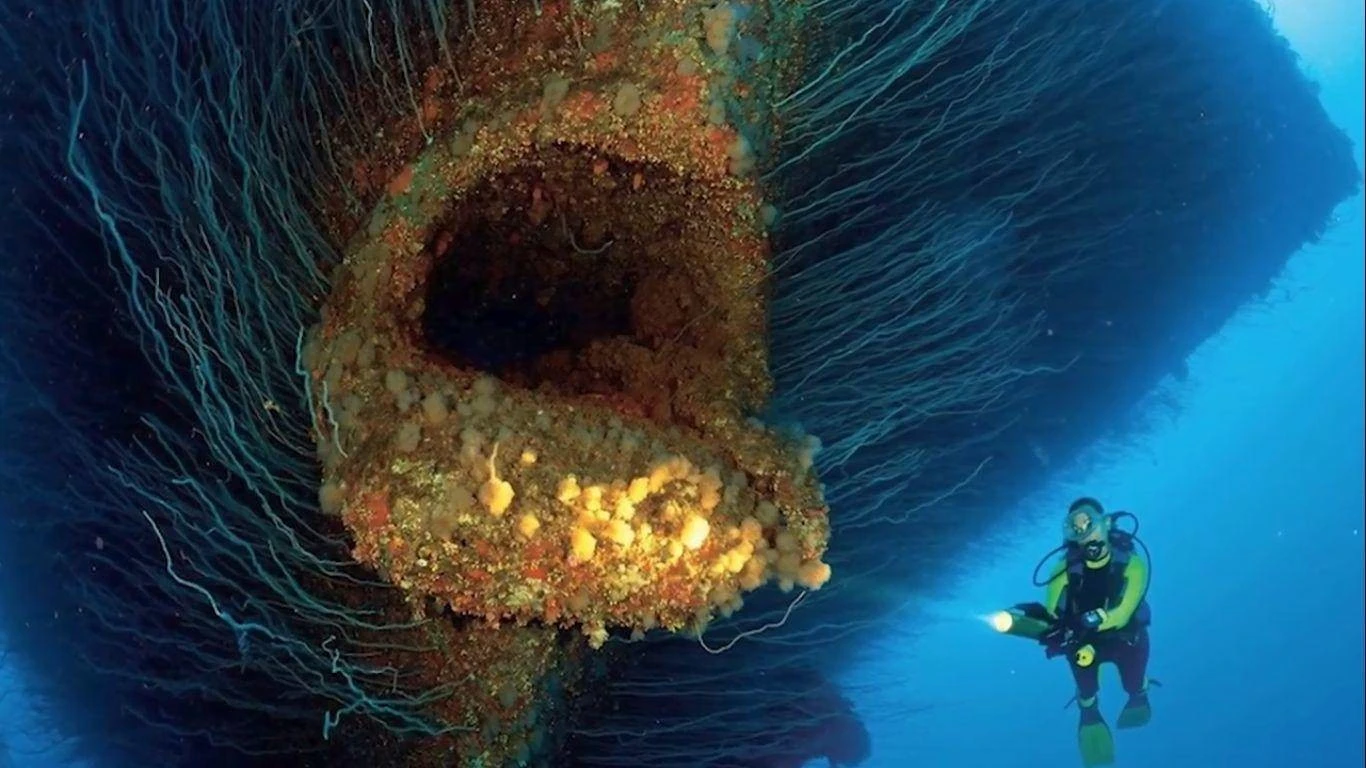
However, even the available information is not always clear to scientists and remains a mystery to them, because they still cannot understand some phenomena!
How is the Turritopsis dohrnii jellyfish able to live forever?
Typically, the life path of animals is a sequence: birth, growth, development, maturation, aging and death. However, the tiny jellyfish Turritopsis dohrnii, only 4.5 mm long, defies these patterns.
When an adult specimen decides that its life is becoming tiresome, it simply... transforms itself back into a young polyp. It matures again, reproduces, and then returns to being an independent, free-swimming jellyfish. 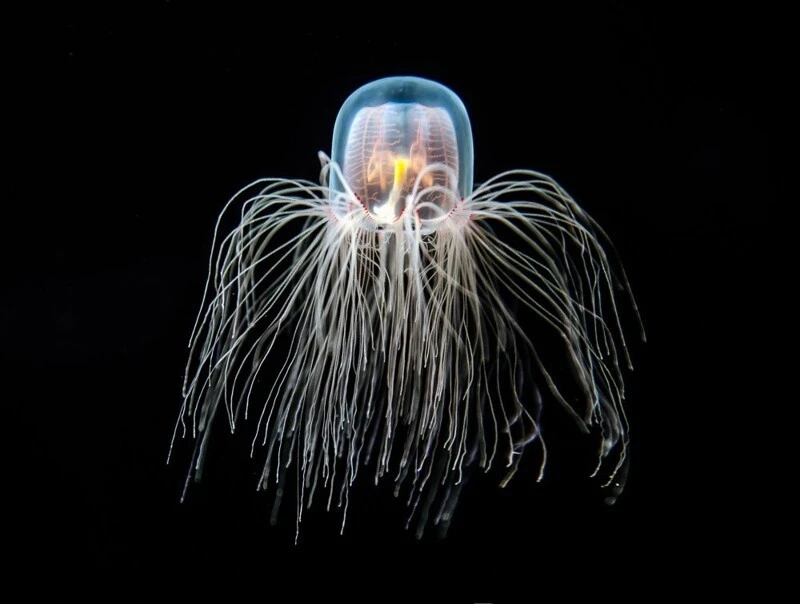
The number of times a jellyfish can repeat such a cycle has not yet been determined by scientists. It must be recognized that we are faced with a possibly immortal being.
It is not yet clear how the jellyfish manages to reverse its life process. It is only known that the jellyfish turns to the process of rejuvenation when the environment becomes unfavorable: hunger, sharp fluctuations in salinity and water temperature, injury, etc.
Perhaps if scientists manage to uncover the mechanisms of jellyfish rejuvenation, this could help people live longer and recover from serious injuries.
Mysterious whistle from the bottom
The US National Oceanic and Atmospheric Administration continuously records strange sounds emanating from the ocean floor. Most of them are explained by natural phenomena: for example, a giant iceberg sliding along the bottom, or a group of whales starting to cough together. However, sometimes very anomalous phenomena occur.
For example, in the region of the equator of the Pacific Ocean, a sound recorded by hydrophones is periodically heard, which scientists call Upsweep. 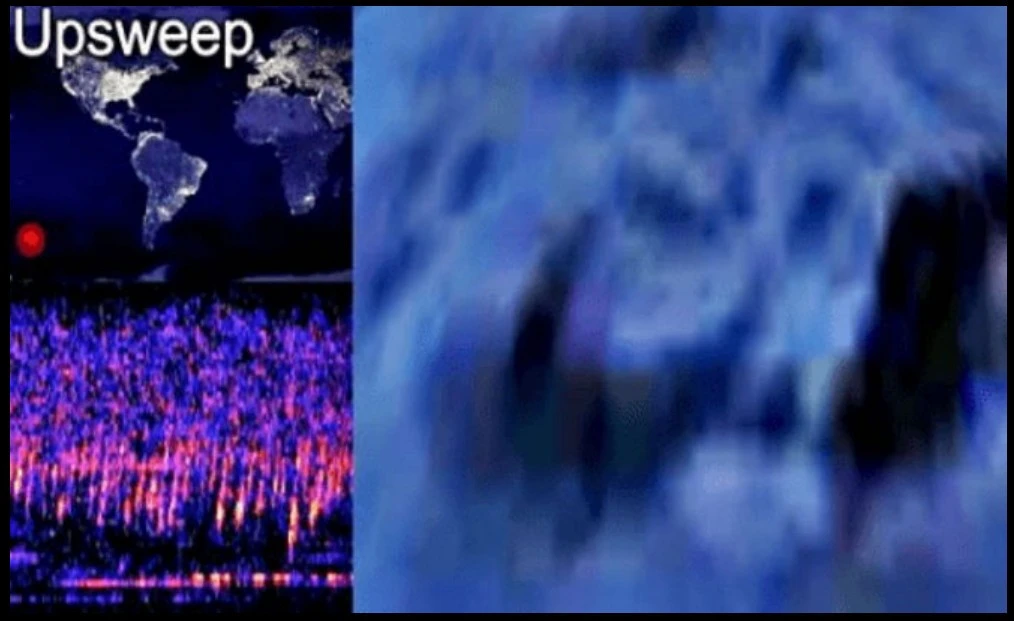
This sound was first recorded in 1991 by oceanographers from the Pacific Marine Environmental Research Laboratory. The phenomenon is seasonal, reaching a peak in spring and autumn. The origin of this sound remains a mystery.
Another mysterious sound sometimes heard at the bottom of the ocean is the so-called “Whistle”. The first recordings of this sound appeared in 1997, but the source of the noise could not be discovered. Scientists suggest that such a whistle can be produced by a structure similar in shape to a volcano.
The reason giants live on the seabed.
There is a scientific concept called “deep-sea gigantism,” which explains the tendency of marine life living in the dark ocean depths to increase in size. Indeed, some of these organisms are incredibly large! 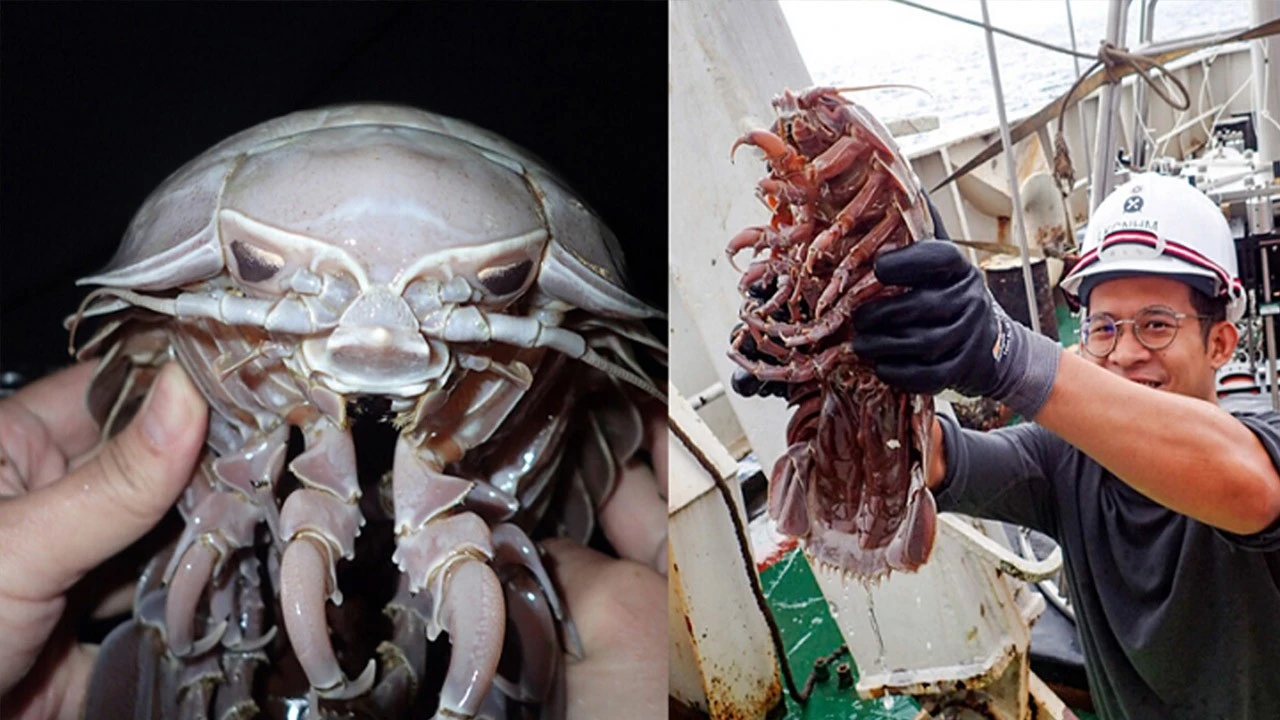
For example, the giant isopod crayfish is a relative of terrestrial woodlice, but measures up to 45 centimeters and weighs up to 1.7 kilograms. Giant isopods can reach 76 centimeters in length. The belt fish, or king oar, can measure up to 11 meters and weigh up to 270 kilograms.
The giant squid is up to 13 meters long and can capsize a boat. Various Japanese spider crabs (with a front leg span of up to 3 meters) and giant amphipods (crayfish up to 34 centimeters long) also cause fear with their appearance. Large red jellyfish and hairy cyanides with two-meter domes resemble aliens from other planets.
It is not yet clear why animals on the seabed increase in size so much. One hypothesis is related to the lack of food - the larger the body, the more efficiently plankton is caught. Another theory concerns the lack of predators, which have difficulty hunting at such depths. 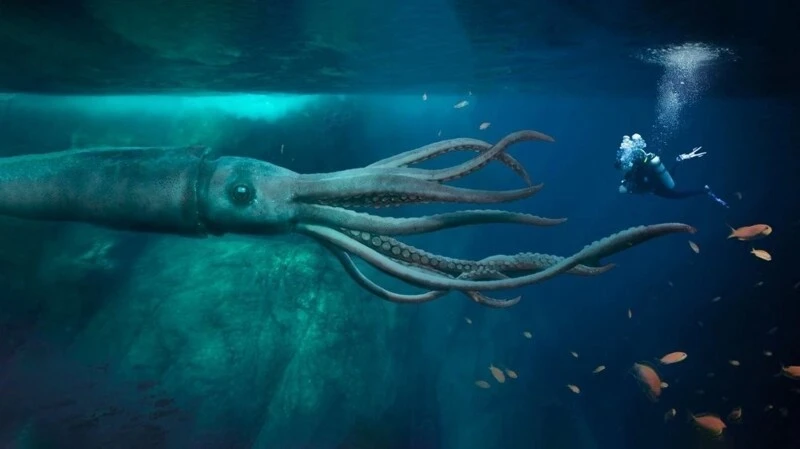
It is also assumed that at depth, oxygen in water is contained in more concentrated volumes, which facilitates its absorption and improves metabolism. It is possible that low temperatures cause organisms to increase their size in order to retain heat more efficiently.
Causes of whale strandings.
Whales and other cetaceans periodically find themselves stranded on harsh rocks or beaches, thrown out of their normal habitat, where they die.
On land, whales and dolphins typically die from dehydration, when body weight not supported by the surrounding aquatic environment compresses their lungs. Some simply drown due to the tide when water fills their airways. 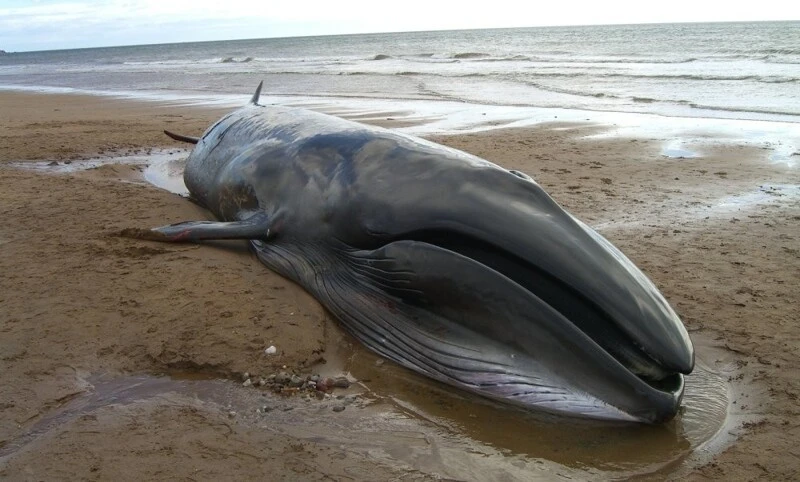
The reasons why cetaceans decide to perform such actions remain a mystery. Perhaps they are prompted to do this by unfavorable temperature conditions or geomagnetic changes, or the built-in sonar in the whale's brain is not working properly.
There are also speculations that animals lose their minds when they hear the active sonar of ships passing by. However, whales washed ashore long before the invention of shipbuilding by man, so the latter hypothesis is unlikely.
What do narwhals use their tusks for?
The narwhal belongs to the cetacean family, prefers to eat fish and cephalopods because of their taste and nutritional value, lives in the cold water of the Arctic seas and tries to avoid contact with polar bears and killer whales. In general, the creature is simple-minded, if not for one nuance. 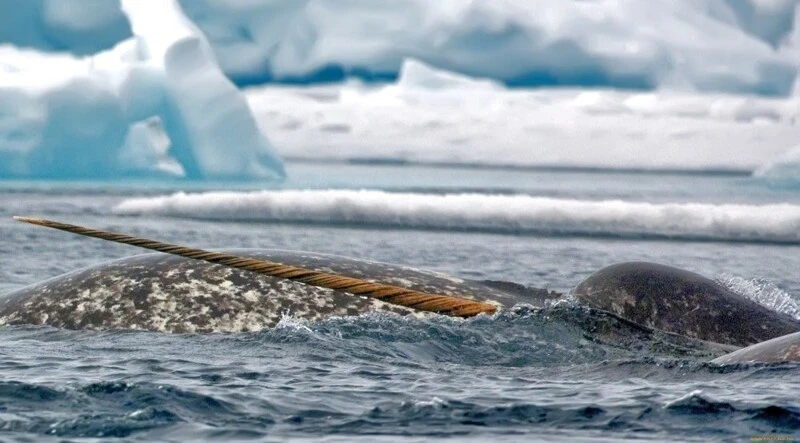
A giant fang grows on the narwhal's head - this is the upper left tooth, which penetrates outward through the gum and upper lip. Some individuals even grow two such tusks. Mostly males have tusks, although sometimes females can boast of such decoration. The length of the tusk ranges from 1.5 to 3 meters, and its weight is up to 10 kilograms. One or two tusks are the only teeth the narwhal has, other than them he has nothing, so he has to swallow his food whole.
Scientists still cannot figure out what this tooth is actually needed for. As a weapon it is not particularly useful, although it is quite strong and can bend up to 30 centimeters in all directions without harm. Destroying ice with a tusk is also not very convenient - it’s too narrow. In addition, there is no evidence that narwhals expertly manipulated their tusks in battle.
One hypothesis states that the tusk serves as an ornament for males, such as the tail of peacocks or antlers, to impress rivals during mating competitions.
0 comments