Water comes and goes, but people remain. How people live in floating villages on Lake Tonle Sap in Cambodia. 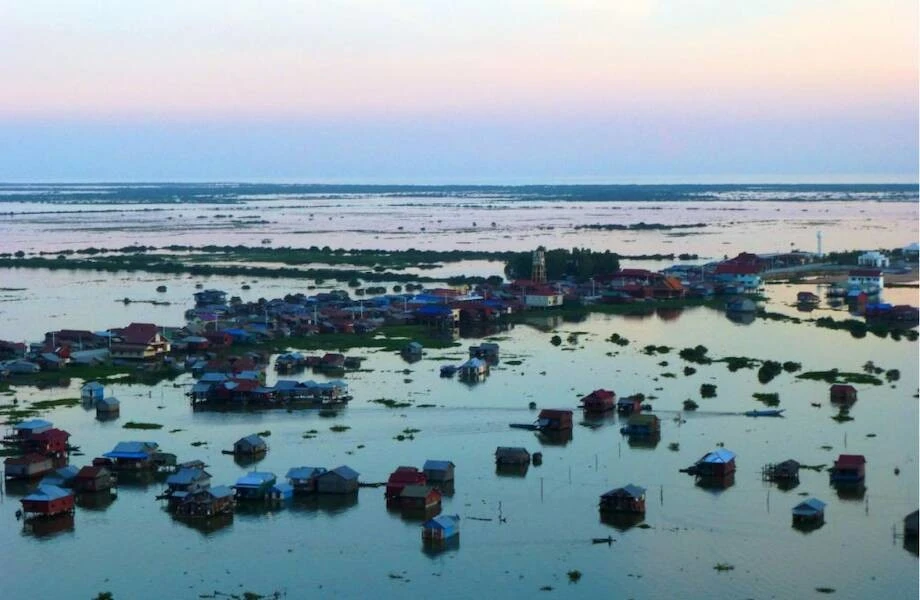
In different parts of the world, people have adapted to life on the water. Floating islands have become their homes, and if necessary, they can always sail to some other area of the lake. There are a lot of villages on the water in Asia, some even take tourists to. Lake Tonle Sap in Cambodia has long been the largest concentration of such villages.
A lake with hundreds of villages
The Tonle Sap is the largest freshwater lake not only in Cambodia, but throughout Southeast Asia. There are more than 150 floating settlements on it. The reservoir itself is a unique ecosystem: it is fed by several rivers, and the largest river, the Tonle Sap, flows from the lake, which then flows into the Mekong. In the dry season, the depth of the reservoir is small, about one to two meters, and its area is approximately 2500 square meters. km. 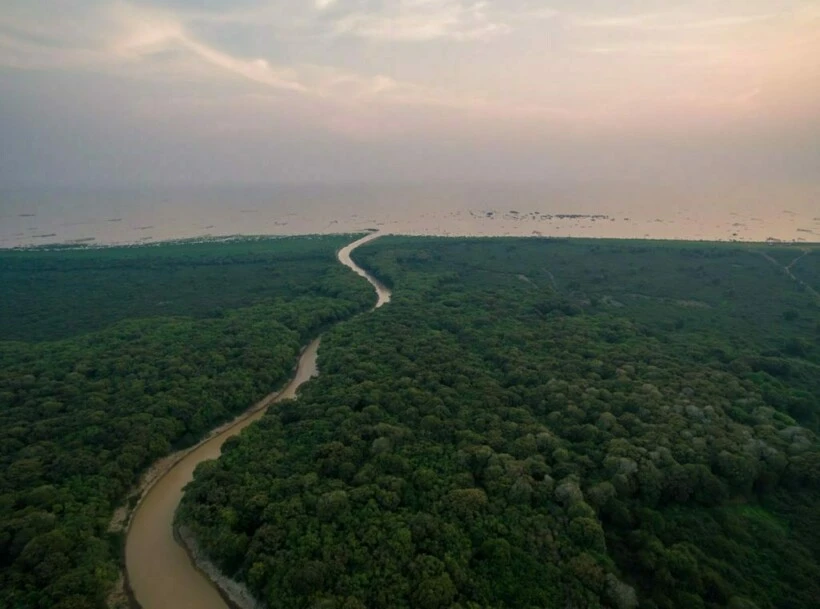
Tonle Sap River emerging from the lake
During the rainy season, the lake changes dramatically, and its area grows approximately six times, reaching 16 thousand square meters by September. km. The depth of the reservoir also increases: the water rises by about seven meters. During the wet season, the lake floods the shore for many kilometers around, and the houses, which rise bizarrely above the water during the dry season, end up practically on its surface.
The most authentic villages
There are many villages on the Tonle Sap, but there are several of the most popular ones where tourists are taken. The most famous village is Chong Kneas. The houses here are fixed to the bottom of the lake, mostly all of them are built from bamboo. The village resembles a settlement of nomads, but in fact the local residents, of whom there are more than six thousand, are not nomadic at all, but have been living here for many decades. Chong Knias, compared to other settlements on the lake, is very developed. 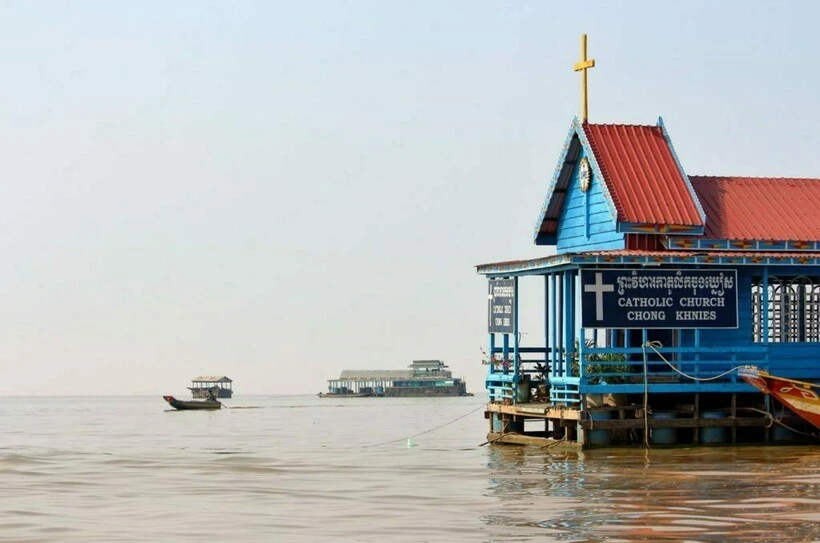
Church in Chong Knias
There is a school, a hospital, a church, its own markets and shops, boat repair shops and even a police station. The only way to get around in these villages is by boat. Absolutely all residents of Tonle Sap Lake know how to use boats, and often you can see only children in them. 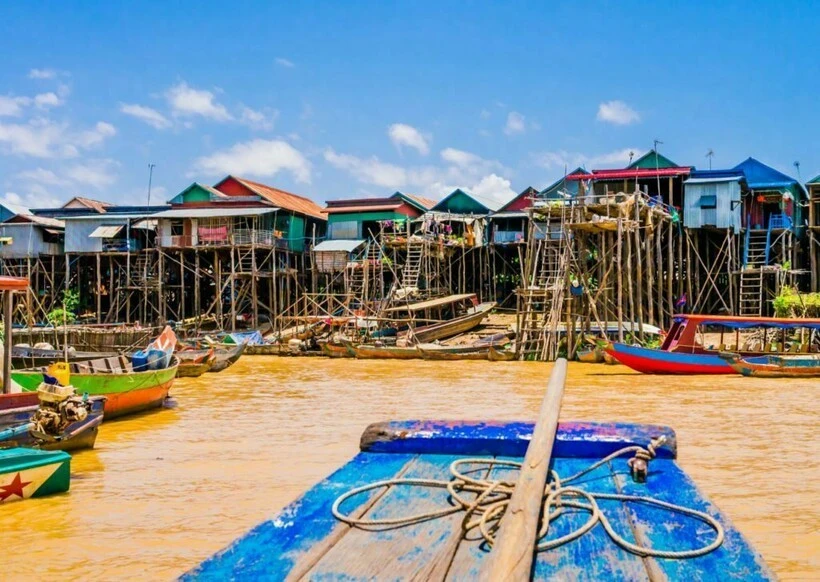
Kampong Phluk
Another popular village is Kampong Phluk. It is colorful and differs from the previous one in the type of houses. Almost all buildings here have six-meter “legs” made of bamboo. During the dry season, the water recedes, exposing the bamboo under houses. At this time, it seems that the village is floating in the air. 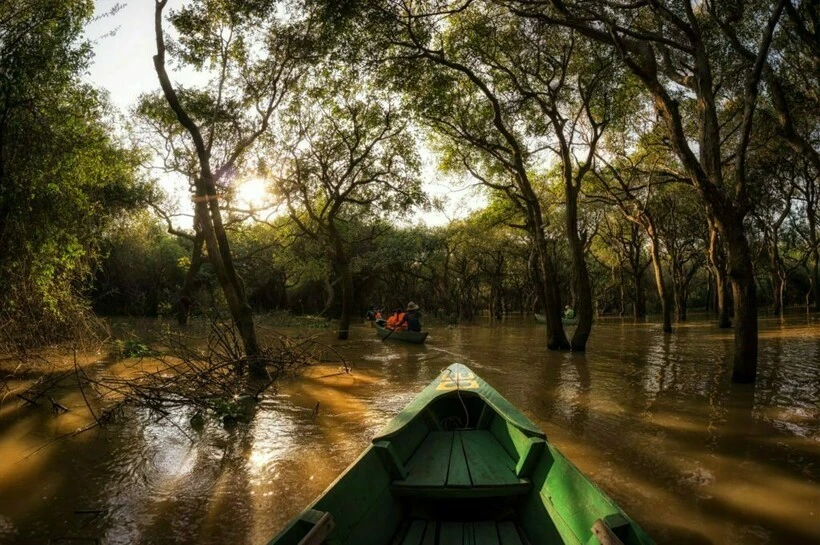
mangrove forest
There is a mangrove forest near Kampong Phluk; local residents vigilantly protect it, maintaining the local ecosystem. The locals may be seen as protectors of the mangroves, but in reality they do so out of necessity: the mangroves feed them, because these waters are rich in fish.
Of course, the main occupation of local residents is fishing. 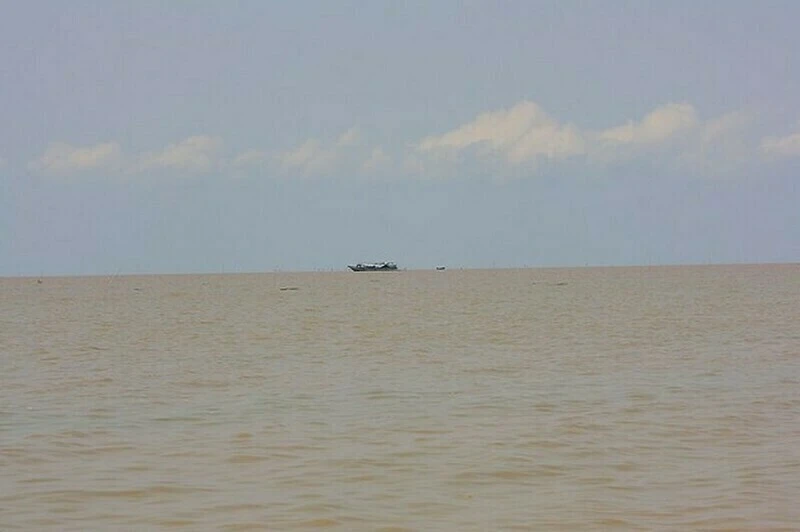
The Tonle Sap is a unique ecosystem in which fish breed very well. Fishermen can go to the middle of the lake for several days: they sleep in boats, and then return with their catch. The fish here is sold to other regions of Cambodia, they also dry it and make sauces from it, which are even imported.
Life on the water
It's amazing how the locals managed to organize life on the water. During the dry season, receding water leaves behind fertile silt where various crops can be planted. In floating villages they even keep farms: not only houses, but also sheds for animals stand on bamboo legs. Dogs are also kept here. 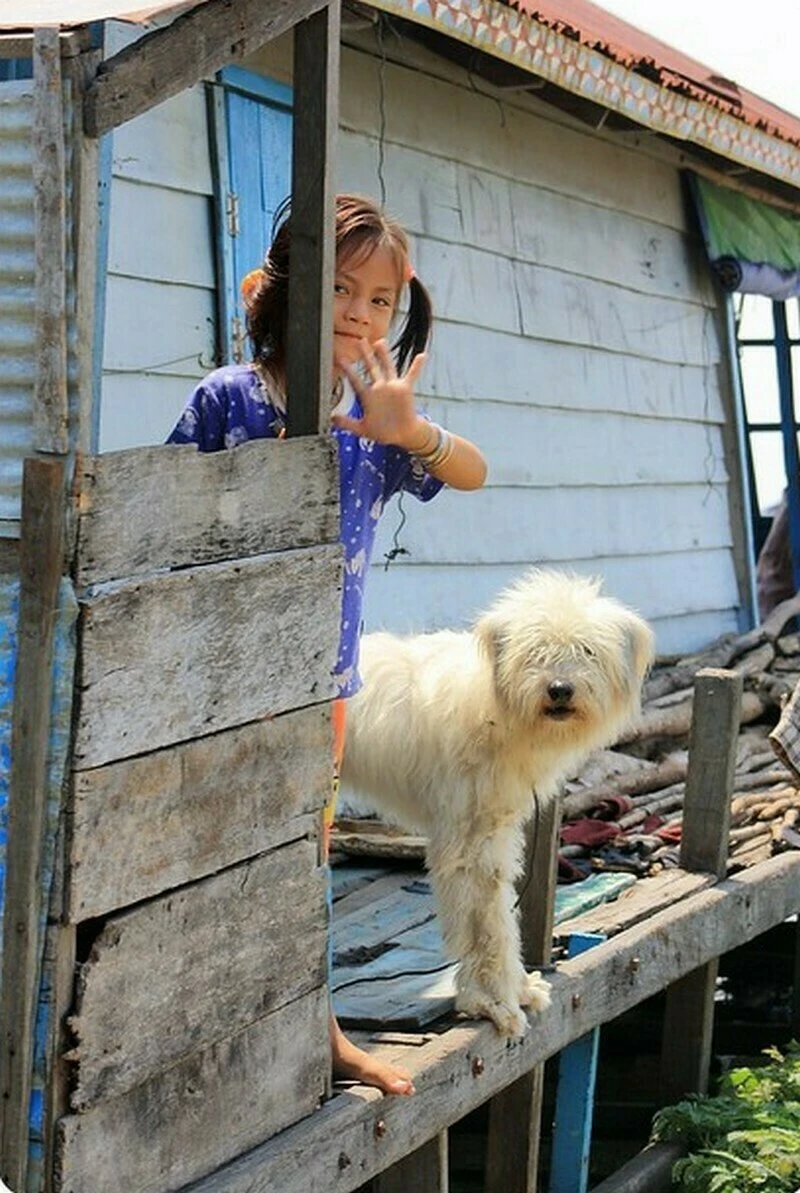
Even though people here have been able to adapt, life on the lake is very difficult. Residents of these picturesque villages found themselves in extreme poverty. The Tonle Sap is mostly inhabited by emigrants from Vietnam who came here many decades ago. Today there are more than a million of them, but it is difficult to name the exact number, because many do not even have documents. According to Cambodian law, immigrants cannot own land, so the Vietnamese were forced to build houses on the water. Most families have lived here for generations, and their children do what their parents did: fishing and selling fish. 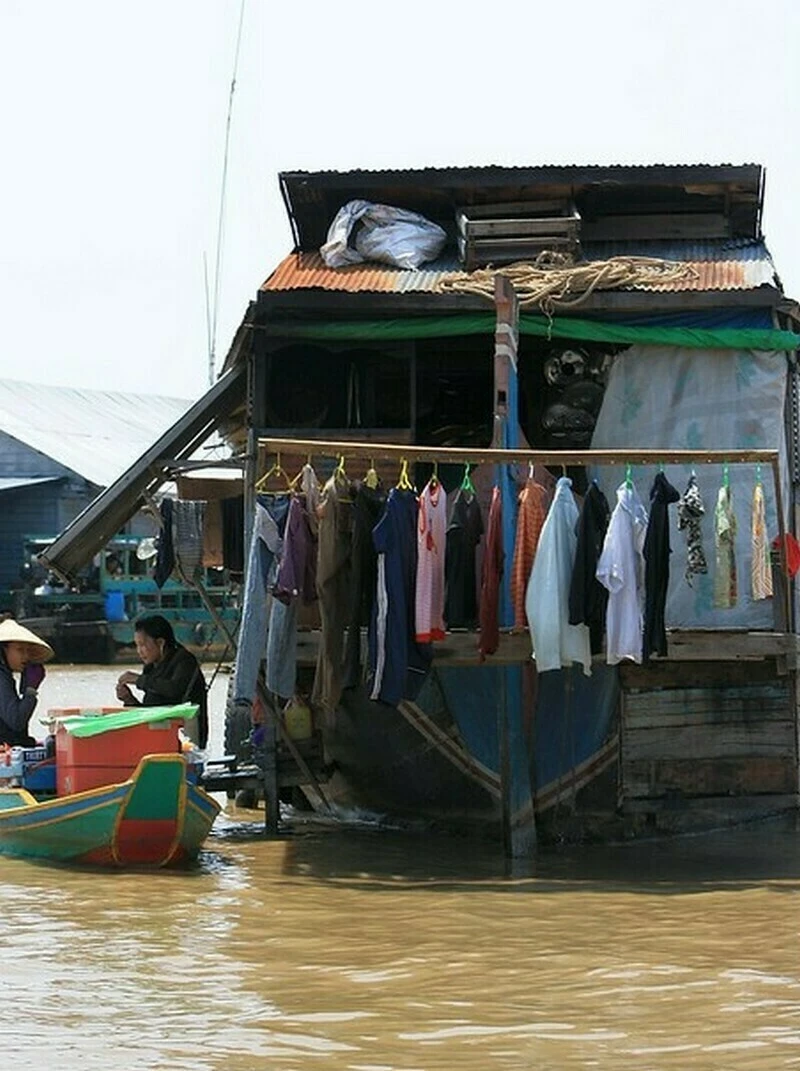
In addition, in Cambodia, people from another country do not have the right to education. For this reason, many children do not go to school, and in fact there is a school only in the largest lake villages. Of course, everything is bad here with sanitation, because the lake replaces everything for the local residents: it is not only a source of food and a source of water, but also a landfill where sewage from toilets and sheds where animals are kept is dumped. The inhabitants of these floating villages are unable to break the vicious circle of poverty in which they find themselves.
0 comments