Tools whose purpose not everyone will understand (17 photos)
Humanity has created so many different objects to organize its life on Earth throughout its history that we have not even heard of some. Some have long been forgotten so much that archaeologists are perplexed: what could this item be used for? But not everyone has sunk into oblivion. People still use some of the tools today. These strange objects have long fallen out of common use, but they are still interesting. 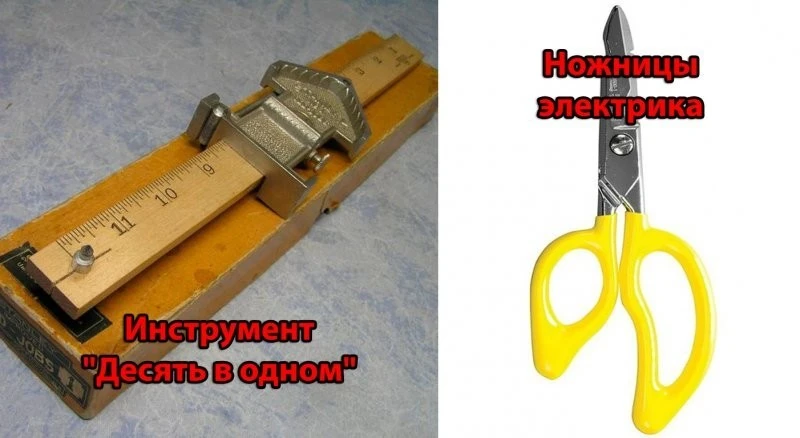
Get acquainted with some of the long-forgotten instruments that were once used by people, but gradually disappeared from the scene. Let's see what they could be used for and what interesting stories are associated with them.
1. Cleaver froe 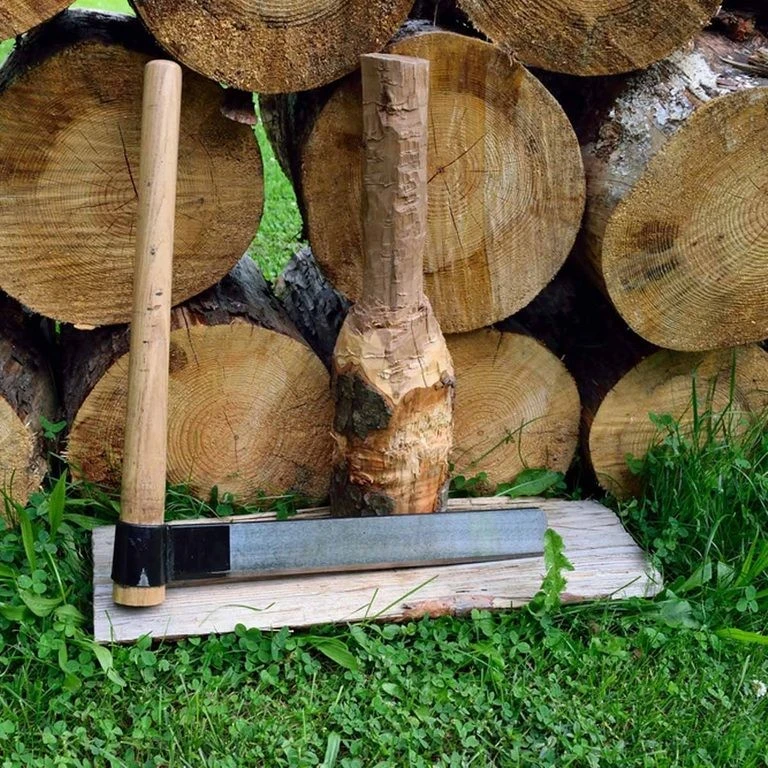
This simple tool, which bears little resemblance to an axe, may look like it was made by cavemen. But in fact, froe is still in production and can even be purchased in online stores. This is a tool for splitting wood along the grain. The blade is placed on a wooden block and hit with a mallet, then the handle is rotated, and the wood is split into long chips.
The froe cleaver was in use in the 19th century. It is L-shaped, has a large handle and a long, flat blade with a cutting edge at the bottom. Froe was brought to America by colonial settlers, who used it to split shingles and other types of lumber to build the earliest homes in America.
Frohe was also used to make palisades. Split shingles are still common, particularly in the Alpine region, as roofing tiles – they are the oldest type of tile for covering house roofs. The froe cleaver can still be used where strong wooden boards with a straight texture are required.
2. Chisel sharpener 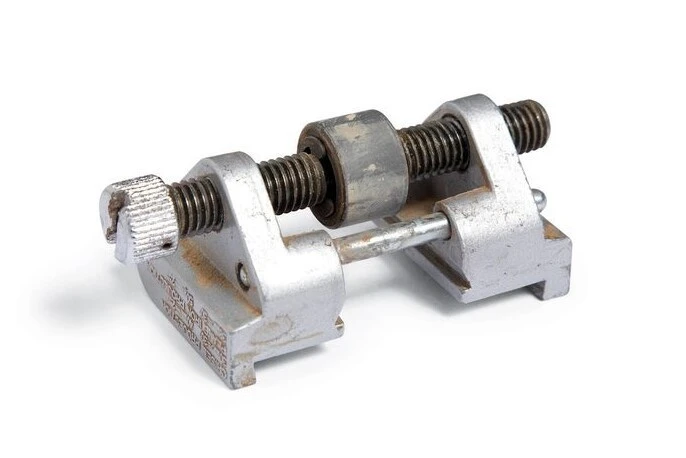
Some experts completely master the art of sharpening a chisel by hand. But for most of us, it is necessary to purchase special sharpeners. There are two types of sharpener clamps: some clamp chisels from the sides, and others from top to bottom.
The side clamp guide only works with chisels whose sides taper to an edge less than 1/16 inch thick. If your chisel has thicker sides, you will need a guide that clamps from top to bottom.
Inexpensive top-down clamp guides made by General Tools and Stanley are harder to find in stores, but can also be purchased online.
3. Ten in one: Stanley No. 1 Odd Jobs 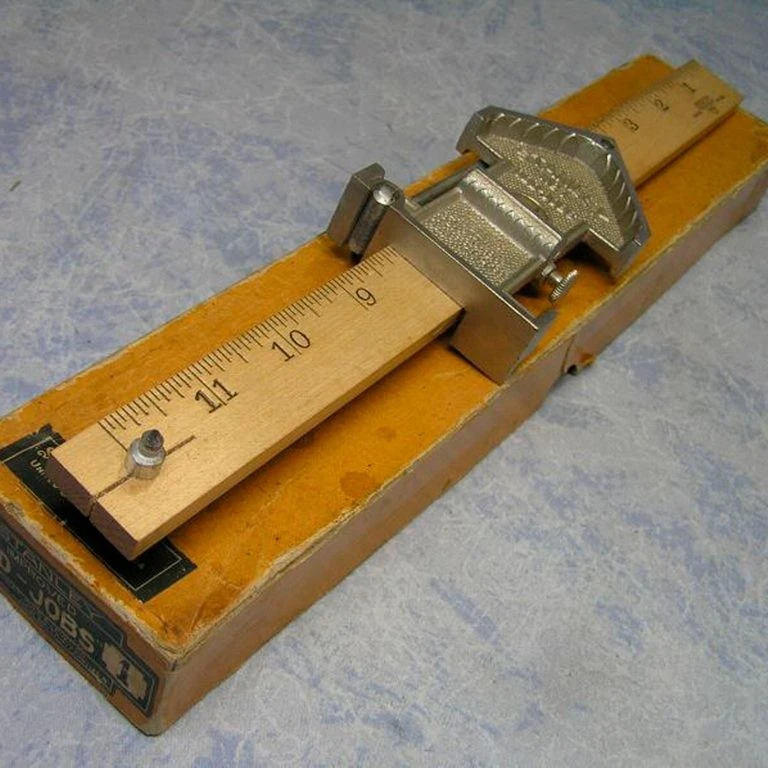
In 1888, Stanley Tools introduced its "Handy Tool", the original version of Odd Jobs, which was later marketed as "Ten Tools in One". For 47 years, carpenters relied on this versatile metal gadget that combined a triangle, spirit level, square angle, scraping awl, ruler, marking gauge, plunge gauge, depth gauge and beam compass.
The device went out of production in 1935, but some manufacturers, such as Garrett Wade and Woodpeckers, still sell modern versions.
4. Lignatool Schnittfuehrung cutting guide set 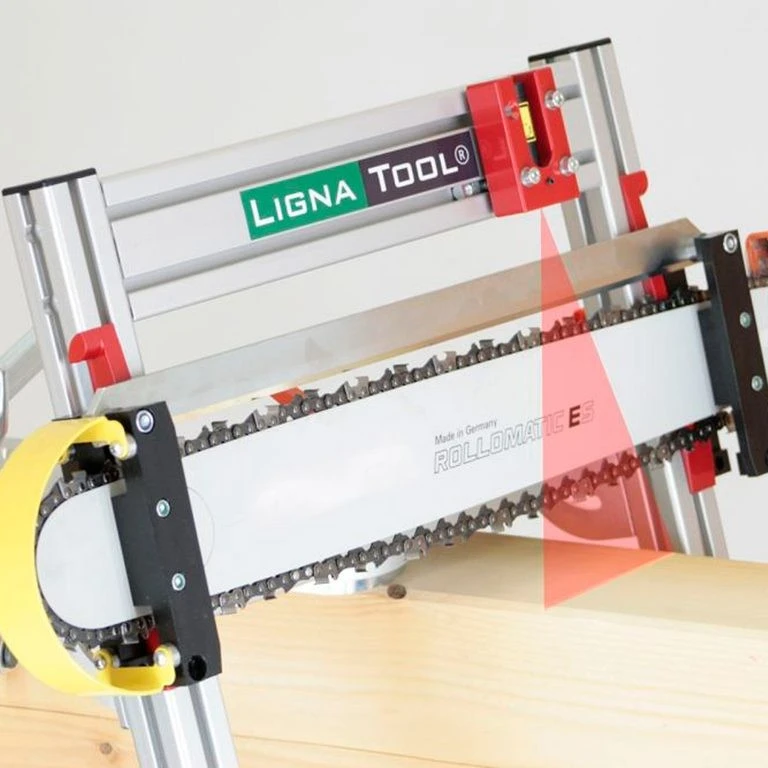
If you've been searching high and low for a precision cutting tool that will guide your chainsaw blade perfectly, look no further. We found such a Lignatool Set Schnittfuehrung SF400 in Austria. It even uses a laser to precisely align the cuts. Sophisticated equipment costs about $3,000.
5. Hydraulic torque wrench 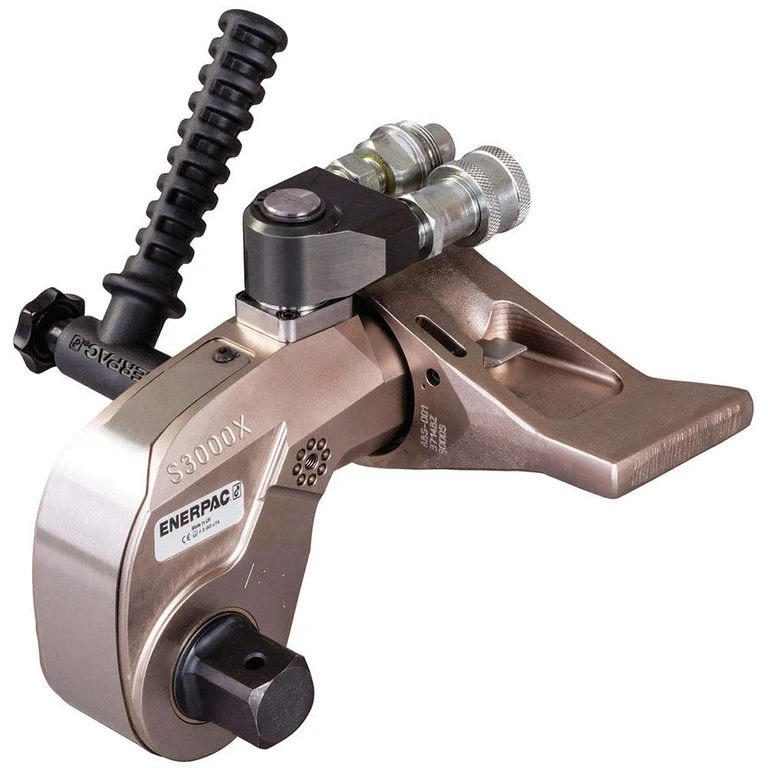
This tool, which uses hydraulic power to create torque and hold fasteners when it's too difficult to do it yourself, may seem like a modern concept. But it was actually invented in the 1960s by George A. Sturdevant in Houston, Texas.
It was first introduced to the market in a bulky and primitive form, but then manufacturers improved it, and now the hydraulic torque wrench is lighter, has a smaller radius, and uses exotic alloys. More simplified and lighter versions can be found today at fairly high prices from manufacturers Grainger and Hytorc.
6. Pneumatic hammer with rounded head 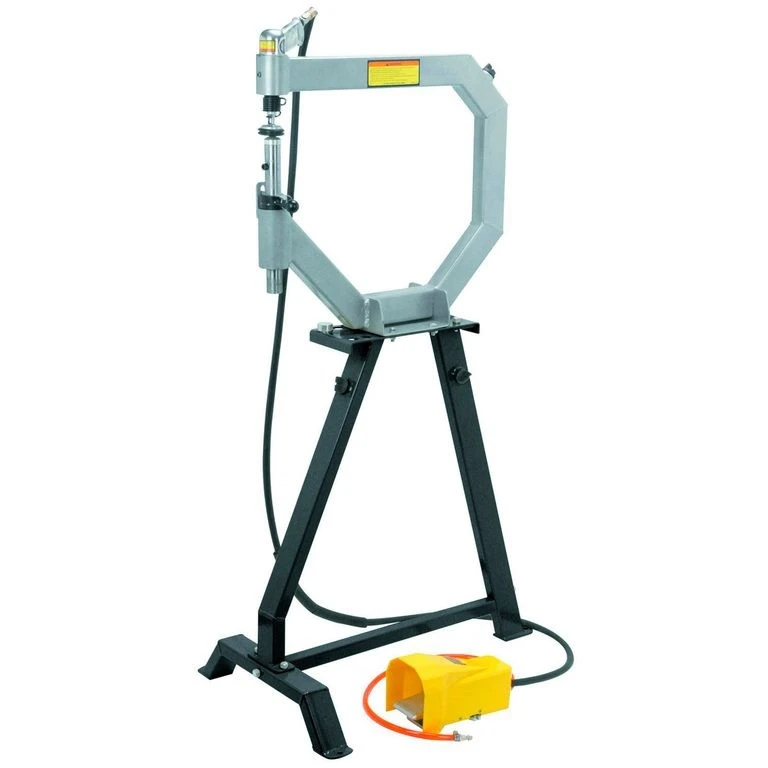
Similar pneumatic devices were invented in the 1920s for working with metal and stone on bridges and buildings. In 1930, F.J. Hauschild adapted the original stone carver's hammer and patented a portable, hand-held tubular steel frame for straightening automobile bodies. The Chicago pneumatic tool company then used this patent to market a range of tools—round-face pneumatic hammers, both hand-held for auto body work and industrial hammers.
If you're familiar with Amish woodworking, then you know the concept of pneumatic tools: these people don't use electricity. Instead, the tools run on compressed air and are powered by a diesel generator.
This "work of art" with the same creative name is used by modern welders to shape and grind large strips of metal. A task that previously required manual hammering has become easier. Non-pneumatic planer hammers are also available.
7. Saw rioba 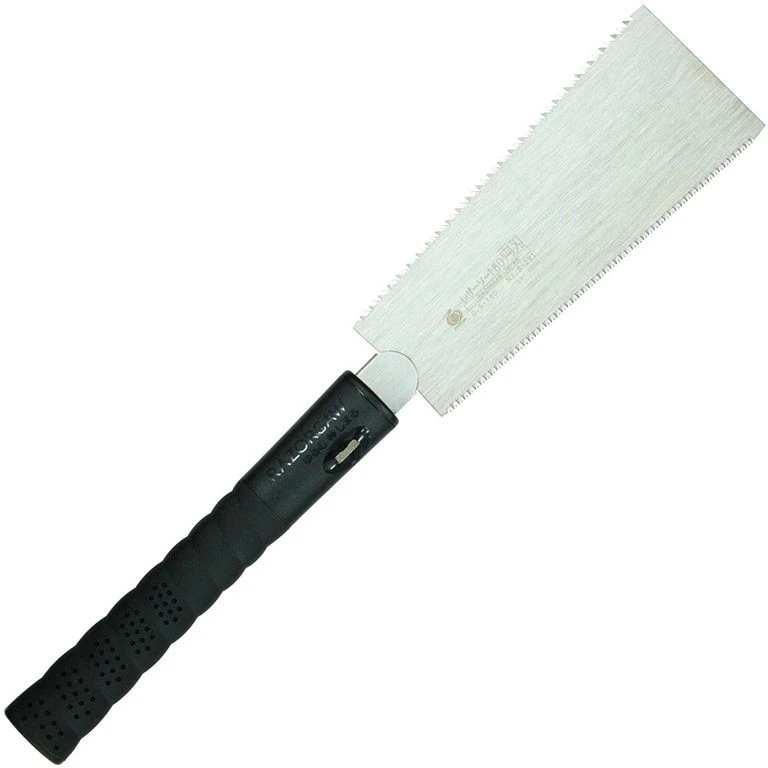
Fine Japanese woodworking tools are prized for their precision and minimalist design. The Japanese Ryoba saw is one of the coolest. This is a lightweight, double-sided hand saw with rip teeth on one side for cutting with the grain and cross teeth on the other side for cutting against the grain.
The Ryoba Utility Carpenter Saw has two cutting edges and means “double blade” in Japanese. On one side there is a transverse cutting blade (yokobiki), and on the other there is a longitudinal cutting blade (tatebiki). Its long handle is ergonomically designed to give the carpenter full control of the work.
8. Tesla 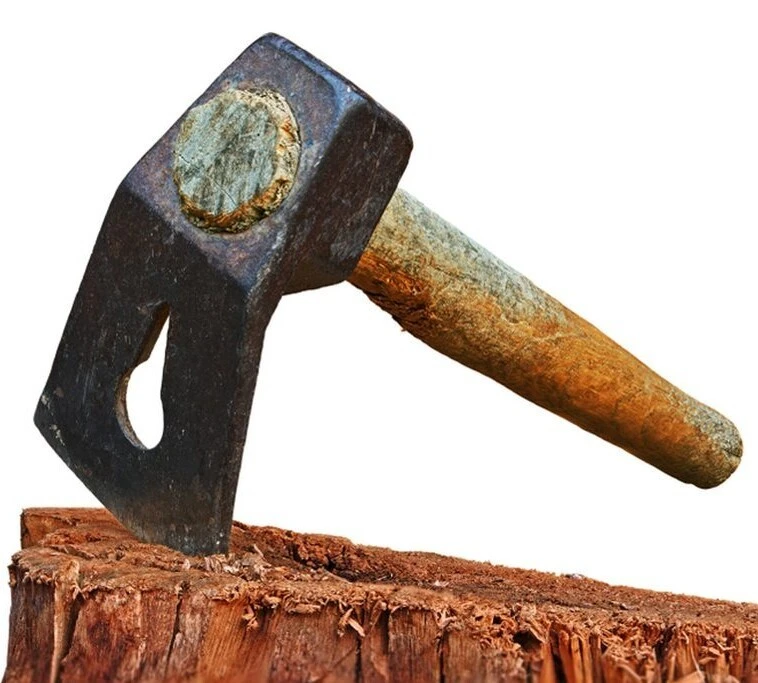
It doesn't get any simpler than an adze, or adze, a sharpened piece of metal attached to a wooden handle and used to carve and shape wood. People have used it since the Stone Age for everything from creating wooden beams from tree trunks to hollowing out bowls. Modern adzes are now used not only for wood processing.
It is an ancient utility cutting tool, similar to an axe, but with a cutting edge perpendicular to the handle. Adzes are used for sanding or carving wood in manual woodworking, and as hoeing tools in agriculture and horticulture. We can see an adze mounted on a firefighter's tool - the Halligan bar, the favorite weapon of fire fighters after the good old axe.
9. Plumb 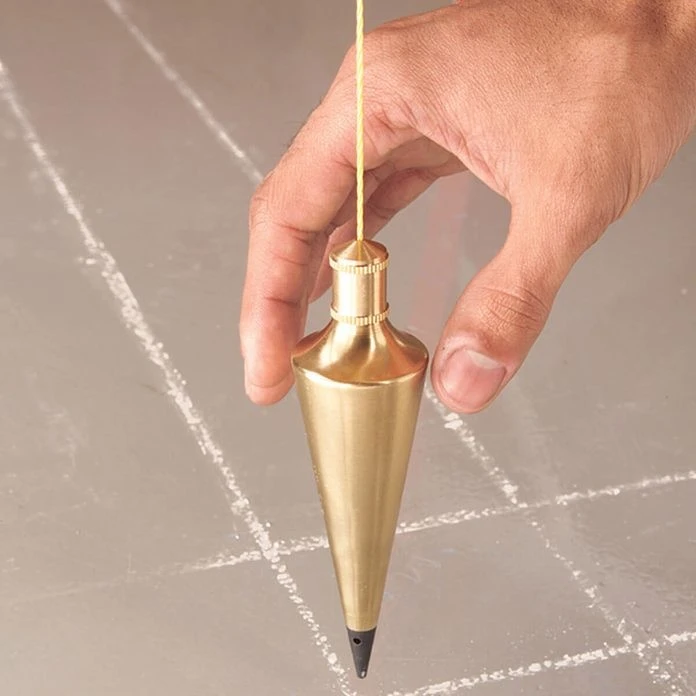
A plumb line is a weight with a pointed end connected to a rope that can be used to establish a vertical line. This weighted object can be made from simple stone or from copper, lead or wood. Some are shaped like a bullet or a cone, but in the DIY world they often take the form of any relatively heavy object, like a chalk box.
Plumb lines have been around for a long time. The Egyptians used them to build pyramids, and builders for centuries used them to determine whether walls were "plumb" or completely vertical. They are ideal for tasks such as centering light over a kitchen island, determining the correct spacing between recessed lights, or framing basement walls.
10. Cartridge remover 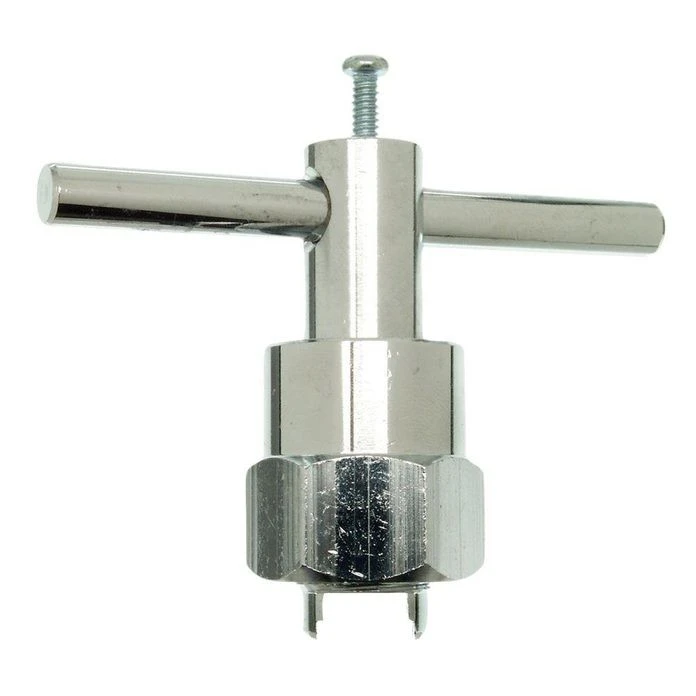
Do you know how to remove the cartridge from the faucet to eliminate an unpleasant leak? There is a special tool for this. This lightweight, portable gadget is so simple yet so useful that it can be called one of the most essential tools for a home plumber. The technician may not even realize how much he needs this cartridge remover until he is faced with the need to use it. The cartridge puller is ideal for repairing problematic plumbing fixtures without having to replace the entire faucet.
11. Inflatable shim 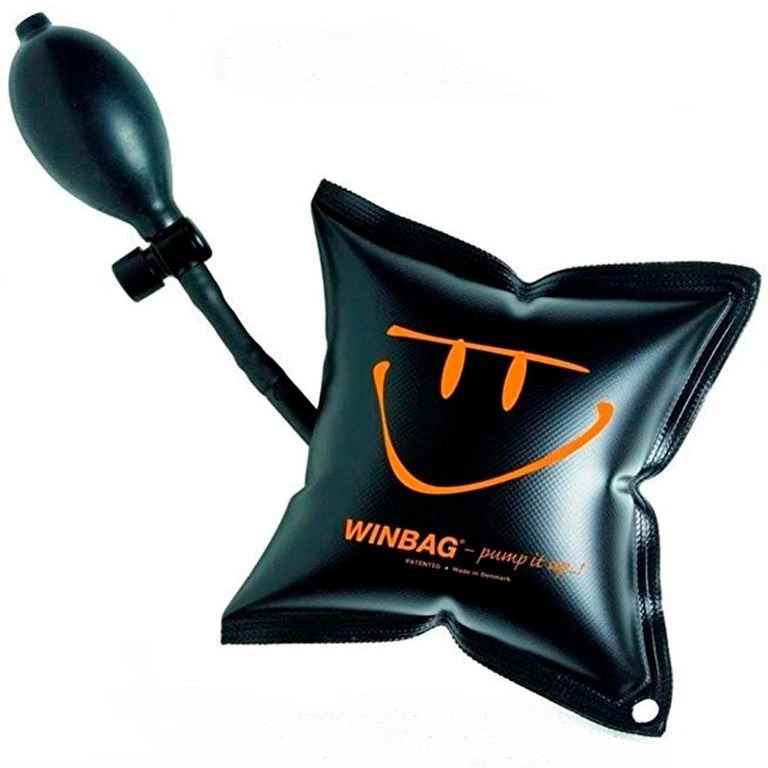
Look at the small rubber pad with a bulb on it. What may appear to be a sleeveless blood pressure monitor is not what it seems. This device that acts like a wedge is a shim. The inflatable air wedge replaces wood spacers and plastic wedges when installing windows, doors and cabinets. Levels and supports household appliances and furniture.
It allows lone craftsmen to hold a window or door in place while working. You can also use an inflatable pad to level cabinets or home appliances without worrying about leaving marks or scuff marks. You can inflate or deflate the device as needed for a perfect fit.
12. Electrician's scissors 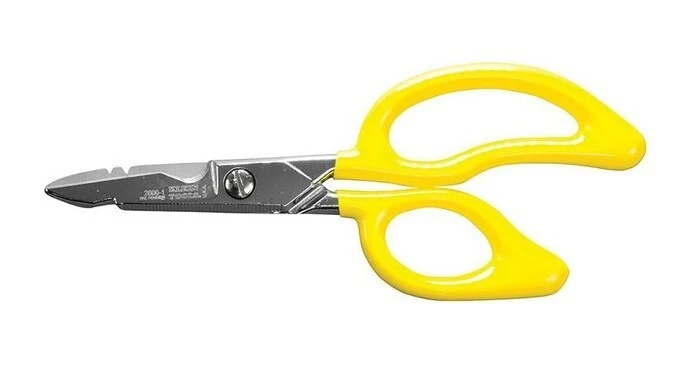
Reliable electrician's scissors are the most commonly used tool among professionals working with low-voltage equipment. If you've never heard of electrician's scissors, check out Klein's products. Of course, just like any other scissors, the new Klein Electrician Scissors can cut things with their serrated blades.
But they additionally have special cable cutouts so that you can cut not only thin wires up to 14 AWG (American wire gauge, corresponds to 1.628 mm). They will tirelessly strip and cut 19 AWG and 23 AWG wire. They also have a notch on the tip for deburring electrical boxes. Both blades have a scraper for easy wire stripping.
13. Adjustable wrench 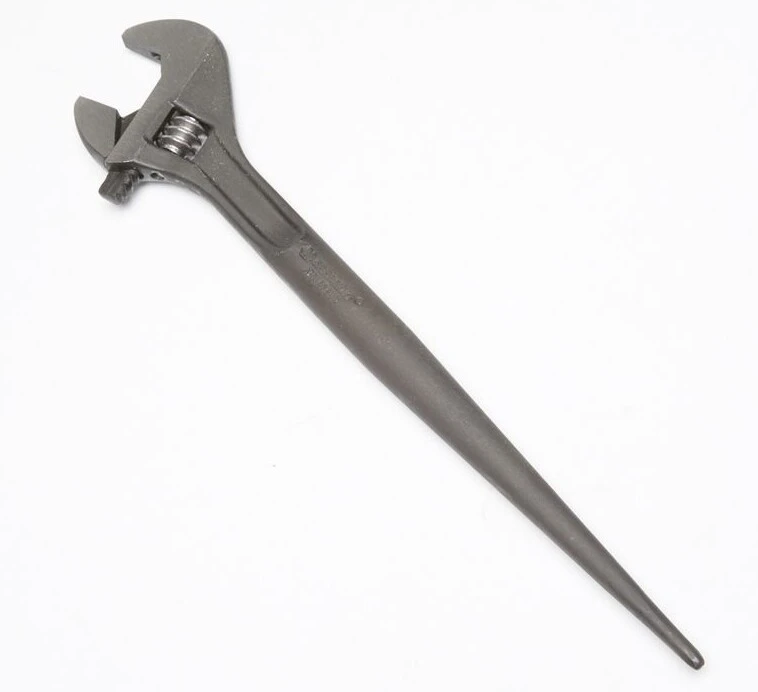
An adjustable wrench is a wrench with an adjustable or standard box-end wrench on one end and a conical tenon on the other. Use a wrench to turn the nuts and bolts to remove them. The spike can be used to align bolt holes when installing pipe fittings, when performing automotive work, or, in the case of metal work, to align bolt holes in beams and timbers.
Some have two-piece plastic and rubber handles for better leverage or access to parts. There are other types of wrenches that go by the name "spanner," so make sure you know what you're buying before you shell out your cash.
14. Bar level 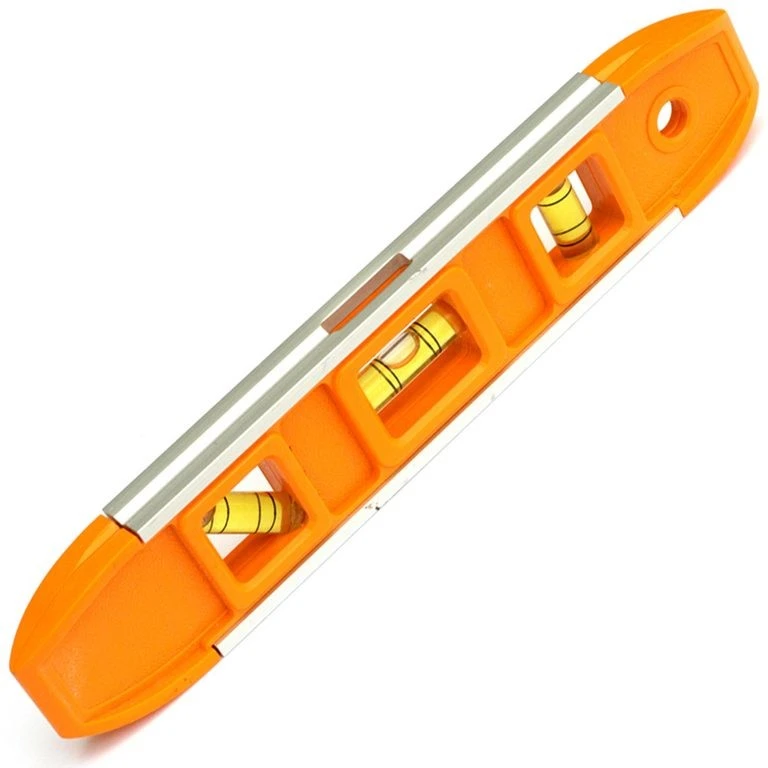
This is a small (225 mm) device with magnets. It is not surprising that most block levels are conical or torpedo shaped. But what's surprising is how many people find uses for them. They are small - from 15 to 30 centimeters in length, and have a chamber with bubbles that indicate the angle of inclination - vertical level, alignment, sometimes 45 degrees. Thanks to its miniature size and shape, the torpedo level is ideal for working in confined spaces.
Some have magnetic edges, allowing plumbers and those who work with metal parts to have a “third hand” while working. Dash levels fit nicely into a tool belt or box and are convenient for leveling images, determining the slope of pipes and leveling over short distances.
15. Darby – trowel for plaster and concrete 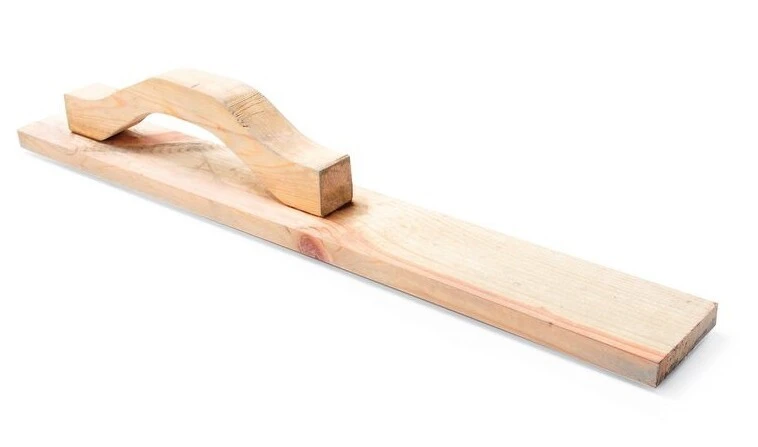
A darby is a long, flat tool used for smoothing plaster and rendering. It can also be used on concrete floors. We call it a grater, a small version is a grater. It consists of two handles on a flat plate with slightly curved edges. Darby is very handy when you need to level a concrete floor.
16. Wrench for sliding connection of sink support 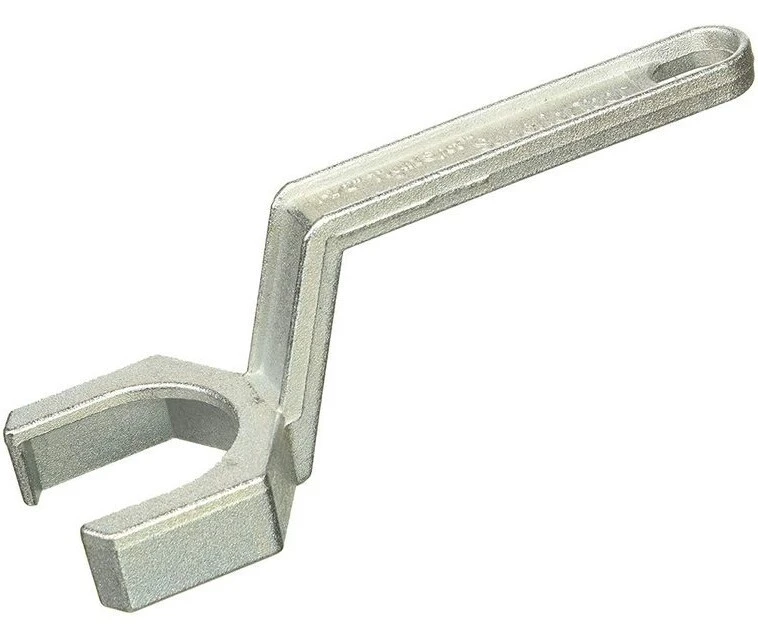
This small wrench can make a plumber's job with a pedestal sink much easier, as it can be used to get into tight spots. The offset design allows the technician to reach the pipe and secure the sliding nut. Allows you to install or remove the trap and drain line with a pedestal mounted sink.