10 most amazing scientific discoveries of 2022 (12 photos + 4 videos)
The year 2022 has seen many scientific advances, from transplanting a pig's heart into a person to the ability to redirect an asteroid off its course by colliding with a spacecraft. These and other wonderful discoveries are on our list. 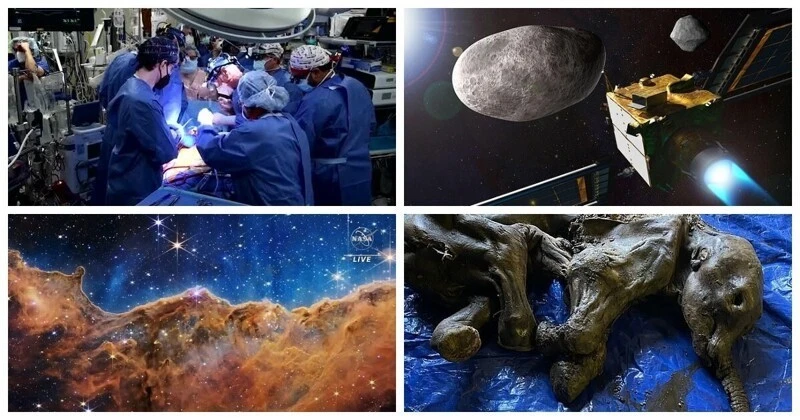
1. Heart transplant from a genetically modified pig to a human
On January 11, 2022, 57-year-old David Bennett became the first patient in the world to receive a heart transplant from a genetically modified pig. The patient, suffering from severe, life-threatening arrhythmia, underwent a nine-hour experimental operation at the University of Maryland Medical Center in Baltimore (USA).
Surgeons used the heart of a pig that had undergone gene editing to reduce the likelihood that the human immune system would reject the organ.

The operation was successful and Bennett's condition initially improved significantly. Unfortunately, two months later he became worse and died in March. The cause was porcine cytomegalovirus. Despite this, doctors call the operation a turning point for the world of medicine.
2. Planetary Defense: Dimorph Asteroid Deflection Experiment
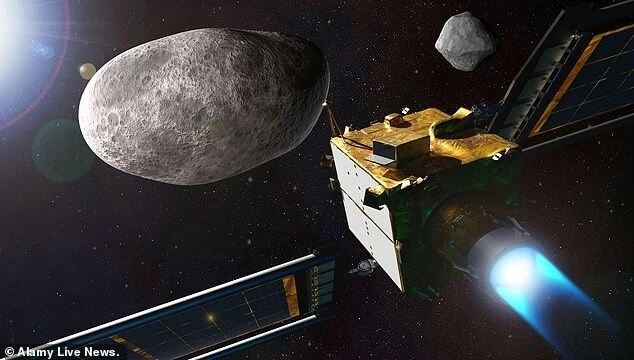
On September 26, the Double Asteroid Redirection Test (DART) space probe intentionally crashed into the asteroid Dimorphos and knocked it off course. Dimorph, a satellite asteroid in the Didymos binary asteroid system, is located approximately 11 million km from Earth.
It was the world's first test of a kinetic impact mitigation technique using an object to deflect an asteroid that poses no threat to Earth and change its orbit. It is hoped that one day it could become a strategy to protect our planet from future threats from space, if necessary.
3. The remains of the oldest dinosaurs were found in Africa
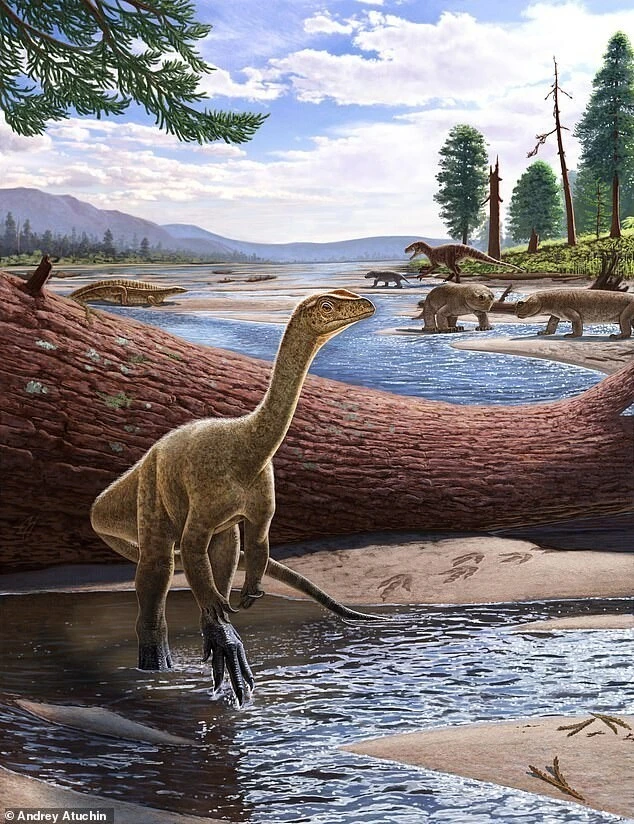
Over the summer, paleontologists discovered the remains of the oldest dinosaur ever found in Africa. The creature, named Mbiresaurus raathi, was about two meters long, weighed between 10 and 30 kg and roamed Zimbabwe 230 million years ago.
Analysis of the fossils revealed that it was a species of sauropodomorph, a relative of the sauropod, that walked on four legs, had serrated teeth, and a long neck and tail.
The discovery of Mbiresaurus raathi fills a critical geographic gap in the fossil record of the earliest dinosaurs and demonstrates the power of hypothesis-driven field research to test predictions about the ancient past, scientists say.
4. An “almost complete” mummy of a woolly mammoth was found in Canada
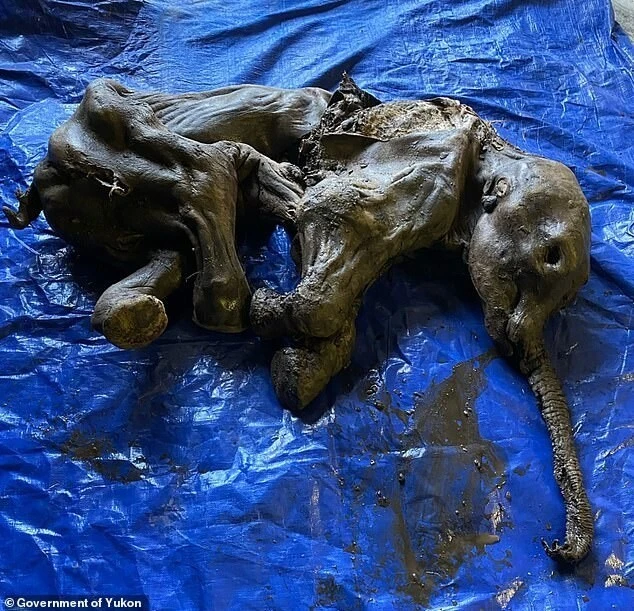
Fossils of a baby mammoth that lived more than 30,000 years ago were discovered in June 2022 in the Yukon. The Yukon government said it is the most complete mammoth mummy found in North America and only the second such discovery in the world.
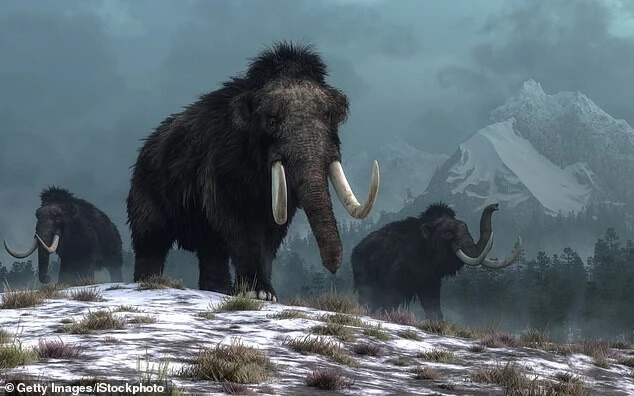
Woolly mammoths roamed the Yukon as early as 5,000 years ago. The found mammoth was named "Nun cho ga", which means "big baby" in the Han language. He was frozen in permafrost, causing his remains to become mummified. Both skin and scraps of wool were preserved. Further analysis revealed that it was a female and lived alongside the wild horses, cave lions and giant prairie bison that once roamed the Yukon, thousands of years ago.
5. Lab-grown brain cells taught to play video games
The classic table tennis-themed video game Pong was innovative and extremely popular in 1972. And now, 50 years later, another brain has mastered this game. What's remarkable is that these were human brain cells grown in a laboratory. And they were able to move the racket vertically across the screen to hit the ball.
Researchers at Melbourne startup Cortical Labs have shown for the first time that 800,000 brain cells can perform purposeful tasks - in this case, playing Pong. The findings suggest that even brain cells in a petri dish can exhibit innate intelligence, changing their behavior over time.
6. Microplastics found in human blood
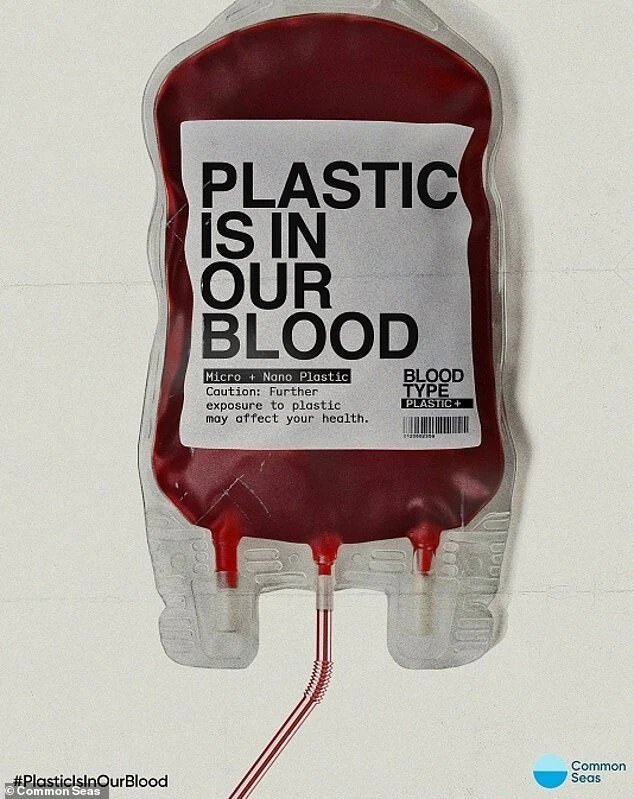
Recently, the problem of plastic waste and its impact on the environment has become more and more acute. In particular, scientists are studying microplastics—tiny pieces of plastic less than 5mm in diameter—and where they are found, including as far away as Antarctica. Alarmingly, microplastics have also been discovered for the first time right inside us. It was found in human blood.
Researchers in the Netherlands took blood samples from 22 anonymous healthy adult donors and analyzed them for particles as small as 0.0005 mm. 17 out of 22 volunteers (77.2%) had microplastics in their blood. Microplastics were also found in the lungs of living people for the first time this year, proving that we inhale these particles from the air.
7. The new space telescope took its first pictures
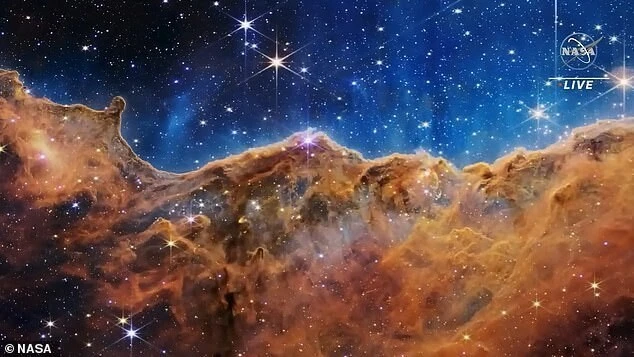
In July, the world saw unprecedented images taken by NASA's James Webb Space Observatory. Among them was an image showing young stars in the Carina Nebula, where ultraviolet radiation and stellar winds form colossal walls of dust and gas.
Also in the summer, Webb finally sent back its first images of the early Universe. Astronomy fans were treated to stunningly clear images of a "stellar nursery", a dying star shrouded in dust, and a "cosmic dance" between a group of galaxies.
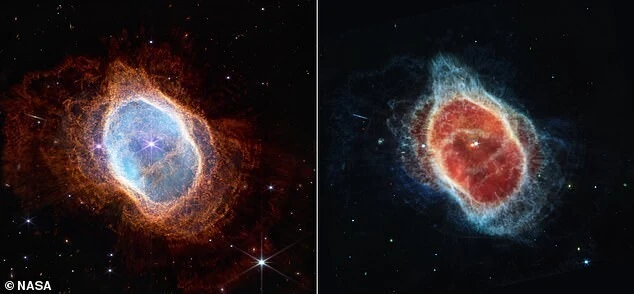
Webb's images were hailed as "the dawn of a new era in astronomy."
The telescope's infrared capabilities mean it can "peer into the past" to within 100-200 million years after the Big Bang, allowing it to capture images of the very first stars to shine in the universe more than 13.5 billion years ago.
8. The human genome is finally complete
It took two decades, but in 2022 the human genome was finally completely mapped.
In April, researchers published a sequence of about 3 billion bases (or "letters") of no gaps in one person's DNA, 20 years after the first draft was created. They said the complete sequence of bases in our DNA, without gaps, is critical to understanding human genomic variation and the genetic contribution to certain diseases.
In addition to the medical implications, the complete genome also helps answer the question of what makes us human. The researchers hypothesized that some of the genes that were gaps in the original genome are critical for the increase in brain size in humans compared to other primates.
The work was carried out by the Telomere to Telomere (T2T) consortium, which included researchers from the National Human Genome Research Institute (NHGRI), the University of California at Santa Cruz (UCSC) and the University of Washington in Seattle.
The newly completed genome, called T2T-CHM13, is now available through the online UCSC Genome Browser.
9. For the first time, the shadow of a black hole at the center of the Milky Way was imaged
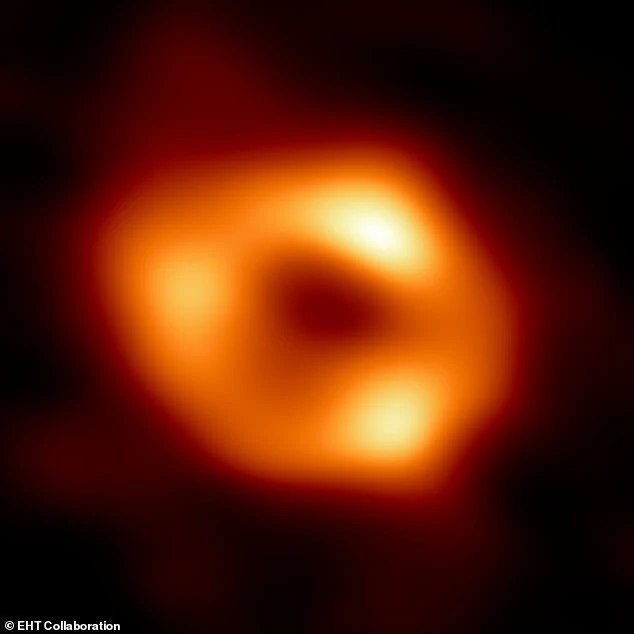
In May 2022, astronomers presented the first-ever image of the supermassive black hole at the center of our galaxy. The image showed Sagittarius A*, which has about 4.3 million times the mass of the Sun and is located about 27,000 light-years from Earth.
This comes just over three years after the same astronomers took the first ever photograph of a black hole.
The two black holes bear a striking resemblance even though Sagittarius A* is 2,000 times smaller than Messier 87, located in a distant galaxy 55 million light-years away.
10. Paleontologists found the remains of a dinosaur that died on the day an asteroid hit the Earth 66 million years ago
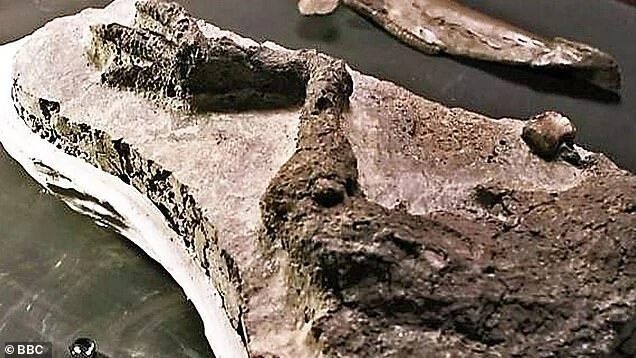
In April 2022, paleontologists reported that they had discovered the first-ever fossilized remains of a dinosaur that was killed on the day a massive asteroid hit Earth 66 million years ago.
The leg of a thecelosaurus - a small herbivore - was discovered next to a fragment of the space rock that killed it. Experts believe the skinned limb was most likely torn off when the Chicxulub asteroid hit and then buried in the falling debris on the day of impact.
The discovery was made at the Tanis fossil site in the US state of North Dakota, known as the Hell Creek Formation. This site, which was first discovered in 2008, is quite unusual: it seems to record the events from the first minutes to several hours after the impact of the Chicxulub asteroid in great detail.
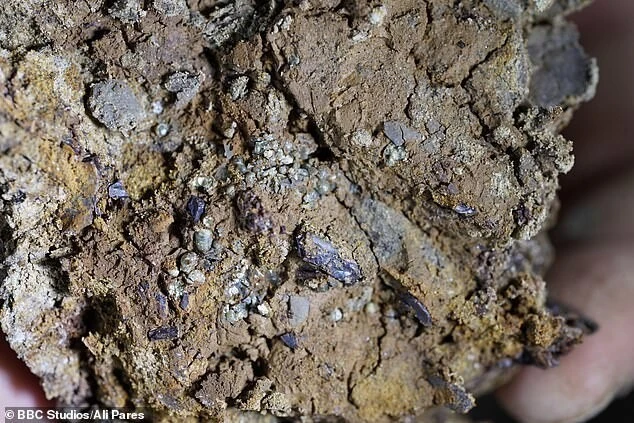
The spherules (glass balls of earth rock) fell from the sky less than an hour after the famous Chicxulub impact and are now stored in Tanis.
Paleontologists say this is the first fossil discovery of the dinosaur, which was the victim of the famous asteroid impact that left a 150-kilometer-wide impact crater in what is now the Gulf of Mexico. They also said they believe they have discovered a tiny piece of space rock that ended the age of dinosaurs and led to the rise of mammals.
University of Manchester paleontologist Robert DePalma, who made the discovery, said it was now possible to provide the first-ever physical evidence that dinosaurs were killed by an asteroid impact at the end of the Cretaceous period.