The long-tailed duck is a cute little duck that lives along North America and Europe. The bird is capable of diving to a depth of 60 meters and going without air for a whole minute! 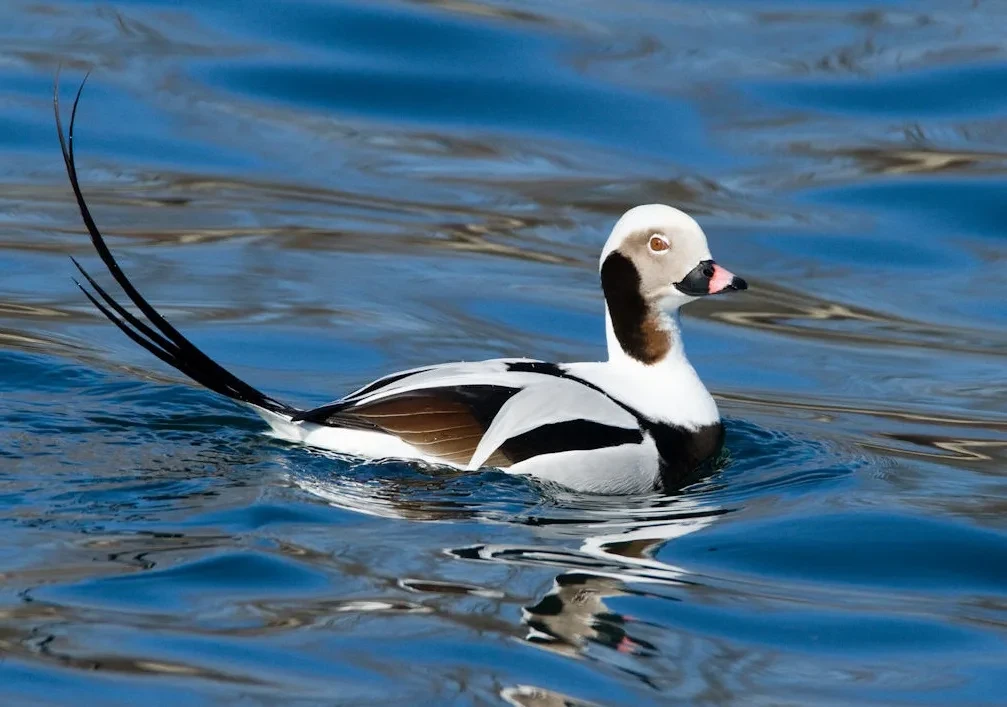
Life-affirming advice from the long-tailed duck for the week: always keep your tail on!
As children, many of us imagined ourselves as brave captains and travelers. Noisy waves, salty spray and the creaking of the mast under sail. Imagine for a moment that you have the opportunity to go to conquer the cold seas. When suddenly... no, not a pirate ship, but a duck appears on the horizon. Only the duck will not be a simple one, but an unusual one, called a long-tailed duck. And she, like a true sea wolf, threw in her lot with salty waters and cool breezes.
Moryanka, also known as Auleika, Alleyka, Avlik, Duck, or Sauk. So many names and all for one bird! It would seem, where does so much honor come from? This bird belongs to the duck family, order Anseriformes, and at first glance is not unique. Unless he lives by the sea and shouts in his own way: “A-aulla, a-uuulyy.” And since the indigenous population did not bother with naming, as the bird screamed, so they called it. But for other people it’s even simpler: if it cuts across the sea, it means it will be a long-tailed duck. 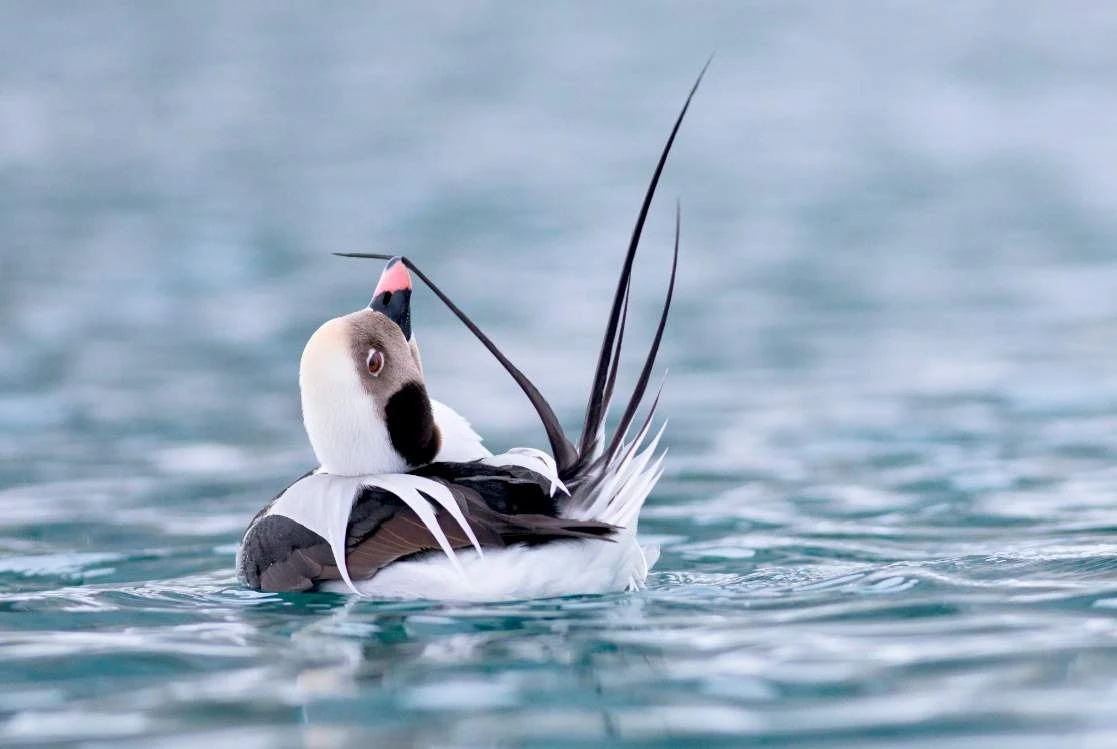
The long-tailed duck has another obvious name: the long-tailed duck. Male long-tailed ducks have a long, sharp tail 10-15 cm long.
And the bird fully lives up to its name: the bird swings on the waves of the cold waters of North America and Europe for up to 9 months a year! Birds come to land only in exceptional cases - the breeding season. 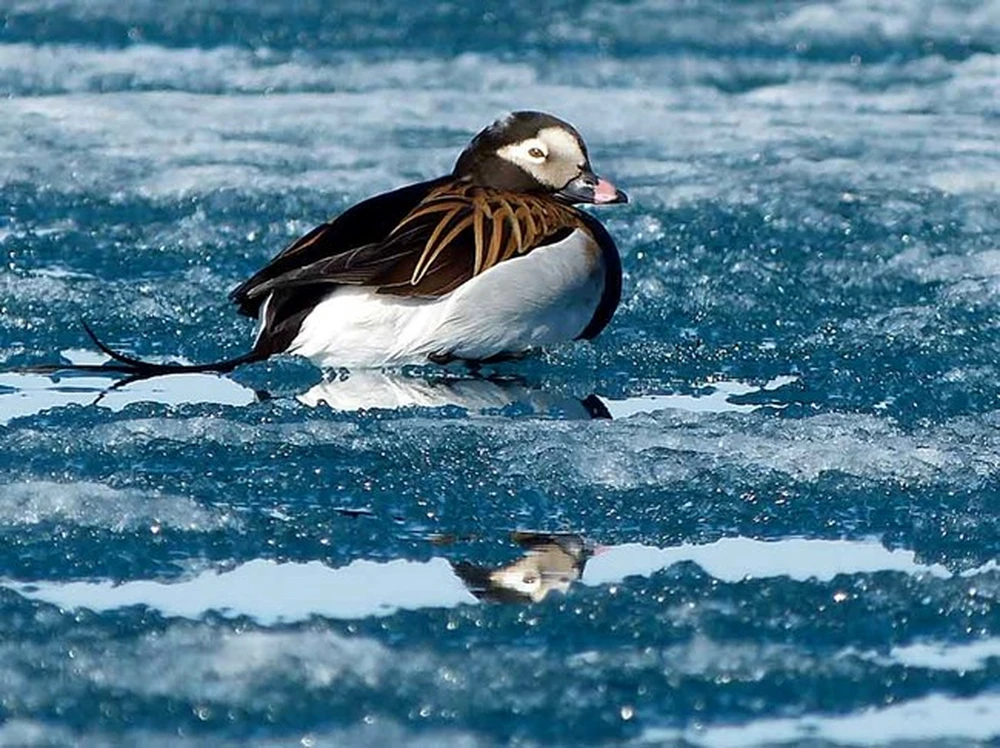
To get food in the big sea, a small bird needs to try very hard. The dimensions of the long-tailed duck are not impressive; the weight of the bird is no more than a kilogram. The city mallard is almost twice as big!
But the auleik makes up for its modest size in dexterity and endurance. If the ducks had a competition to see who could stay underwater the longest, our heroine would be the clear winner. The long-tailed fish can survive without air for a minute - this is three times longer than its counterparts from rivers and lakes. 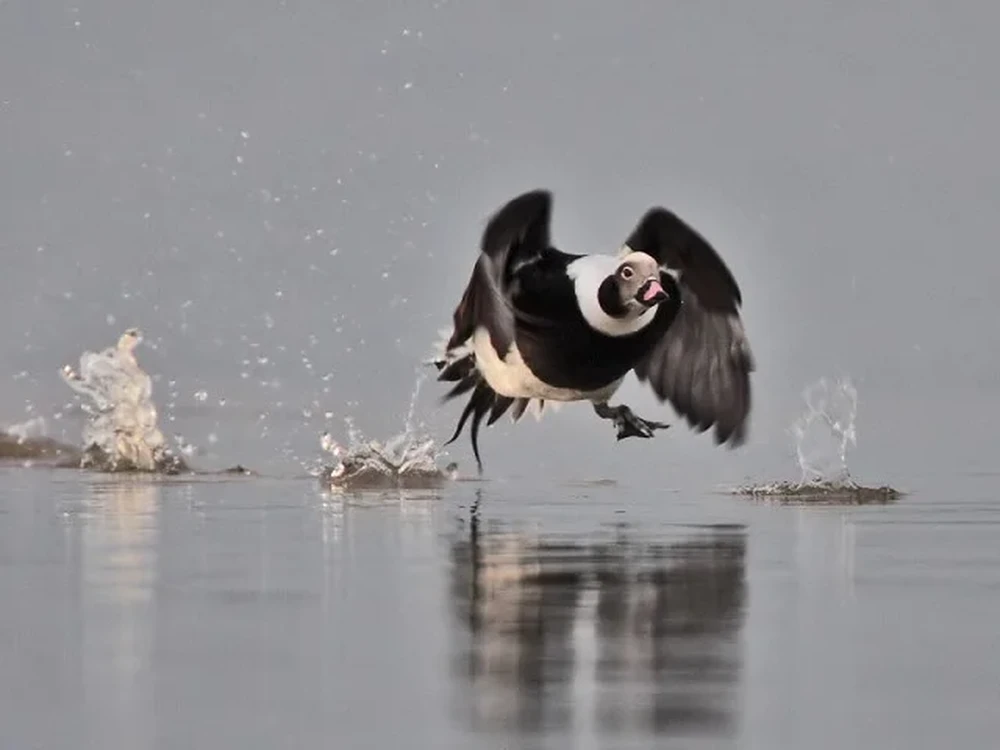
If the same toastmaster offered the ducks a competition “who can dive deeper,” the long-tailed duck would once again be in common with her clawed brothers. Auleika dives to a depth of 60 m. And the recorded maximum is 146 m! The bird breaks records thanks to a special technique: the long-tailed duck is the only duck that uses its wings for swimming, like flippers. At such a depth you can catch anything: mollusks, crustaceans, and small fish. 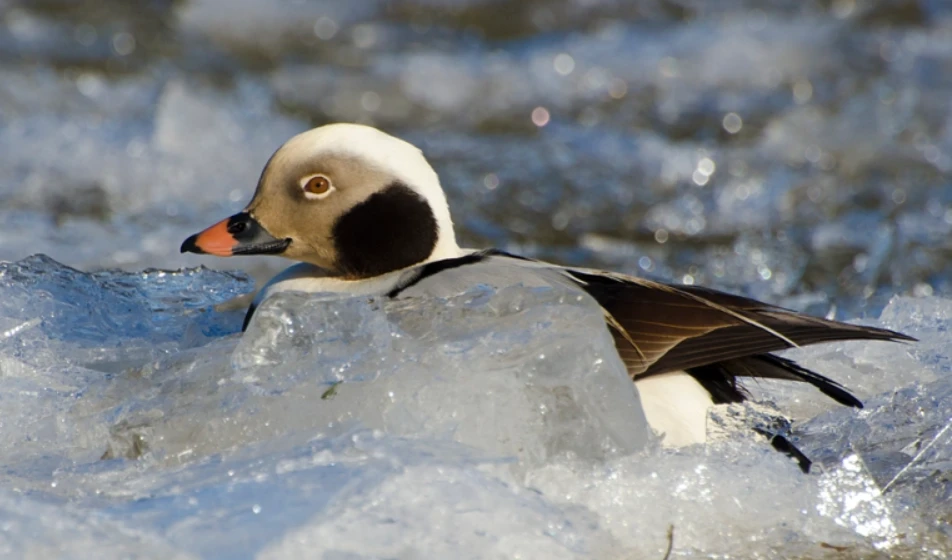
But with the onset of the breeding season, the duck changes its lifestyle from shipping to land. In May-June, birds gather in groups and fly to the tundra to build nests and pairs. The female selflessly incubates the babies for a month. But dad will leave very quickly for “bread.” At first, the male watches his chosen one, but by the middle of the term he has a more important task - to change his suit. Auleyka males have three of them: mating, summer and winter. That's it, I washed it and threw it away. 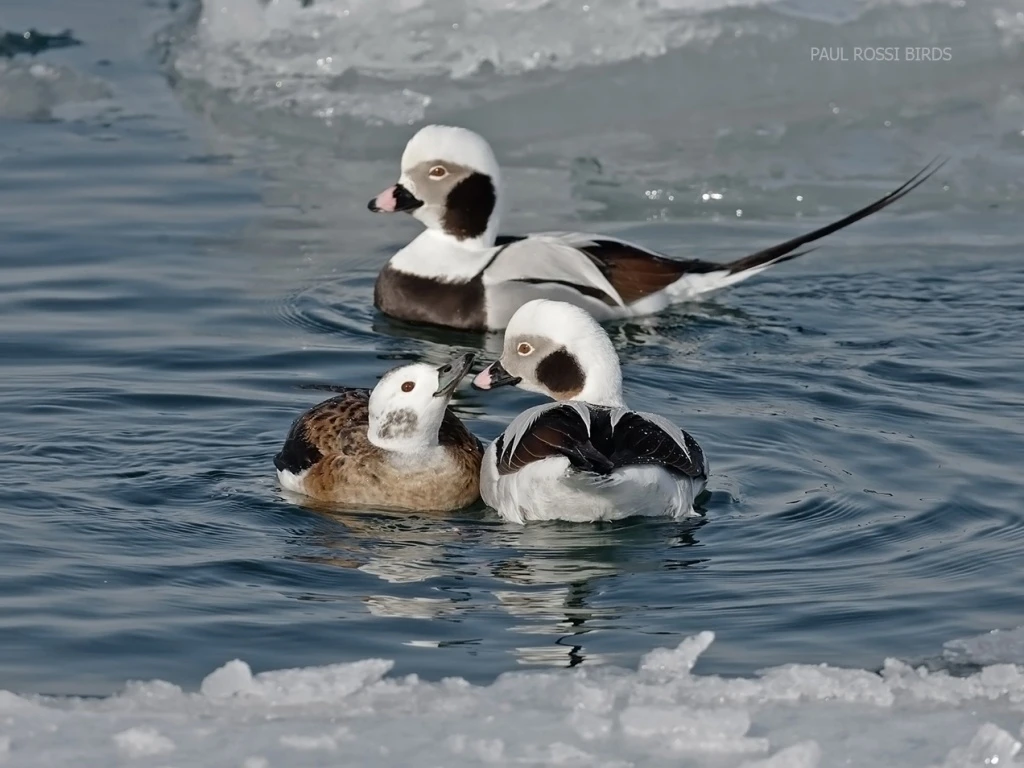
Fortunately, the future mother’s offspring are independent from birth. Just a few hours after hatching, the fluffballs are ready to follow their mother and learn the basics of Moran life. At first, no one will release the ducklings into open swimming. They will learn the basics on the lake, repeating after the female. But sometimes the craving for the sea outweighs parental instincts, and mothers resort to a trick: they push the grown chicks onto the “shoulders” of another female. And then one auleika swims in a crowd of ducklings of different ages. And the “cuckoo”, having freed itself from troubles, quickly flies away to conquer open waters. After a month and a half, the chicks themselves will change their downy outfit to an adult one and fly off in all directions. 
On average, long-tailed ducks have 5-7 eggs in a clutch. But there are 13 chicks in the photo. What a pity that ducks can't count...
0 comments