Fish with spines: interesting facts about ruffes (5 photos)
Fishermen dreaming of a big catch often catch small spiny fish called ruffs. They do not enjoy special honor and respect, which is quite understandable: this fish is not very large, has no gastronomic value, and besides, it is prickly. However, this does not mean that ruffs are completely useless and uninteresting 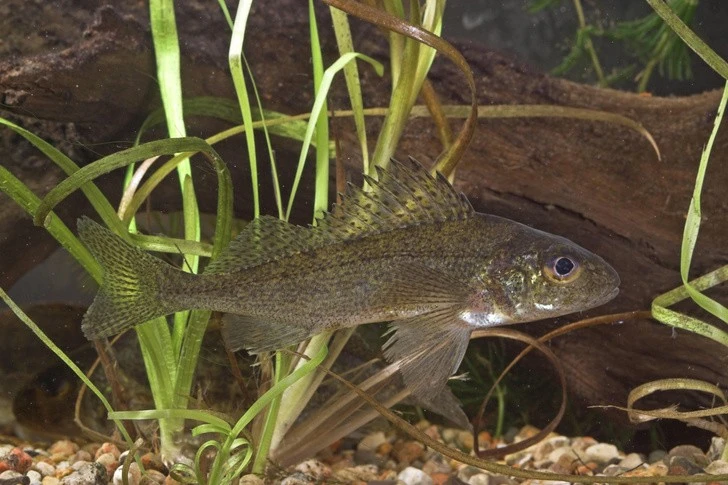
Despite their small size, ruffs are very voracious and can fend for themselves
ZOOSPRAVKA
Ruffs (Gymnocephalus)
Class - ray-finned fish
Order - Perciformes
Family - perch
The genus of ruffes belongs to the perch family and has five species that live in the cool fresh waters of Europe. There are cases of successful acclimatization of common ruffe in lakes in Scotland, Italy, the USA and Canada, where these fish displace local competitors and create problems for established ecosystems.
There are two types of ruffe: the common ruffe (Gymnocephalus cernua) and the Don ruffe (Gymnocephalus acerinus).
Underwater hedgehog
Outwardly, ruffes are similar to their close relatives - perches, but they have a number of features by which they are easy to recognize. The body of all ruffs is laterally compressed. It has a greenish tint and is covered with spots and thick mucus. The eyes are large, bulging, the jaws are armed with bristly teeth. The fins and gills are equipped with sharp spines that serve as defensive weapons against predators. In case of danger, the ruff straightens them, ruffles them - hence its name. 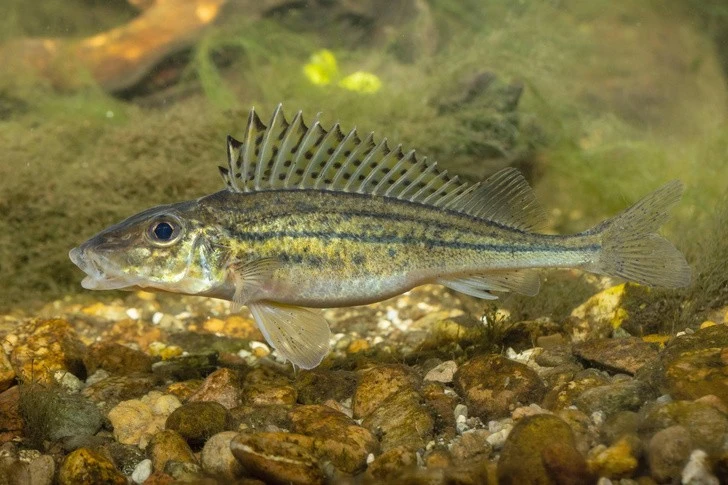
Striped ruffe (Gymnocephalus schraetser)
As a rule, adult individuals of most ruff species grow to 10-13 centimeters in length, although some ruffs can reach a length of more than 20 centimeters. But among the striped ruffs that are found in the Danube basin, there are almost 30-centimeter individuals weighing about 250 grams; in some sources there are even references to larger and more well-fed striped ruffs.
Formidable Hunter
Despite its modest size, the ruffe is a voracious and dexterous predator. Its victims include fry of other fish, leeches, and insect larvae. He eats caviar with pleasure. In case of hunger, it can replenish the diet with plant foods. Its stomach easily stretches, the digestion process occurs faster than that of many fish. That is why the ruffe is able to eat one and a half times more perch of comparable size. 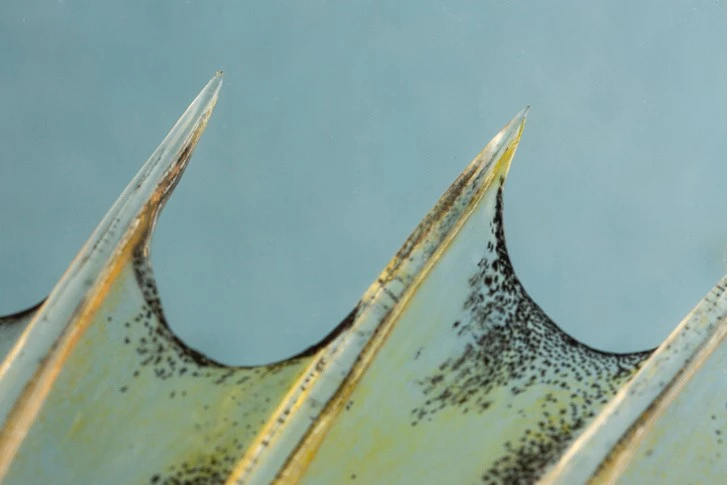
Ruff needles
He prefers to look for food at the bottom, although sometimes he hunts at the surface of the water. When searching for prey in the dark or muddy water, the ruffe relies on good sense of smell and hearing. In addition, the developed lateral line running along the body helps the ruffe to navigate well when searching for prey.
However, even such voracious fish sometimes lose their appetite. This happens during spawning or in winter. However, even severe cold does not force the ruffe to completely give up food.
Hybrid offspring
Ruffs usually reach sexual maturity at about 2-3 years, and individuals living in warmer bodies of water are capable of reproduction already at one year of age. In mid-spring, ruffes gather in large flocks and go to spawn. Females spawn in different parts of the reservoir, after which the eggs attach to driftwood, stones, and aquatic plants. It is estimated that one female common ruffe is capable of laying up to 200 thousand eggs per year. The larvae appear after 5-14 days depending on the water temperature. At first they feed on small invertebrates, and as they grow they move on to larger prey. 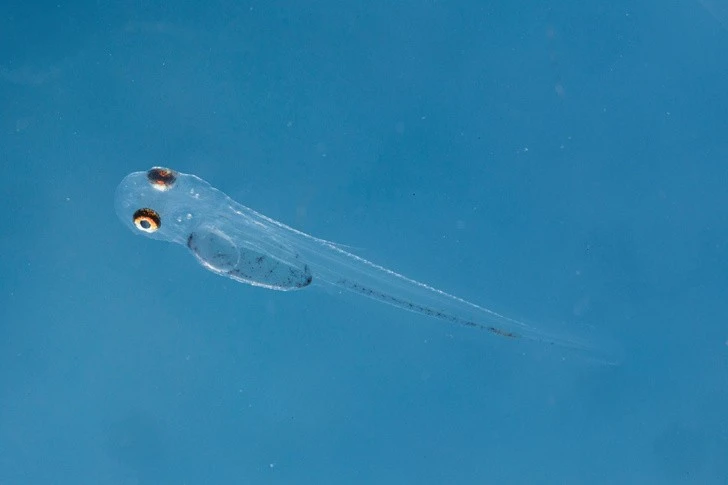
Larva of the striped ruffe
It is noteworthy that ruffs can interbreed with perches. The resulting hybrids have features of both species and are more hardy and resistant to environmental pollution than their parents. Hybrid males cannot bear offspring, which cannot be said about females.
Note to fishermen
Some fishermen do not take ruffs seriously. Some even believe: if you catch a ruff, you won’t see another fish. Practice, however, shows the opposite. The ruffe accompanies schools of larger fish like bream, and is well caught with them using a regular float rod or winter “twitch”. The caught ruffes are then used as bait to catch pike, catfish or burbot. Experienced fishermen say that before putting a ruff on a hook, it is advisable to cut off its spiny dorsal fin. 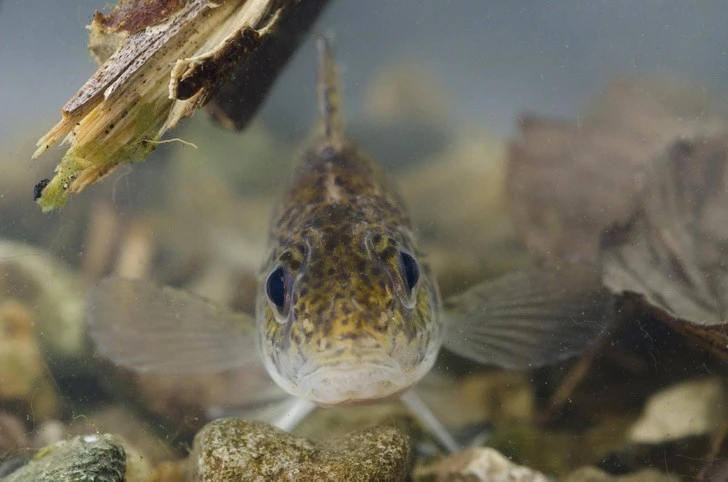
The ruff is suitable not only for bait. It makes an excellent fish soup - many gourmets highly value ruff broth. Dried ruffs are often consumed as a beer snack. Even though these prickly fish are not considered commercial fish, they also bring benefits to humans!