Japanese macaque: merciless hierarchy amid high intelligence (13 photos)
If you don't like to complicate things, then you are definitely not a Japanese macaque. Their social relationships are so complex that my editor and I argued about them for almost an hour before we finally understood how it all worked. 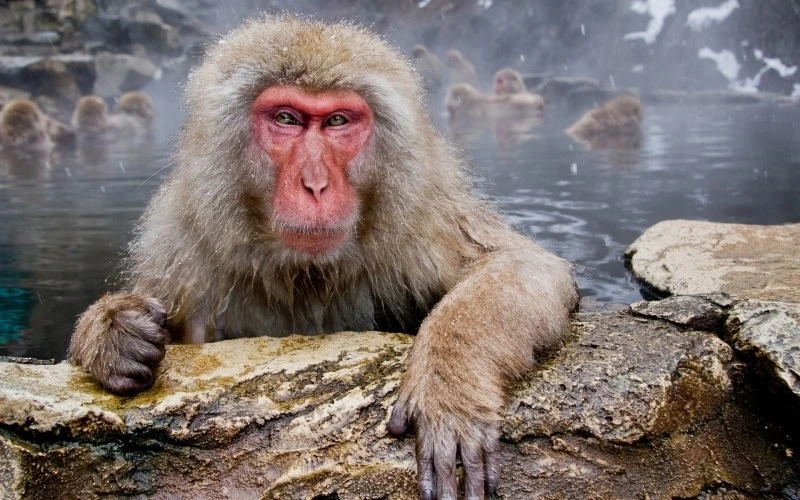
Well, now, armed with knowledge and a complete vision of the situation, I’m ready to tell you about our distant relatives! 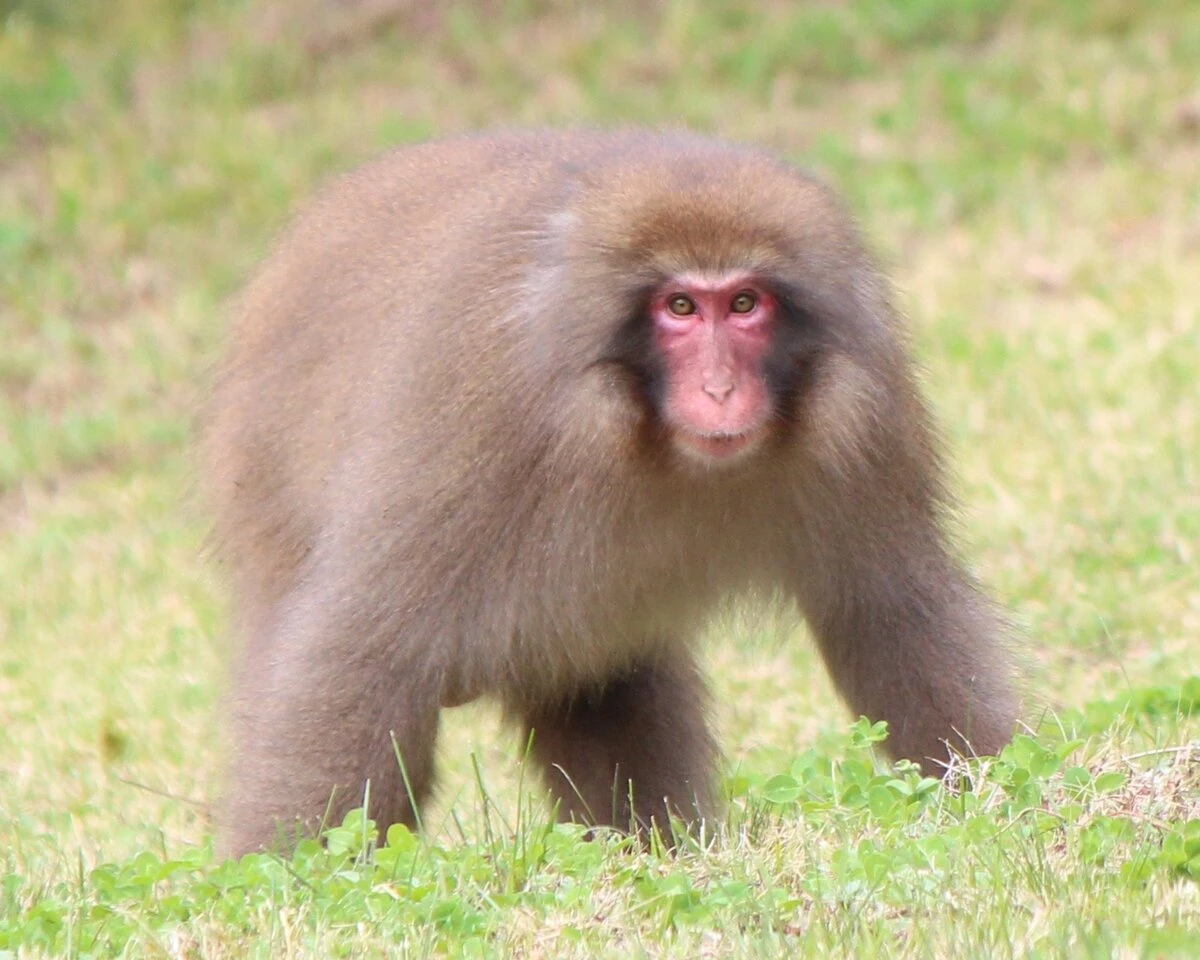
Even I wouldn’t refuse such a fur coat!
Even looking at photographs of primates on the Internet, you notice that they stand out among other macaques. Not in size, no, the animals are half a meter tall and from 8 (females) to 11 (males) kilograms of weight - this is the average result for macaques. They attract attention with their thick and dense wool of white or yellowish color, from which only fingers and a bright red muzzle stick out. 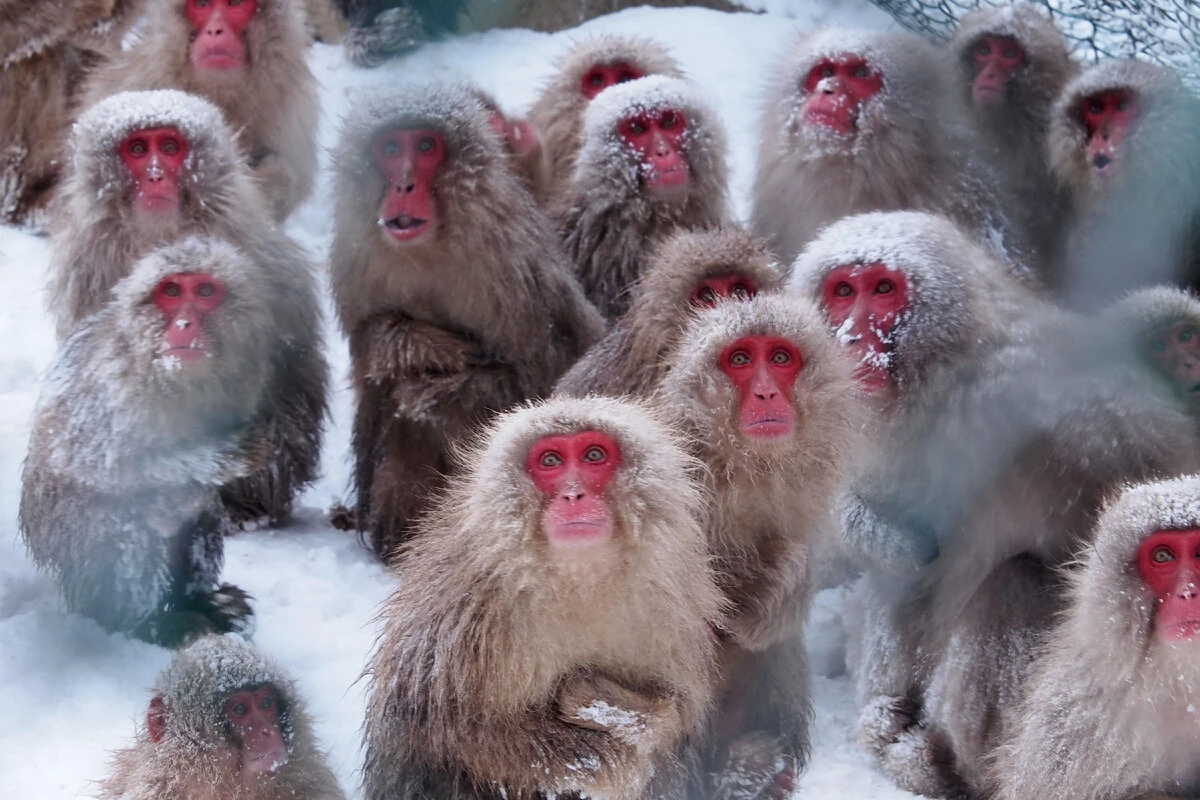
Siberians stand at the bus stop and wait for the bus.
They don't need a fur coat for beauty. It helps withstand low temperatures, down to 20 degrees below zero. Thanks to this ability, Japanese macaques are the northernmost primates on the planet. If you forget about the person, of course. They live in regions where there is snow for up to 4 months of the year! 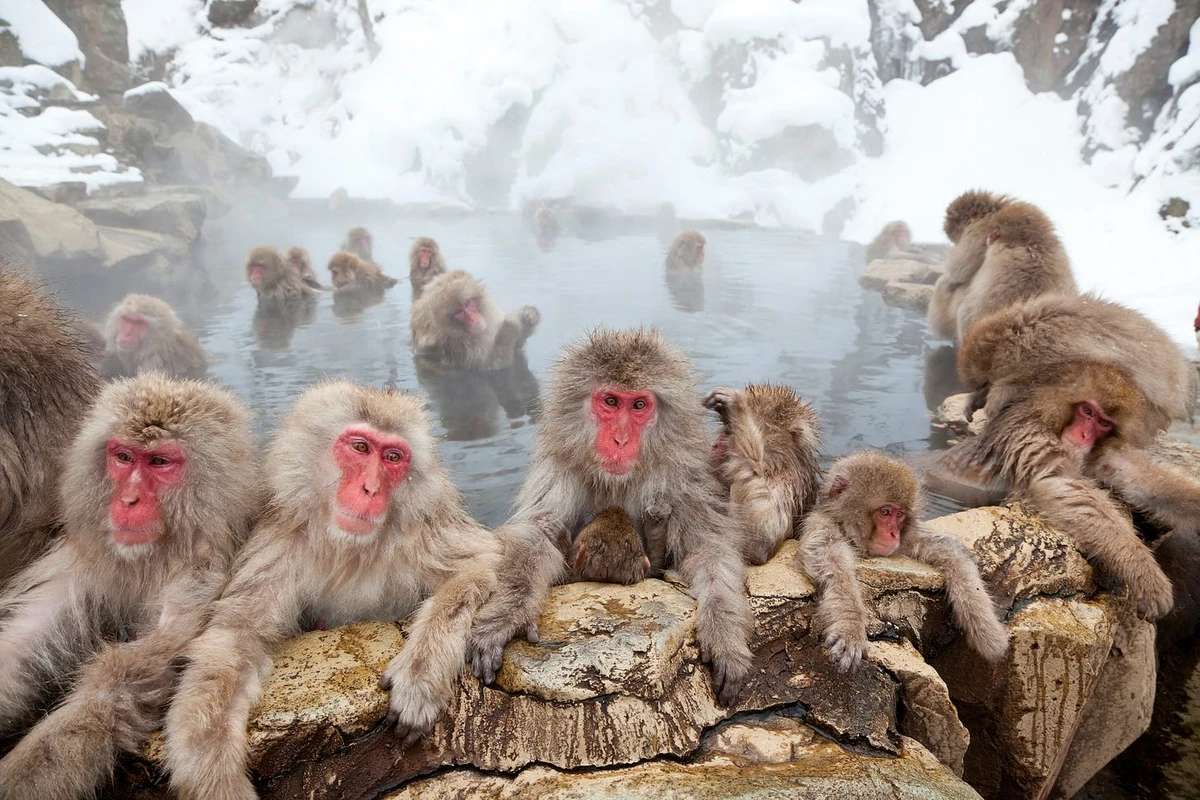
Of course, it's not -30 in Japan. But in winter the temperature regularly drops below -5 degrees. And for most monkeys this is already terribly cold!
Another way to warm up is thermal springs. Have you ever seen photos of Japanese macaques basking in warm water, like during a spa treatment? It turns out that for them it is the same as a bathhouse for us. A way not only to warm up, but also to relieve stress. Japanese macaques do not like the cold just like us. Their levels of the stress hormone, cortisol, increase in winter. But for those who regularly bathe in warm water, it is 20% lower. The monkeys enjoy the procedures so much that they don’t even notice the tourists during the bathing process! 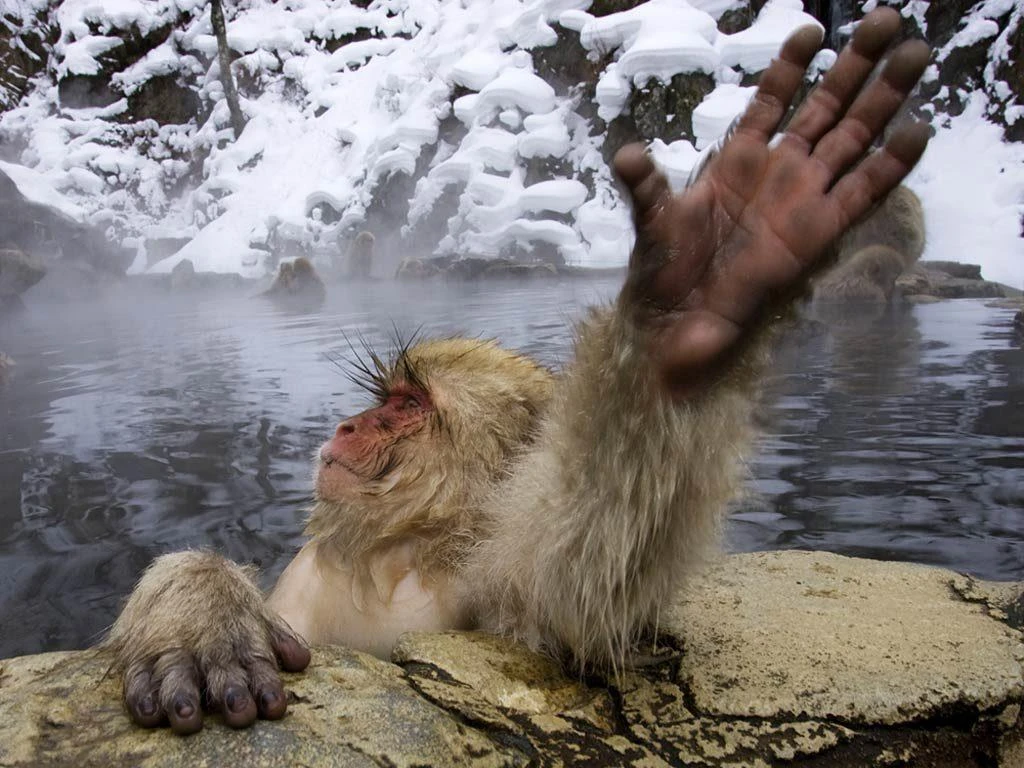
Mom, come out, I haven't gotten dressed yet!
Monkeys have learned not only to wash themselves, but also to wash food! Cosima Island macaques, for example, wash sweet potatoes and grains in the sea before eating them. Special gourmets dip even clean food in the sea, adding salt to it. Simply because it tastes better! First, a female named Imo learned this, and a year later, almost all the monkeys on the island used the life hack. 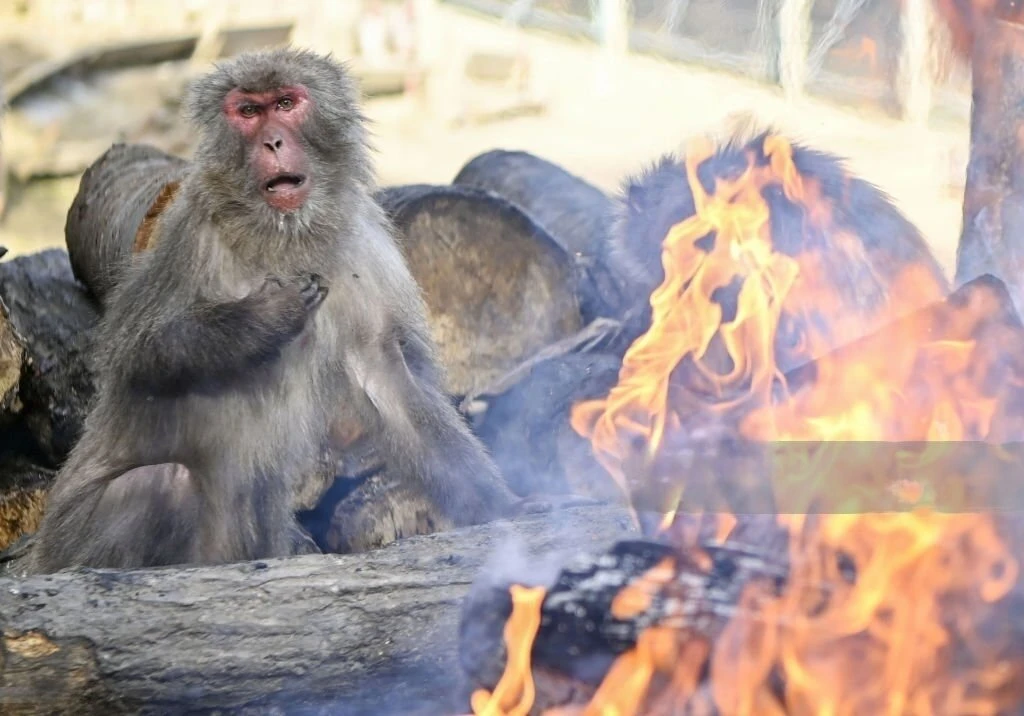
Sanya, what are you looking at? I've already marinated the sweet potatoes, let's go fry them!
All this speaks of extremely extraordinary intellectual abilities. And where intelligence is developed, complex societies always appear. The life of macaques revolves around participation in social games and the constant determination of the hierarchy within the flock, usually numbering from 10 to 100 individuals. Every primate tries to climb higher. The higher you are in the hierarchy, the tastier your food, the better your bed, and the more time you can spend in the hot springs. But the routes to gaining recognition vary greatly by gender. 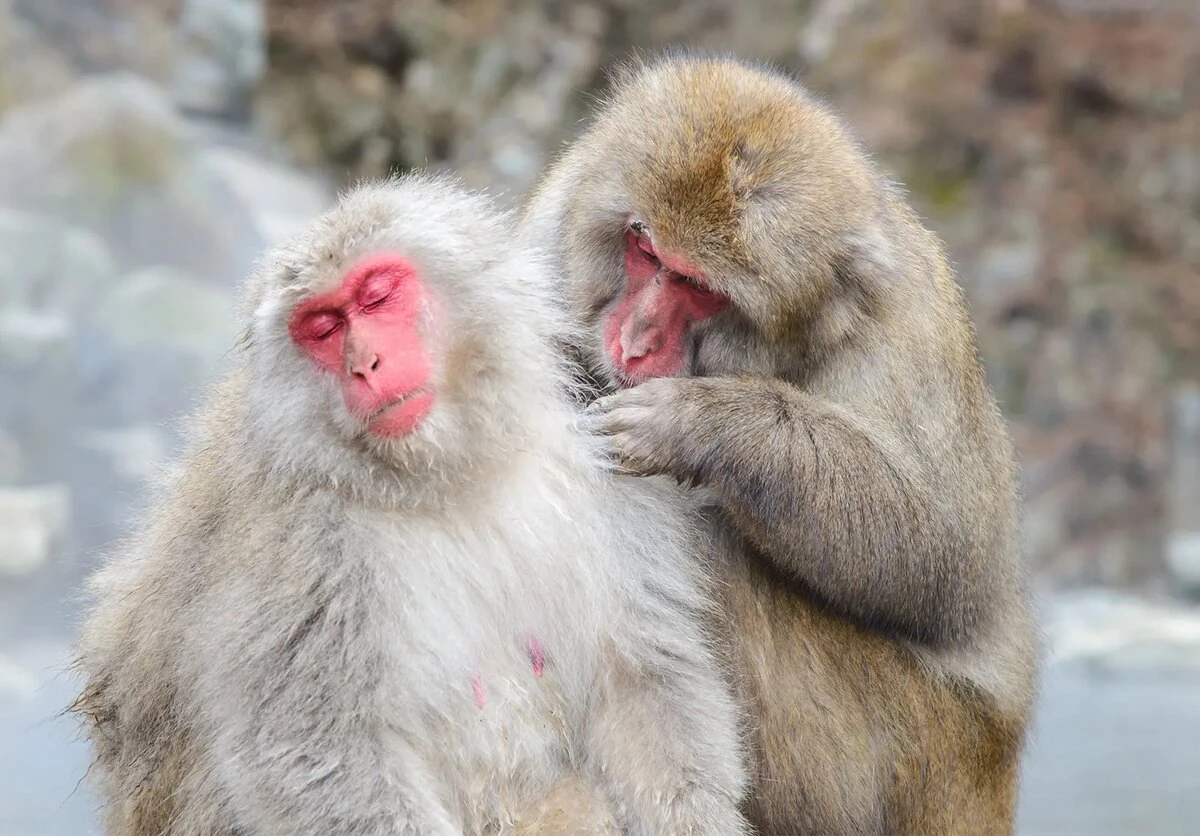
Now we’ll get all the ticks out and you’ll be the most beautiful princess again!
Females are the core of the pack. They live and die where they were born. Such groups are called matrilineal. Over the years of existence, clans of high-ranking matrons appear within one group, competing with each other. But the advancement in the hierarchy itself is more like a living queue: females become closer to the top only as their superiors die. True, there is a nuance: daughters take a position immediately behind their mother. Therefore, the children of the respected madam will be ranked above the adult "middle class" monkey. 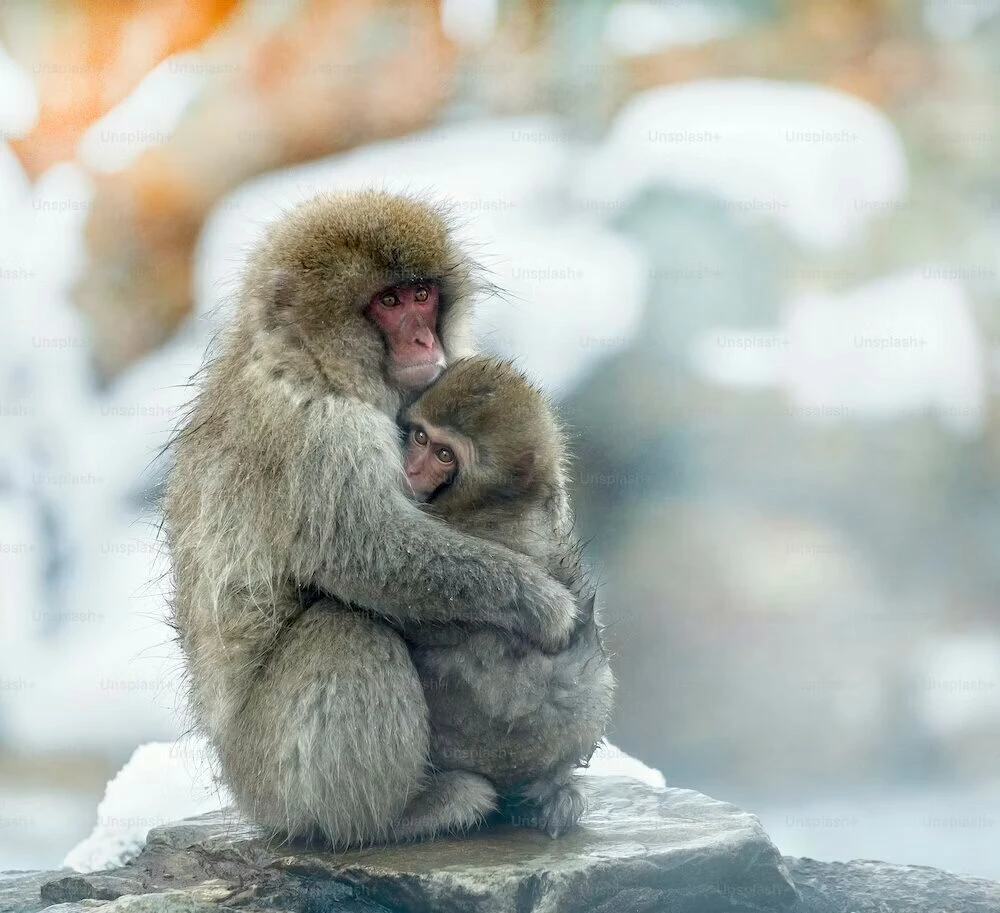
A mother reassures her daughter, who has just learned that she will become 256 in the hierarchy only in 10 years.
But males always make their way from the very bottom. Upon reaching adulthood, they leave their native pack and spend some time alone or in small male groups. And only then do they join mixed company. Their goal: to get to the top, to become alpha. 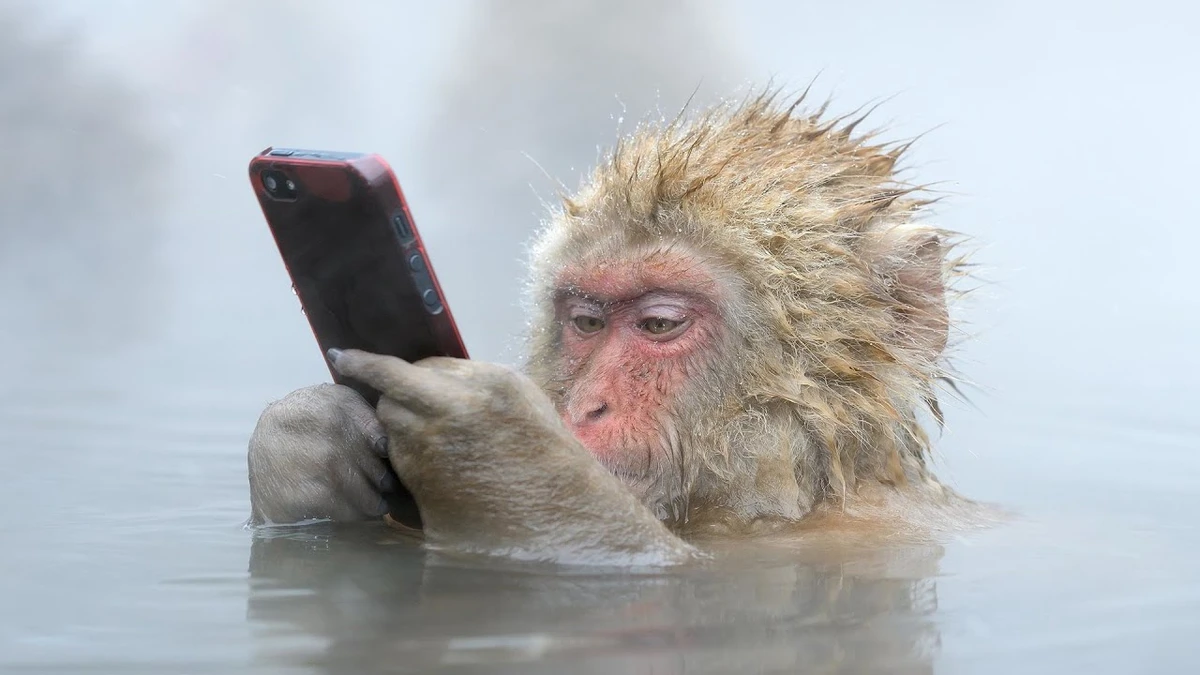
Ok Google, how to find friends in a new group?
There are several ways to reach the top. Some wait until their older competitors die; others rely on friendship with respected females who will support them in difficult times. And some achieve respect through force and threats. Due to their greater activity, physical strength and aggression, it is the males who lead the monkey society.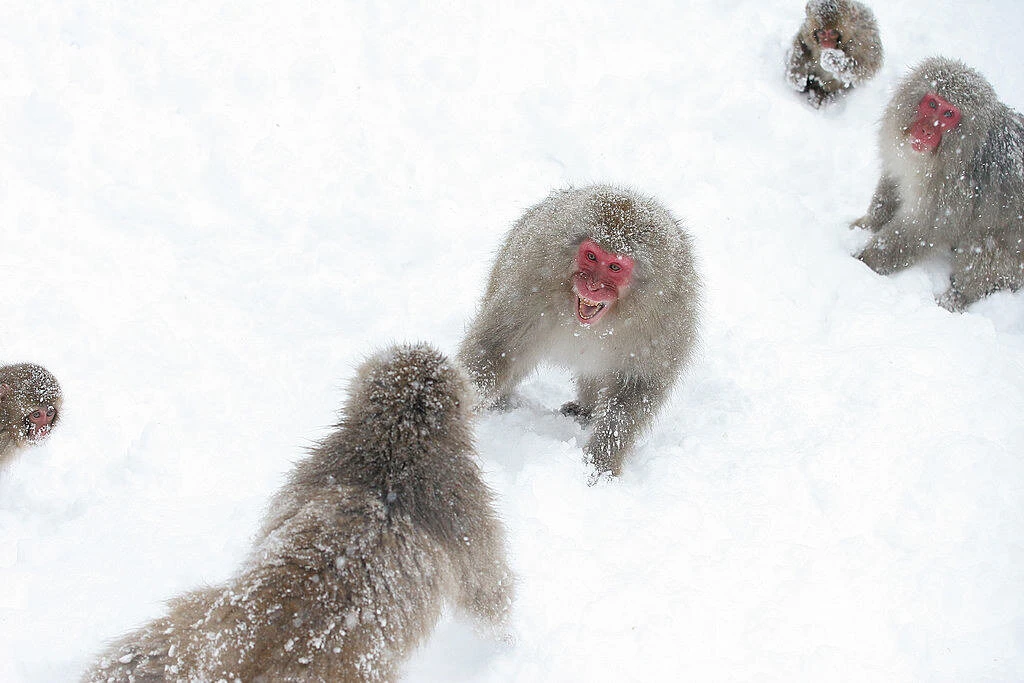
Battle for respect!
But every rule has exceptions! In 2021, a 9-year-old female named Yakei seized power in the pack. And there were 667 monkeys in it, just a minute! Instead of living like an ordinary female, an ambitious and aggressive lady decided to make her way to the top of the power pyramid, no matter what. 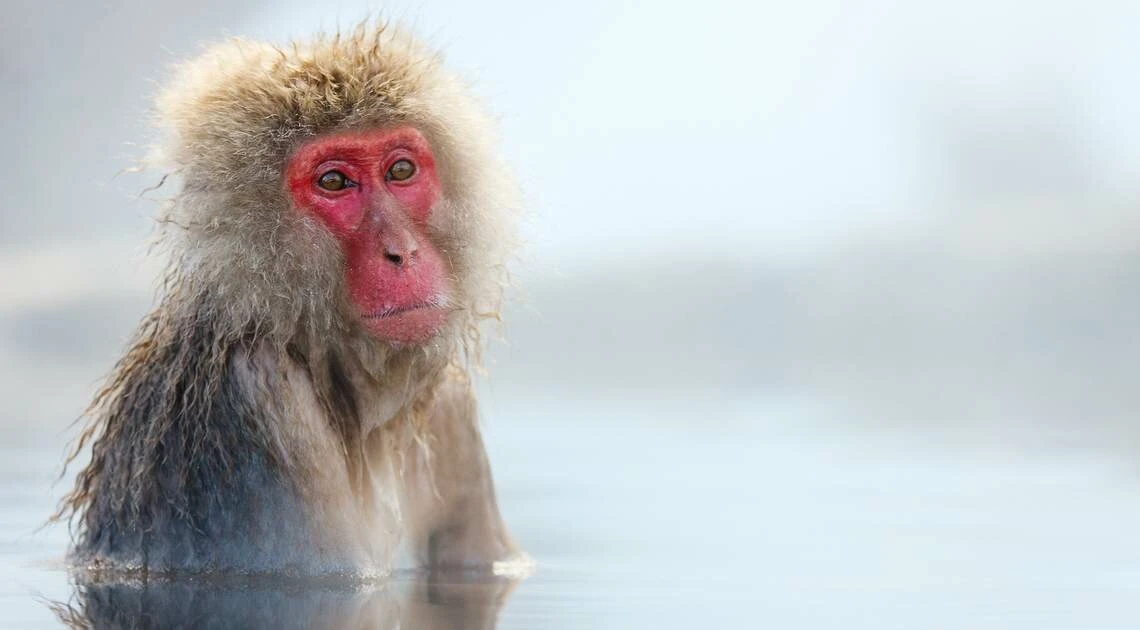
Meet Yakei. Doesn't look dangerous, right?
First, Yakei beat her mother and took her place. She then beat up the three males on top, one after the other. The last one was Nanchu, the leader of the pack. Despite his superior size, he was unable to provide serious resistance to his competitor. Age had an effect: the elderly leader was 31 years old. By the standards of monkeys, he is already a real pensioner. 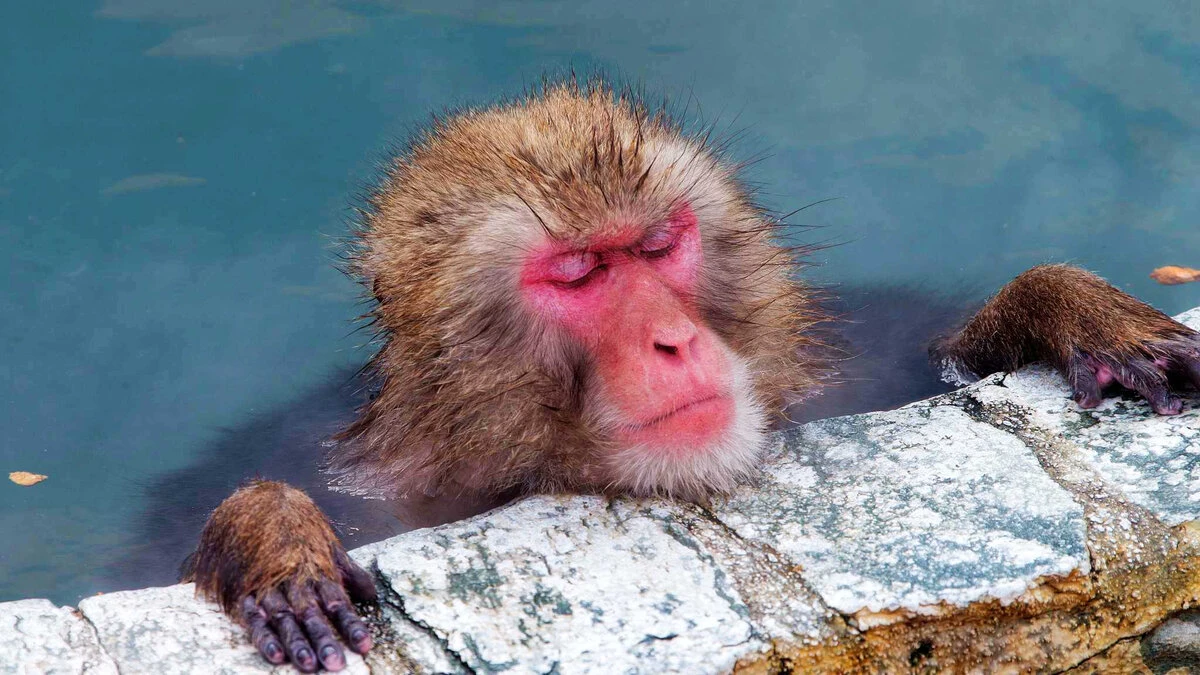
Was all this really for the sake of free access to SPA treatments?
Once at the top, Yakei began to behave like a male: walking with her tail raised and shaking tree branches. Probably, in this way she strengthened her power over the monkey gang. The female was able to retain power even during the mating season, when the guys become angrier and more impudent. 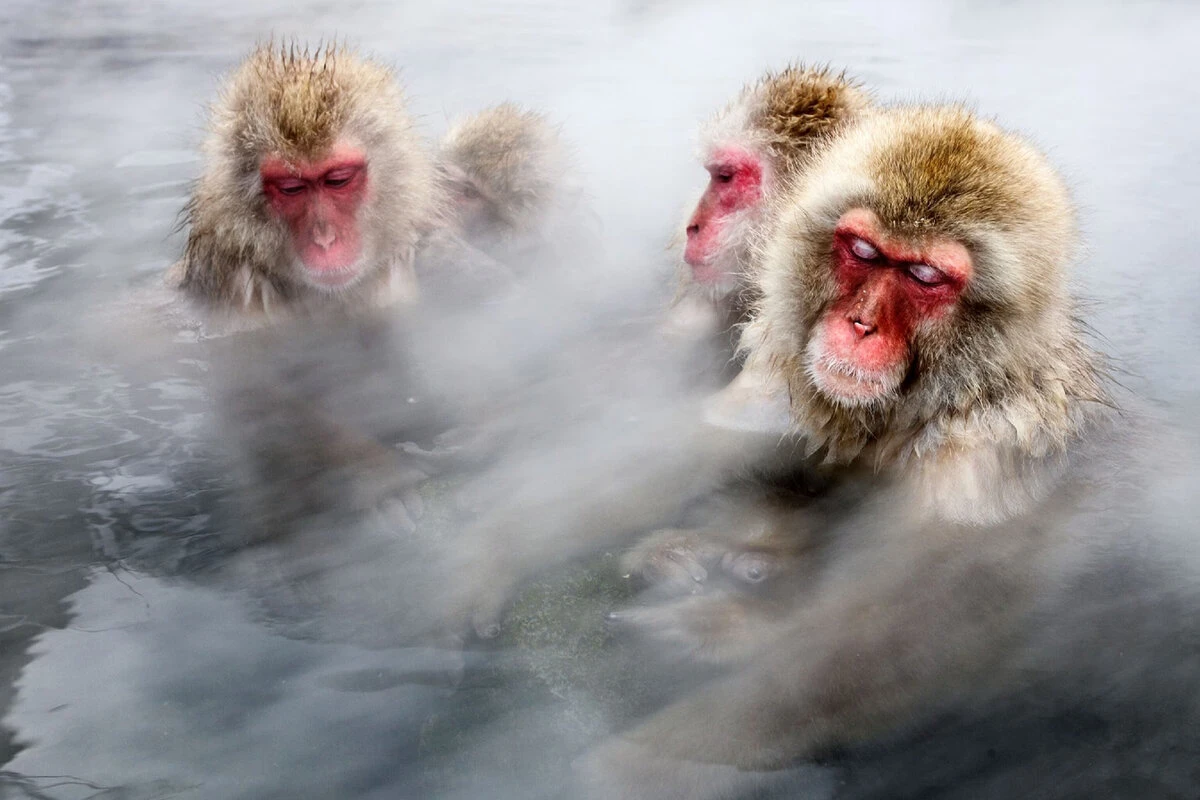
Remember this photo every time you wash yourself with water heated on the stove.
The Yakean era is the only observed instance of a female macaque troop being led. And it serves as excellent confirmation that Japanese macaques are very intelligent and flexible creatures, capable of both learning and making unexpected decisions. This means that scientists’ observation of them will give us a whole bunch of interesting stories!