Sparrowhawk: How does one of the most famous hawks live in the wild? (10 photos)
The most accurate description of a sparrowhawk: fast, bold, sharp as a bullet. This feathered predator is damn small, damn fast and damn beautiful! 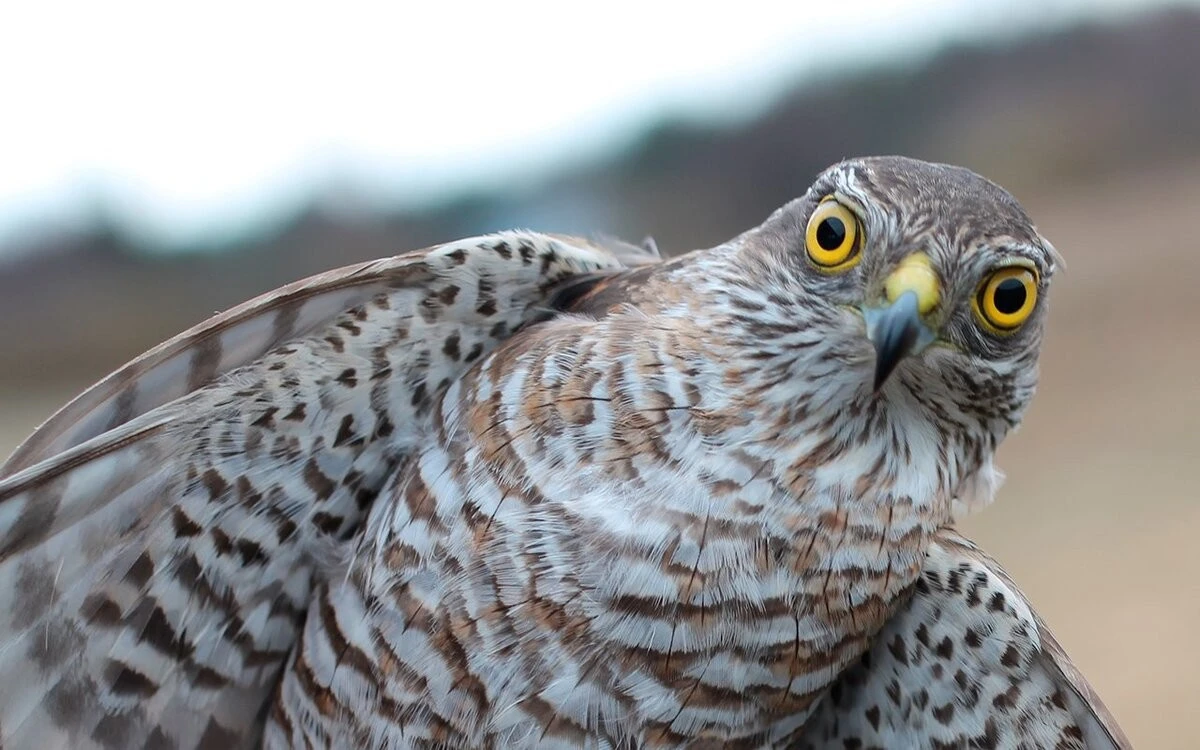
Our predatory friend is found almost throughout the Old World. In summer, the bird can be found from Portugal to Kamchatka, and in winter it goes to Southeast Asia or Africa to warm its furry butt. 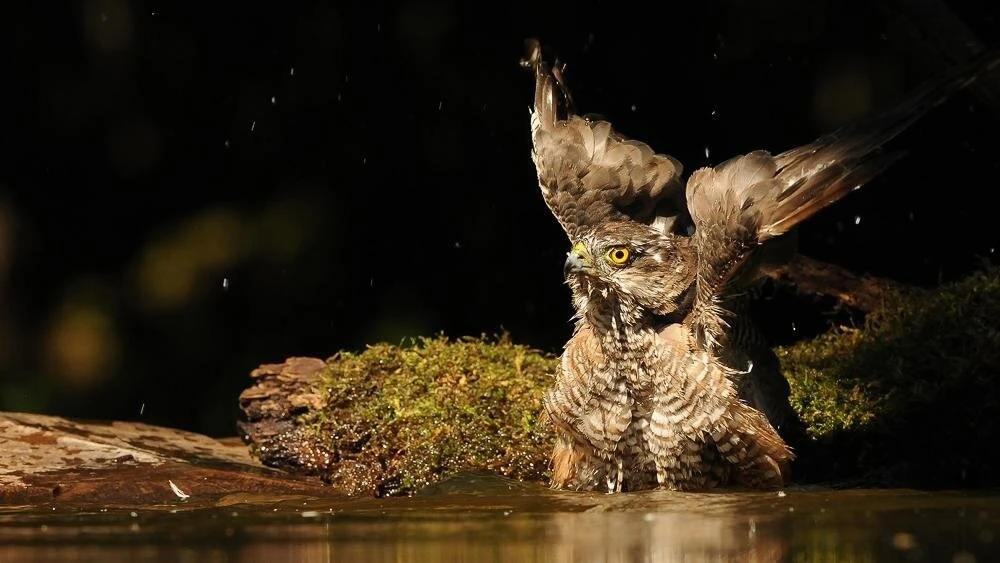
If what you value most about birds of prey is their size, then the sparrowhawk is not your choice. The hawk carcass is no more than 43 centimeters, and its weight does not exceed 280 grams! And now we are talking about sexually mature females, males are one and a half to two times smaller. Sexual dimorphism be damned! 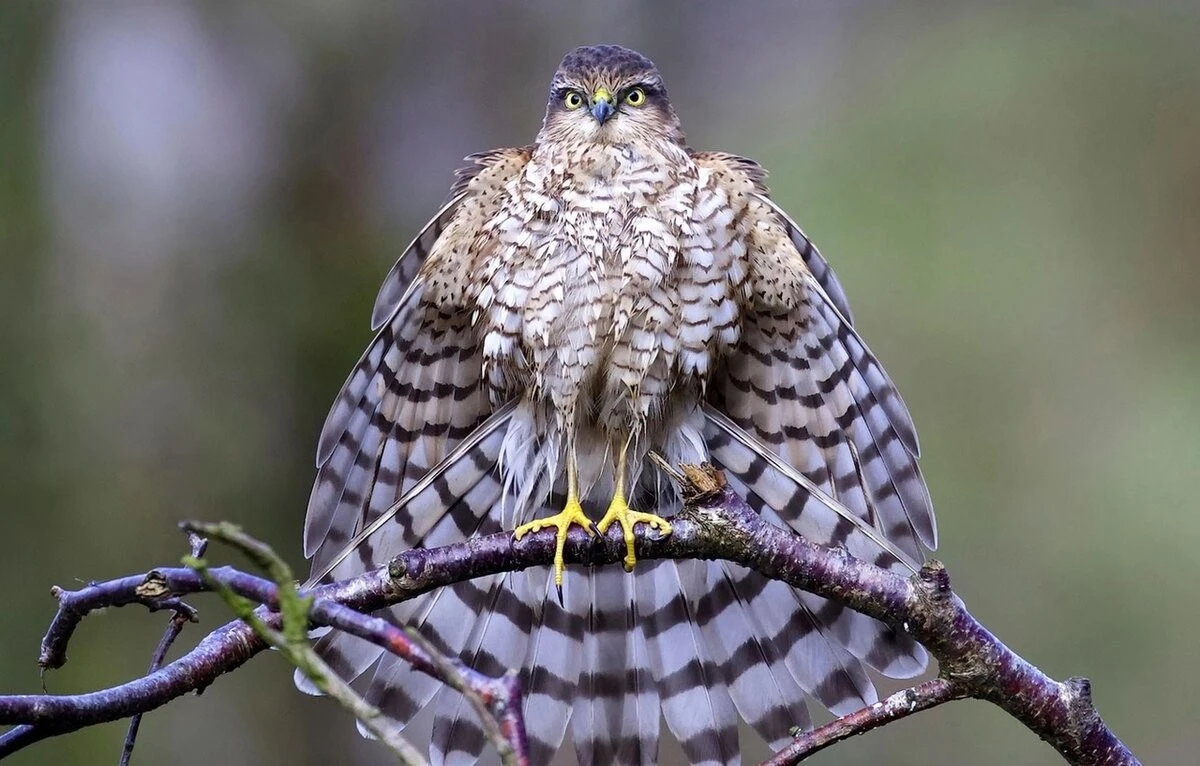
However, true connoisseurs of winged killers know that they need to look not at the volume of the carcass, but at the efficiency. Wide wings with a span of 50-80 centimeters are perfect for sharp turns in the forest and for high-speed racing in open spaces. Moreover, the prey may miss the start of the hunt: the bird flies almost silently, and camouflage distorts its outline and complicates identification. 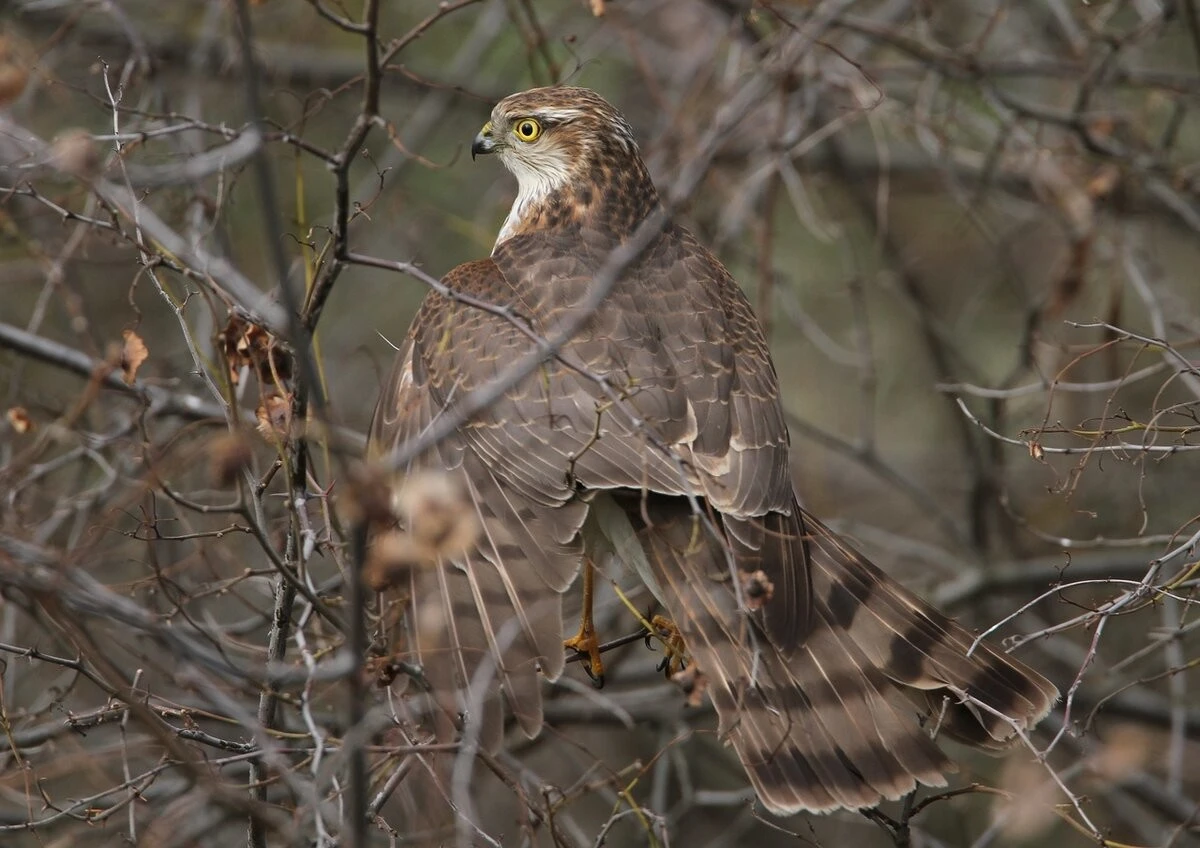
The sparrowhawk is not only a first-class hunter, but also a master of camouflage.
The sparrowhawk skillfully uses all its abilities to hunt an assortment of targets: dozens of species of passerines and small wading birds have lived in constant fear for hundreds of thousands of years. With the arrival of man, the diet of our children expanded greatly, it included domestic animals (farmers are indignant) and city pigeons and sparrows (residents of megacities are delighted). 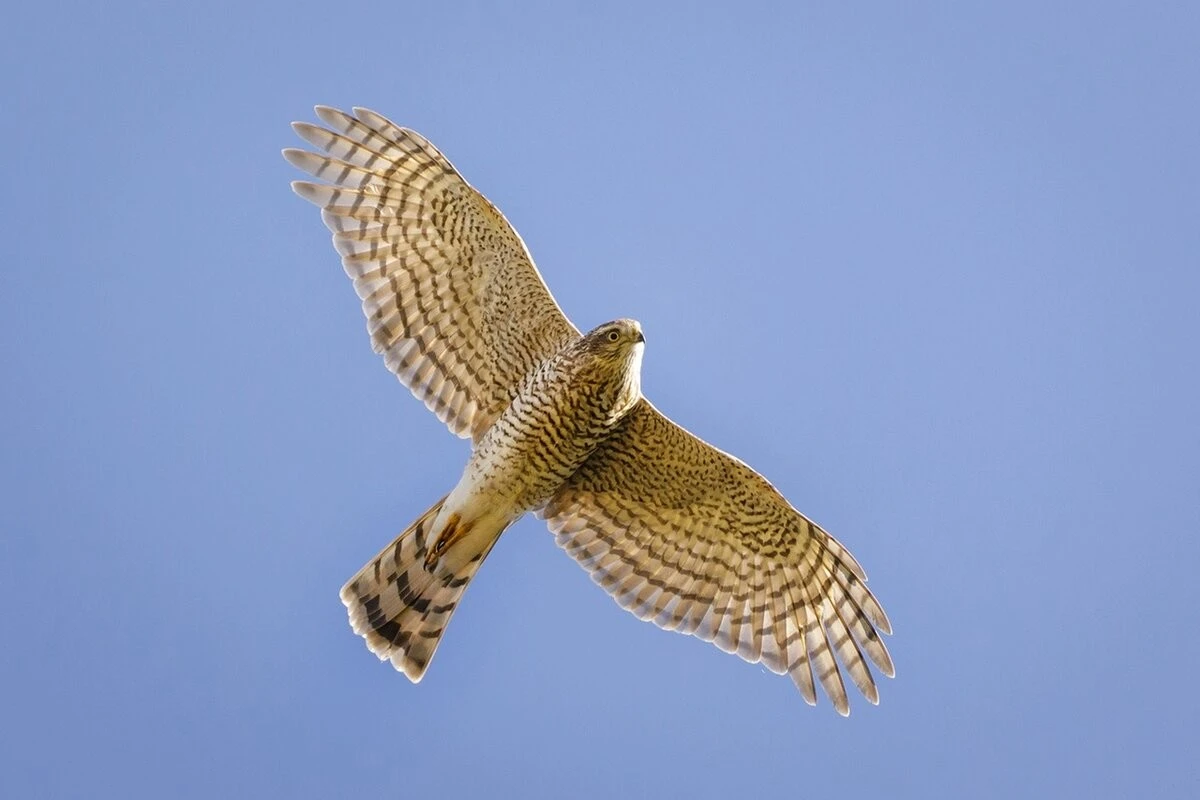
But this does not mean that man brought only benefit to the sparrowhawk. For the last 500 years, we have been actively catching and training these birds, and by the middle of the 20th century their numbers dropped to critically low levels; then we went a little overboard with pesticides. Fortunately, nothing threatens the little hawks now, because they are breeding like crazy. 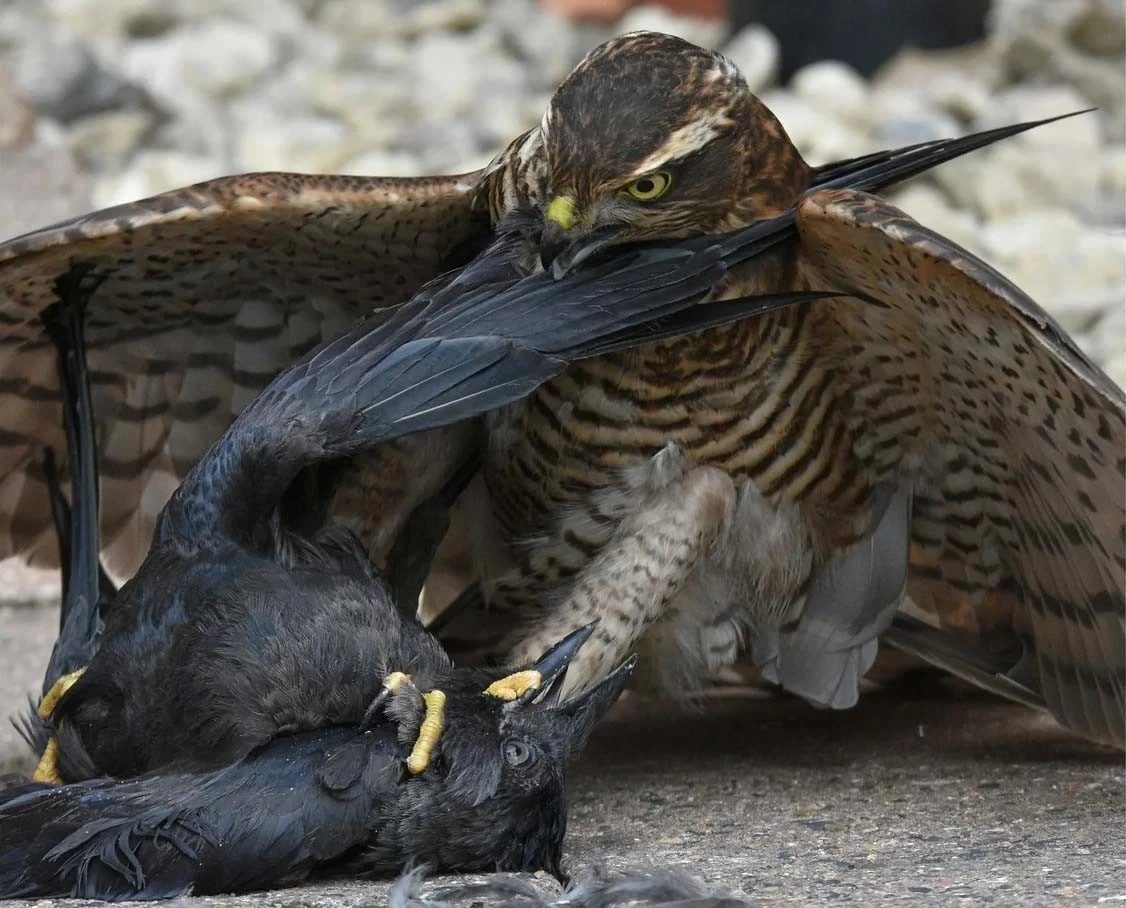
Every spring, male sparrowhawks tend to screech a little. If the performance of the show “The Voice” is a success, the boy will attract a fighting girlfriend and begin building a nest on the cozy top of a coniferous tree. Soon there will be half a dozen freshly laid eggs in the newly built apartment. 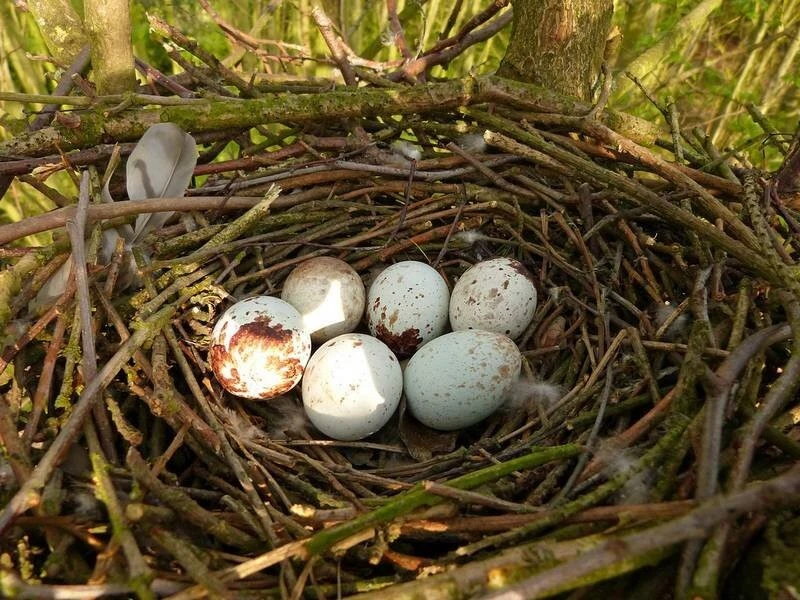
Sparrowhawks lay eggs in April-May.
At this stage, a division of labor occurs: the mother takes upon herself the incubation and protection of the chicks, and the father takes on the task of obtaining food for all household members. They cope with their tasks in an exemplary manner: the game is unable to hide from such a high-class hunter, the mother will attack anyone, regardless of height and species. 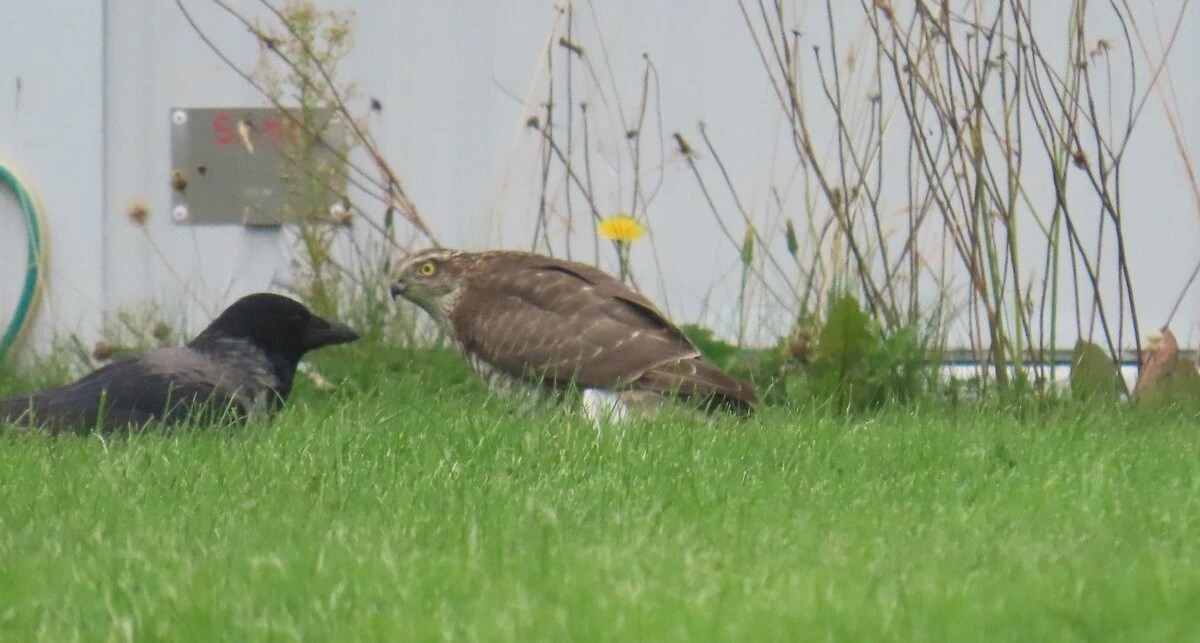
The guys don't play around either. In just three months, cute fluffy balls will turn into young and fearless hawks. True, excess ambition can be dangerous: every third chick dies during the first year of life. 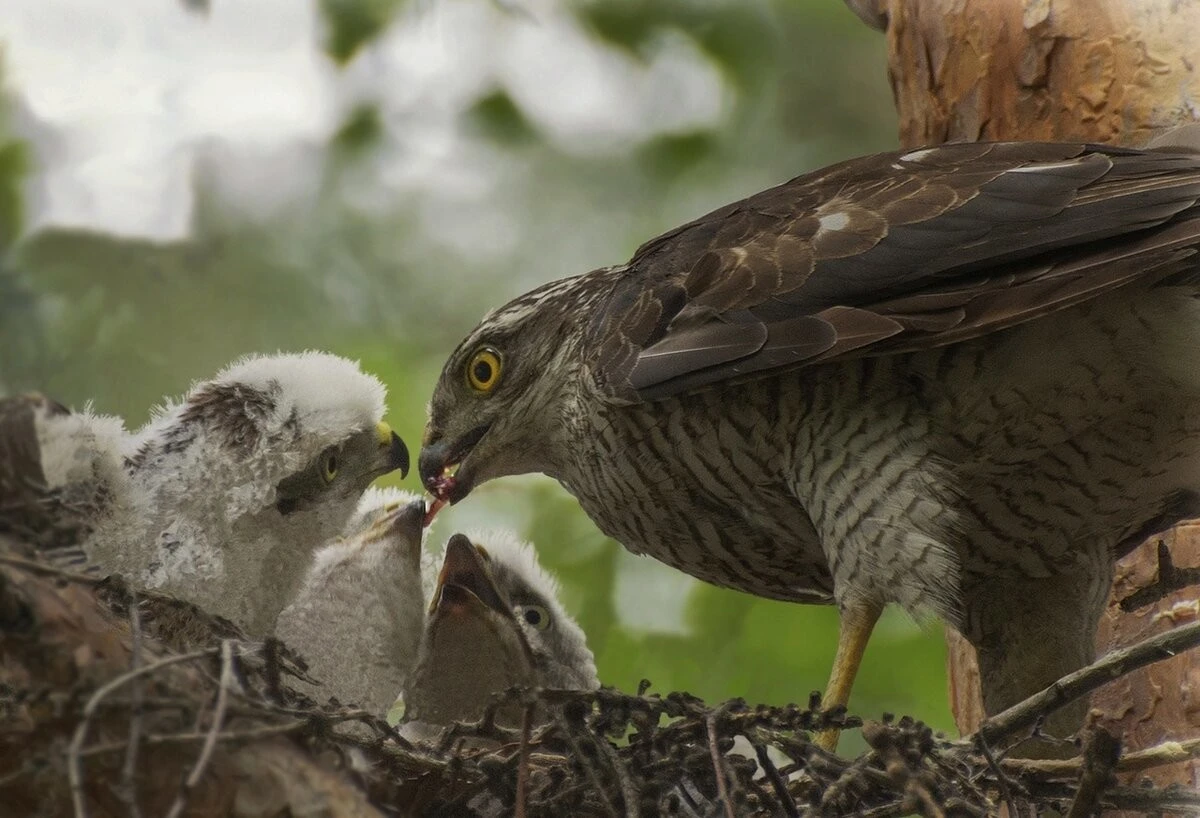
Fresh meat from your beloved daddy.
The rest manage to upgrade their intellect and reduce their desires. They are less likely to stick themselves under the barrel of a hunting rifle, do not attack large birds unless absolutely necessary, and have a real chance of living for about 12 years. 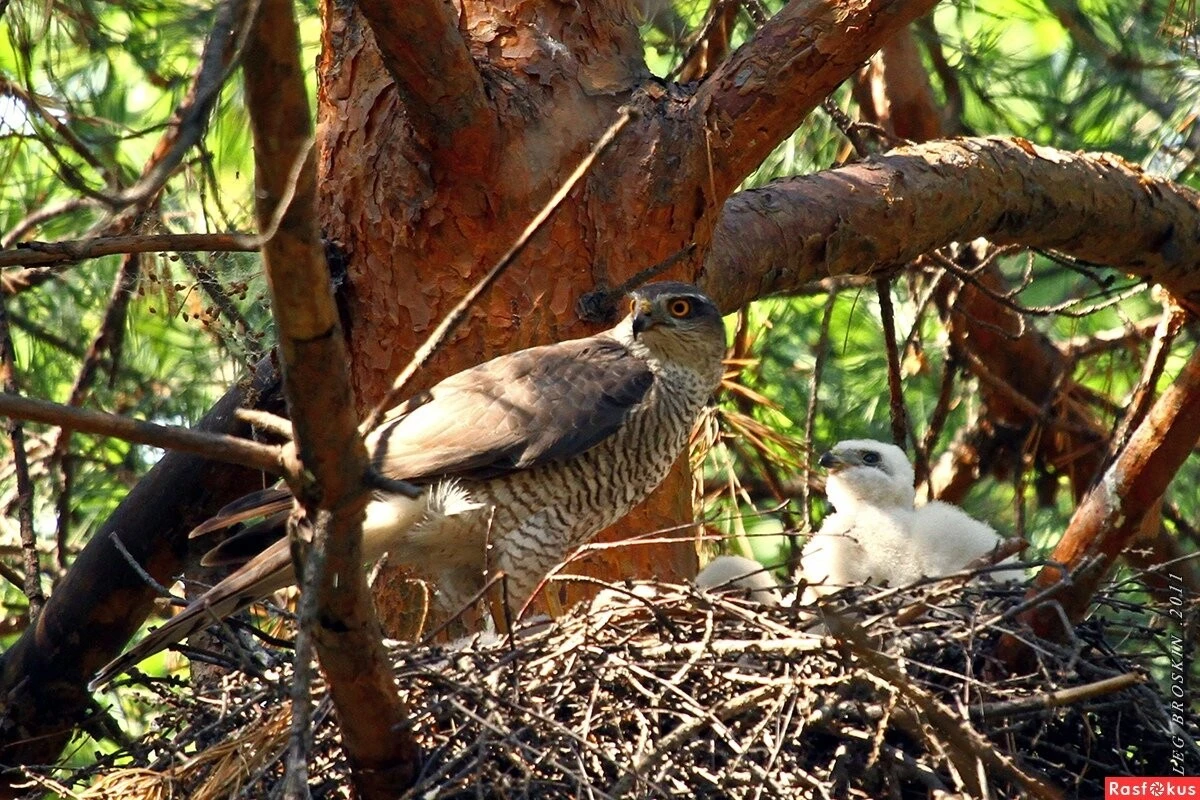
You can determine the age of the bird by the color of the iris: yellow for young birds, orange for adults, red for old birds.
What does this story teach us? Size is nothing, effort, responsibility and professionalism are everything.