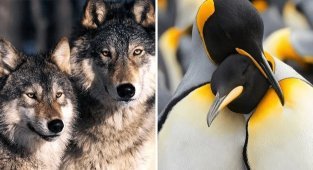
For the rest of my life: not only swans, wolves, beavers...
But also termites, vultures, voles, turtle doves...
And also skinks, bristletooths, barn owls, kalao. Who is this anyway? 

Gibbons
These are the closest relatives of a person who mate for life. Their unions are unusually strong. And they are based on equality, because males and females are approximately the same size, which means that no one dominates in relationships. Gibbons are very picky when choosing a partner. In the wild, they can search for a suitable mate for quite a long time, and in zoos and nature reserves they are able to completely ignore all possible partners. 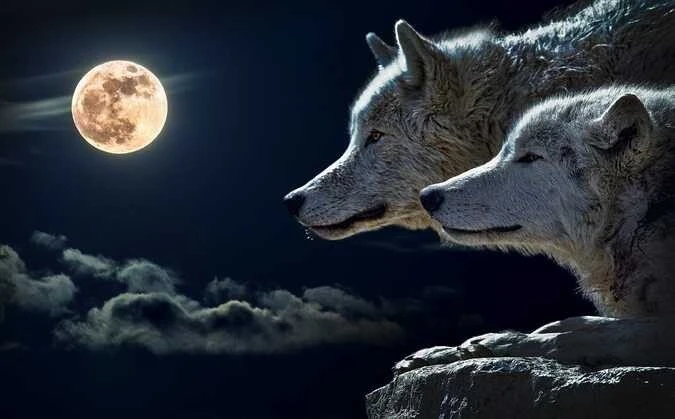
Wolves
They are not alone at all. These animals not only find a partner for the rest of their lives, but also form real family groups of related individuals. Each pack is led by the strongest male and female. The wolf treats the she-wolf very kindly and tenderly, cares for the female in every possible way, they rub their muzzles, flirt with each other, and only death can separate them. And after the death of one of the partners, the other no longer seeks a relationship, remaining faithful for the rest of his life. 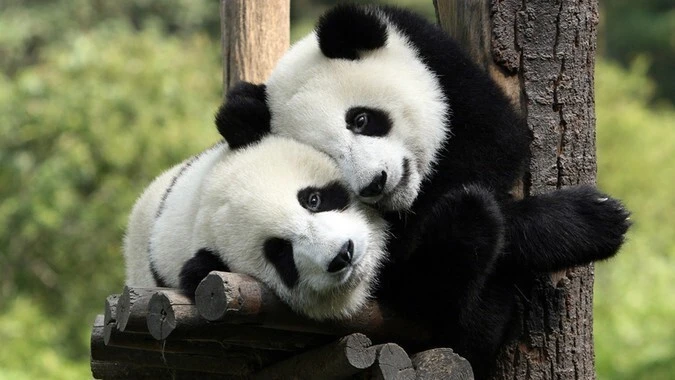
Pandas
Nature has awarded the sweetest pandas with all the virtues at once - they are modest and shy, caring and gentle, and remain faithful to their companions all their lives. Unlike many other species of animals, the male panda lovingly cares for the female, both before mating and after the birth of the cubs. 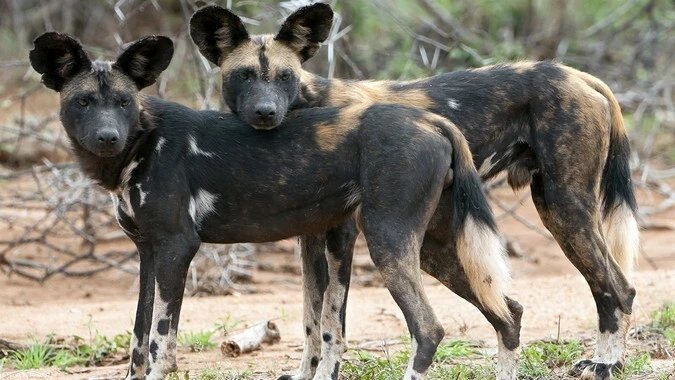
Wild dogs
These animals are only angry in appearance, but at heart they are romantics, respect the institution of family and take care of puppies until they grow up. 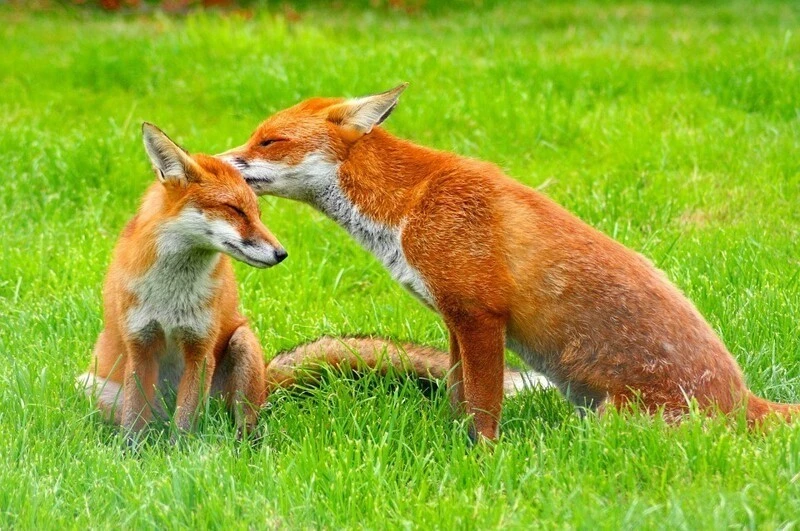
Foxes
Maybe they are considered cheats, but not in family relationships. Foxes form strong pairs and whole related packs. Males tenderly care for their females: they take care of them during pregnancy and build a family nest. Both parents take care of the offspring. True, there is one nuance in the relationship between foxes. If the female dies, the male no longer looks for a mate and lives out his days alone. But in the event of the death of a male individual, the place of the father of the family can be taken by a “stepfather” fox - a male who helps the female guard the little puppies. 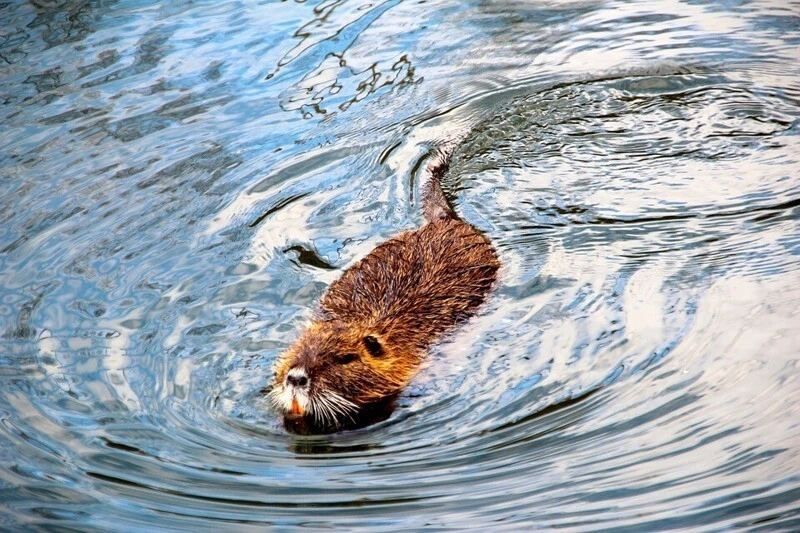
Beavers
Beavers are loyal to each other throughout their lives, which lasts an average of 25 years. They build their home together, which protects them from predators. Researchers believe that the beaver is the head of the family, but the beaver is completely satisfied with the matriarchy, so the secret of this couple’s long and happy relationship lies in the infinite female wisdom. The beaver takes the initiative in mating and the issues of raising and training the cubs. The male devotes himself to construction and obtaining food. 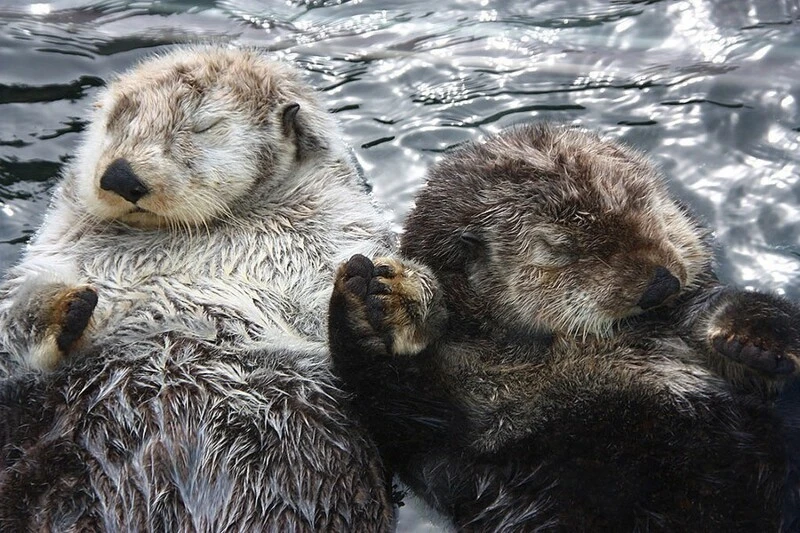
Sea otters.
When it's time to eat, sleep, or simply relax, otters do so in the water. And during sleep, partners always hold their paws so that they are not separated by the current. 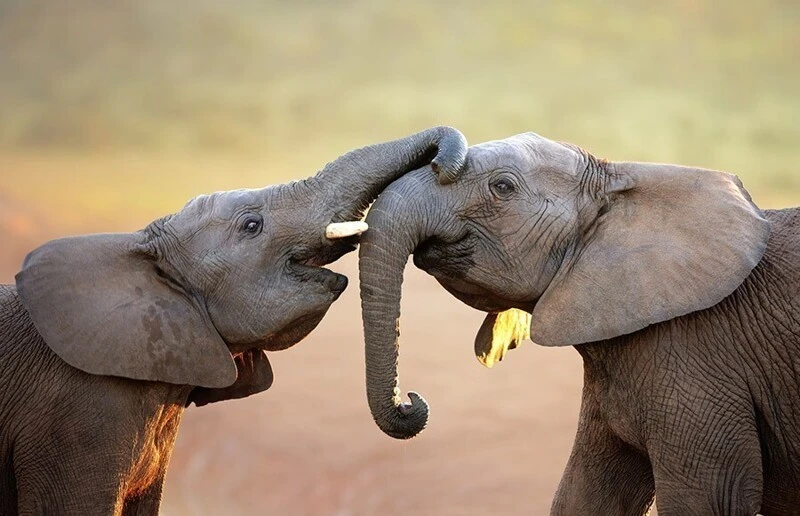
Elephants
They are powerful animals, but when it comes to lovers, they are all tenderness. An elephant's trunk contains up to 100,000 different muscles and is more sensitive than human fingers. So it’s not surprising that when elephants “roll up” to each other, they wrap their trunks around each other. These giants also use their trunks to stroke their partner's head and back when they are sad. 
Steppe voles
Although most rodents are known to be sexually promiscuous, prairie voles break this frivolous reputation by forming monogamous pairs. They care for each other, cuddle for warmth, share nesting and raising responsibilities, and generally display high levels of supportive behavior. 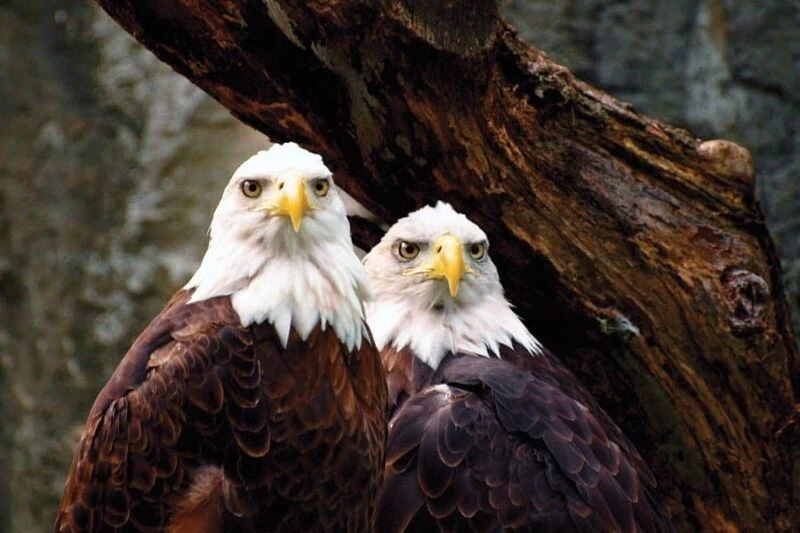
Bald eagles
The secret of the strong union of these formidable birds is in the bewitching mating dances and the nature of monogamous people. The male and female usually remain in a lifelong relationship. But there are also exceptions. If one of the pair does not return to the nest after wintering, the other looks for a new partner. Each mating season, these faithful birds return to the same partner. Just like black vultures, bald eagles take turns incubating eggs. 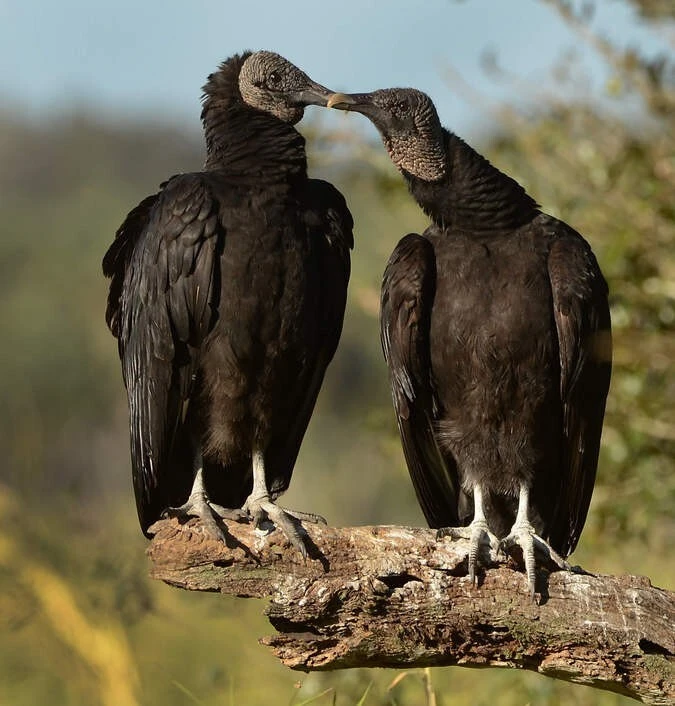
Black vultures
For black vultures, loyalty is a family matter. They not only live in pairs for many years, but also nest together, incubate eggs together and care for their offspring. Cheating on one of the partners can cause the wrath of an entire flock. Yes, these birds are not as cute as swans, but they demonstrate the same love and devotion. 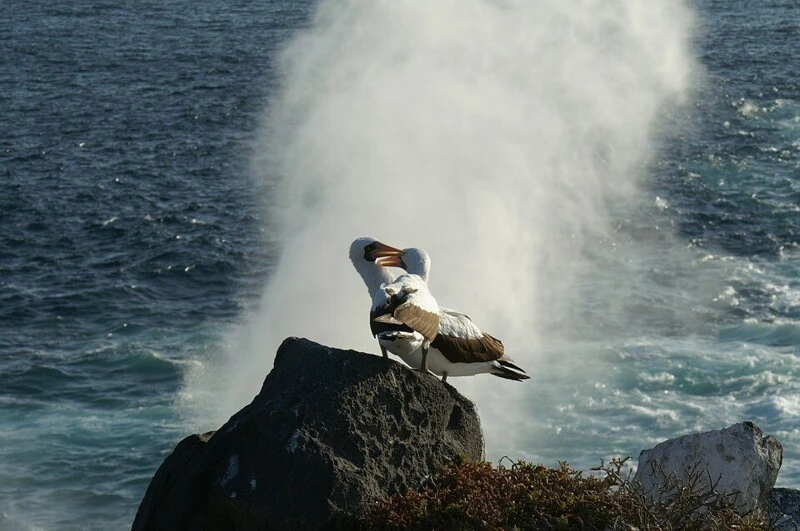
Albatrosses
Bonds between male and female albatrosses form over several years and last a lifetime. The love of the albatrosses is cemented by the husband's long business trips and the wife's completely stupid, in human eyes, but very loving ritual dances. Being monogamous, they remain faithful to their partner even after his death. “Divorce” is possible in an exceptional case: if it is not possible to have offspring for a long time. Then one of the partners can give up and go in search of a new pair. 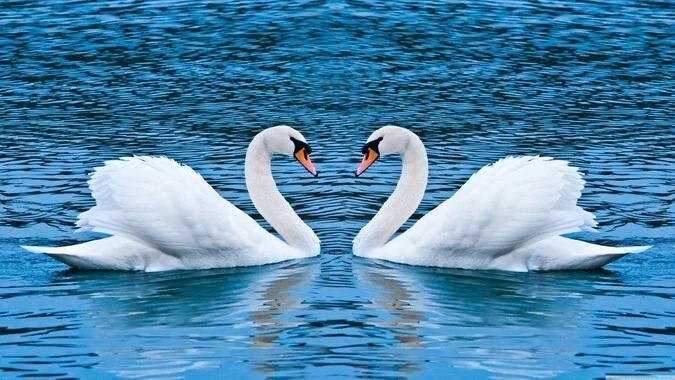
Swans
These birds are a symbol of strong family ties and mutual love. Perhaps these are the most famous monogamous people from the animal world. People often use their image in wedding paraphernalia. These birds really, in most cases, remain faithful throughout their lives. Friendship, care and compassion reign in the swan family. A swan recognizes its friend by sight and will never confuse her with anyone else. He jealously protects his chosen one and cubs and, if necessary, will even attack a person. If one of the birds dies, the partner cannot stand being alone and most often dies 
Storks
They create alliances for life. The male is constantly with his chosen one, helps her hatch the chicks, feeds her and protects her. However, unlike swans, which try to never separate, these birds fly away separately for the winter. Every spring they meet in the same place, returning to the nest only a couple of days apart. True, there are exceptions. If one of the storks does not arrive for a long time, the second may begin to search for new love. 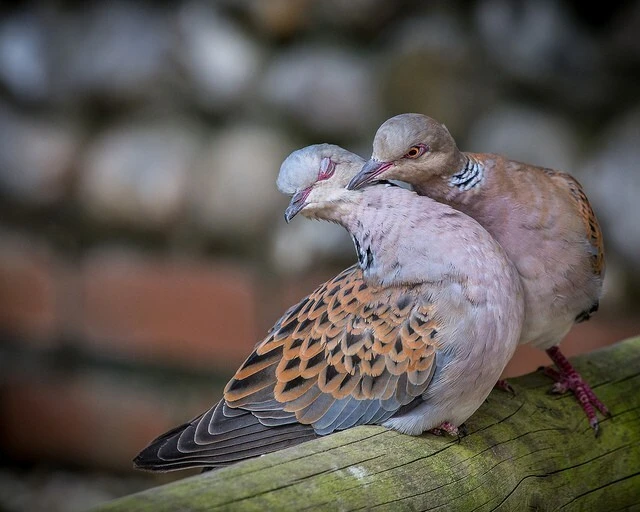
Turtle Doves
It was turtle doves that inspired Shakespeare to write “The Phoenix and the Dove.” They live only in pairs and are very affectionate towards each other. 
Pigeons
The rock pigeon can form strong pairs for several seasons or for life. This bird uses the same nest every year. If the couple does not yet have it, then the right to choose the place where it will appear belongs to the male. He brings materials in his beak, and the female builds the nest. She often incubates the chicks, but if she needs to go somewhere, the male is ready to replace her and sits on the eggs himself. When the chicks hatch, the parents take turns feeding them. 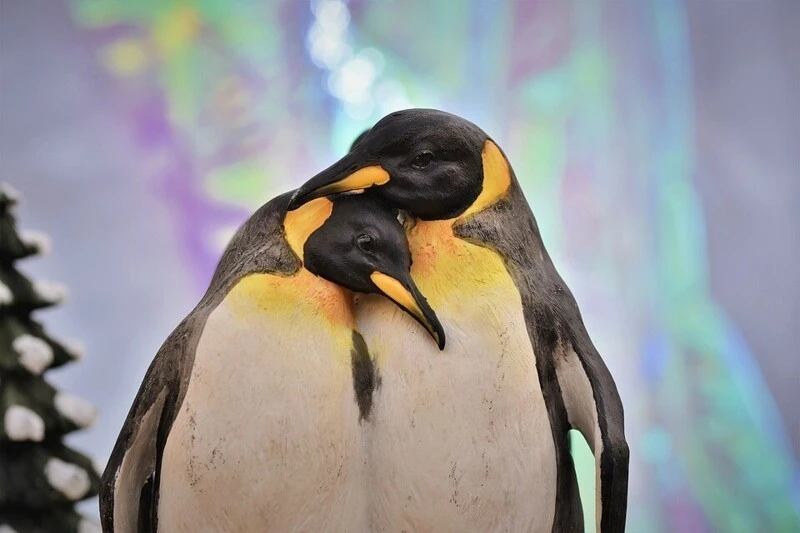
Penguins
This is the case when it is possible to keep warmth in the hearts even in the harsh conditions of Antarctica. Penguins mate for many years. And males put so much effort into family relationships that some human species would do well to learn from them. Thus, they help the female in all economic and educational matters. They tenderly look after their chosen one during the period of hatching the egg and can even replace her in this important matter. The hatched baby is cared for equally by mom and dad. And if one of them dies, the second takes care of the offspring on its own, rejecting the help of other relatives and not entering into new relationships. 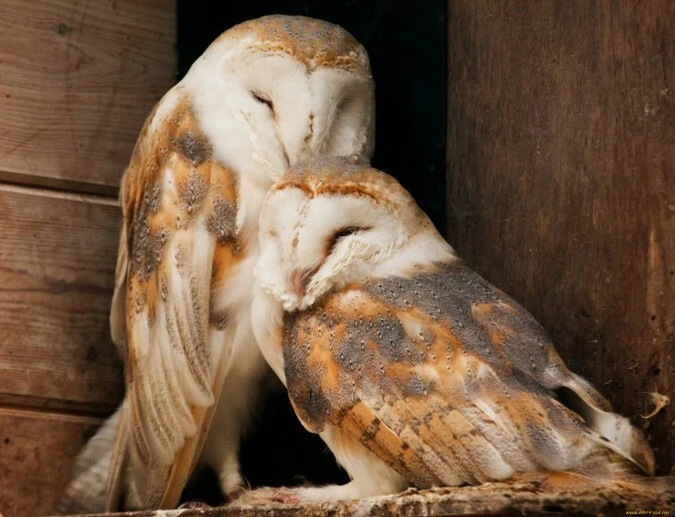
Barn Owls
These birds mate for life. Moreover, most of the responsibility in this matter lies with the male. Just imagine: first he cares for his chosen one for about a year, then he chooses a place and builds a nest there, where he invites the female, giving her a “gift” - specially caught prey. If he manages to win his “beloved,” the male fully provides for the female while she incubates the eggs, and then the whole family until the chicks grow up. 
Crows
All corvids - rooks, crows and ravens - are monogamous and form very stable pairs. There is no doubt that these are highly intelligent birds. The well-known hooded crows often form pairs for life. Every year they build new nests, choosing the cleanest possible places for this. Crows are sensitive to the ecological state of the environment. When the female sits on the nest, the male feeds and protects her all the time. When the chicks hatch, the parents take turns bringing them food. The couple has a strict distribution of responsibilities. 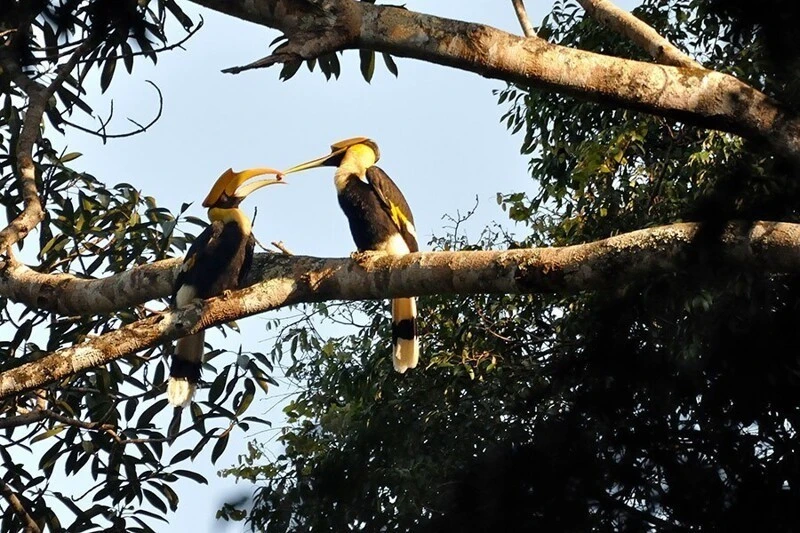
Two-horned kalao
Everyone has at least once seen a couple who just can’t keep their hands off each other. It's like they're possessed. Well, in the animal world such lovers are a pair of two-horned kalaos. Their mating ritual consists of singing a duet. Having laid eggs, the female remains in the nest for two months and eats only what her husband brings her. 
Short-tailed skink
These lizards live in Australia. During the mating season, they return to the same partner over and over again. Such a partnership can last more than 20 years. The male shows respect for his partner by walking slightly behind her. 
Termites
In ants, the queen mates with one or more males, stores gametes throughout her life, and the male ant dies soon after mating. Termites are completely different. Male and female termites often mate for life, literally giving birth to an entire kingdom. 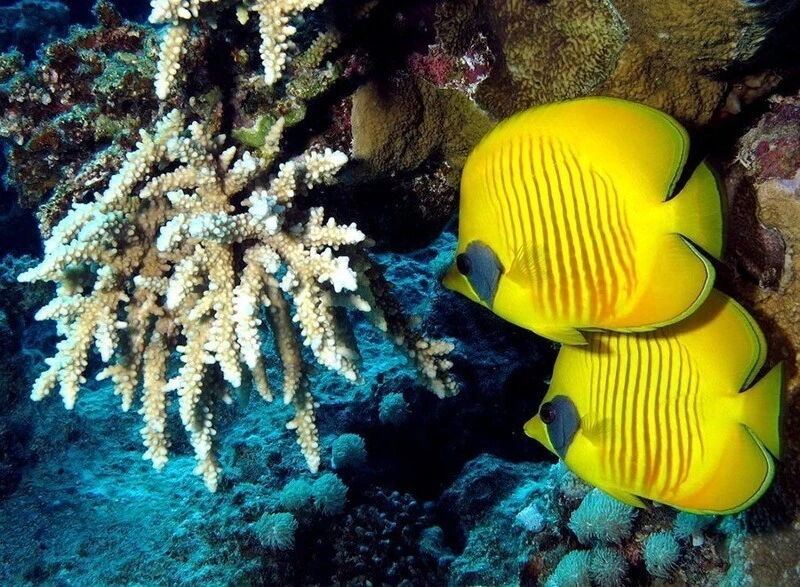
French bristletooth
It is unlikely that you will ever find a French bristletooth alone - these fish live, travel and even hunt in pairs. Bristletooths in love work successfully as a team, resolutely defending their territory from other couples. Some representatives of bristletooths live on their own... until they find that one and only partner. Once united, the pair will travel, hunt and mate for the rest of their lives. 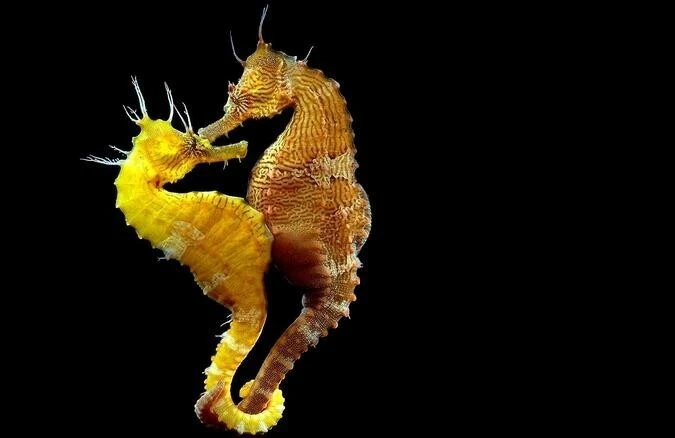
Sea Horses
Seahorses greet each other every morning with a unique dance, during which they sometimes change color. The couple performs stunningly beautiful pirouettes together and then separates for the rest of the day. The next time they meet, they greet each other to ensure that their partner is still alive, but also to strengthen their union and synchronize their reproductive cycles. These animals are elegant both externally and internally. There is more romance in their mating rituals, touching courtships and love unions than in Hollywood melodramas. Surprisingly, seahorse children are carried by the male - in a special pouch on his chest, where the female lays eggs during mating. If the male or female dies, the partner does not look for a new companion and often dies of grief.
0 comments