Once upon a time, the headdress served as a symbol of power and might. In Central Asia, it was forbidden for beggars to wear hats, in Ancient Rome for slaves, and in Ancient Egypt for everyone except the pharaoh. 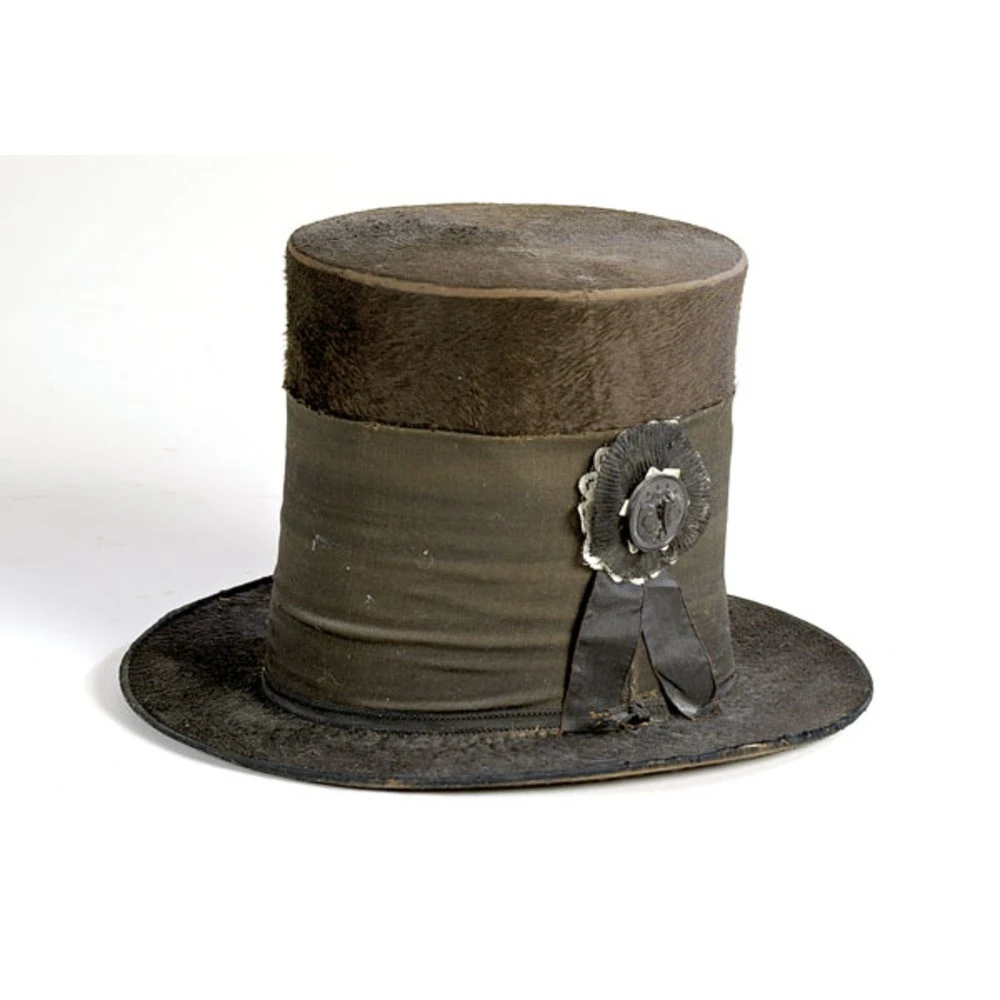
Now everyone can walk with their head covered. And the variety of hats is so great that it can satisfy anyone, even the most sophisticated taste. But how much do we know about the history of what we put on our own heads?
A hat is not a luxury
In antiquity, the attitude towards hats was purely practical. They saved people from rain, cold and heat. The ancient Greeks, for example, wore hats only when traveling. If someone took it into his head to wear a hat in the city, he would be considered a fool.
By the way, the Greeks had only two types of headdresses - pilos (something like a cap that fits the head, without a brim) and petasos (a headdress with a brim, similar to a hat). It was convenient to travel in bad weather in this way, and if there was no rain, the petasos was thrown behind the back, as it was suspended on a belt or ribbon.
Hood era
This definition can be safely given to the Middle Ages. At that time, both men and women had capes and cloaks with hoods in special esteem. Moreover, these hoods were of the most varied shapes. Sometimes their end was so long that it hung below the waist.
In the Middle Ages, hats became an item of incredible luxury. Here is what one of the Augustinian monks wrote about this: “A vain city woman puts on either a man’s hood, or an expensive veil she has purchased, or a silk net in three or four layers, or decorates her head with gold and silver hairpins, or uses an ornament on her forehead (or chest) ) or wears a coral rosary around his neck and, finally, the purchased shiny hair of a deceased woman. A woman needs all this to decorate her head; one hundred gold pieces is hardly enough.”
Noble ladies wore genin - a tall cone-shaped headdress. The frame for the genin princesses was about a meter high! It was not possible to go through every door wearing such a hat.
Greeted by the hat
In the 15th century, the type and shape of a headdress indicated a person’s occupation: a notary wore a beaver hat, a scientist-theologian wore a black hat with a flat rectangular crown. The artist and the doctor preferred the beret.
In the 15th - 16th centuries, the fashion for berets spread among men and women. The beret was often made of velvet and decorated with embroidery and feathers. Surprisingly, over time the beret has not lost its meaning. Today, this headdress, especially beloved by women, is gradually returning to the men's wardrobe.
The era of hats begins in the 16th century. It was at this time that a large felt hat became widespread. It was especially popular in the Netherlands. Since such hats were often found in paintings by Rubens and Rembrandt, they were called a hat a la Rubens, a la Rembrandt.
Men did not remove their hats either indoors or outdoors. They even sat at the table wearing this headdress. According to etiquette, a man could only take off his hat when bowing when greeting someone. There are so many varieties of this headdress! Tricorne hat, sombrero, bowler hat, top hat... Speaking of top hats. The fashion for these tall hats with small brims began in England in the 18th century. At first, men wore colored top hats, but over time this clothing acquired the black color we are familiar with today.
At one time, a folding cylinder with a wire frame was in fashion - the shapoklak, or Gibus hat. This hat, which easily flattened into a pancake and hid under the arm, was invented in 1835 by the Parisian Guibus. Until 1914, the hat, as an addition to the tailcoat, was part of the men's ballroom dress.
0 comments