Why is Lake Chad dying? What will happen to the African people? (3 photos)
The beautiful Lake Chad, located in the middle of the arid Sahara Desert and sung by the poet Gumilyov, is today on the verge of extinction. 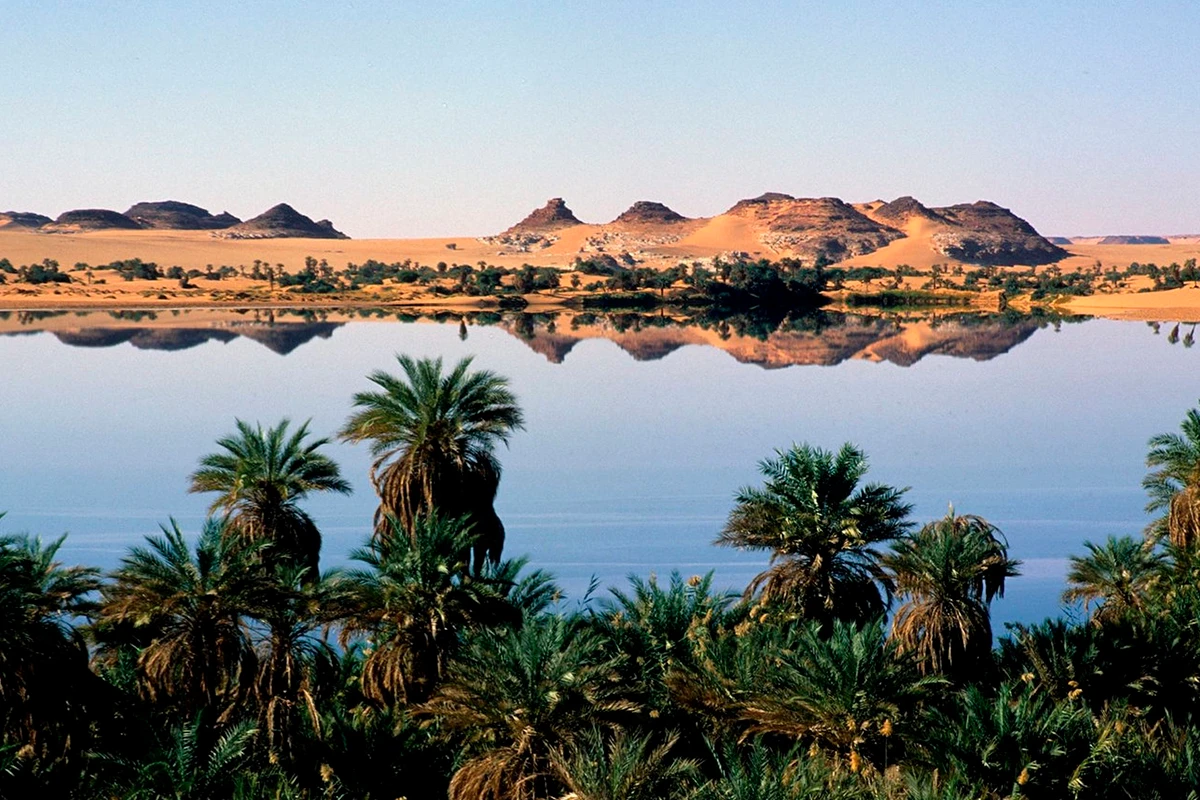
Over the last half century, the natural reservoir has been rapidly declining, as a result of which the reservoir has lost 95% of its area!
The water level in one of the once largest lakes continues to decline, which poses not only a threat to the environment, but also to the multi-million local population dependent on its water resources.
Will the reservoir really suffer the same fate as the Aral Sea, and what led it to such a sad state?
Changeable character
The endorheic Lake Chad is striking in its contrast. Semi-desert lands stretch over a 2000 km radius from the majestic freshwater body. People knew about the existence of the “desert sea” back in the days of the Roman Empire, but only the Scottish traveler Hugh Clapperton was able to describe it for the first time and indicate the exact coordinates of its location in 1823. This event became a turning point in the fate of the relict natural object. The so-called civilization that came to the CAR states reduced its area to a minimum. 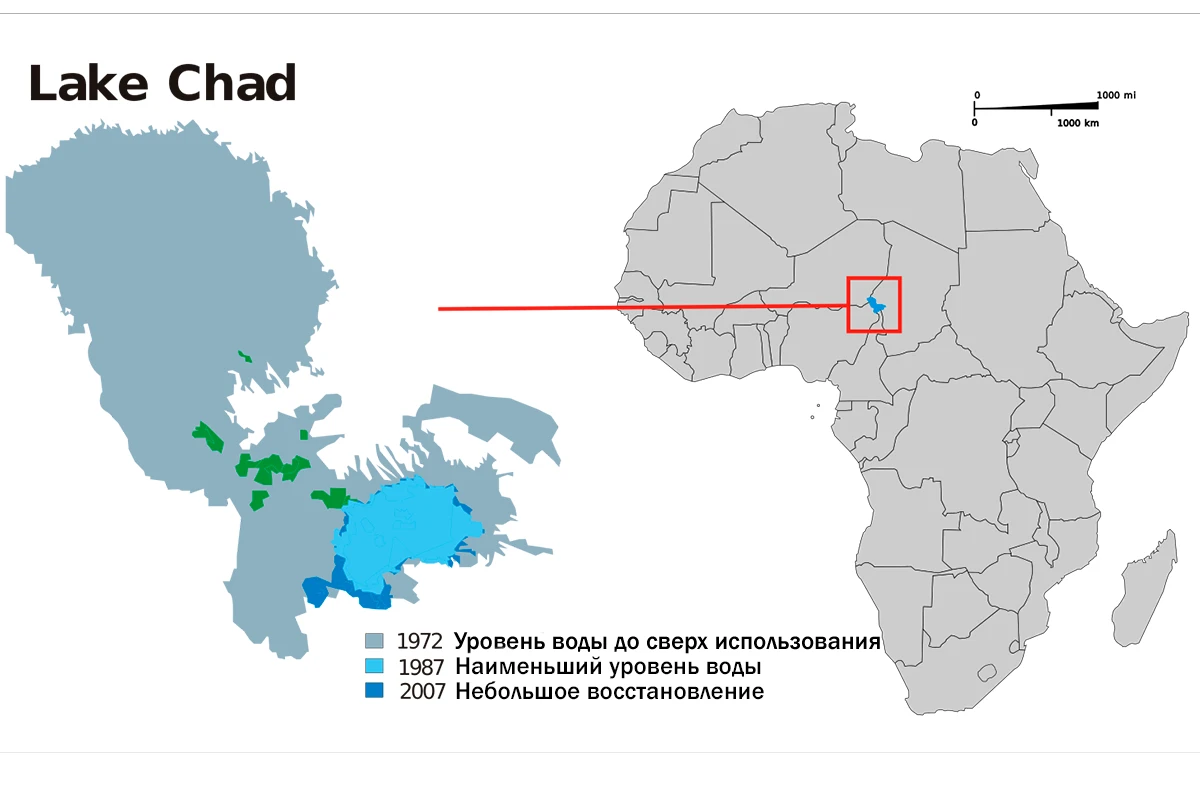
Lake Chadd on a map showing water level changes
In our age of technology, there is not a single map that accurately indicates the size of the lake. The reason is the lack of a clear coastline. Chad's borders are lost in swampy reed beds stretching for tens of kilometers, and the area of open water in 2017 was only 1,000 square meters. km. For comparison, in 1960 its size reached 26,000 square meters. km, which awarded Chad the status of the 4th largest freshwater body of water on the territory of the Dark Continent.
The importance of the natural reservoir for preserving human life, as well as the rich fauna and flora living on the coast, cannot be overestimated. It is located at the junction of 4 African states: the Republic of Chad, Niger, Nigeria and Cameroon.
Observing the dynamics of changes in the area of Lake Chad, scientists note the instability of replenishment. Over the past millennium, the reservoir has repeatedly lost its waters and then overflowed again. But, alas, each time it was more and more difficult for him to achieve the previous values, and since the 70s of the 20th century there has been a steady regression. Today we can only sadly state the fact that Chad is the “dying” heart of Africa.
What are the reasons?
The global ecological catastrophe of the lake reservoir, both in its causes and in scale, is in many ways similar to the fate of the Aral Sea. The long road to drying out is associated with the development of African territories by Europeans. But besides the active activity of people, there are other factors. 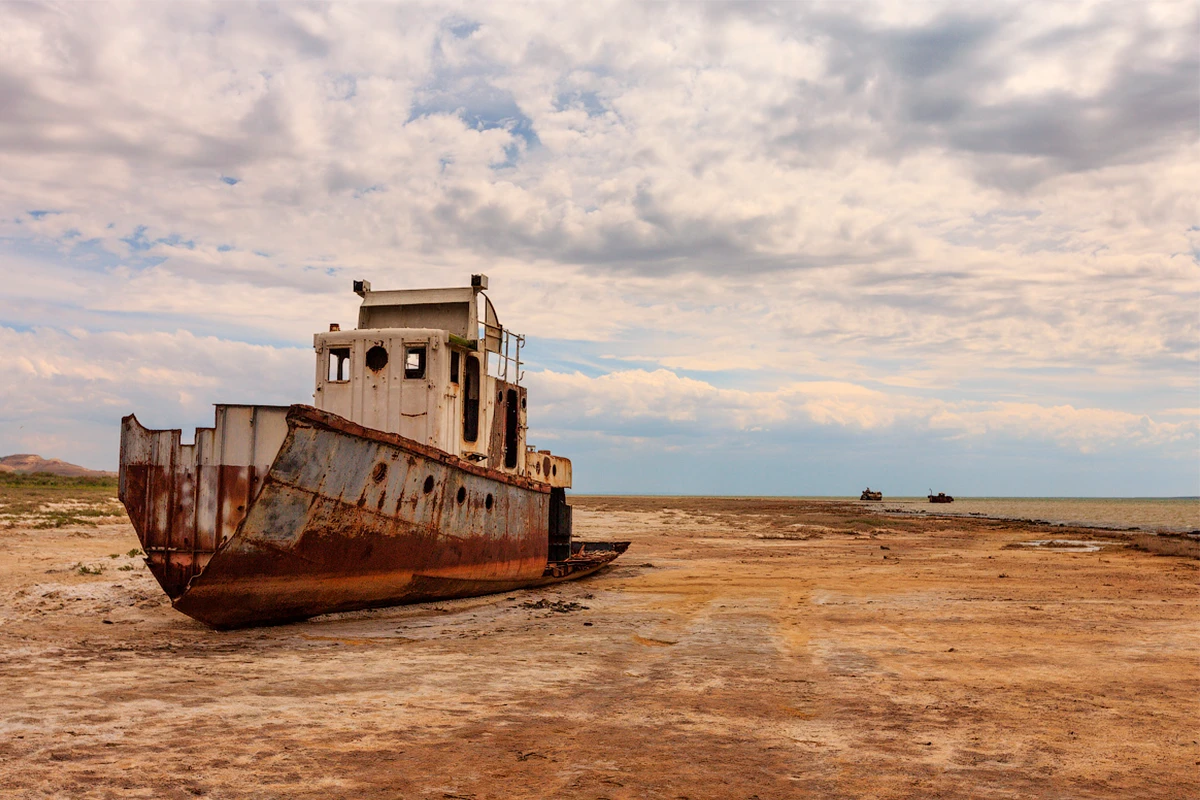
All that remains of the Aral Sea
Uncontrolled water intake.
Since the 19th century, European colonialists brought the concept of commodity production to Africa. French monopolists founded cotton growing and processing companies on the territory of modern Niger, the British began cultivating peanuts and cocoa beans, and the Germans set up huge plantations on the coasts of various crops that could grow in the local climate. Water for irrigation and life support for the people who worked here was taken from the lake and the rivers that feed it. Since the 60s, having gained independence one after another, African states have not lost their increased demand for water.
Population explosion.
Surprisingly, the lack of quality medicine, education, unstable local political situation and lack of funding does not prevent the peoples of the African continent from increasing their numbers. The rapidly increasing population, as before, is actively engaged in agriculture, ploughing, and fishing, not allowing reservoirs to replenish their waters.
Increased solid sediment.
Lake Chad is considered very shallow. In some points its depth reaches only 11 meters, in other places this figure does not exceed 4 m. Every year, solid sediments brought by the waters of the main arteries feeding it increasingly silt up the bottom.
Climate change.
Global warming and decreased precipitation have also affected the African continent. An increase in air temperature promotes active evaporation of fresh water and reduces the level of water entering the lake.
According to UN experts, the disaster is global in nature. Lake Chad cannot be allowed to disappear completely. Otherwise, this will entail complete desertification of populated lands, extinction of flora and fauna, as well as the forced resettlement of African peoples.
Concerned about the fate of the reservoir, scientists regularly discuss ways to solve this long-standing problem and propose various projects to save it. One of these is changing the course of the Congo River. Unfortunately, the matter has not yet progressed further than discussions, since all ideas are expensive undertakings.