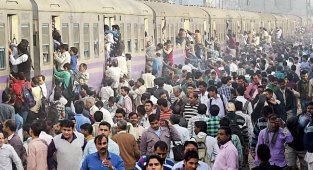
North India: the most populous region in the world (5 photos)
700 million people live there! In 2022, India overtook China (or at least equaled it), now there are more than 1.42 billion people living there. Moreover, only five provinces are responsible for this incredible population growth. 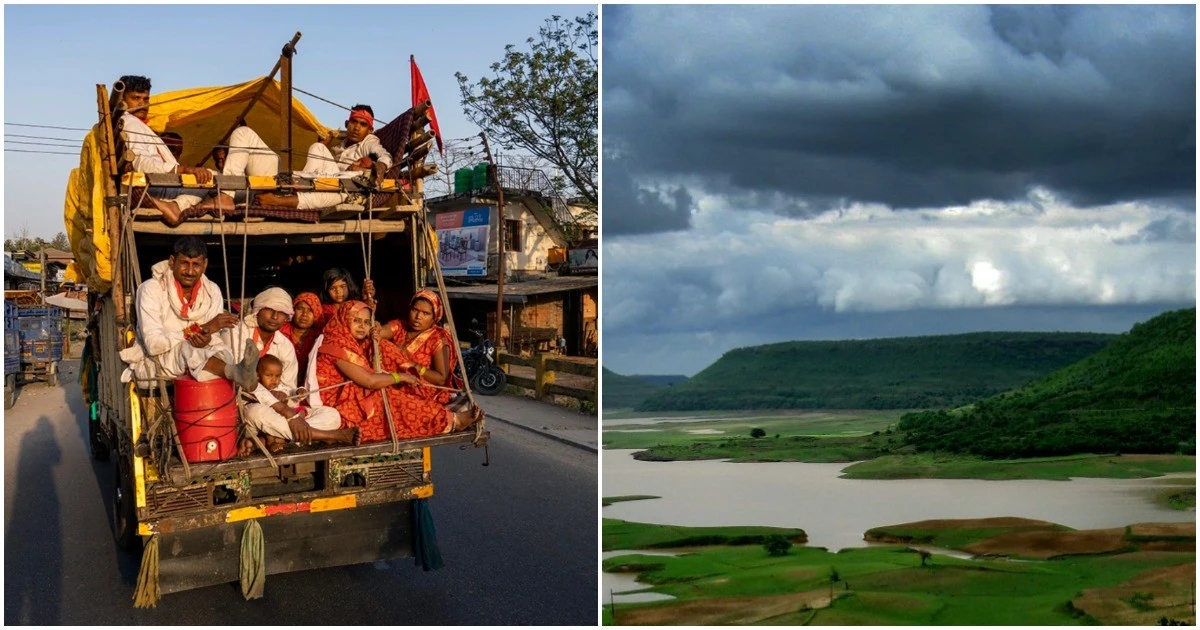
Since 1982, China has increased its population by 400 million people, and India has increased by 700 million people over the same period. In China, the situation is not improving and, according to forecasts, by 2050 the population will begin to decrease (naturally) by about 30 million people per year. The “One Family, One Child” policy has forced the Chinese to seriously reconsider their views on large families. 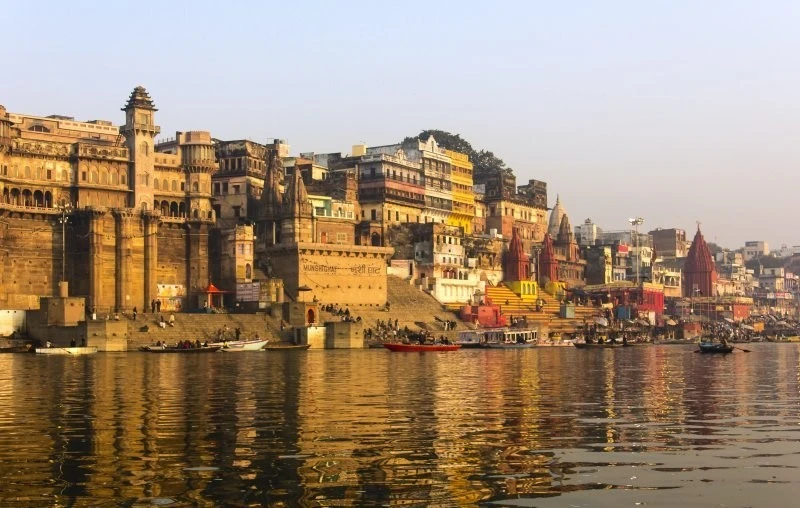
Uttar Pradesh
In India, approximately the same thing is happening - to maintain the population, the birth rate must be 2.1. But in 31 regions (36 in total) this indicator is equal to or lower than 2.
Literally half of India's population lives there. It is due to the north that by 2050 the population of India will increase by another 200 million. 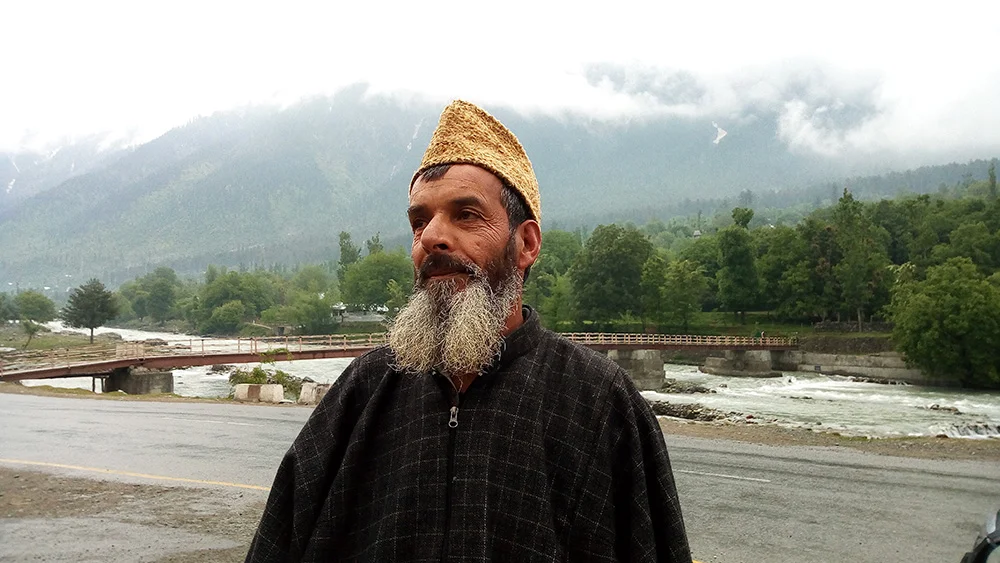
North Indian
But why does this happen?
To the north are the Himalayas, and to the west are the Hindu Kush mountain range. These mountains are quite young, they are only 20 million years old, but they are among the highest.
The mountains act as walls, blocking the polar and cold winds that blow through Central Asia from Siberia. At the same time, the warm monsoons that come from the Indian Ocean to the depths of the continent cannot overcome the mountains.
Monsoon moisture is concentrated in the clouds and falls as rain. The territory north of the Himalayas became a dry and cool desert, but the southern region, on the contrary, became tropical.
Northern India has much higher temperatures and humidity compared to other regions of the country, even during winter. Plants have time to go through several growth cycles. 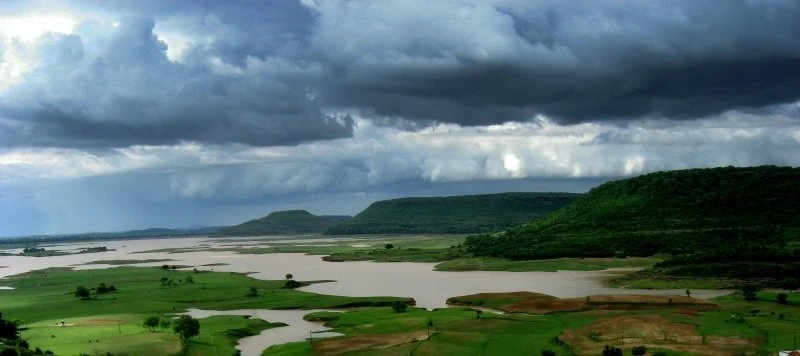
Indo-Gangetic Plain
The basis for the agricultural well-being of the northern region is not even rain, but mountain rivers that bring melt water. The arable land in this area is larger than all of France.
The so-called Indo-Gangetic Plain is the second most arable area. Only the Mississippi Basin is larger than it. But at the same time, India has melt mountain water rich in minerals. 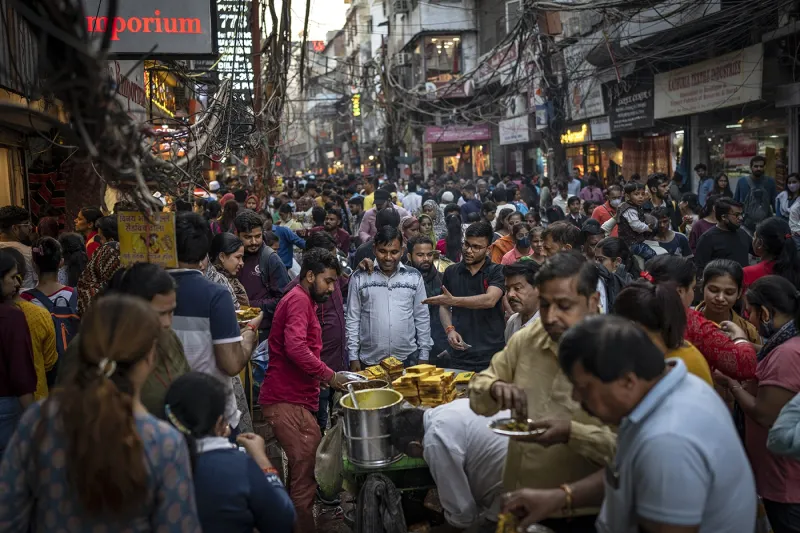
residents of Delhi
Uttar Pradesh, Meghalaya, Manipur, Bihar, Jharkhand are the provinces of the Indo-Gangetic Plain and leaders in reproduction. Their entire economy is based on agricultural work and it is one of the most developed regions of India. Delhi, the capital, is also located there.
Unfortunately, the GDP per capita here is much less than its neighbors... There are workers here for various service sectors and factories, but how this will be implemented is a big question. So far, people there are simply multiplying at an incredible speed.