The world of Conan as the basis of fantasy. The Hyborian era - from which Robert Howard created his Universe (16 photos)
Where did fantasy begin? Most will probably say - from Tolkien. But speaking about the history of the genre, it is impossible not to recall another founding father. Robert E. Howard created Conan, and Conan created fantasy. 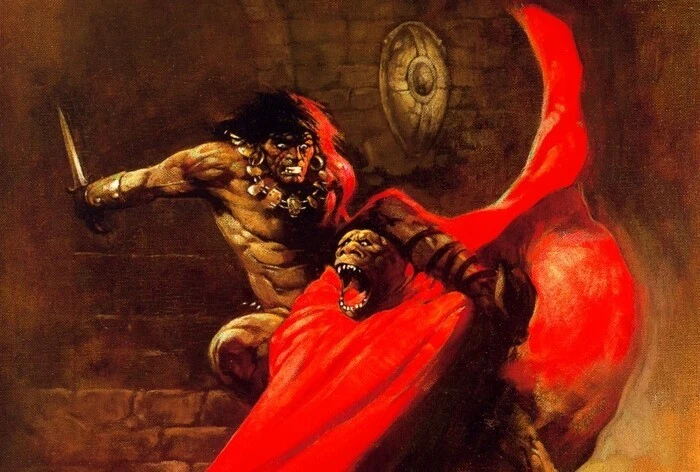
Howard's texts are characterized by a subhuman, almost mythological purity - his texts contain the primary features of the fantasy genre. Modern heroes of fantasy novels and epics are tormented by many ethical problems, plot twists and personal complexes. While a creation simpler and purer than Conan the Barbarian is difficult to imagine.
Hyboria: a world of scraps 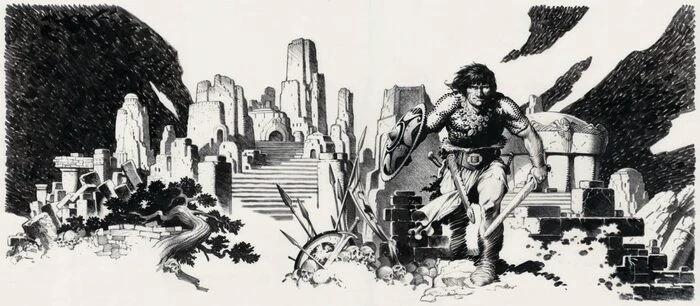
Artist Mark Schultz
At first, fantasy authors wrote about anything but Middle-earth. The idea of another world in which the action of a fairy-tale epic and heroic adventures would unfold was alien to literature. Edgar Rice Burroughs, H.G. Wells and other patriarchs of science fiction justified the departure from reality in their novels by the fact that the action takes place in a distant, foreign place. But their worlds were real, despite all the fantastic scenery - Mars, Venus, the Moon, the Earth of the distant future...
The writers of Howard's circle dealt more with mystical, frightening, adventure plots - and placed the heroes either in little-explored corners of the Earth, or in everyday circumstances where dark forces were invading. Howard did the same thing at first - his cycles of stories about Solomon Kane and some other characters traveling through the wilds of the Amazon and other mysterious places were quite consistent with the general trend of entertainment literature. The American fiction magazines of that time - Oriental Stories, Amazing Stories, Weird Stories - went down in history as the cauldron in which heroic fantasy was brewed.
In this literary kitchen bubbling with ideas, Howard took the furthest step along the genre road. He combined fantastic settings and the real world. He stepped into the distant past of the Earth and turned to mythological origins when John Ronald Reuel Tolkien had not yet invented a well-appointed rabbit hole. 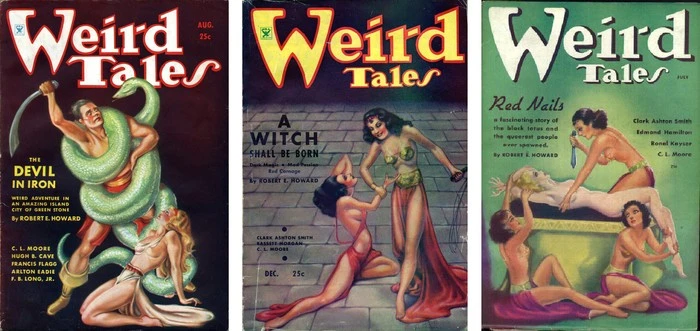
Stories about Conan on the covers of the tabloid magazine Weird Tales
The reasons were the same as the Professor’s: love of history. Howard was always interested in the Celts, and built many completely unscientific hypotheses about them, but close to his heart. Howard's correspondence with Lovecraft, who was much more savvy in these matters, shows how naive his ideas about the Celts, Picts and the ancient history of the peoples of Europe were. But these hypotheses became the basis of the fantastic world that arose in Howard's head. The result of his research (for the first time, by the way, appeared not in the stories about Conan, but in the short stories about another fearless and powerful warrior - Cull, king of Valusia) was the ancient world, which absorbed mythological, historical and fantastic motifs from various cultures.
Howard, like an alchemist, mixed the mythological Atlantis with the real Gondwana; like Michurin, he crossed the Scandinavian Asgard with the Greek fantasy - “Hyperborea”, and the ancient Indian Mithra - with the Egyptian Set. Like a successful chef with flair and a sense of proportion, he brought the ingredients to a state that was characterized by one main quality: vague recognition.
The strange world, as if cut from scraps, was vaguely familiar to any reader. And he, the reader, subconsciously experienced “kindred” feelings for the images, countries, peoples, gods and heroes of the new universe. This world, without making any effort, became close to the reader due to images and words familiar from childhood.
Robert Irwin Howard
Everyone knows Howard as the creator of Conan of Cimmeria, the famous fantasy hero. What is less known is that Howard wrote several hundred poems and poems. He has written works in the genres of adventure, horror, mysticism, western, erotica, parody and even sports reporting. Howard's unique synthesis of historical adventure, fantasy, and horror resulted in the creation of a new literary subgenre now known as Sword and Sorcery. 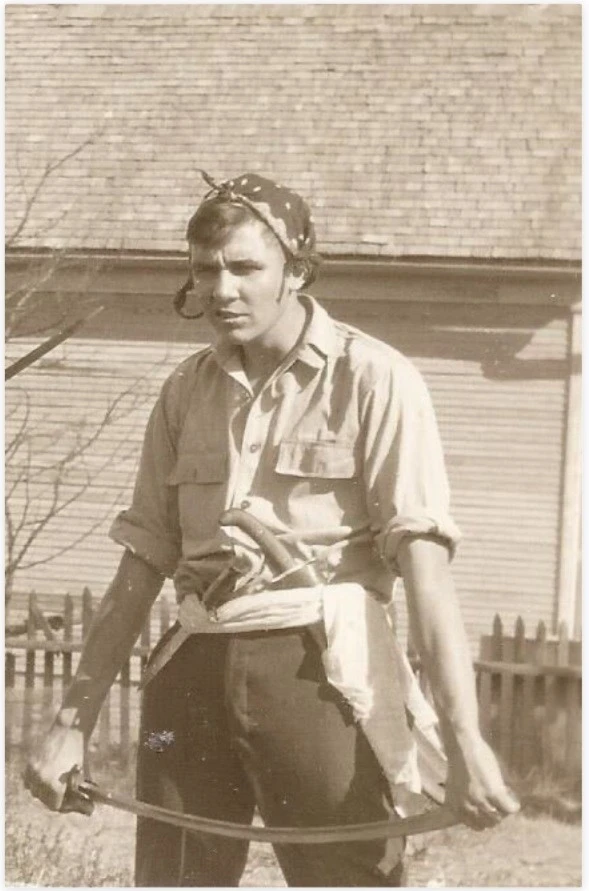
Howard was born in Texas on January 22, 1906. In 1921, he made his first attempt at writing - he sent a story to Adventure magazine. In 1924, his first professional success awaited him: the magazine Weird Tales accepted the stories “Spear and Fang,” “Hyena,” and “The Lost Race.” Robert takes typing and shorthand courses at Howard Payne College, Brownwood. In August 1928, the story “Red Shadows” was published. A series about Kull will start soon.
In 1930, Howard began corresponding with Lovecraft. In December 1932, Howard's new hero, Conan of Cimmeria, was born. The first published Conan story was "The Phoenix on the Sword."
In 1935, Howard's mother underwent major surgery, after which she fell into a coma. Howard was left with heavy expenses and caring for his mother. On June 11, 1936, Robert, unable to accept his fate, shot himself in his car. His mother survived him only by a few hours.
Geography of Hyboria 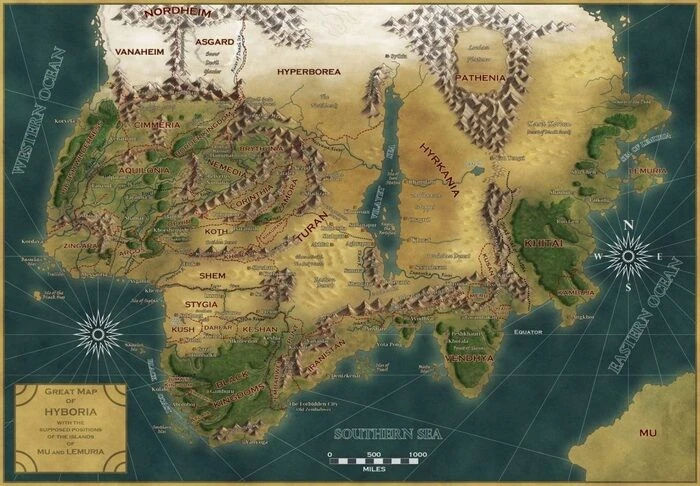
Map of the Earth in the Hyborian Era, artist Sapiento
The Earth in this era appears to be an almost square continent, on which, perhaps, all types of cultures known on Earth are located - however, taken from different times and mixed by the author according to his personal desire.
In the north live the black-haired Cimmerians and the red-haired barbarians of Asgard. From the east and west, the northern lands are surrounded by the same wild countries, Vanaheim and Hyperborea, covered with snow. The harsh and merciless lands brought up the simple morals and undeveloped cultures characteristic of the northerners. However, like all others, even these barbaric countries and the peoples inhabiting them have their own distinctive characteristics. The Aesir, red-haired Viking conquerors, are hot-tempered and furious. Freedom-loving black-haired Cimmerians, heirs of the Atlantean people who sunk into the abyss. Hyperboreans, idolaters, cruel and cunning cannibals... Howard tries to give each of the peoples attracted to the pages of his short stories something unique, peculiar only to him.
The “middle zone” of Hyboria is represented by a wild mixture of cultures and civilizations - we will list them from west to east. The wilds of the Picts (ancient Scotland) are adjacent to Zingara, a maritime kingdom (the prototype of which was Spain). There are three countries of advanced feudalism at once - Aquilonia (something between France and Germany), Nemedia (the closest, perhaps, is a highly modified Portugal) and Britunia (explanation is unnecessary). Argos (Greek city), next to it (and a little lower than Nemedia) Ophir (Persia), then Kof (something elusively eastern), Zamora (Spain again), above them Corinthia is another Greek port city, Corinth (it tore Greece apart in all directions!). There are no seas or other water resources on the territory of Corinthia; on the contrary, there are the Karpash Mountains (Romania) and Shem (either Turkey or Iran). 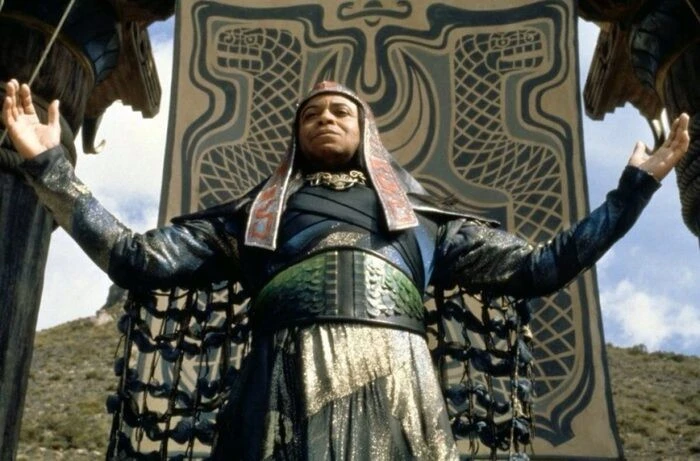
James Earl Jones as Thulsa Doom
If you imagine, instead of these fantasy names, their real prototypes, located on the map in exactly this order, you can go irrevocably crazy. Ethnographers and geographers of the forties, they say, reading Howard, quickly changed their place of work and profession.
The east of Hyboria is divided between the Turan Empire (something between the Mongol and Syrian cultures), Vendia and Khitai - which is logical. And the south is proudly decorated with countries such as Stygia (Egypt) and a set of black kingdoms, half Arab, half Negro.
The first map of the world was, of course, created by Howard himself, and subsequently a great many of them were drawn.
Hyborian history 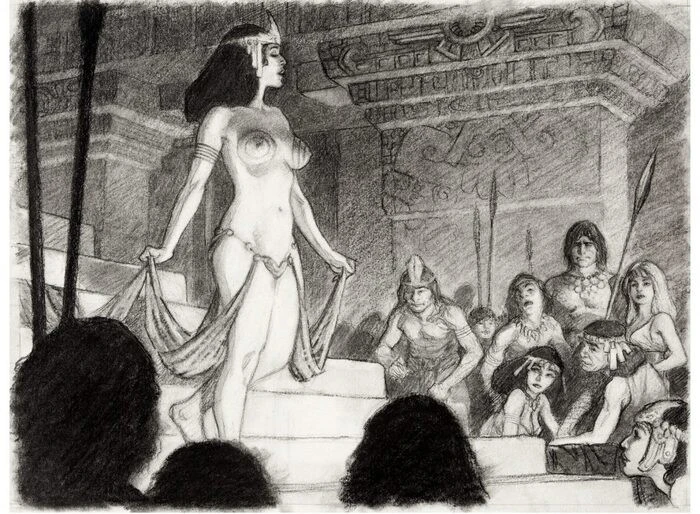
Artist Mark Schultz
Hyborian history began ten thousand years ago. The ancient continents of Turan, Atlantis and Lemuria, the empires of Valusia and Grondar... Legendary names, covered in the darkness of oblivion and the greatness of power. These lands were filled with the most ancient human civilizations, from the darkness of centuries before which the ghosts of departed other, dark races peeped out, which were swallowed up by time that knew no mercy. The cataclysm that devastated the world and drowned the continents, destroying Atlantis and Lemuria, swept over the continent. Kull, King of Valusia - the great hero of the Hyborian Age, the first of Howard's characters associated with Hyboria - fell into oblivion along with its first era.
Several branches of the human race collided on the wounded land. For many centuries, peoples moved, driven by needs, minor disasters, wars, floods and invasions, alternating each other. Names and titles, clans and dynasties, kingdoms and states replaced each other on the same lands, and then mounds arose in once inhabited places. 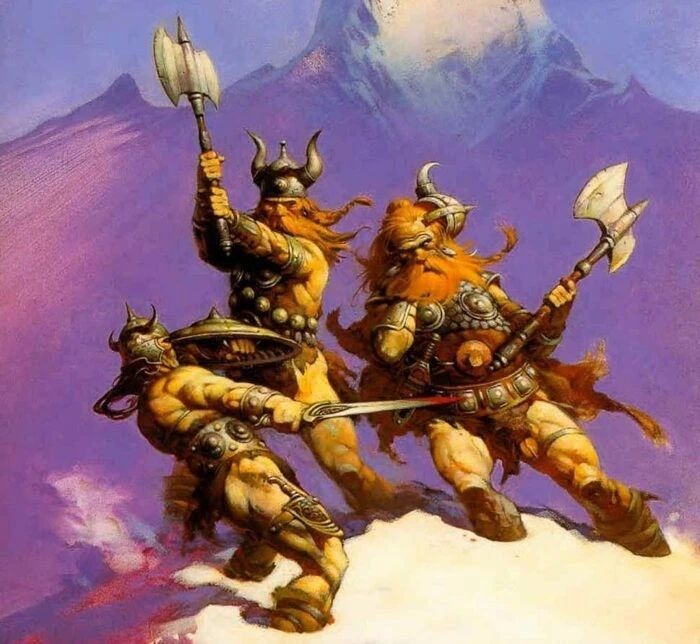
Artist Frank Frazetta
Barbarism, ignorance and savagery are what remains of ancient civilizations, consumed by cataclysms and wars. Even the ancient gods sank into oblivion along with the peoples who worshiped them - and now the Picts, the “eternal barbarians,” are on par with the former Atlanteans, conquerors of the universe.
Then begins the era of the Hyborians of the north. It would be long and tedious to list all the vicissitudes of the genesis of this race, but as a result, it was she who conquered the mainland and brought it into line with the boundaries on the map that Howard drew. The Hyborians spread throughout the world, gradually mixing their blood with other races and assimilating them.
By the end of the millennia-long history described by Howard himself and continued by Sprague de Camp, numerous peoples rule over the Turanian continent. Their culture and civilization are developing, rising from the ashes of eras, as well as military affairs and magic. These countries are in many ways uncivilized and cruel; human life is valued no more here than in the dark earthly Middle Ages. Countries and cults are at war with each other, and the power of magicians sometimes means more than the power of swords.
It was in such a world that Conan the Cimmerian was born.
Starring
Conan is known to be a great hero, having defeated more black magicians in his life than all D&D players combined, and conquered more women than Elvis Presley, Beckham and Agent 007.
His portrait is brilliantly simple - this is a powerful two-meter man with the muscles of an ice giant, a luxurious mane of black hair and the icy gaze of blue eyes (a legacy of the ancient Atlanteans). He is very strong, inhumanly agile, and incredibly durable. In addition, Conan has an unadulterated barbarian instinct, which helps him anticipate danger, and a barbaric resistance to black magic, which he hates. 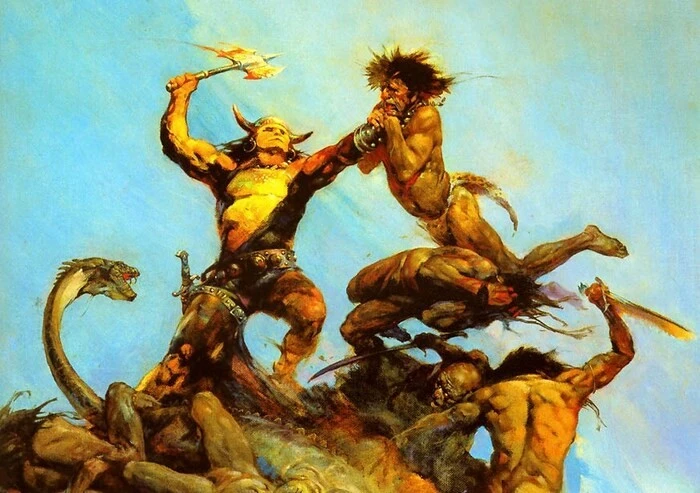
Artist Frank Frazetta
Conan is a magnificent warrior and lover, a fearless and generous comrade, an invincible enemy and the main hero. Gentleman's set, complete set. How did he come to live like this?
According to legend, the greatest warrior in the history of mankind was born right on the battlefield, and this probably determined his future fate. Cimmerian women fought on the battlefields along with men, so the legend is worth believing.
Conan's father was a blacksmith, and it was he who forged his son's first sword. The Cimmerian clans constantly fought among themselves, and so the Cimmerian’s childhood flowed into adolescence. He celebrated his fifteenth birthday in the terrible massacre perpetrated by the Cimmerians on the Aquilonian invaders, when the barbarians immediately took and plundered the border fortress of Venarium. Conan distinguished himself greatly already in that battle, receiving the praise of the elders. 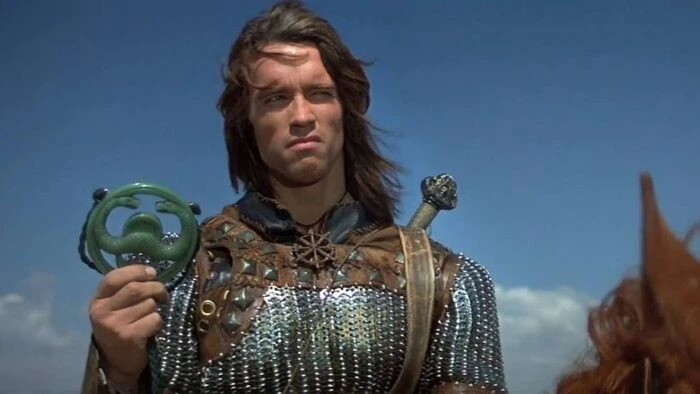
The plot of the film with Schwarzenegger is actually very different from the book
Then, during a skirmish with the Vanir, he was captured, and, at the age of fifteen, he experienced the first of his adventures. Fate drove him from one captivity to another, from one mortal danger to the next. Fleeing from them, he went further and further from his homeland. Finally, Conan found himself in Zamora, the city of thieves, where he became one of the best representatives of the profession - but from there he had to flee so as not to be killed. Passing country after country, everywhere leaving the saved and the defeated, enemies and friends, he reached Turan itself, and entered the service of the mercenaries of Emperor Yildiz.
It is impossible to list all of Conan's adventures and travels. There are over three and a half hundred of them in total, and every inch of paper on which the biography of Conan the Cimmerian is written is saturated with adventure.
Fighting with magicians, mercenaries, bandits, dark priests and soldiers, overthrowing kings, the barbarian traveled the entire continent. As a result, he first settled in Aquilonia, became its king and reigned for more than twenty years. And then he went on a journey overseas, long before the Vikings discovered America, fought there with Death itself, gained immortality and went along the path of the worlds on an endless journey.
Carousel of the Gods 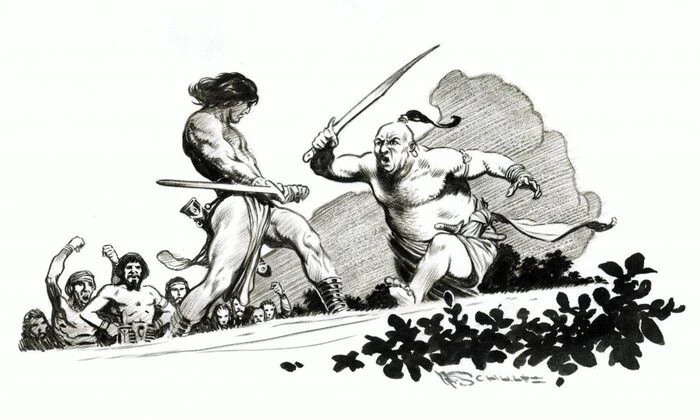
Artist Mark Schultz
Naturally, not all of these books were written by Robert Irwin Howard. The fate of Conan's creator was sad. Lonely, naturally withdrawn, hot-tempered and suffering from many complexes (the complete opposite of his hero), Robert could not bear the plight of his dying mother and committed suicide at the age of only 30.
But the popularity of the hero he created was too great for him to die with him. The cruel irony lies in this - the strong-willed barbarian with his barbaric instinct of survival outlived his creator for many decades, and is still alive today.
Many writers, from the venerable to the completely unknown, have had a hand in writing sequels to the Conan Saga. These are Sprague de Camp, and Lin Carter, renowned fantasy classics in their own right, and Paul Anderson, and John Maddox Roberts, and Steve Perry, and many, many others. 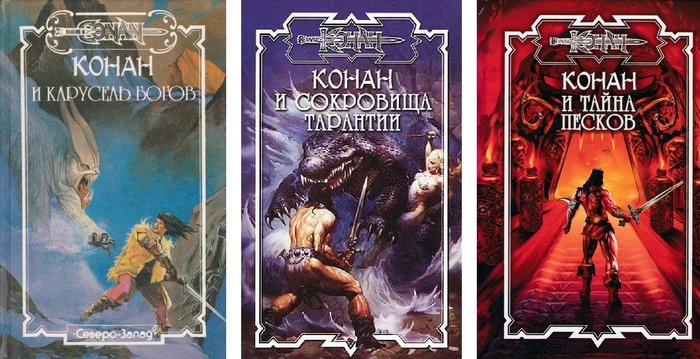
Pure Conan
When Conan his popularity simply went through the roof. Surprised publishers connived at our “homemade products” being published under sonorous foreign pseudonyms. Thus, among the creators of “horse meat” there were Elena Khaetskaya, Andrei Martyanov, even Nik Perumov (he wrote about the battle with Death and departure to other worlds, that is, about the worthy end of the hero’s creative career). 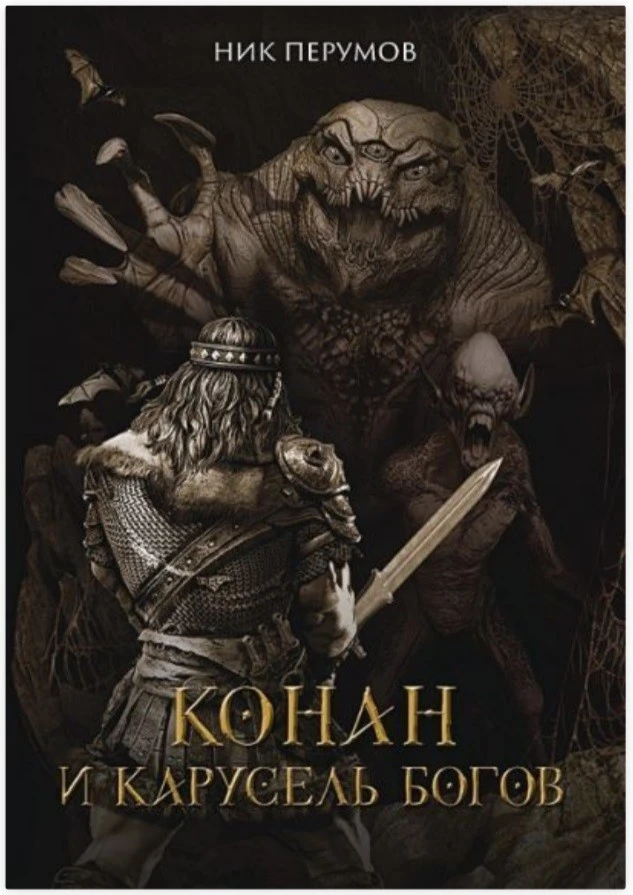
The latest edition of Nik Perumov's novels about Conan to date came out of the printing house just the other day, in August of this year.
Who are the judges?
Fantasy lives and develops. And it is natural that many today’s readers are disgusted by the simplicity and banality of Conan’s techniques, and the general level of the Saga’s texts. While I agree that Conan is not an example of a literary masterpiece, I will make an important point.
Many consider the stories and novels about Conan to be an example of commercial writing and stupidity. What is overlooked is that Conan himself is just an idea that brought us to modern fantasy as much as Frodo of Middle-earth or Ged of Earthsea. Of course, most of the fiction about the mighty barbarian lives up to the name, being “horsemeat”, and second-rate at that. But this is the platform on which the genre was built. 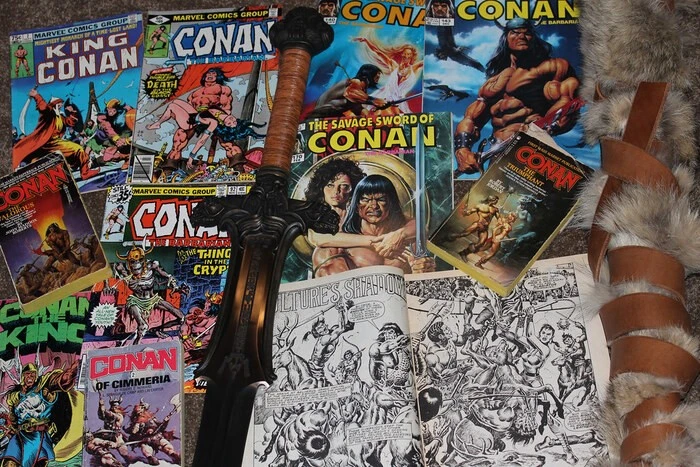
Conan is also a comic book hero from Marvel (and not only)
All “game literature” came from Conan, as did all of Leiber, Moorcock, and after them the pillars of high fantasy - from Terry Brooks and Roger Zelazny to Robert Jordan and our other contemporaries, who still use the archetype and canon created by Howard. Even role-playing games were formed under the undeniable influence of heroism, the ideal image for which was formulated by him, Howard. It’s not for nothing that Conan was incredibly popular in America in the second half of the 20th century, in Europe, and in the perestroika USSR of the late 80s and early 90s. 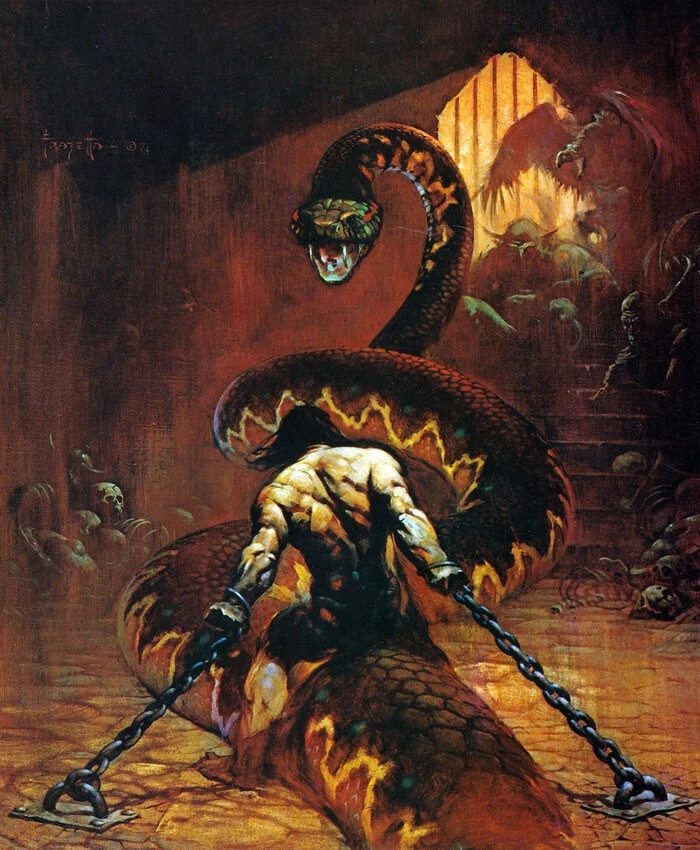
Simple and accessible is always necessary for development, and often for reviewing what has been learned. Conan's charisma, the fascination of his adventures, the minimalism that was laid down by Howard and accepted by the crowd of successors - these are features that require respect and attention.
And when I buy a wonderful work, for example, Martin’s “Storm of Swords,” I am aware that at the center of this Storm lies the Sword of Conan. The sword that Howard forged even before the famous Tolkien sat down at the table and wrote: “There was a hole, and in it lived a hobbit.” 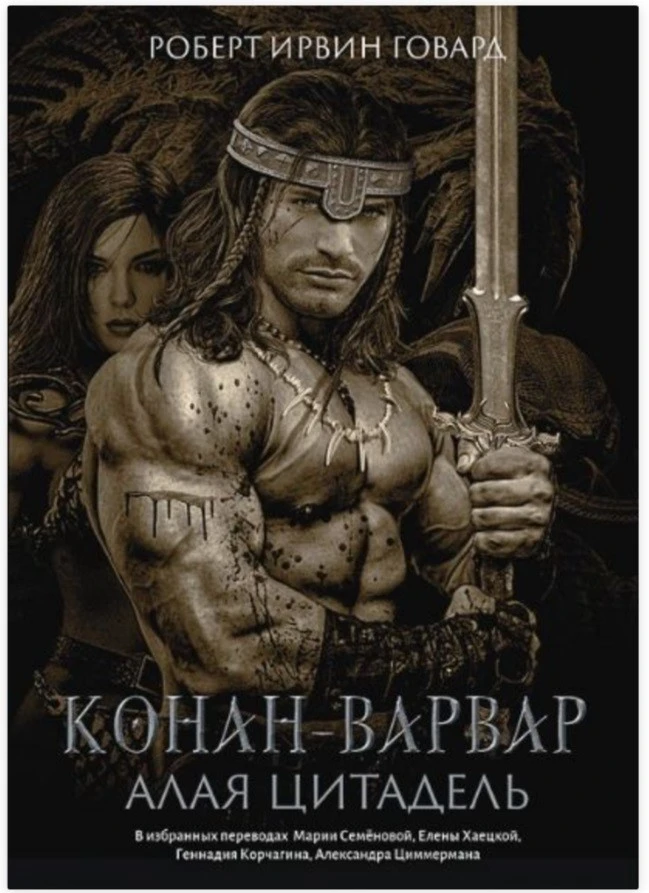
In 2022, the Phoenix publishing house published three volumes about Conan in the Masterpieces of Science Fiction series - two with works by Howard and one with novels by Perumov.