There are too many wonderful and amazing things happening in the world every day for one person to know about everything. There are quite a few things that will make you think, “Wow, who would have thought this could happen!” And today you will learn about the shortest flight in the world, about the most unusual street in the world and about a light bulb that has not gone out for more than 100 years. 
The shortest flight in the world 
To become a passenger on the shortest flight, you need to go to Scotland. Namely, to the Westray airport of one of the northernmost islands of the Ocranian Islands archipelago. The shortest flight in the world takes place between the islands of Westray and Papa Westray, the distance between which is only 2.7 kilometers.
Flights between Westray and Papa Westray operate daily, once a day. Scotland's largest airline, Loganair, operates on this route. According to the schedule, the shortest flight lasts only 2 minutes. However, the record recorded flight time is 57 seconds; this is only possible with a tailwind. 
According to the airline's website, the minimum price for a return ticket is £14.50. The flight takes place on board a Britten-Norman Islander aircraft. There are only 8 economy class seats in the cabin. This flight has been in existence since 1967, and celebrated its 50th anniversary in 2017. Recently, all passengers began to be issued a certificate confirming that they have made the shortest flight in the world.
The largest iceberg in the world 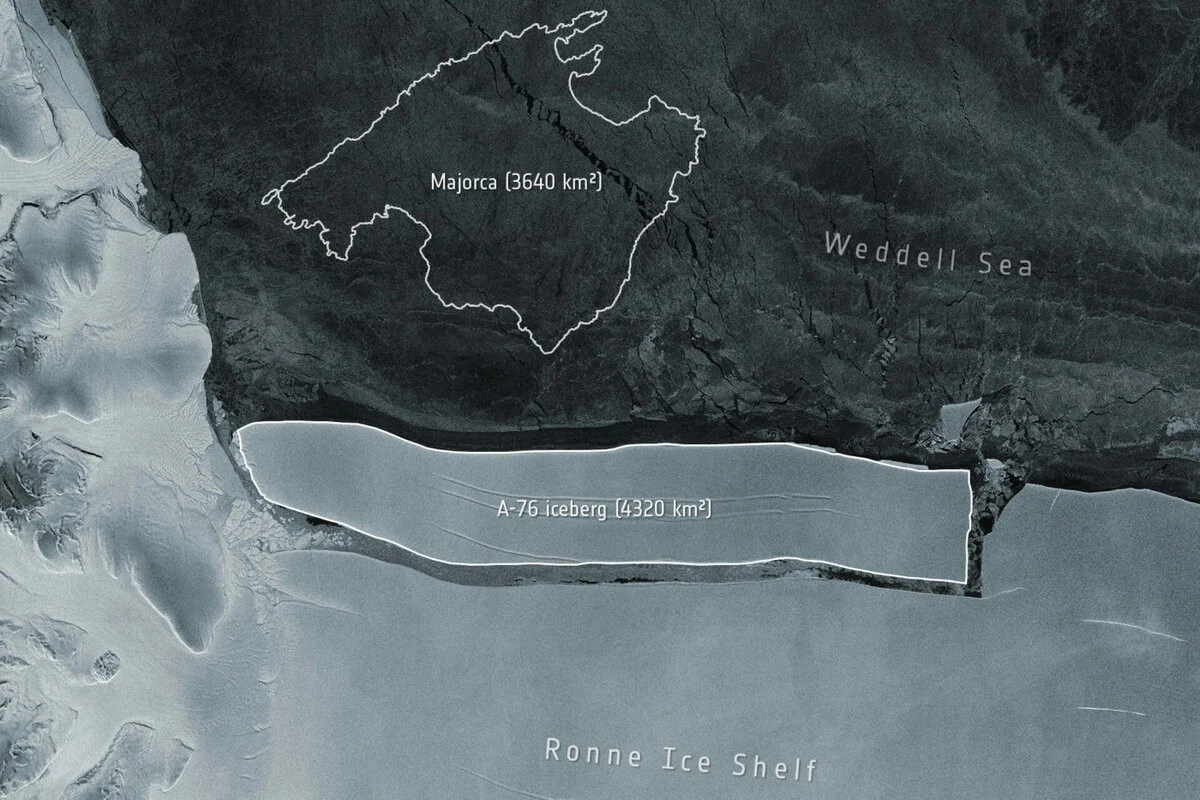
The world's largest iceberg broke off from the Filchner-Ronne Ice Shelf in the Weddell Sea in western Antarctica in May this year. 
The area of the iceberg, designated A-76, is about 4,320 square meters. km, which currently makes it the largest in the world. The iceberg is about 170 km long and 25 km wide. It is slightly larger in size than the Spanish island of Mallorca. Until today, iceberg A-23A with an area of 3880 square kilometers was considered the largest. It is also located in the Weddell Sea
An American gave his daughter an African “kingdom” 
A father of three children from American Virginia, Jeremiah Heaton, decided to make his seven-year-old daughter Emily’s dream of becoming a princess come true, for which he declared a small territory between Egypt and Sudan a “kingdom.” “One winter, Emily and I were playing, she kept talking about princesses. And then she asked me seriously if she would ever become a princess. “I said yes,” Heaton recounted the backstory. 
The new “kingdom” is located in Africa, in the desert, and occupies about 1,300 square kilometers, which is approximately half the area of Luxembourg. Neither Sudan nor Egypt have ever laid claim to this territory. Heaton arrived in the “kingdom” and planted a flag there, invented and created by his children. Then the man submitted documents to the appropriate authorities with a request to legally register the “kingdom.” Previous online applications were rejected, but this time Heaton expects a positive response - after all, he took the trip and planted the flag. "It is beautiful there. This is an arid desert in northeast Africa. Bedouins roam this land. The population is virtually zero,” the man said.
Cozy house to spite the neighbors 
Built back in 1925 in the city of Montlake in the suburbs of Seattle, USA, the cute little house has an area of only 79 square meters. meters and a very original layout in the shape of an elongated triangle. On one side its width is only 4.57 meters, and on the other it is 1.4 meters, which is quite enough to place an entrance door here. The story goes that the Montlake Spite House was literally built to spite its neighbors. 
Once upon a time, the owner of this small plot of only 287 meters decided to sell the land to his neighbors for expansion. They offered such an insignificant amount that they simply infuriated him. To spite his neighbors, the owner of the land managed to build such a long narrow house on his plot. As a result, the new long building completely blocked the neighbors' view of the street.
old man of the lake 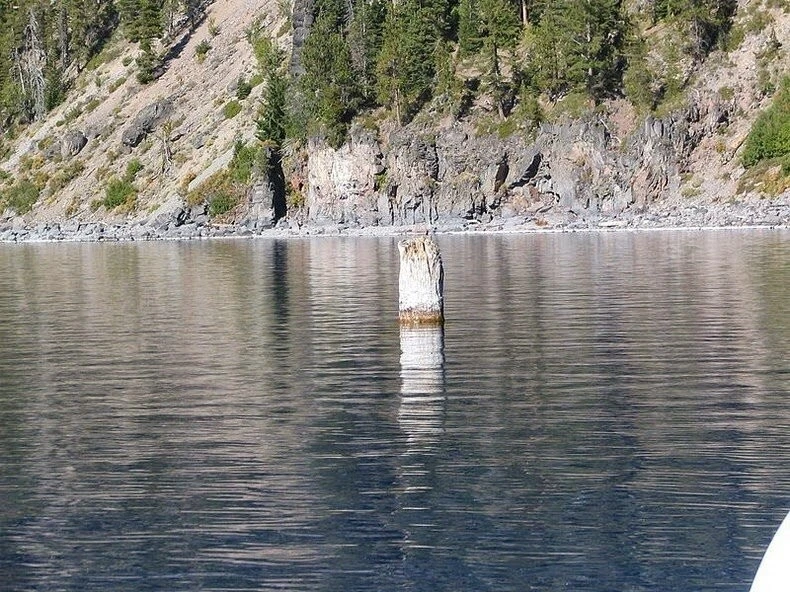
Oregon is home to Crater Lake National Park, named after its main attraction. This body of water, formed approximately 7,700 years ago after the destruction of Mount Mazama, is the deepest in the United States (597 m) and the eighth deepest in the world. In addition, the “Old Man of the Lake” brought fame to the lake: a huge log that has been floating vertically for more than a hundred years. The first evidence of it dates back to 1896, and radiocarbon dating showed its age to be 450 years old.
Most likely, the “Old Man” ended up in the water as a result of a landslide that came down from the slopes of the volcano, and the icy lake water “preserved” it, preventing the wood from collapsing. Like decades ago, the log reaches 61 cm in diameter, protrudes 1.2 meters above the water, and the total length of the trunk is 9 meters. The surface part has split a little, but the tree is so strong that it can support the weight of an adult. While studying the “Old Man” phenomenon, scientists noted his active movements throughout the reservoir. During the observation period alone (July-September 1938), the log floated almost 100 kilometers,
Casper the bus cat 
About 10 years ago, the whole of Britain was tensely following the busy life of Casper the cat from Plymouth, who loved to ride the bus. The black and white cat waited every morning at the stop near his house for bus number 3, got on it and drove the entire route in a circle. The driver carefully dropped the cat off in the same place where he picked him up in the morning. 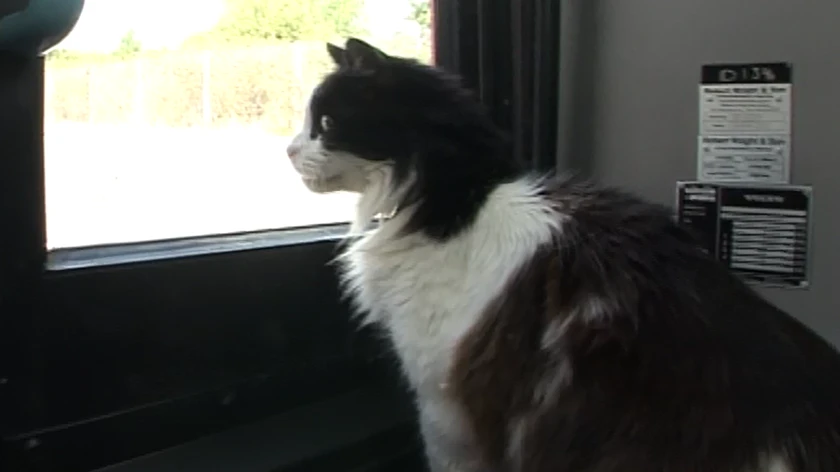
Castor's extravagant hobby was featured in the national media, and his owner, Susan Finden, even wrote a book about him. Casper's owner was flooded with letters from grateful fans of the cat until her death in 2017. As Susan's daughter Kim Holland recalls, the book was a huge success. 
“A lot of letters came. Some people would just write on the envelope, 'To Casper's Mom, Plymouth,' and the postman would deliver all those letters,” she recalls. The family was even contacted by a producer who wanted to make a feature film, but was unable to get financing. Unfortunately, Casper's adventures came to a tragic end in 2010 when he was hit and killed by a car. “Poor Casper was hit by a taxi right in front of the house. Mom later received so many letters of condolences from bus drivers and local residents,” recalls Kim Holland.
Deadly graffiti 
Graffiti is a popular, but not always legal, form of expression that can be found around the world. Almost anything can become a canvas for graffiti artists - roads, walls, roadsides, skyscrapers and even concrete sidewalks. In most countries, the law equates graffiti on public or private property with vandalism. Some graffiti artists take great risks and travel great distances to leave their mark. And the risk does not always involve the danger of being caught by a police officer. Sometimes an artist has to create his work in very dangerous places. 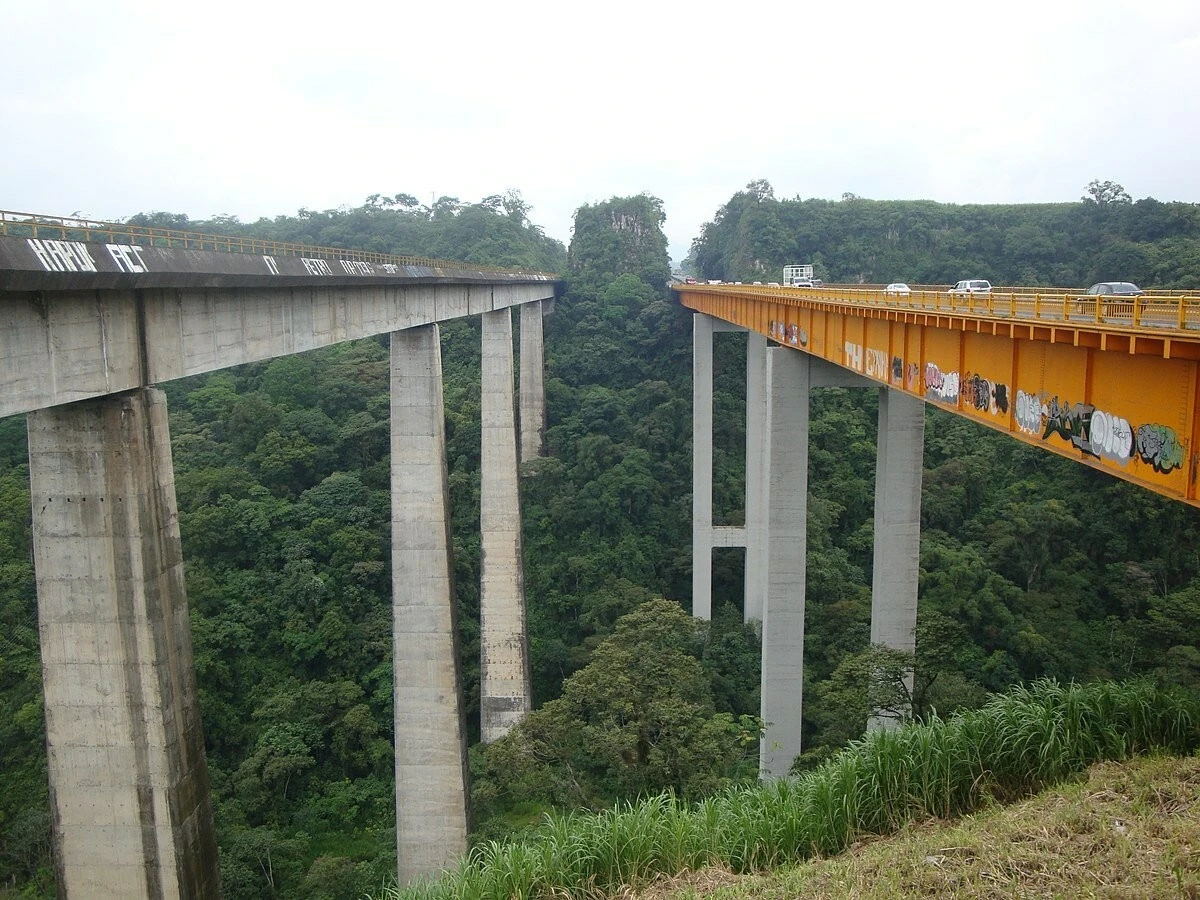
Some of the most dangerous graffiti was created in Mexico. Here is a video of the guys walking along the lower edge of the bridge. Definitely, their graffiti will be seen by many. It’s just not clear whether the person filming this video wants to capture everything that’s happening as a keepsake, or is he filming evidence of a crime, which he then wants to give to the police? There are a lot of people on the edge, and the likelihood of something bad happening is only growing. Creating graffiti on a bridge hundreds of meters above the road is a very risky endeavor. Graffiti has been part of our culture since
since time immemorial and will remain so for a very long time, whether we like it or not.
Centenary lamp 
The lifespan of a typical incandescent light bulb is about a thousand hours. And only if it is made with high quality and used in the most favorable conditions. It is all the more interesting to know that there is one light bulb in the world that has been shining regularly almost constantly for about 120 years, since 1901. There are only two known times when the lamp was turned off: the first time the lamp was “extinguished” in 1976 for twenty-two minutes, when it was moved to another place, the second time in 2013 for 7 hours, to replace the power source. The light bulb with a power of only four watts (according to other sources - eight) has its own name - “Centenary Lamp”, its own website and a personal web camera constantly monitoring its work. 
The lamp was produced by ShelbyElectricCo; it has not the usual tungsten filament, but a carbon filament, eight times thicker than modern ones, and a glass bulb “handmade” by master glassblowers of the early 20th century. The light bulb was designed by Thomas Edison's main competitor in the field of lighting inventions, Adolphe Chaiet. By the way, in 1912, ShelbyElectricCo, having lost the race of “light sources”, ceased to exist.
0 comments