Why did the Egyptians only draw people as flat? What were they afraid of? (4 photos)
How can I stop worrying that I still haven’t learned to draw properly? A good option is to look at the cave paintings of cavemen and understand that this is simply not given to everyone, and humanity did not immediately master this skill. 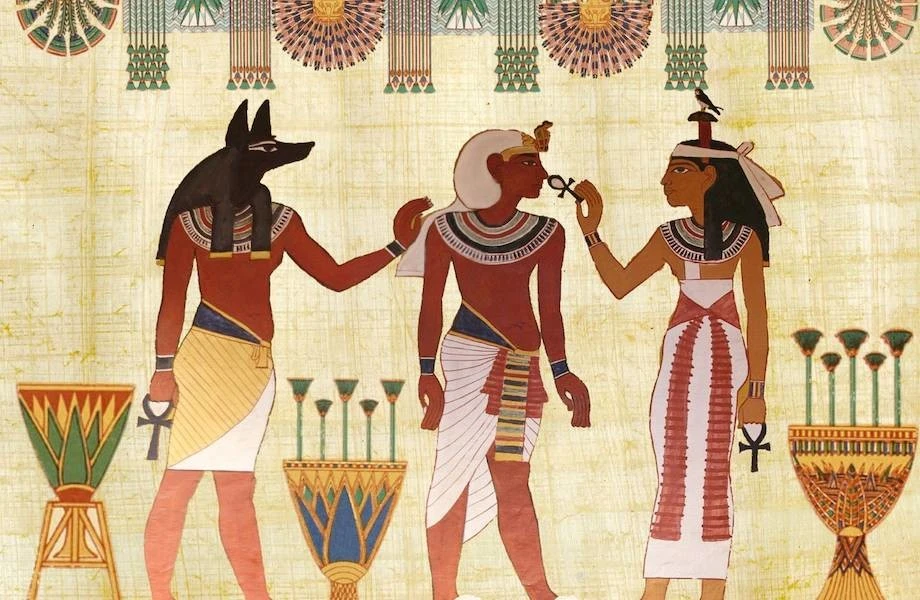
The drawings of the Egyptians also inspire hope, but less so - they still involuntarily attract attention, although they have a number of oddities. Indeed, why did the representatives of this unique civilization draw so primitively, making a number of gross mistakes?
We just didn't think of it
All the images left to us by the ancient Egyptians are absolutely “flat”; they are drawn without taking into account the law of perspective. At the same time, both people and animals are depicted in quite a variety of poses and situations; these are entire stories like comic books. Why did artists always depict heads in profile, but not the body, since the shoulders of people and gods are always turned straight? A number of researchers believe that the Egyptians of those years simply did not yet know how to create a three-dimensional image using the law of perspective. Others believe that they simply painted according to established canons once and for all, not wanting to break them. I believe more in the latter, because the observance of rules and canons in Egypt was strict. And that's why. 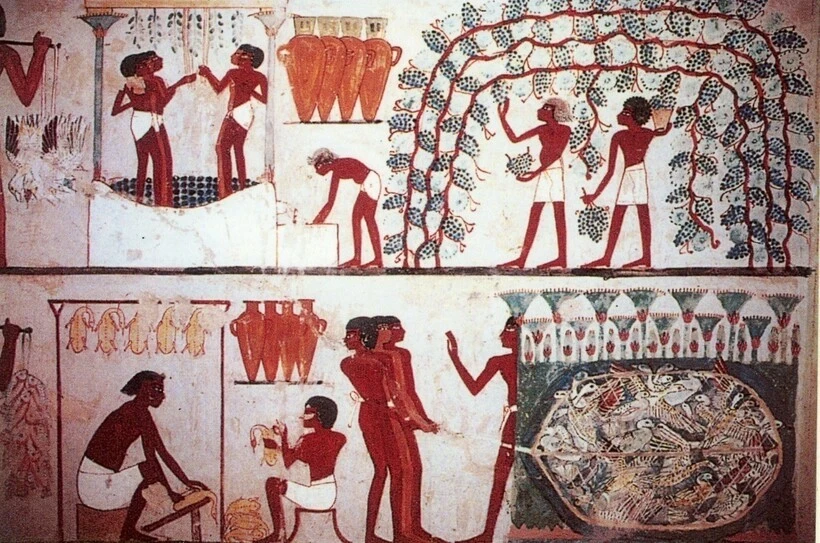
Quite a lot of drawings by the ancient Egyptians have survived to this day, and they have a lot in common
Draw according to social status
If you look closely at the images left by ancient Egyptian artists, you can quickly understand that the person’s height in them was not a real value, but a socially dependent one. The higher the status of the person depicted, the taller he was in the paintings. The pharaohs looked like giant people, the military leaders were much shorter, and ordinary people looked like ants. It’s sad, but this is exactly how, in accordance with the canons of the image, people were perceived in the society that existed at that time. And this is exactly how they perceived themselves. Who knows, maybe such rules for artistic images further fixed the established class order and were a kind of propaganda tool. 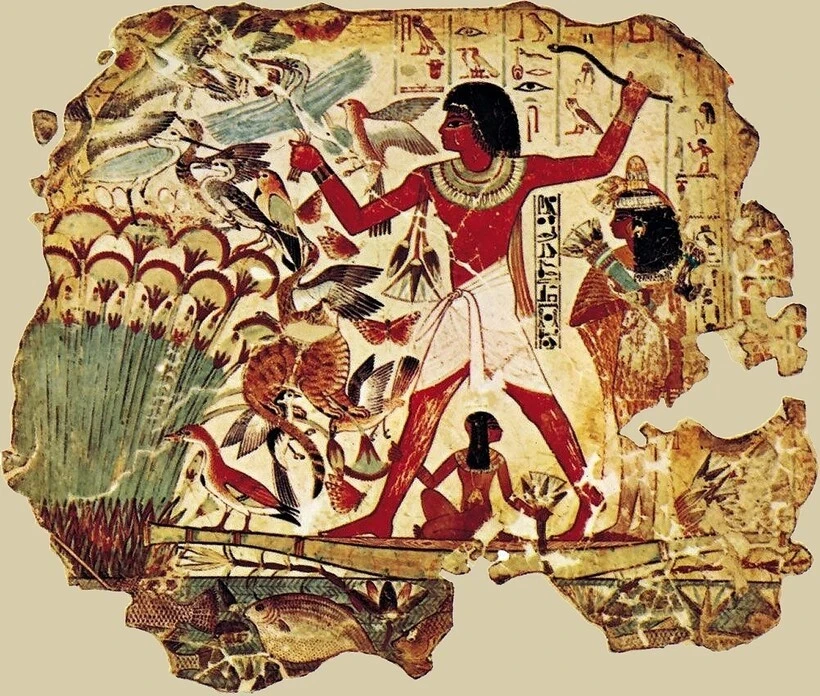
Notice how different the people depicted by the artist are in height
What if they come to life
Another interesting version that is worthy of attention is a little mystical. However, the entire worldview of the Egyptians - both nobles and ordinary people - existed exclusively within the framework of the then existing religion. So, for example, in those days, the inhabitants of the country of the Great Pyramids believed that the drawings in the tombs and tombs (and they were mostly located there) could come to life. Provided that the image was three-dimensional, it was supposedly able to literally come off the wall. It is clear that no one wanted the deceased pharaoh to suddenly come to life, therefore, to ensure that he would not return to this world, people were depicted in profile, and their figures were made flat. Just in case. 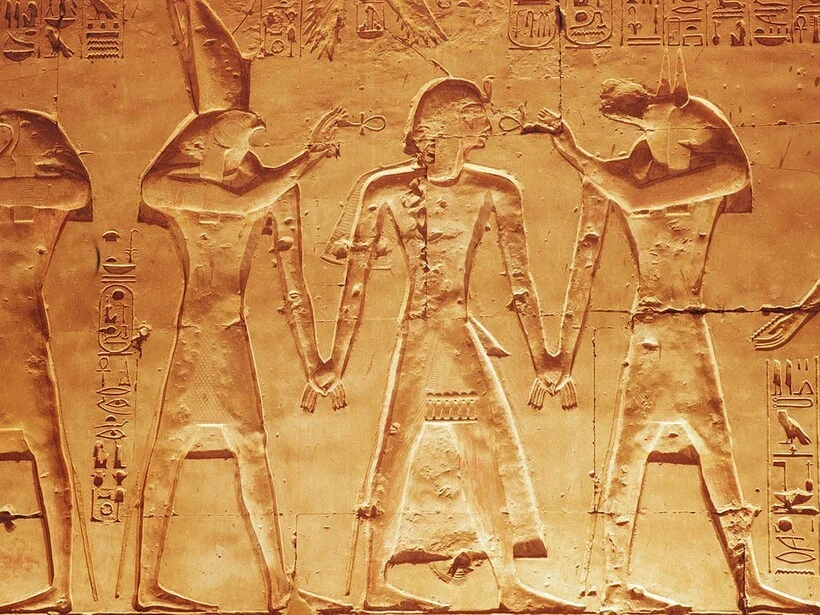
Nobody wanted to revive the dead pharaohs, so they were depicted exclusively according to the canons
Today, the drawings of the ancient Egyptians, despite their apparent primitiveness, for some reason continue to attract our attention. What's special about them? Maybe the fact that they are all made in the same style? Or that they are imbued with sincere belief in the mystery of the afterlife? Everyone sees something different in them. And yet, whatever the reason really lies at the basis of such unusual canons of artistic creativity, perhaps we will never know which of the three. It seems to us that it’s definitely not the first, but what do you think?