Hoarse frogs have some of the largest tadpoles in the world. In addition, their young look more like fish than amphibians. 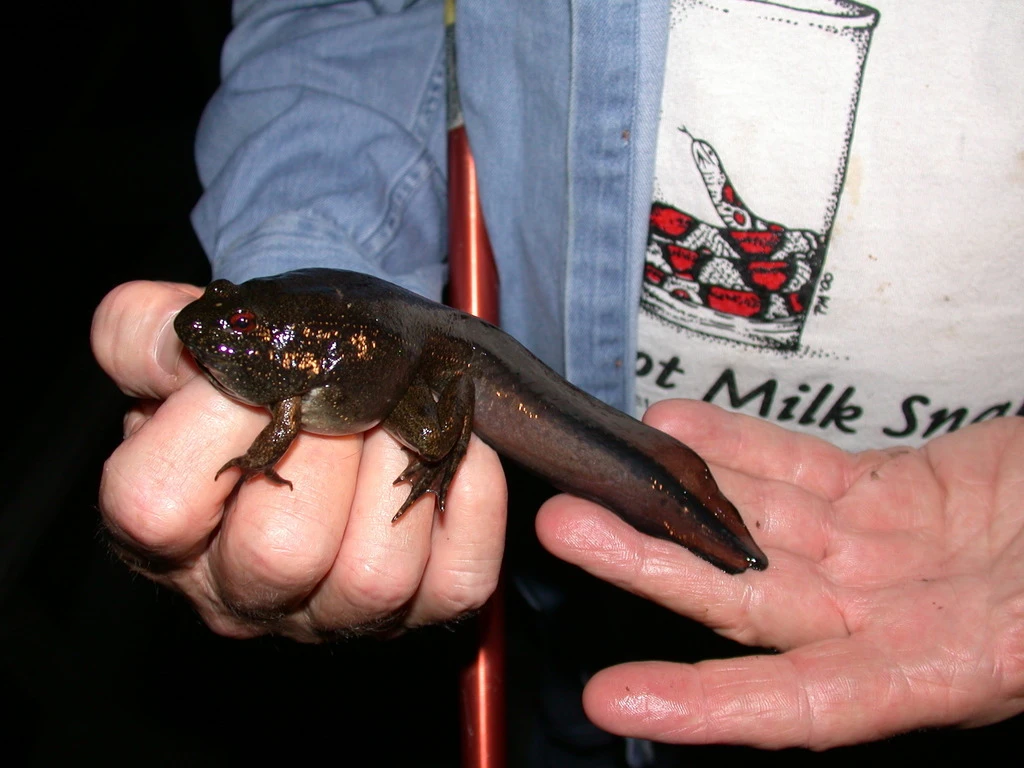
Usually, baby frogs hide in thickets of aquatic plants, eat carrion, plankton and try not to be seen. To achieve this, they even became translucent! But the husky frogs are painted in the typical camouflage colors of fish: a dark back, a light belly and a motley spotted pattern. And all because at 16 centimeters in length it will not be possible to dissolve in the surrounding space 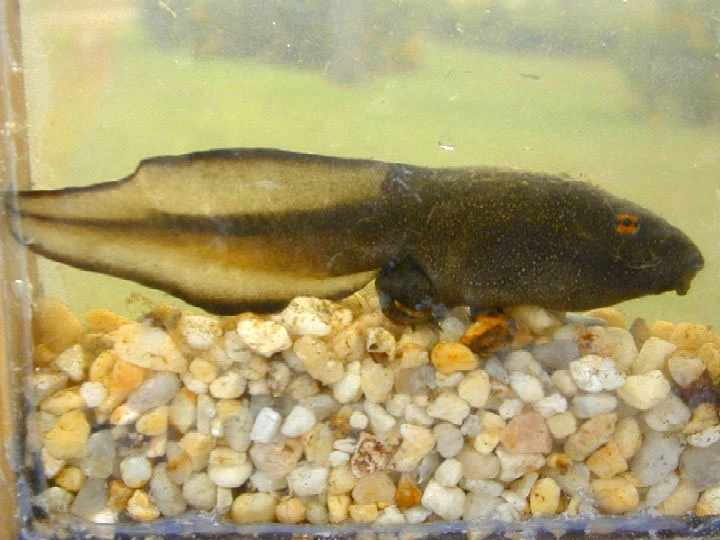
Their behavior is also different. Instead of staying away from each other and hiding in secluded places, the husky frogs actively move and gather in organized groups. 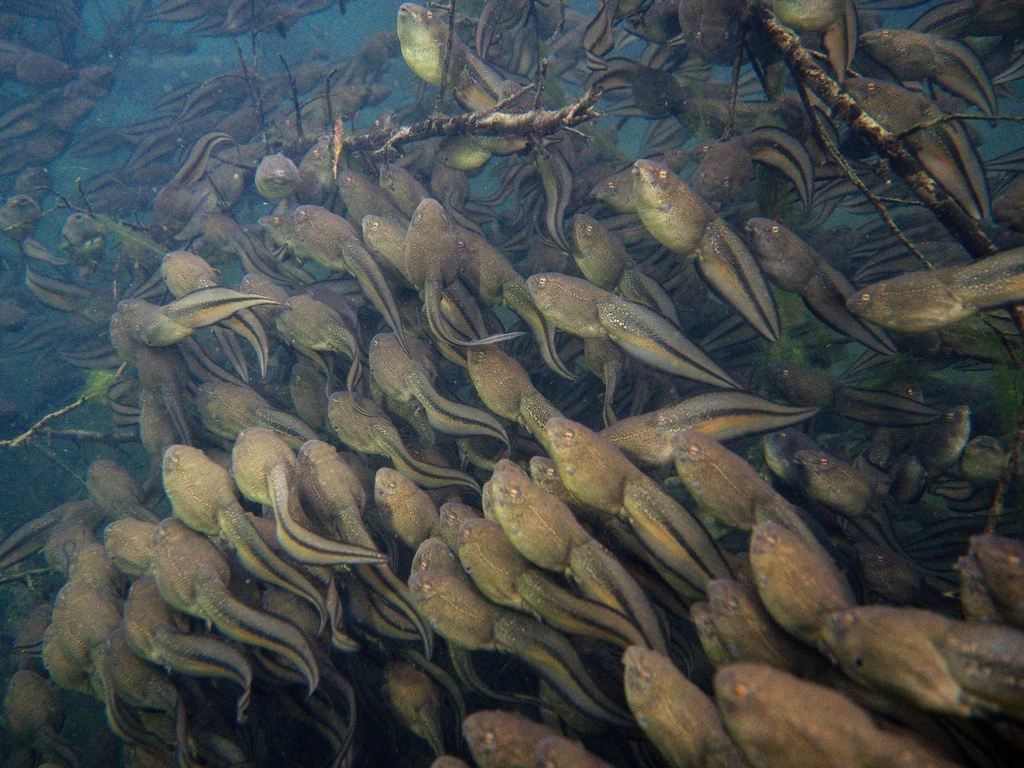
This behavior is not without meaning. A giant tadpole cannot hide under a snag and pretend to be a rag, and in a crowd the chances of being eaten are much lower. In addition, predators who are not particularly keen-eyed can mistake a flock for a solid object, large and dangerous. For small fish, tadpoles of other species and insects, a crowd of hungry mouths really poses a threat. The flock, like a crowd of hungry schoolchildren in a canteen, sweeps away everything that falls into its visible surroundings. 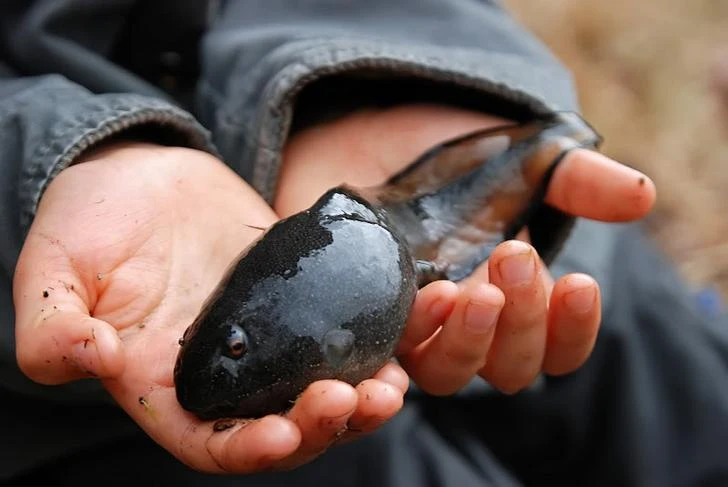
In the larval stage, animals exist, for a minute, from 1 to 2 years, tens of times longer than the fry of other species of frogs! But after wintering, in March or early April, they go through metamorphosis. The changes are standard: the tail is reduced, the paws are cut out and all that. When the hoarse frog finally grows, a thin body 3-5 centimeters long appears from the water! Of course, then the amphibian will fatten up to 10 or even 12 centimeters, but it will never be larger than in childhood. 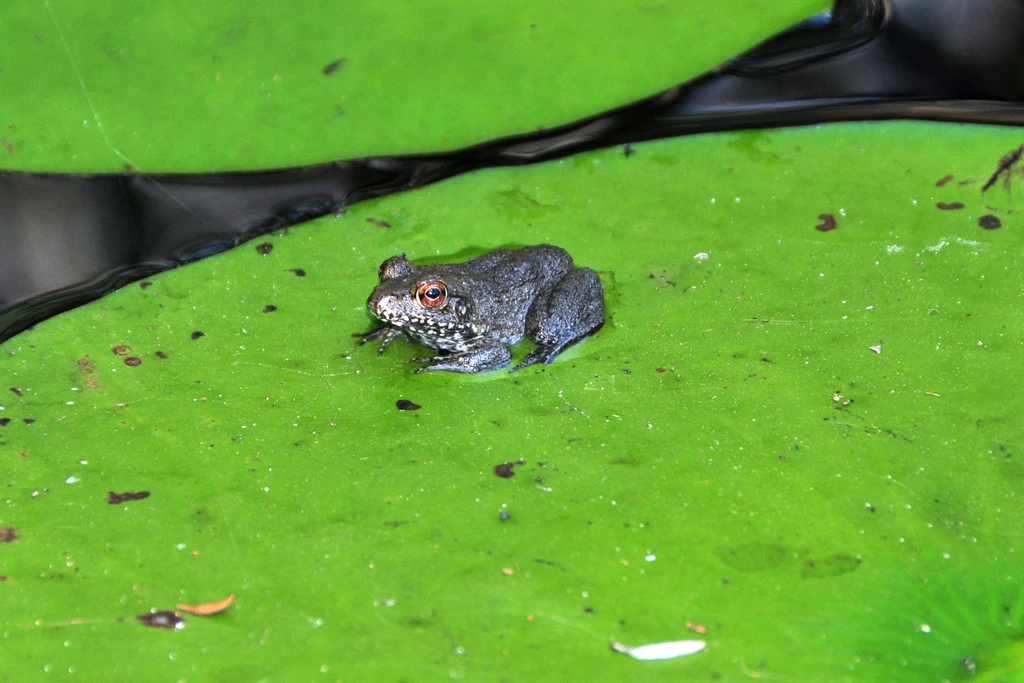
Perhaps all the weight goes into the voice? Instead of the standard “kwa”, amphibians emit a powerful, booming snoring sound. Female hoarse frogs find this sound extremely erotic, so they flock together like doves for bread. And then everything is trivial: the lady lays several thousand eggs, the guy fertilizes it all, and the couple goes about their business, leaving the eggs dangling in the water thickets near the surface. 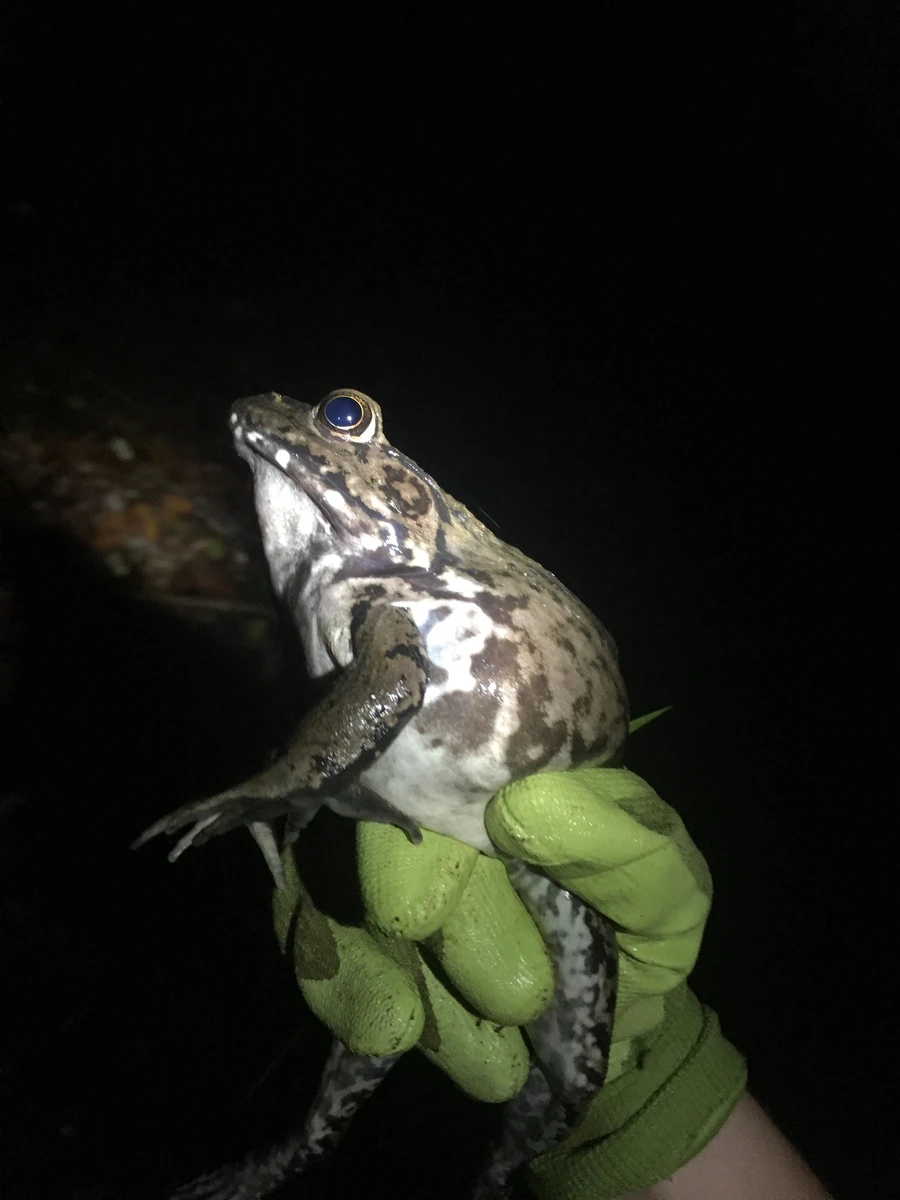
Having finished with their parental duties, snoring frogs can relax a little. During the day they sleep in damp places, and at night they work along the banks of reservoirs as anti-insect defense points. And the amphibians came up with this very cunningly: aquatic predators are not interested in a husky frog, and terrestrial predators simply do not have time to get to it! Therefore, the number of frogs on the Southeast Coast of the United States is stable, although it has decreased somewhat on its outskirts. Habitat destruction has a negative impact on almost all animals. 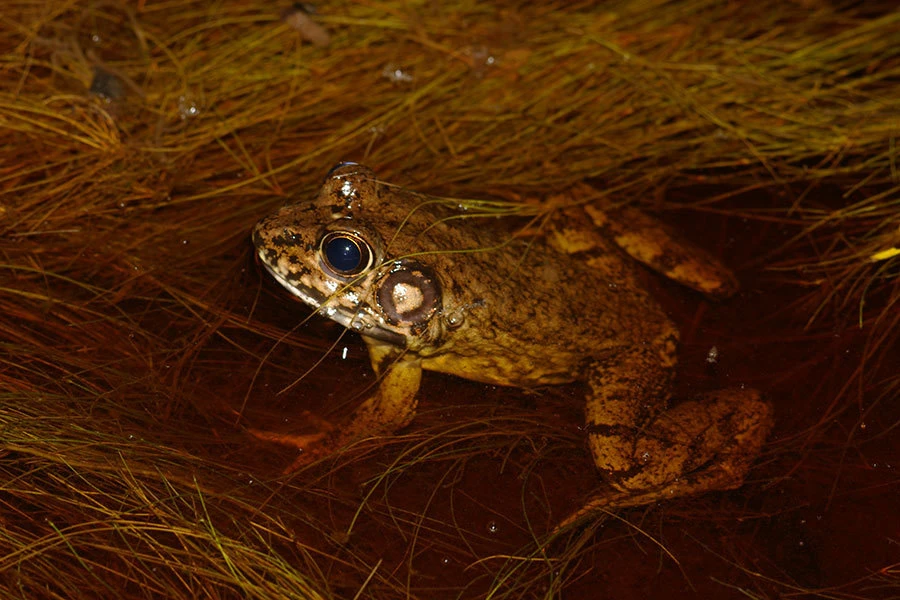
Frogs have only one serious drawback: they do not tolerate temperature fluctuations very well. If it's hot outside, the thin-skinned animals hide from the sun's rays in the forest and tall grass. And if the temperature drops below 17 degrees, the animal dives into the water in the hope of not dying.
0 comments