Indus dolphin: blind whales of dirty rivers of Pakistan (10 photos)
Moms and dads of India and Pakistan can tell their children horror stories about the terrible blind dolphins with piranha teeth that swim in the Indus River. But not with the intention of intimidating, but just the opposite - if the child does not obey and throws garbage anywhere, then the animal will never come. Because Indus dolphins are the monsters you want to meet: they are almost living fossils. Perhaps our century is the last time when you can still see them live. 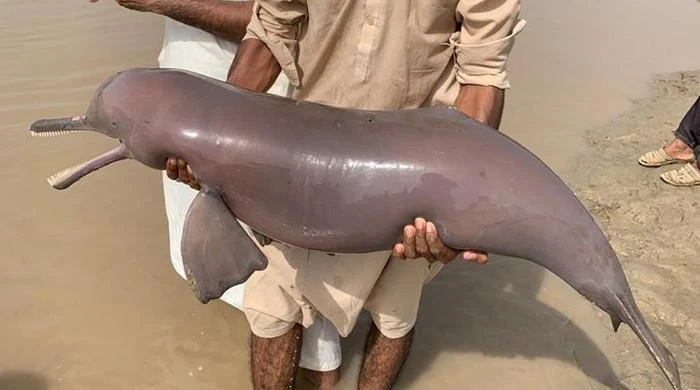
According to Pakistani media, this dolphin, alas, died due to shots fired by unknown persons.
Indus river dolphins are distinguished by a very strange muzzle: a long elongated snout with protruding stake teeth. Instead of eyes there are two tiny dots. And this ominous smile... It’s strange that the animal has not yet become the main character of a trash horror film with the epic title “killer dolphin.” 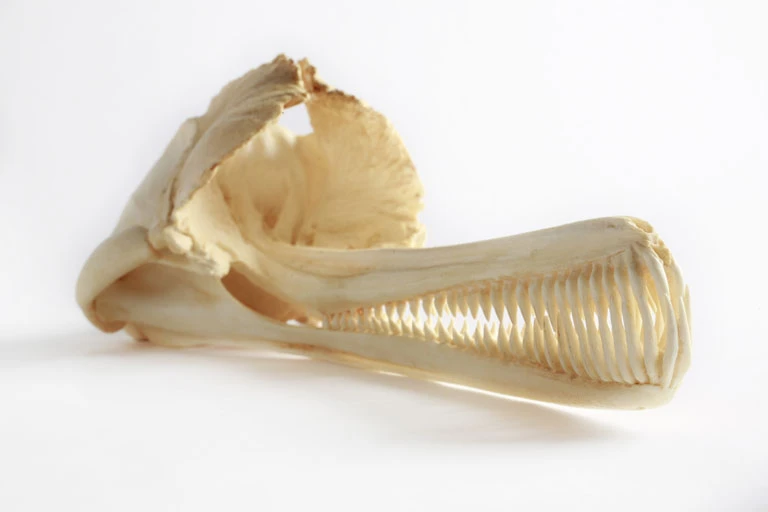
Replica of an Indus dolphin skull. Well, is it getting through?
But if you curb your imagination and take a closer look at the facts, the little animal will turn out to be more than harmless. At least for you and me. The effectiveness of such a bite for gutting people is extremely low. But catching slippery fish with a picket fence of razor-sharp teeth is a nice thing! This is what the Indian dolphin does. 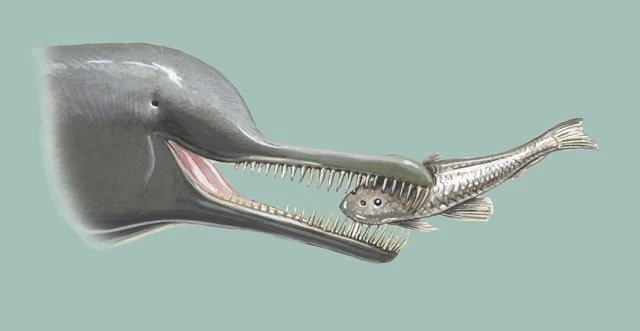
Unfortunately, there are few photographs of this dolphin. Therefore, how he hunts can only be seen in the illustration.
Otherwise, the animals are not original: a stocky build, small thin flippers, a gray-brown color matching the color of muddy water. What's so unusual about it? Let's start with the fact that the Indian river dolphin is not a “dolphin” at all. According to phylogenetic analyses, Indus guys belong to the relict family Platanistidae. 29 million years ago, the order of toothed whales divided into three families: ziphiids (beaked whales), delphinids and our platanistids. Further, the paths of these families in the evolutionary race diverged sharply, and the relict critters had the worst of it. 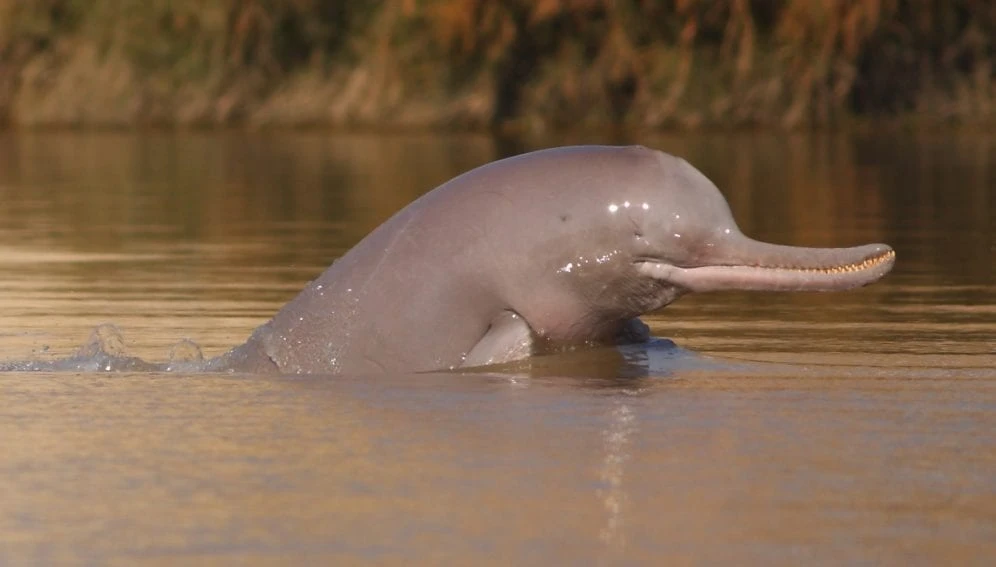
I'm not a Chernobyl bottlenose dolphin! I am a representative of an ancient family!
Beaked whales today include as many as 6 genera and 24 species. They are scattered throughout the world's oceans and, in general, do not complain about life. Dolphinids fared even better: their taxonomy includes approximately 37 species - and these are only living ones. But the unfortunate platastinids in our time are represented by only two species: Indus and Gangetic river dolphins. Why this happened - there is little data. But apparently, the extinct relatives of these cetaceans simply could not take root in other river systems. Fossil remains of river dolphins are found in South and North America, Italy, Kazakhstan, Austria, Hungary and France. Can you even imagine a dolphin in Kazakhstan?! Evolution also decided that the idea was so-so. 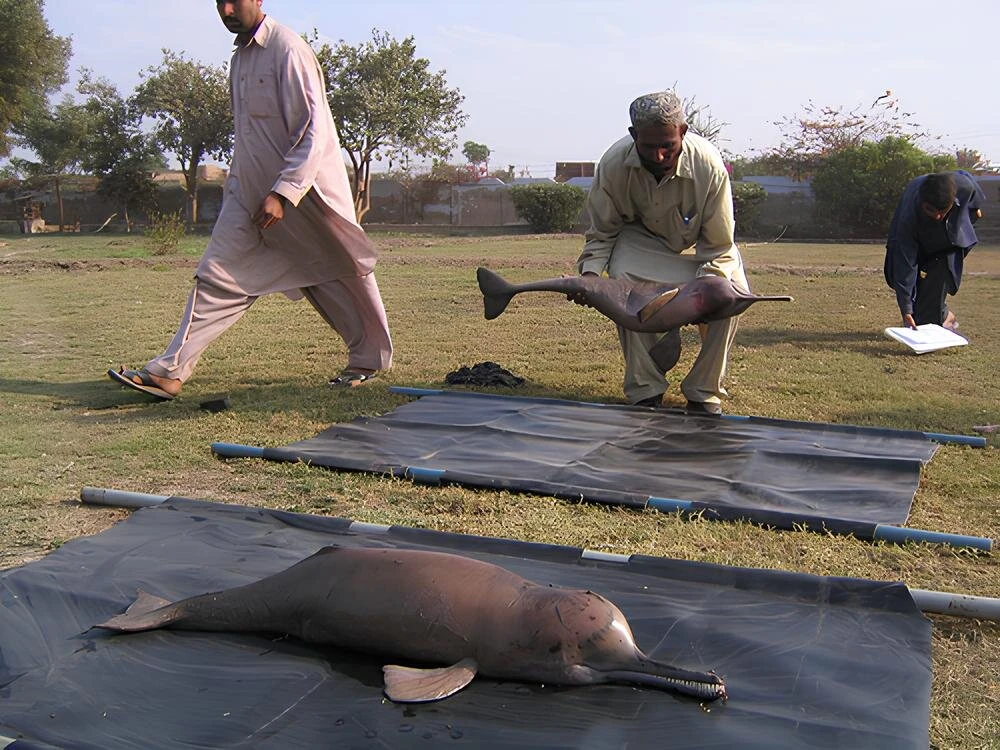
Some families in Pakistan and India have been saving dolphins for generations.
Now our heroes and also one of the last representatives of the platanistid family, in the muzzle of the face of the Indus toothfish can be found, in fact, in the Indus River valley, on the territory of India and Pakistan. They got there about 550 thousand years ago from the Ganges River basin during a heavy flood or even a flood. Later, everything calmed down, but the two populations of animals were forever isolated from each other. 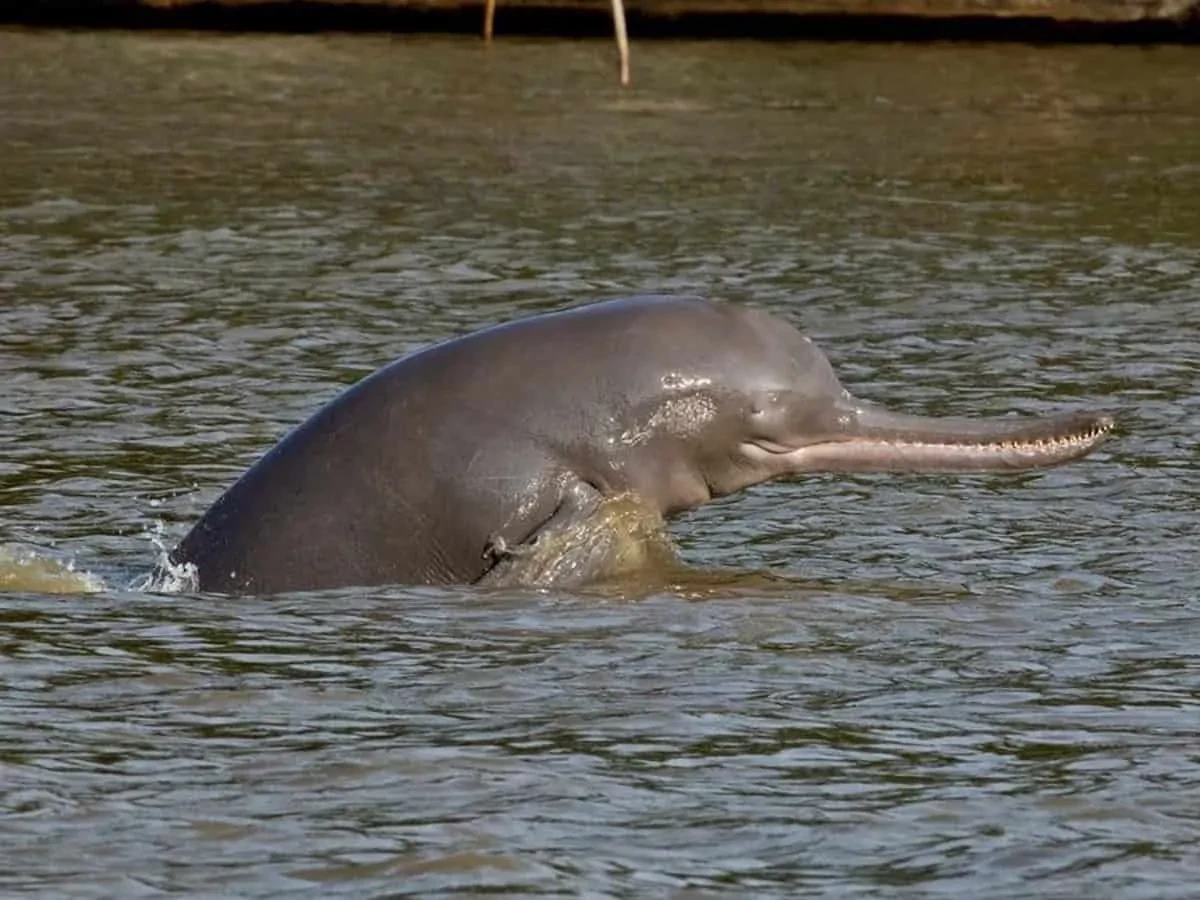
And in this photo there is a Gangetic river dolphin. The relationship between the two species is obvious.
But why the latter? Have you even seen this river? Neither am I, but scientists say that the Indus is one of the dirtiest rivers in the whole world. There are 10 rivers on the planet that carry 90% of all plastic into the ocean. The first place in this sad ranking is occupied by the Yangtze, and the second by the Indus. 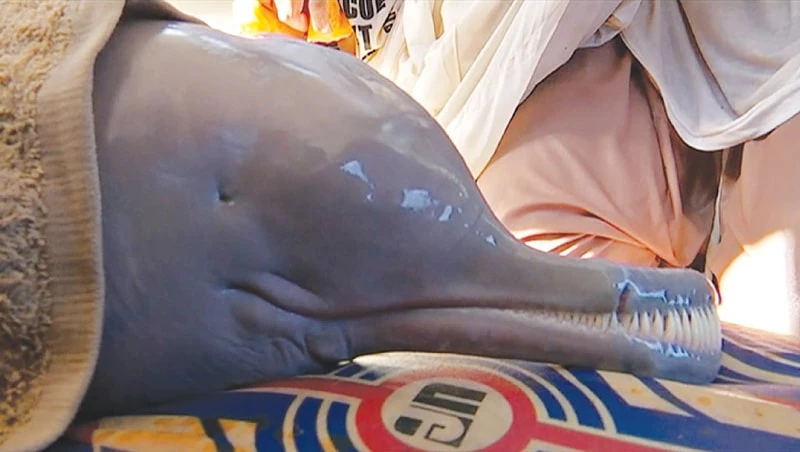
Grandmother: Well, the handsome boy has grown up! Are all the girls chasing you? I:
But even in this swamp, dolphins are not allowed to swim in peace! If previously the animals splashed freely in the impressive waters of the Indus and its tributaries, 3,400 kilometers long, now they can only be found in a small area of 890 kilometers. And because of the irrigation canals of the dams, their entire tiny range is strictly divided into 5 isolated populations. According to some reports, there are about 1,800 individuals floundering in the river. 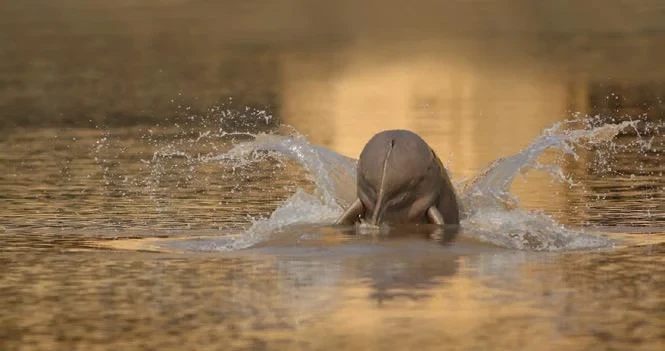
Lift my eyelids! Oh, I don't have them...
Dolphins are harassed by fishermen who catch a lot of fish and leave dangerous nets in the water. Animals are also disturbed by deforestation along the river banks and the discharge of toxic wastewater from factories, farms and cities. Cetaceans encounter water traffic and suffer from noise. And as if all of the above weren’t enough, the poor Indians are being hunted! Poachers hunt them for meat and raw materials for traditional medicine. 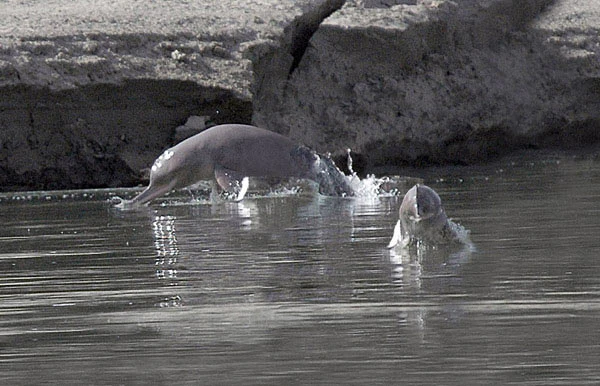
Well, there are at least two of them here. This can't help but rejoice!
We understand well what harms dolphins, but we have little idea how they live in their natural environment. Perhaps because their current environment is extremely unnatural.
It is believed that cetaceans live alone, gathering in groups of up to 30 individuals in regions that are especially rich in prey. It can be crustaceans, mollusks and fish: an adult dolphin needs about a kilogram of food per day. Catching it in a river, and even in such a muddy one, is not very convenient. That is why the beast was almost blind and upgraded its echolocation. So you can find something tasty even in the dirtiest body of water. And, despite its barrel-shaped body, the dolphin swims deftly on its side. So he calmly goes out into shallow water 20-30 centimeters deep. 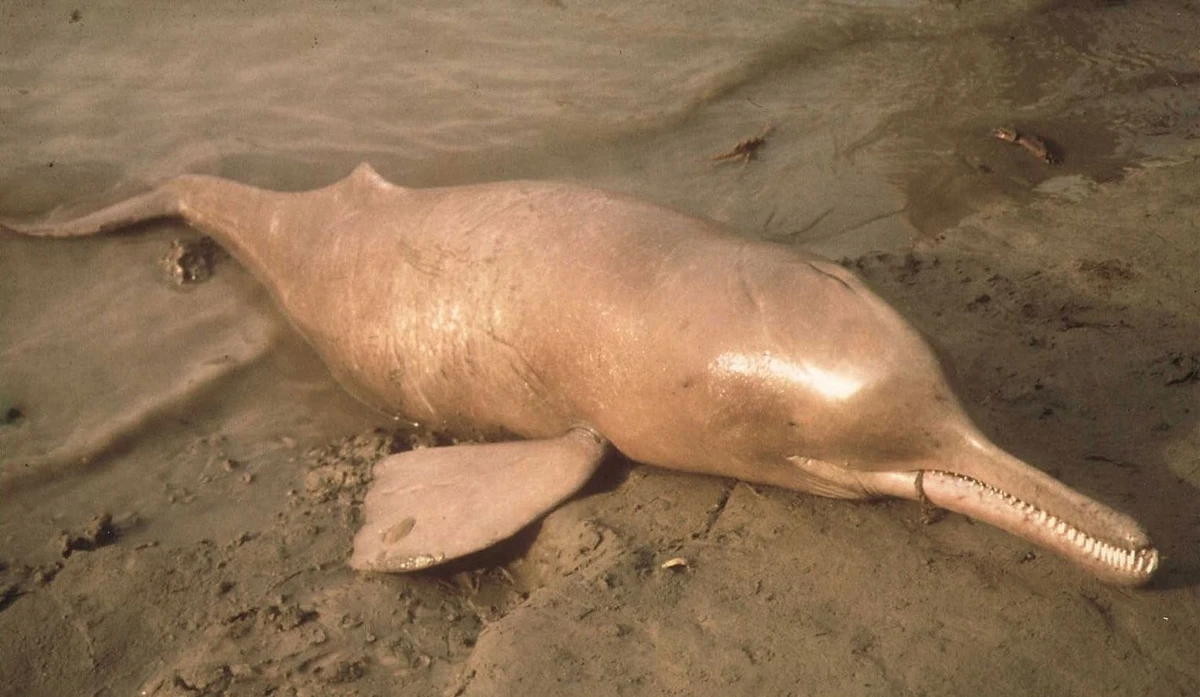
Dolphins' eyes have become so atrophied that they don't even have a lens. They are able to distinguish only the intensity of light and its direction.
But scientists can only guess and make assumptions about reproduction and mating rituals by analogy with other cetaceans. Most often, females with cubs were seen between January and May. Usually one baby swims with one mother. When the young are ready to continue the race is unknown. But it is believed that individuals of this species can live up to 30 years. Although in modern conditions such an age is very rare for Indus critters. They should just survive to begin with.