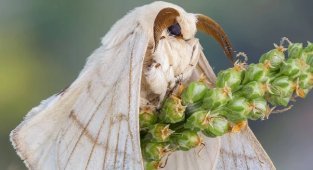
If you don’t have a summer house, then the silkworm won’t eat it. But this does not mean that he cannot cause you problems. Gypsy moth caterpillars are capable of doing things that will ruin the lives of even staunch city dwellers: deleafing their favorite park or depriving them of a fresh apple harvest. And the saddest thing is that they ruin the lives of people in dozens of countries! 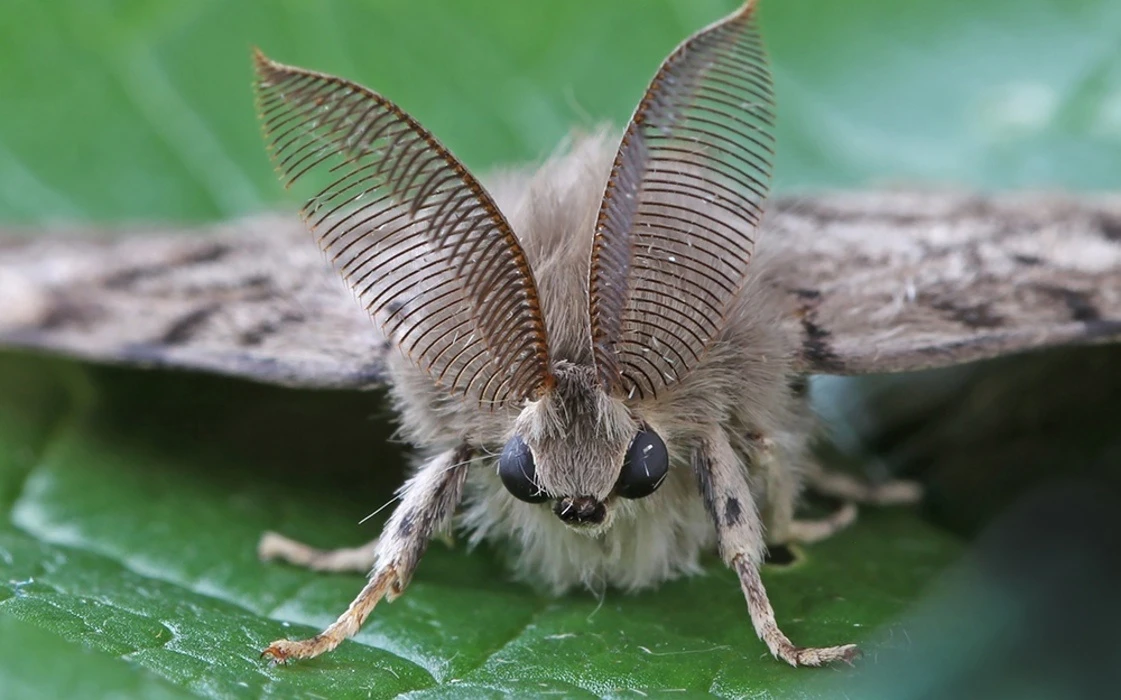
Don't believe the author, we're cool!
The gypsy moth got its name because of the pronounced sexual dimorphism in butterflies. Females are off-white in color, males are grayish and more severe in appearance. The two of them look just like the bride and groom on the threshold of the registry office. It would seem that advice and love. The problem is that, having found each other, these butterflies begin to multiply very quickly. 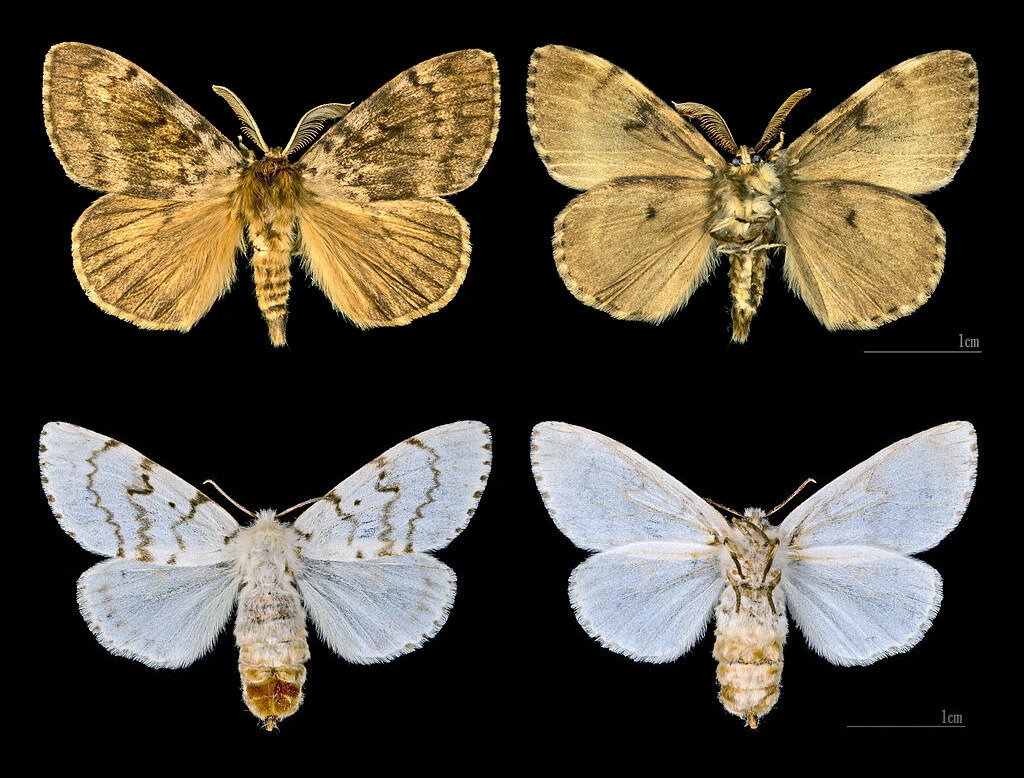
The males are on top and the females are on the bottom.
The female lays from 200 to 500 eggs. And these eggs are extremely tenacious. They are not afraid of either 10 days under water or -50°C outside. But the caterpillars are more tender, and 10°C is harmful to them. So they are trying to go public somewhere in April. Immediately after birth, insects are just good boys, kind of fluffy creatures that sit in a tight group and don’t touch anything. But over time, the animals scatter around and have a feast. 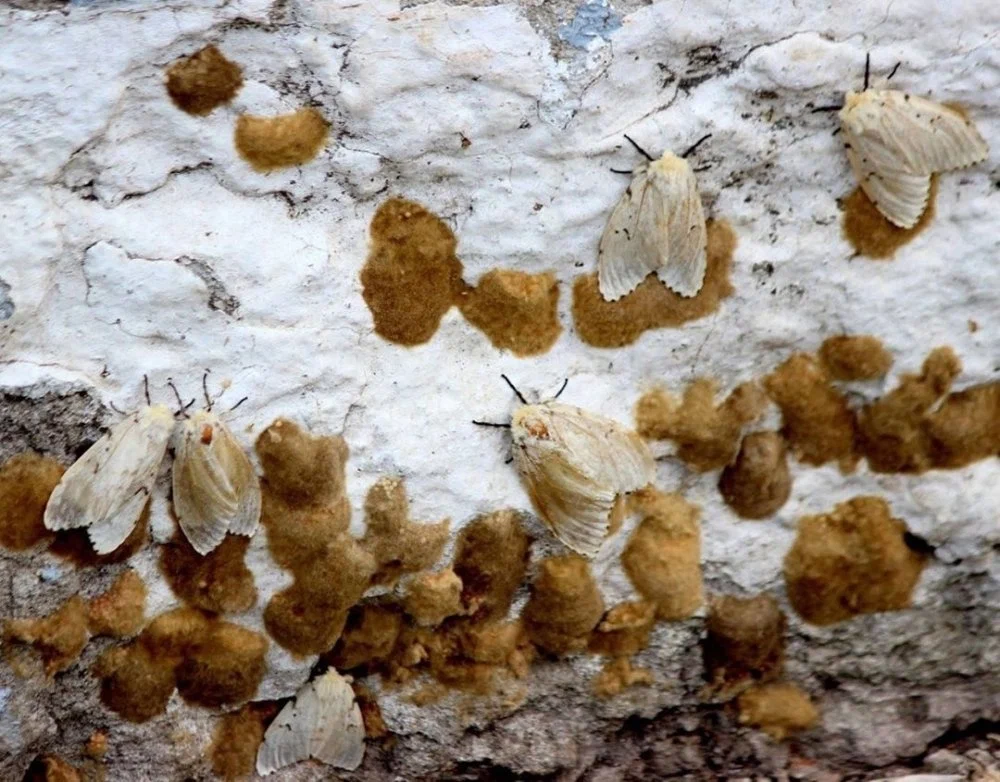
Gypsy moths cover their clutches with a dense layer of coarse hairs. Excellent protection from both insects and birds.
The gypsy moth cannot be accused of being picky. Its menu includes about 300 types of vegetation. There are oaks, birches, lindens, and many fruit trees, including apple, pear and plum trees. There are, of course, plants that leave the gypsy moth indifferent. Lilac, for example. But what kind of summer resident would be consoled by the prospect of stocking up on lilac jam instead of apple jam for the winter? 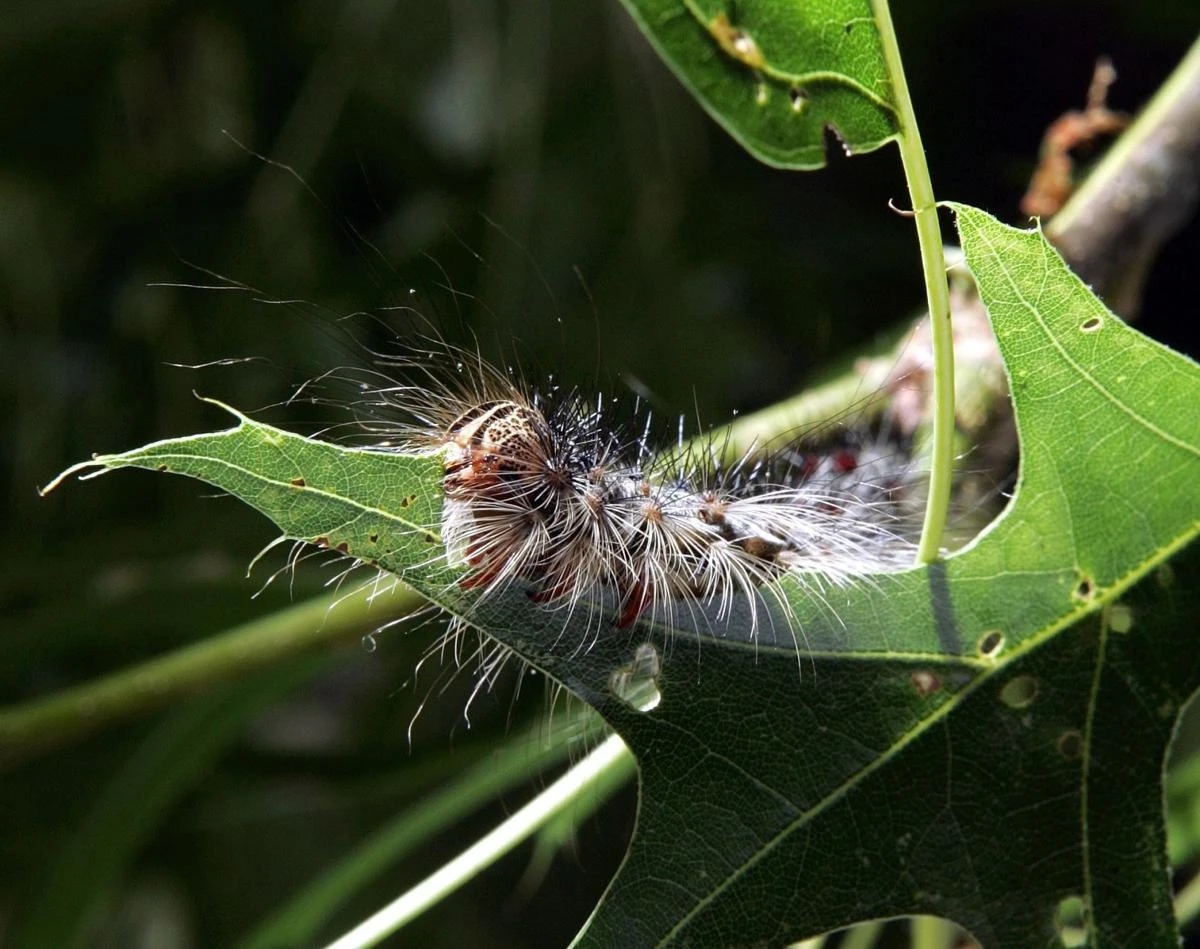
The young growing organism spoils the young growing leaves.
Grown-up gypsy moth caterpillars eat trees so thoroughly that in June the plants look as if spring has not yet arrived. And it is not at all a fact that new leaves will have time to grow at least until autumn. And since leaves are needed not only for the production of organic matter by photosynthesis, but also participate in the transfer of water and minerals from the roots to the top, without them a tree can easily fail. 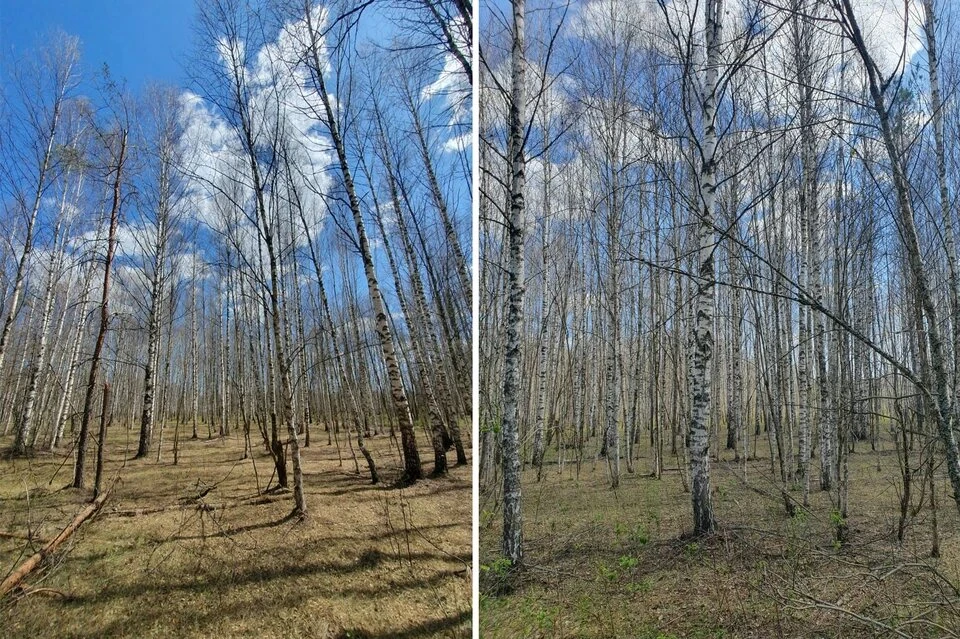
Thanks to the silkworm, the Ryazan birch grove looked like this in June.
And the most unpleasant thing for us is that the insect loves to travel. Moreover, butterflies fly poorly and not far, but the larvae can fly hundreds of kilometers! Their bodies are covered with hairs, which in strong winds turn the body into a large sail. The baby further enhances this effect by releasing cobwebs. Thus, the gypsy moth actively colonizes new territories and exchanges genetic material between populations. And researchers from the Baltic Federal University have completely found out that all gypsy moths in Western Siberia are representatives of one huge population. 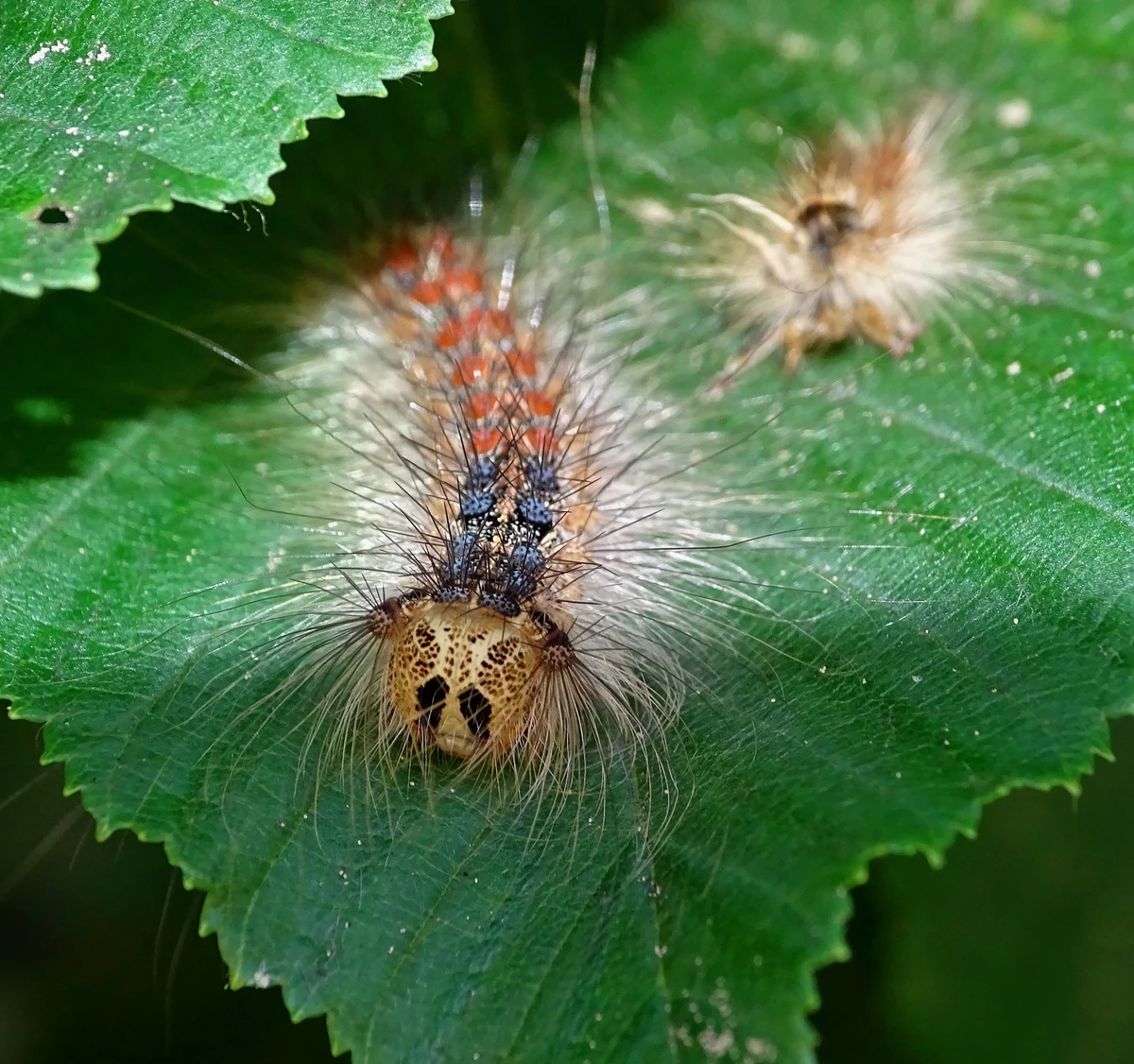
Two travelers are preparing for a flight.
Well, resettlement is not complete without good people. In the 19th century, the French entomologist and artist Etienne Trouvelot, who moved overseas, was greatly saddened by the fact that all the silkworms in the United States had died. And he decided to do good to America and cross the surviving butterflies with new ones. The adventurer chose the gypsy moth. They say he is less susceptible to all sorts of illnesses. And he brought a whole colony of these tenacious creatures to the USA. 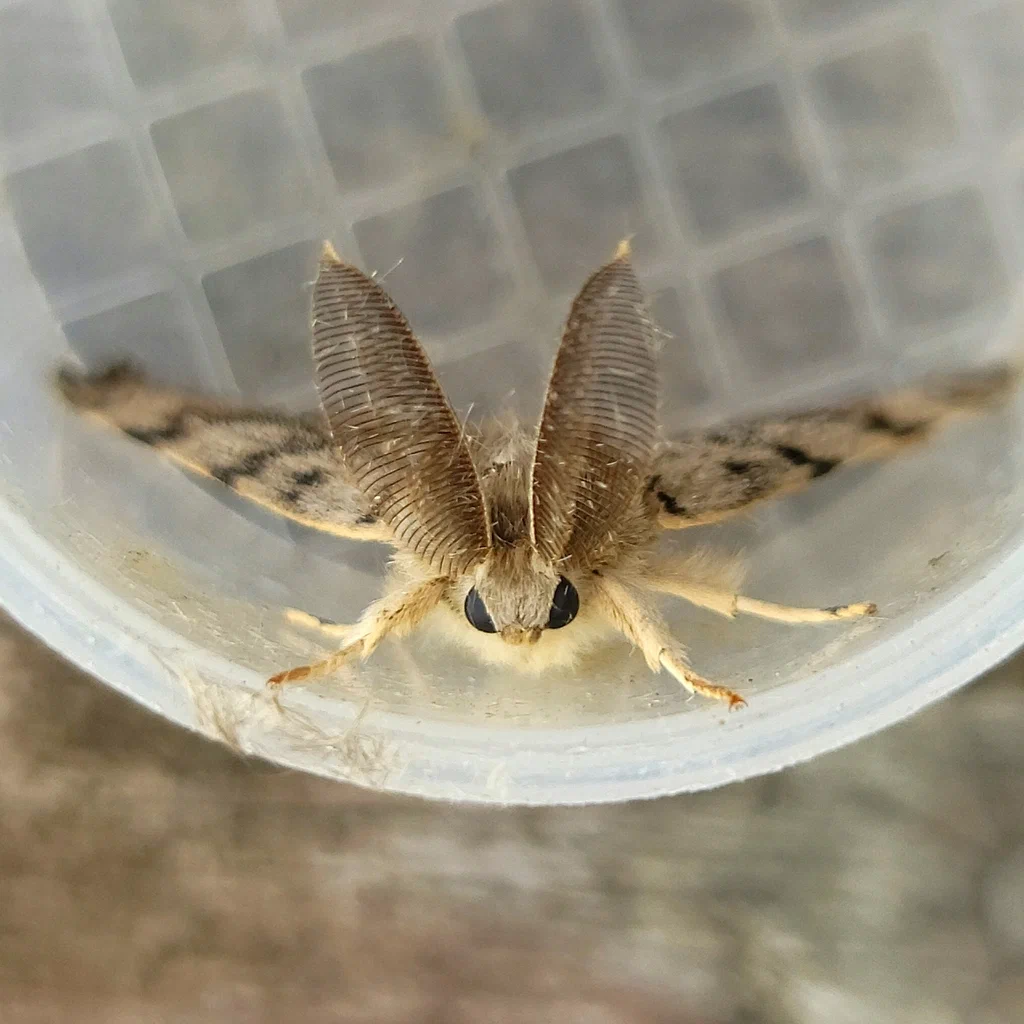
The New York gypsy moth looks at you with disapproval.
At first, the caterpillars peacefully chewed his garden, but soon they wanted variety. By the time Trouvelot noticed what was happening, it was already too late. Realizing the size of his school, he abandoned entomology and took up astronomy. A couple of decades later, his charges were gnawing on greens in several states. 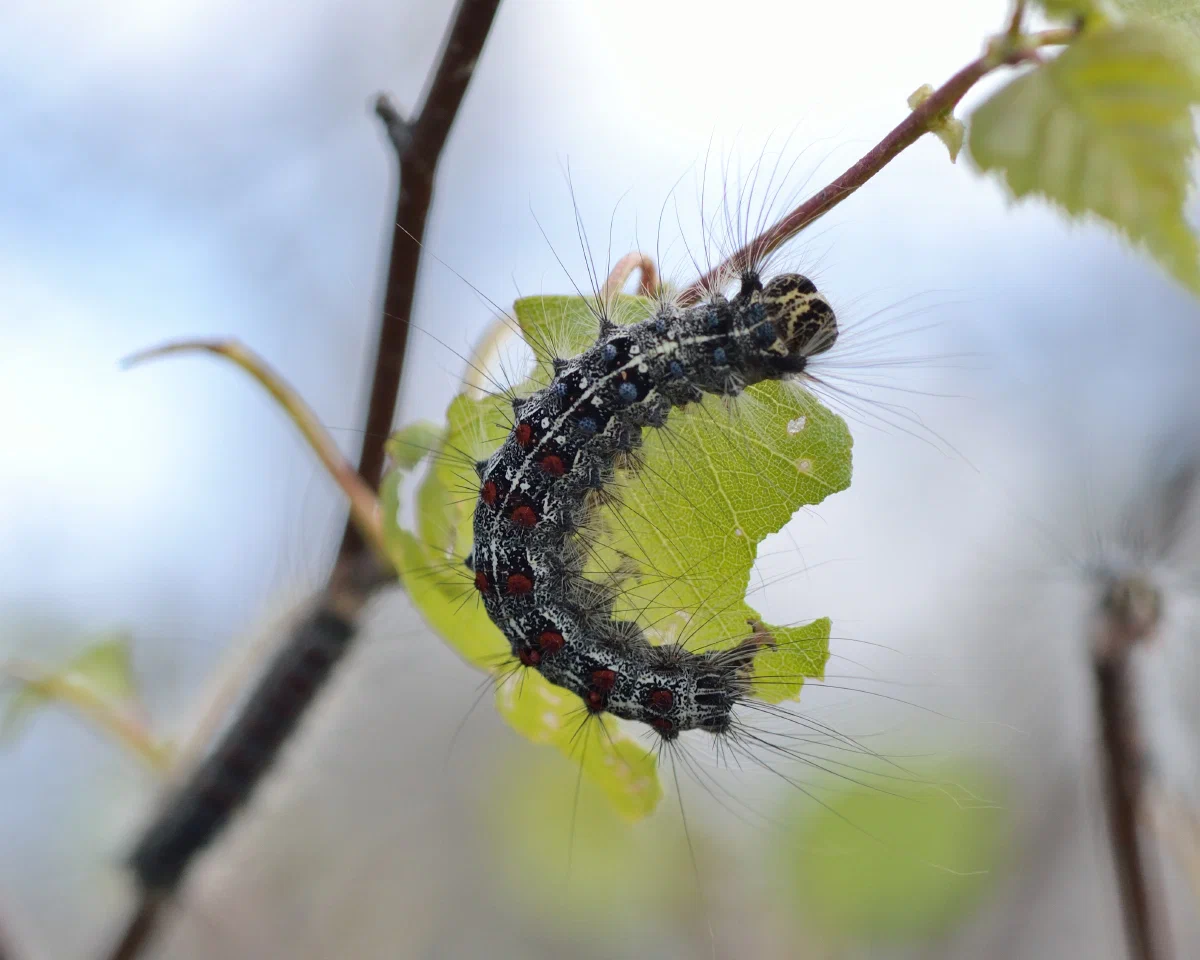
And you won’t do anything to us, people!
Regardless of where the silkworm lives, it is problematic to fight it. Agronomists and summer residents are itching to fill its accumulations with chemicals, but they can’t. A poison of sufficient strength will destroy not only the pest, but also its natural enemies: beauty beetles, ants and parasitic wasps. Well, there is no hope for the birds - they will not eat the nasty spiny caterpillars. 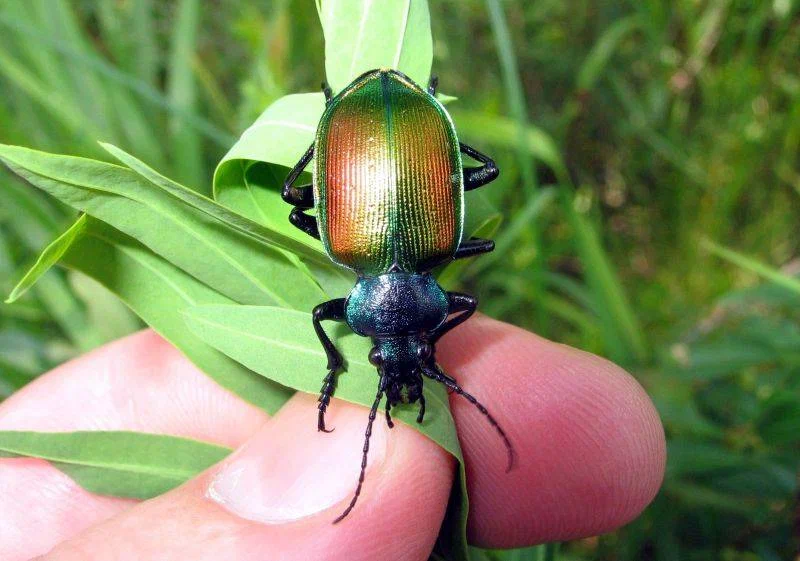
The odorous beetle, the main exterminator of the gypsy moth, is now going through hard times. Its numbers are declining.
Those who absolutely do not want to get a chronic March in the garden instead of a green summer can only follow the butterflies themselves and scrape off the eggs, carefully wrapped in brown hairs. Only the unpaired mothers carefully strive to hide their clutches in places where you wouldn’t guess to look for them without half a liter. And even in this case, losses from this insect are inevitable.
0 comments