Why it’s not easy for a moose to live in winter: 9 features from the life of an elk (10 photos)
The problems of the forest giant begin with the arrival of the first cold weather. And they are not at all connected with the fact that the elk is freezing. The elk has an excellent thermoregulatory apparatus! 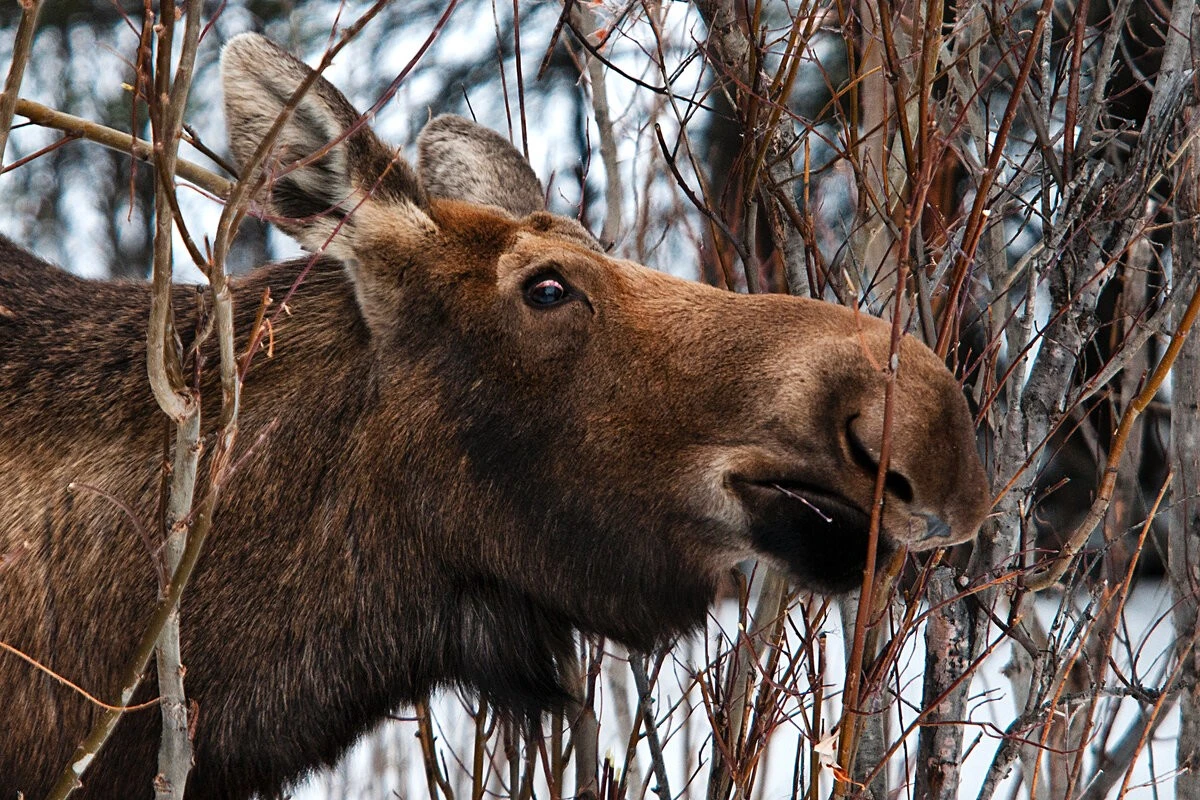
Long road in the dunes
The moose realizes that he will have to take a one-way ticket if he does not bother to find a decent place for a winter camp. The pragmatic beast begins to look for it around mid-November. Moose have high requirements - a coniferous forest is a must. Sokhaty knows that coniferous “paws” will trap snow, and pine or fir bark will be an ideal winter dish. Finding a full-fledged “parking lot” takes a lot of time. Sometimes the moose is busy with this until December. 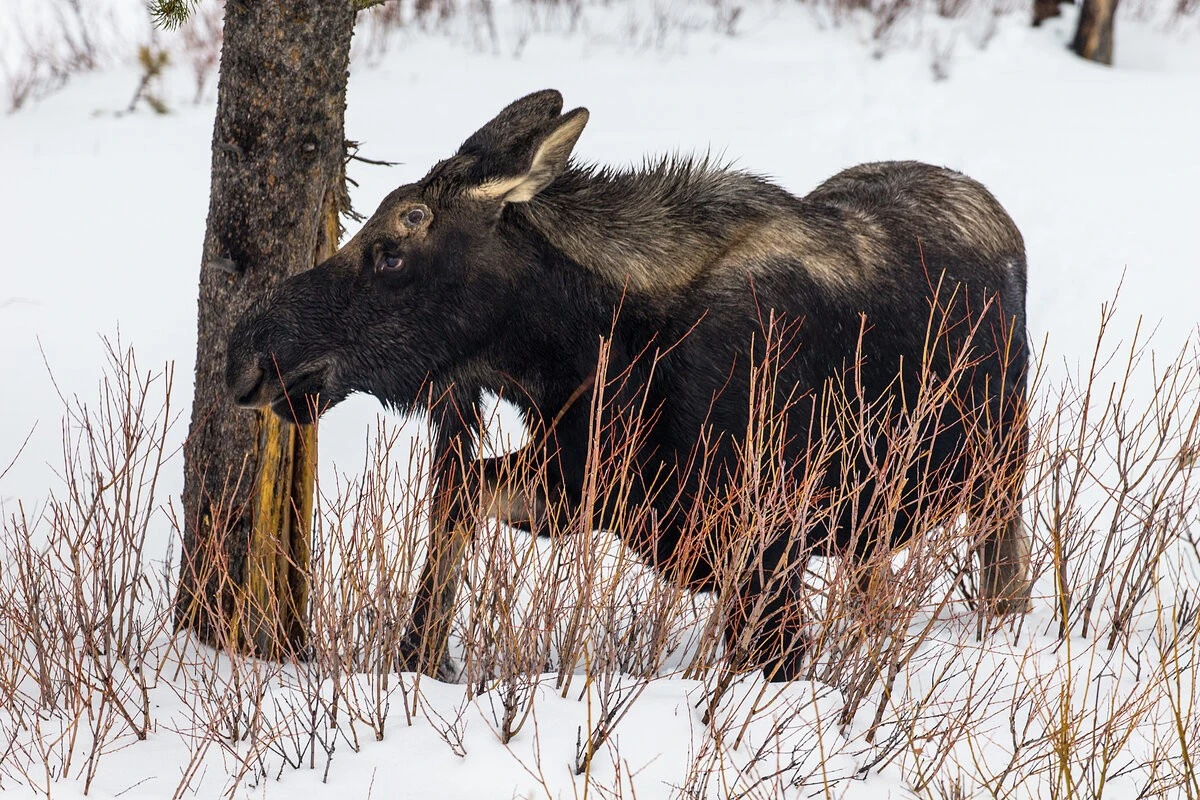
Without salt it's not lunch
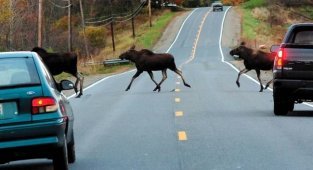
Rough plant food is a priority for elk, but it is poorly digested without salt. The giant’s body does not know how to produce it as much as is needed for full metabolism. But the moose knows that the bipeds sprinkle the trails with a special mixture. Therefore, the elk confidently steps onto the highway in the hope of replenishing the necessary resource. He can recognize salt from a very impressive distance. But no one has canceled inattentive drivers... 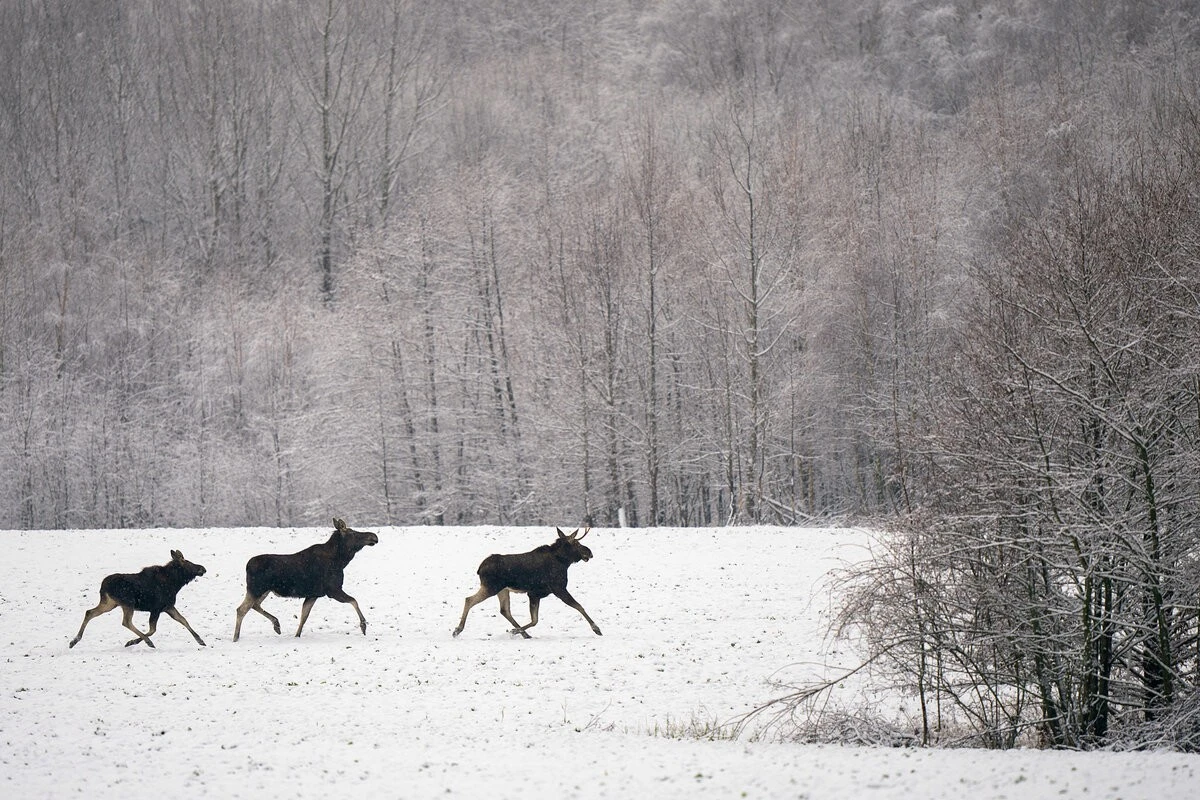
Fully
The crust is incredibly hard, and the moose’s paws are not protected by anything. Yes, long. Yes, they can overcome large snow drifts. But as soon as a thaw occurs, and after it the snow becomes covered with crust, the forest giant will no longer be able to get out of the snowdrift without losses. Fortunately, the elk senses changes well. Suspecting something was wrong, he will immediately try to go deeper into the forest. There it will try to find an area with thick dead wood and lie to the bottom! 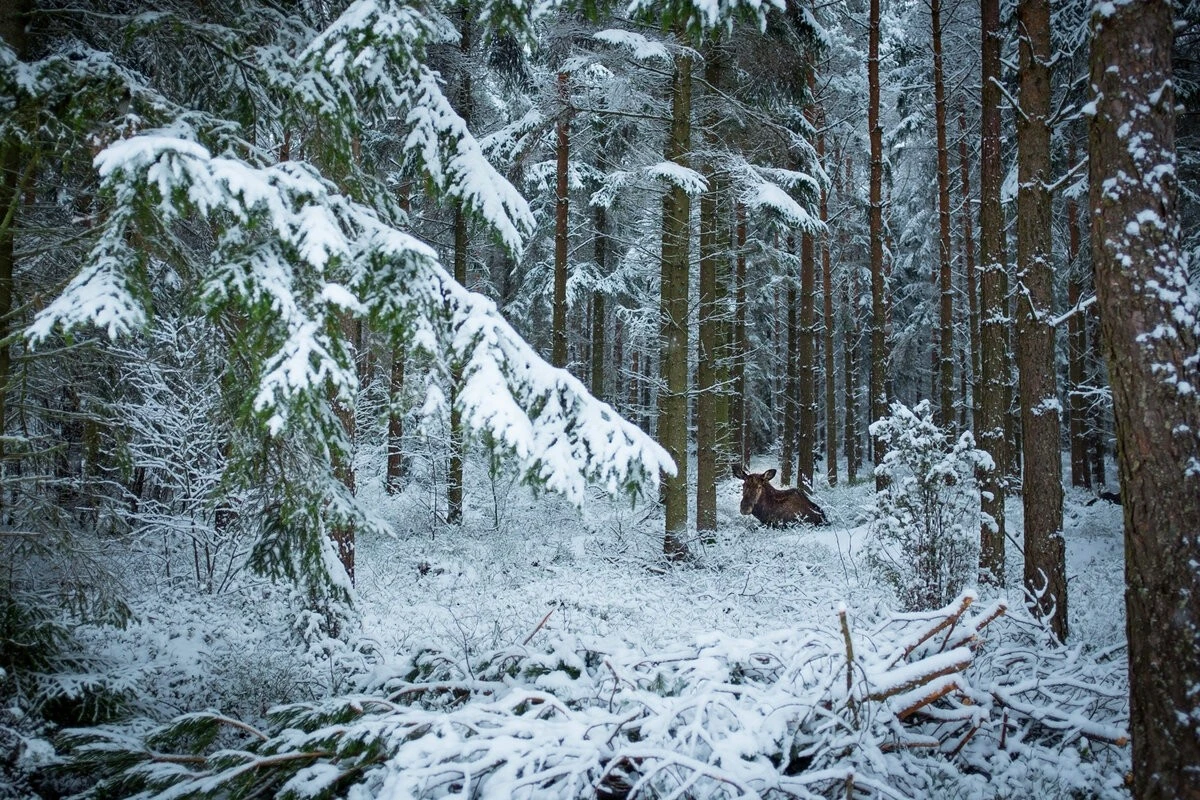
Here, period!
Long-term parking near dead wood is a necessary measure. The animal's horns blend perfectly with the branches, and the moose itself can easily be mistaken for a fallen tree. A person can discover such a site only by chance. It cannot be said that predators will deliberately seek out such sites. Many people are familiar with the “golden hoof” of the elk. But if wolves accidentally discover “crust beds”, then there will be trouble. The moose will not run away, because it understands how doomed the idea is. 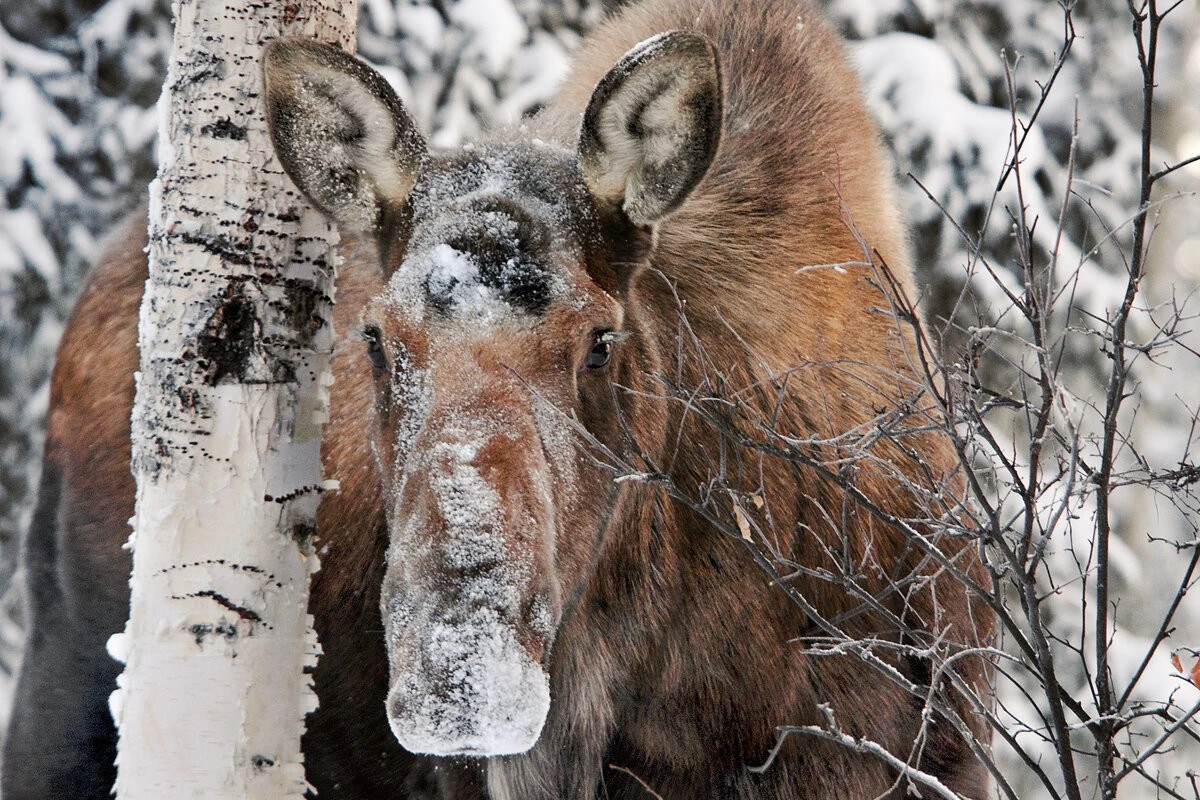
Nasty parasite
In winter, most elk suffer from decreased immunity. And the reason for this is disgusting flies called gadflies. The two-winged midges sincerely believe that the body of the poor elk is suitable for them as a maternity hospital. Their babies are developing and causing the elk a lot of inconvenience. If the internal itching can still be somehow endured, then weakened health is reflected in the speed of movement. “Forest orderlies” are not asleep. 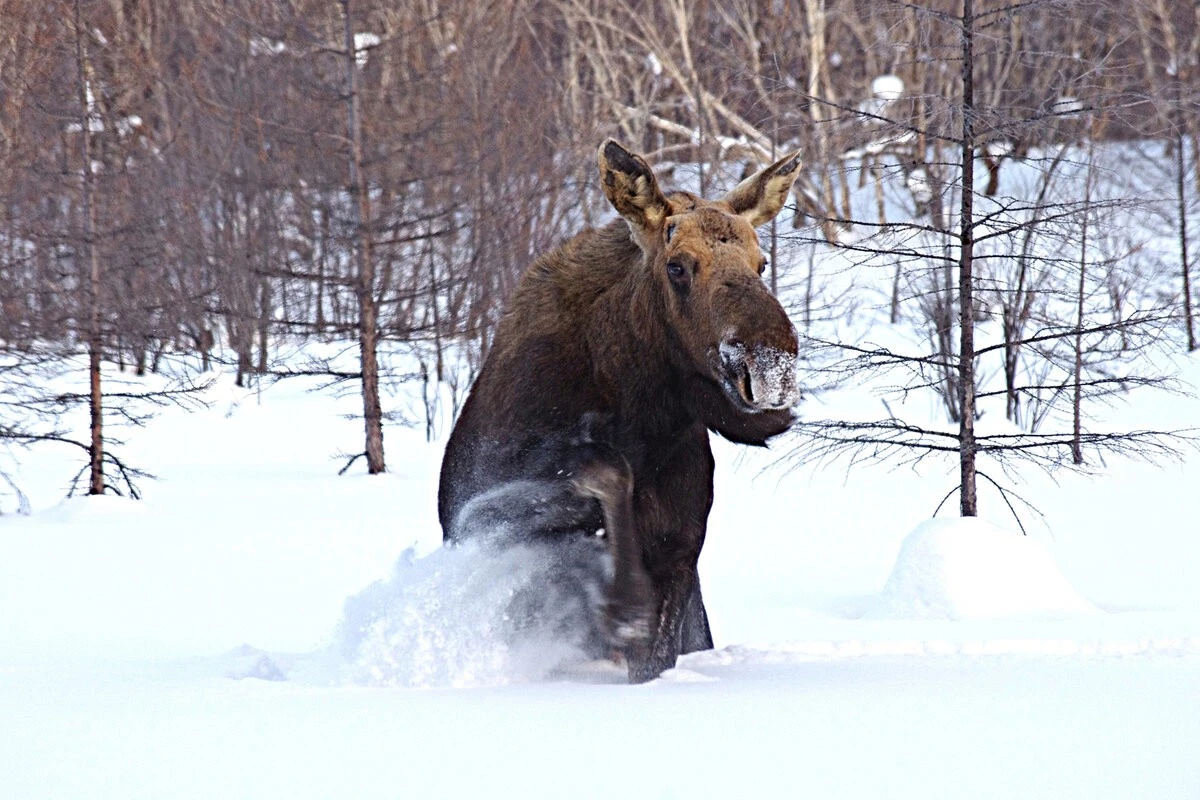
The elk successfully overcomes high drifts of loose snow, but one cannot deny him foresight.
Not one thing, but another
The moose's winter diet consists of tree bark. When the frost hits so hard that gnawing off the bark becomes problematic, our hero switches to twigs. On the one hand, it’s good, because bark is inferior to them in nutritional and calorie content. But on the other hand, it’s bad. Possessing truly heroic strength, the elk easily makes bends in brushwood. Only the branches are ricocheting a lot! It is for this reason that in winter you can meet a moose with a black eye - a kind of pirate. 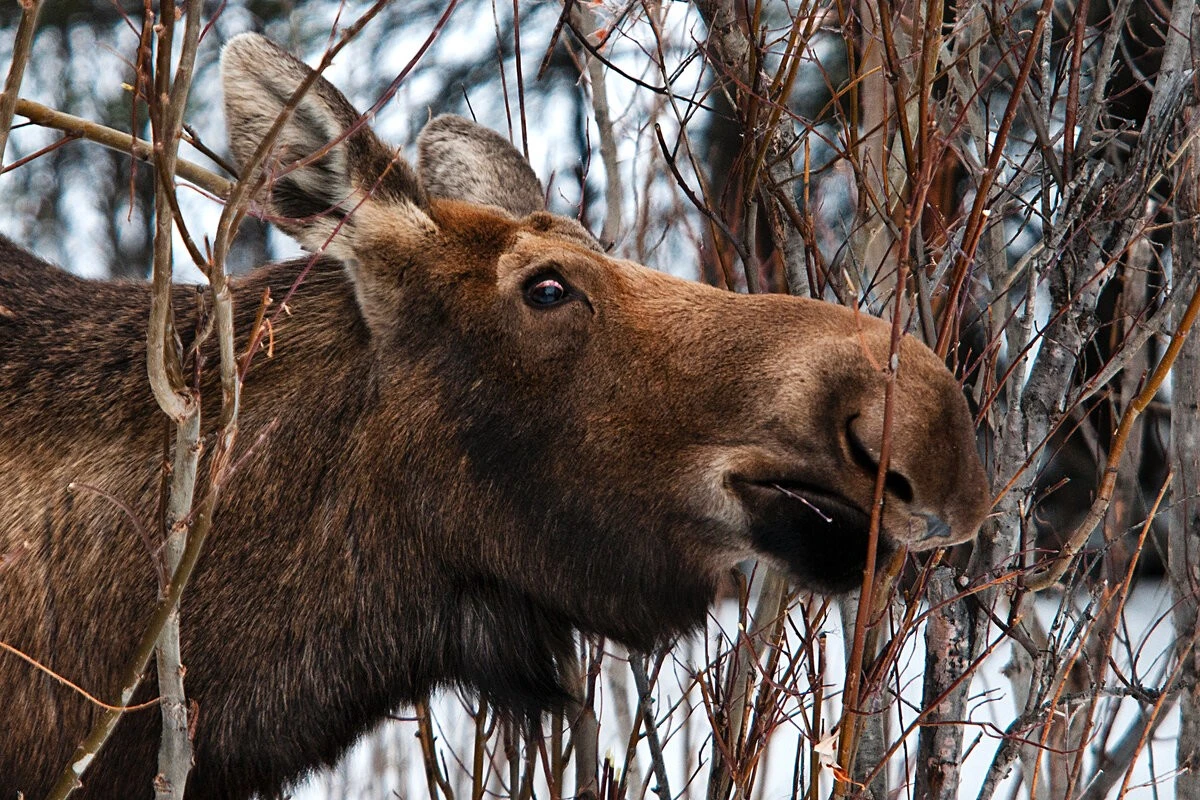
A winding path
Moose is a great fellow. He uses all food resources that come his way to the maximum. What are production wastes? He makes fattening forays with enviable regularity. The closer to the middle of the path, the more tortuous and confusing the fat passage becomes. And let the animal have to spend a significant amount of energy walking around each bush in a circle. And let the elk get tired because of such wanderings. But he's full! 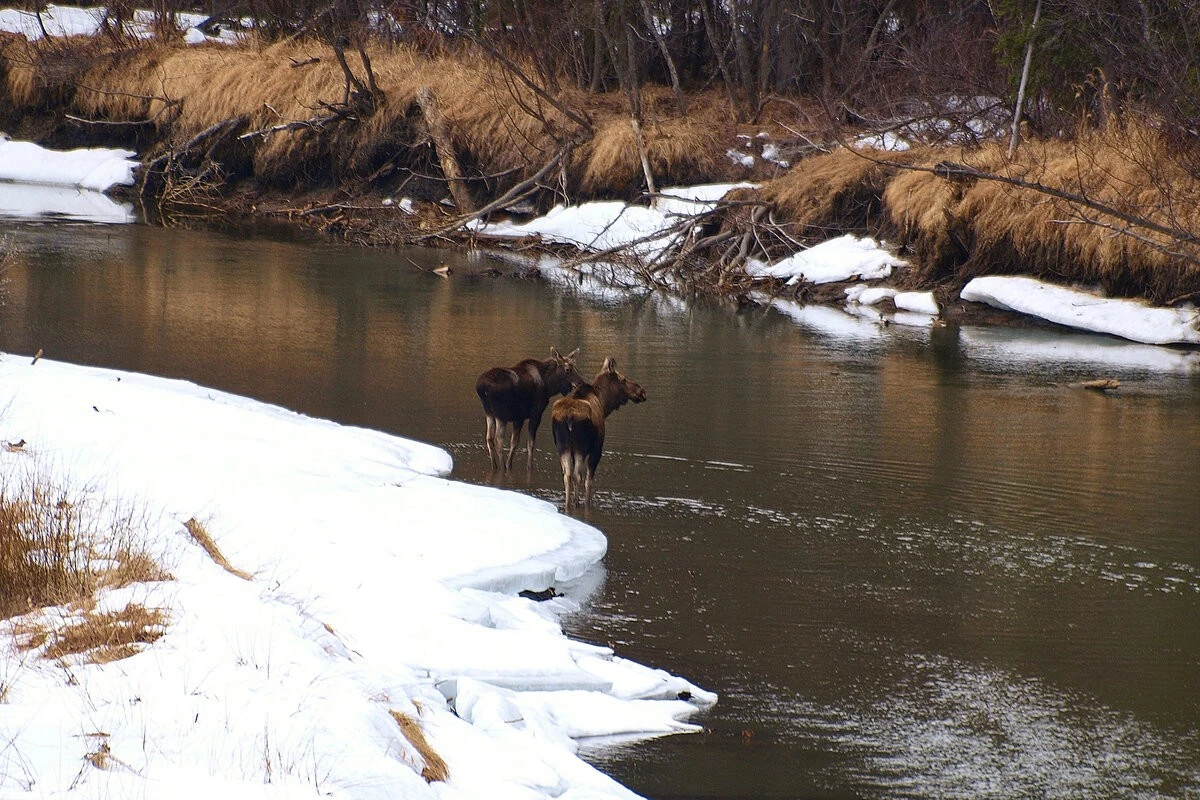
The elk always go to feed where there is a body of water nearby.
Weighted and happy
Too much weight for the animal would affect its quality of life. But nature has provided for everything. The winter diet of moose is not as high in calories and nutrition as in summer. The elk maintains a stable weight due to long transitions between fats. The energy costs are colossal, but the elk has learned to compensate even for them. When an elk begins to feed, it behaves indecently slowly. If he stops controlling his weight, he won't live long.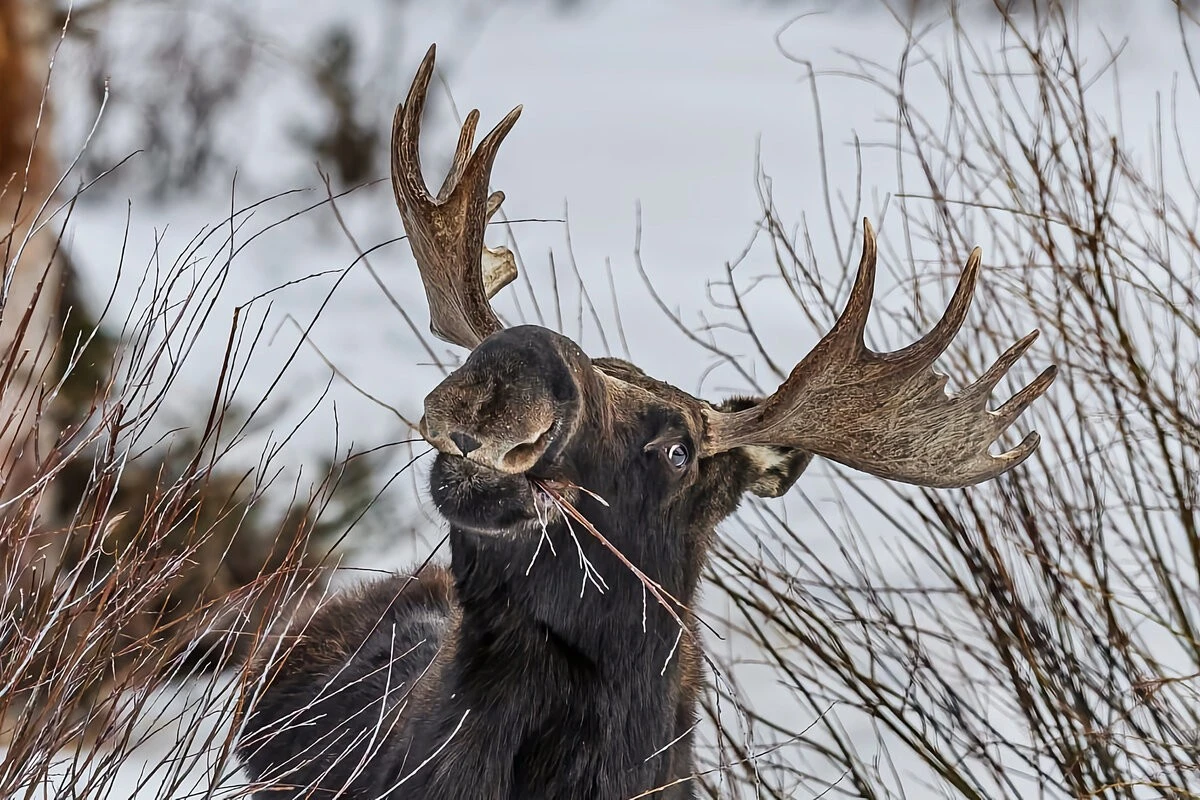
Difficult, but possible
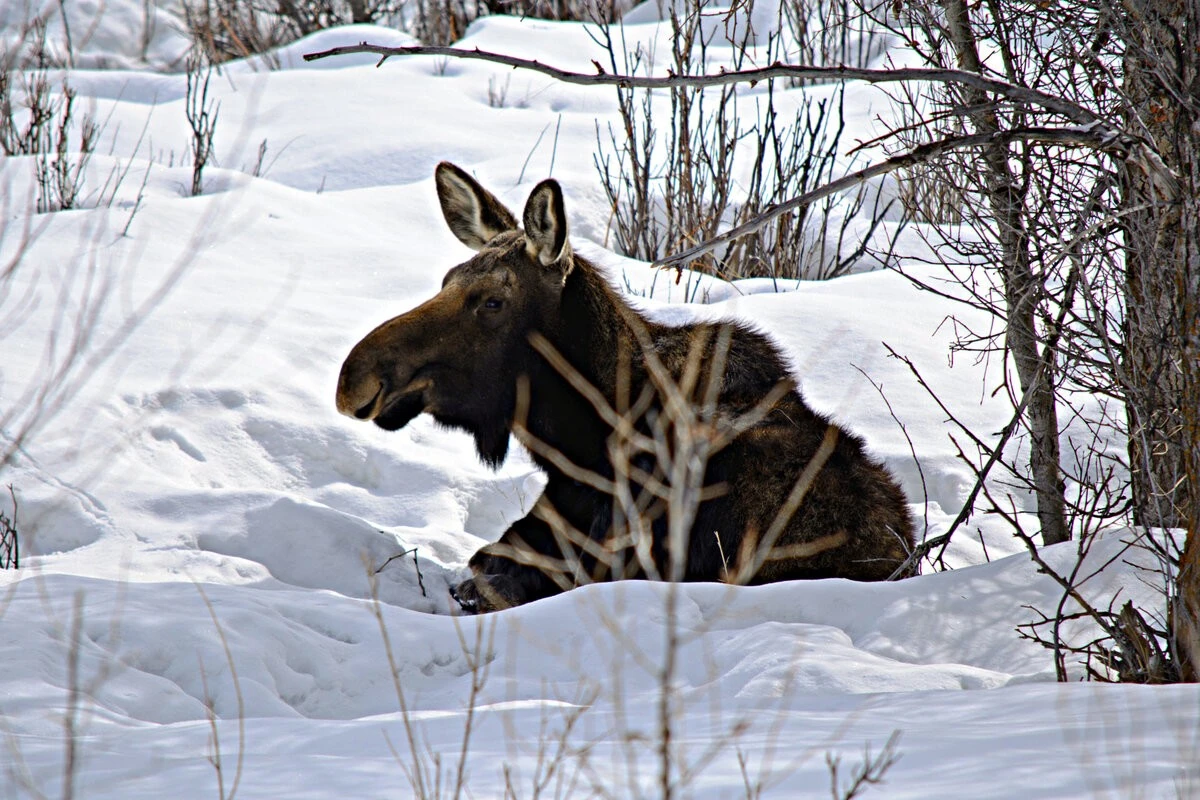
At the moment when the elk comes to the camp, its rest and feeding systematically alternate. In order not to lose heat during rest, the elk has to lie motionless in one position. The heat does not go away only if the snow tightly adheres to the sides of the elk. Maintaining a couch potato pose is not as easy as it might seem. But the moose is ready for anything. However, after the next lunch he still changes sides and, accordingly, side.