Aviation development has always gone hand in hand not only with physical laws and safety considerations, but also with a certain amount of creativity. There is no other way to explain how aircraft designers sometimes come up with ideas for aircraft of such a strange appearance that you don’t immediately believe that it’s not Photoshop. 
True, the imagination of developers does not always play into the hands of the future of an airplane or helicopter, but this does not stop them. We bring to your attention 11 of the most unusual flying machines.
1. Airlander 10 
The nickname for this device suggests itself.
When society saw this creation of engineering, there were simply no questions left regarding the popular name - Airlander 10 was nicknamed “Flying Ass”. The aircraft is a hybrid of an airplane, airship and helicopter with a length of 92 meters. According to the developers' idea, it is capable of rising to a height of almost 5 kilometers and reaching speeds of up to 150 km/h, and its carrying capacity reached 10 tons.
The first test flight of Airlander 10 went without problems, but during the second, an incident occurred: the aircraft touched a telegraph pole, began to fall and ended up plowing its nose into the ground. As a result of the collision, the cockpit was destroyed, but there were no injuries among the crew. Considering the fact that the Airlander 10 does not plow the air at every turn, this frankly strange concept has not gained popularity.
2. Aerodine Dornier E-1 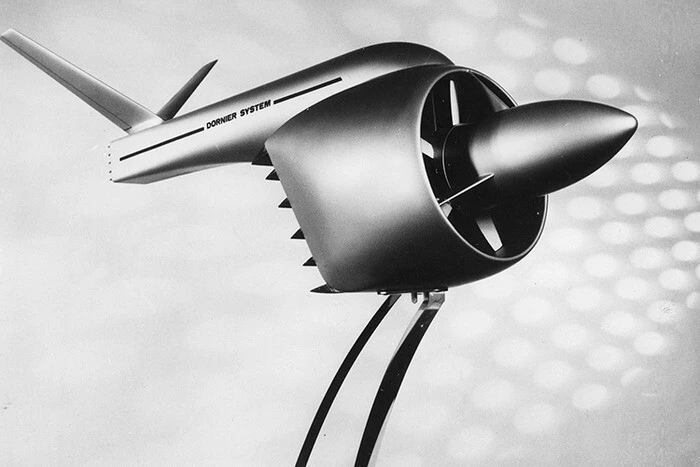
One of the strangest drones.
Vertical take-off and landing drones have been tried for a very long time, but not every attempt has been successful. This is exactly what happened with the Dornier E-1, developed based on the legacy of the famous German aircraft designer Alexander Lippisch, which can easily be called one of the strangest projects of this type.
The Aerodyne was distinguished by its vague wings, frankly strange design, and its principle of flight was generally compared to a movie hairdryer that escaped from the owner’s hands and began to fly in all directions. Surprisingly, the tests of the aircraft, which took place in 1972, showed very promising results, but just a few months later the project was closed, and only a few photos remained as a reminder of the strange drone.
3. Stipa-Caproni 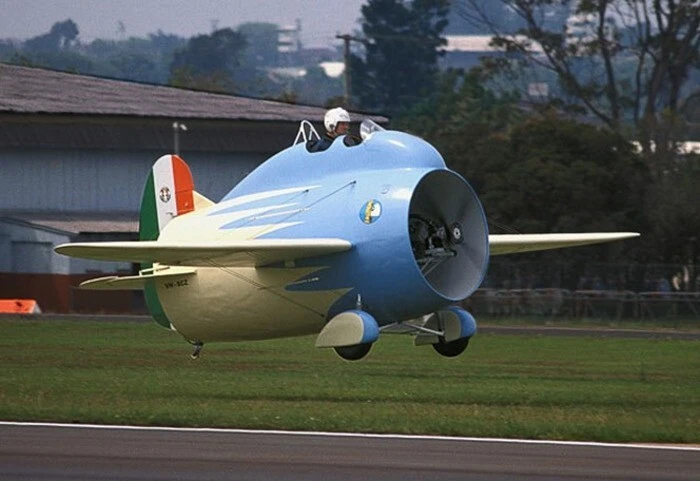
A real flying hairdryer.
This plane was quite rightly called the “Flying Barrel”, although it also looks like a hair dryer. After all, in fact, the creation of the Italian designer of the thirties of the last century, Luigi Stipe, which was assembled by the Caproni company, is something like a huge pipe with wings and a propeller.
Development proceeded smoothly, a prototype was built, and the first tests of the aircraft in 1932 were successful. However, this did not give the plane a start in life - they did not develop the concept. However, the developments of Luigi Stipa, which he left while working with Stipa-Caproni, were later used by scientists to create new aircraft engines.
4.Vought V-173 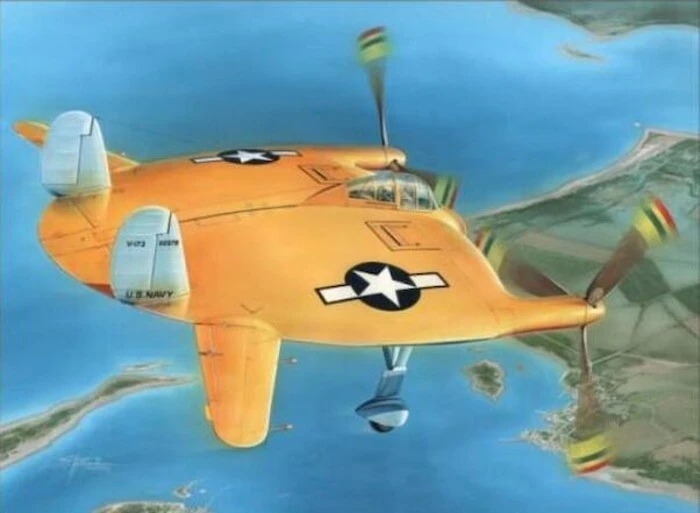
Something that looks like a flounder, but also flies.
The Vought V-173 was the brainchild of American designer Charles Zimmerman, who developed it during World War II at the Vought company. The VTOL aircraft was successfully tested and was planned to be introduced into service with the US Air Force as a naval fighter. However, Vought still abandoned mass production of this strange aircraft, nicknamed "pancake" or "skimmer", although the remaining prototypes flew several times between 1942 and 1947.
5. Aerocycle De Lackner HZ-1 
This is the case when portability is everything to us.
Another repetition of the already mentioned Charles Zimmerman. But this time the goal of the development was to create a compact device, or portable aerocycle. Potentially easy to operate, it was intended to be used for reconnaissance on the “battlefield during a nuclear war.”
Testing of the aerocycle began in 1954, but a serious problem immediately arose: it turned out that the De Lackner HZ-1 was much more difficult to control than expected - even experienced test pilots found it difficult to handle. As a result, when the aerocycle suffered several accidents during tests, they decided to simply cancel the project.
6. Nemeth Parasol 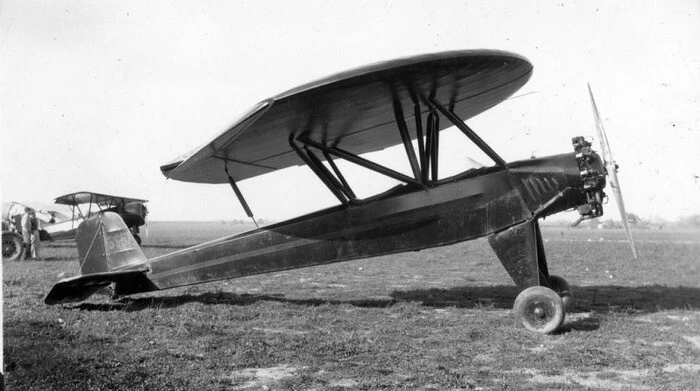
The special appearance of the aircraft was already reflected in the name.
“Umbrella plane” was the apt name for the first plane on the planet with a perfectly round wing. Its creator, Steven Nemeth, argued that the Parasol had exceptional capabilities - it was able to land on even the smallest platform, and in the event of engine failure, the round wing provided a soft landing, working on the principle of a parachute.
In addition, the developers assured that the Nemeth Parasol is so easy to operate that even an inexperienced person in aviation can handle this machine. However, no matter how the unusual plane was advertised, it never received a ticket to life, taking off only a few times and remaining in a single copy.
7. Triple airship Lockheed Martin P-791 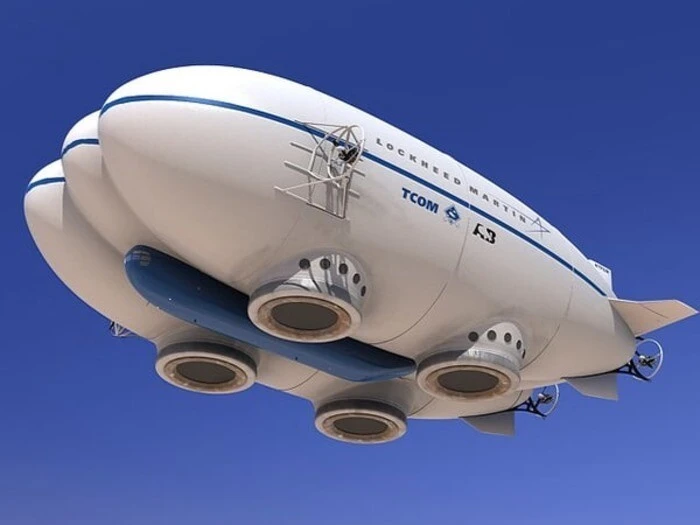
Not the luckiest modern airship
In our century, as practice shows, aircraft designers love to assemble unusual-looking hybrids. One of these can safely be considered the triple airship Lockheed Martin P-791, the first tests of which took place in 2006. This aircraft is filled with helium, but at the same time it has a number of design principles of the aircraft. According to available information, the ockheed Martin P-791 is capable of carrying up to 20 tons of cargo.
It is interesting that its production has not officially been completed due to catastrophically low demand: only one airship sold for $480 million is known for certain, but Lockheed Martin continues to accept orders for their assembly.
8. Coleopter SNECMA C-450 
The original vertical take-off device
Another vertical take-off vehicle, but of a strange appearance. To fulfill its direct function, unique mechanisms to soften the impact during landing were developed specifically for the C-450. However, this did not add to his luck: during tests on the only experimental prototype built, the first attempt was planned to change the flight direction from vertical to angular right in the air.
However, the pilot was unable to cope with the task; moreover, the plane lost control, and the pilot had to eject. After the fall, the C-450 was destroyed, and this was the end of the project: there was simply no money to build a new prototype.
9. Avro Canada VZ-9 Avrocar 
Earth-made UFO.
During the Cold War, a variety of aircraft were developed, but the appearance of one brainchild of Canadian aircraft designers simply surpassed all others. And all because it is strikingly similar to UFOs as humanity imagines them. It is difficult to say for what purpose the device received exactly this appearance, but perhaps it was intended to psychologically disorient the enemy.
Little is known about this project even today: for example, according to the idea of the flying saucer’s designer, the Englishman Jack Frost, the Avrocar was not supposed to fly high, the pilots were in open cockpits, between which a machine gun was installed. At the same time, the design of the device did not stop the creators from calling it a “flying jeep.” However, this did not help him: after the first flight in 1959, the project existed only 2 years later - and then the funding stopped.
10. Asymmetrical glider Blohm & Voss BV 141 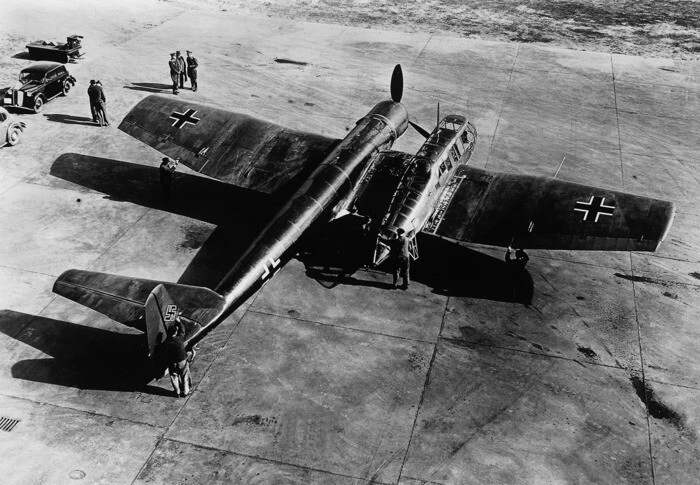
When did you decide to ignore symmetry?
The asymmetrical glider Blohm & Voss BV 141 was one of the creations of the Third Reich during the weapons build-up period before World War II. His purpose was to be aerial reconnaissance. The promotion of the unusual project was facilitated by the personal favor of the German ace Ernst Udet. As a result, the history of the aircraft ended with the release of a small series of several dozen copies.
The following is known about the design of the aircraft: the crew gondola was located on the right to increase the viewing sector. Despite the fact that outwardly the design seems unbalanced, tests refuted all such fears - the machine turned out to be a stable and maneuverable machine. It is difficult to say whether the Blohm & Voss BV 141 managed to take part in combat operations - no documented evidence has survived. The only thing that the Allied forces managed to find during the attack on Germany were several broken samples.
11. Aero Spacelines 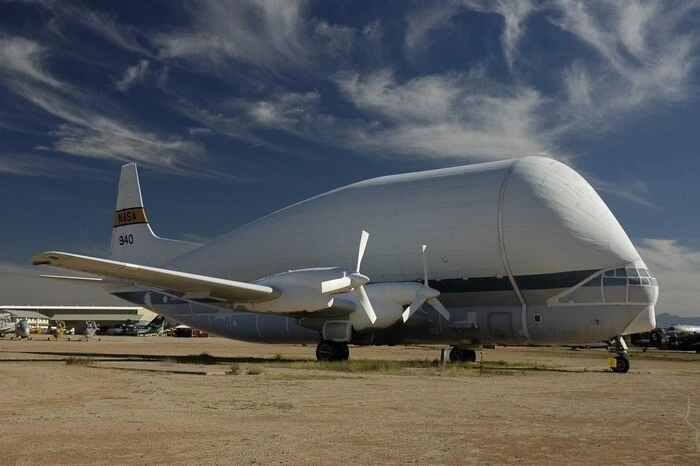
It really does look like a huge fish.
Aero Spacelines, due to its unusual appearance, was quickly dubbed Pregnant Guppy, which translated into English means “Pregnant Guppy.” However, this unusual aircraft was actually used and performed scheduled flights for seventeen years - from 1962 to 1979. And this despite the fact that it was assembled in a single copy based on the Boeing 377.
It was used not by just anyone, but by NASA divisions when it was necessary to transport oversized cargo, in particular, various rocket parts and other very large items needed in aerospace activities. Today, the Pregnant Guppy no longer flies, but over time, new models of the same series with similar names appeared - Super Guppy and Airbus Beluga - and they are still taking to the skies today.
0 comments