The deepest place on Earth. 
The Mariana Trench or Marianas Trench, the lowest and deepest point on our planet, has been fraught with many mysteries for many centuries that cannot be fully explored even with the most modern scientific equipment. Legends and bold theories regarding the origin of all life on Earth have more than once been based on the realities of this unique geographical object, where the monstrous water pressure, it would seem, does not “predispose” living organisms to a comfortable existence, but, nevertheless, they are there!
Basic moments
The Mariana Trench is located in the western part of the Pacific Ocean, not far from the Mariana Islands, just two hundred kilometers away, thanks to its proximity to which it received its name. It is a huge marine reserve with the status of a US national monument, and therefore is under state protection. Fishing and mining are strictly prohibited here, but you can swim and admire the beauty.
The shape of the Mariana Trench resembles a colossal crescent - 2550 km long and 69 km wide. The deepest point - 10,994 m below sea level - is called the Challenger Deep. 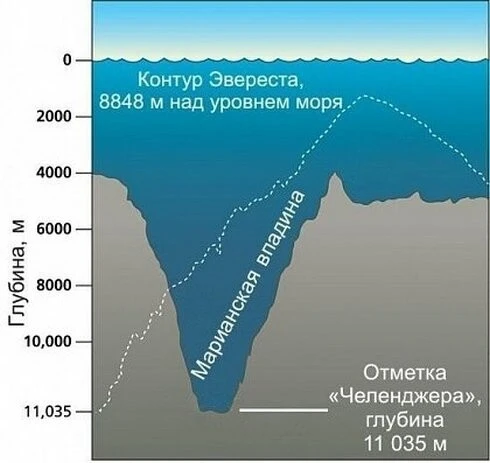
Discovery and first observations
The British began to explore the Mariana Trench. In 1872, the sailing corvette Challenger entered the waters of the Pacific Ocean with scientists and the most advanced equipment of those times. After taking measurements, we established the maximum depth - 8367 m. The value, of course, is noticeably different from the correct result. But this was enough to understand: the deepest point on the globe had been discovered. Thus, another mystery of nature was “challenged” (translated from English as “Challenger” - “challenger”). Years passed, and in 1951 the British carried out “work on the mistakes.” Namely: the deep-sea echo sounder recorded a maximum depth of 10,863 meters.
Then the baton was intercepted by researchers who sent the research vessel Vityaz to the Mariana Trench area. In 1957, with the help of special equipment, they were not only able to record the depth of the depression as 11,022 m, but also established the presence of life at a depth of more than seven kilometers. Thus, making a small revolution in the scientific world of the mid-20th century, where there was a strong opinion that there are no and cannot be such deeply living creatures. This is where the fun begins... Many stories about underwater monsters, huge octopuses, unprecedented bathyscaphes crushed into a cake by the huge paws of animals... Where is the truth and where is the lie - let's try to figure it out. 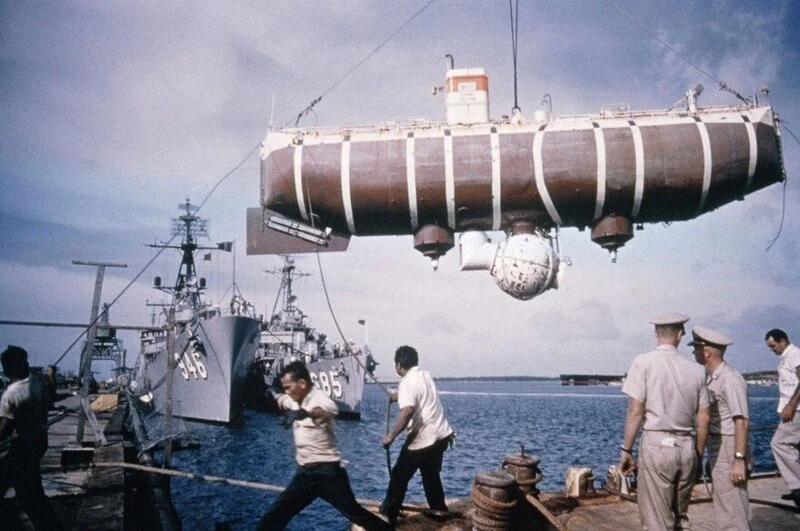
Secrets, riddles and legends
The first daredevils who dared to dive to the “bottom of the Earth” were US Navy Lieutenant Don Walsh and explorer Jacques Picard. They dived on the bathyscaphe "Trieste", which was built in the Italian city of the same name. A very heavy structure with thick 13-centimeter walls was immersed in the bottom for five hours. Having reached the lowest point, the researchers stayed there for 12 minutes, after which an ascent was immediately begun, which took approximately 3 hours. At the bottom, fish were found - flat, flounder-like, about 30 centimeters long.
Research continued, and in 1995 the Japanese descended into the “abyss.” Another “breakthrough” was made in 2009 with the help of the automatic underwater vehicle “Nereus”: this miracle of technology not only took several photographs at the deepest point of the Earth, but also took soil samples.
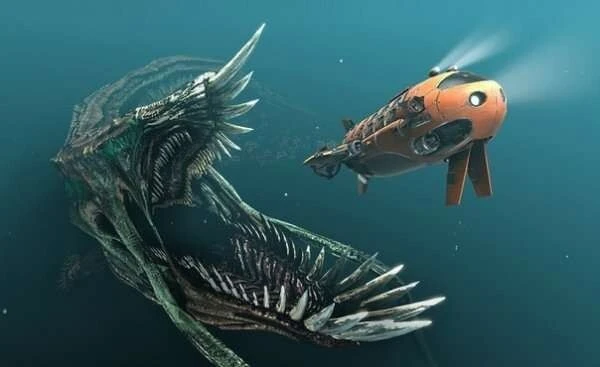
In 1996, the New York Times published shocking material about the diving of equipment from the American scientific vessel Glomar Challenger into the Mariana Trench. The team affectionately nicknamed the spherical apparatus for deep-sea travel “the hedgehog.” Some time after the start of the dive, the instruments recorded terrifying sounds reminiscent of the grinding of metal on metal. “The Hedgehog” was immediately raised to the surface, and they were horrified: the huge steel structure was crushed, and the strongest and thickest (20 cm in diameter!) cable seemed to have been sawed off. Many explanations were immediately found. Some said that these were the “tricks” of the monsters inhabiting the natural object, others were inclined to the version of the presence of an alien intelligence, and still others believed that it could not have happened without mutated octopuses! True, there was no evidence, and all assumptions remained at the level of conjecture and conjecture...
The same mysterious incident occurred with a German research team that decided to lower the Haifish apparatus into the waters of the abyss. But for some reason he stopped moving, and the cameras impartially displayed on the monitor screens an image of the shocking size of a lizard that was trying to chew through the steel “thing.” The team was not at a loss and “scared away” the unknown beast with an electric discharge from the device. He swam away and never appeared again... One can only regret that for some reason those who came across such unique inhabitants of the Mariana Trench did not have the equipment that would allow them to photograph them.
At the end of the 90s of the last century, at the time of the “discovery” of the monsters of the Mariana Trench by the Americans, this geographical object began to become “overgrown” with legends. Fishermen (poachers) talked about glows from its depths, lights running back and forth, and various unidentified flying objects floating up from there. Crews of small ships reported that ships in the area were being “towed at great speed” by a monster possessing incredible strength. 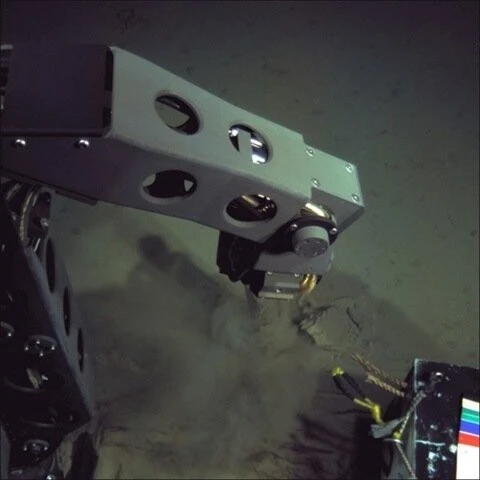
Features of the deep sea world
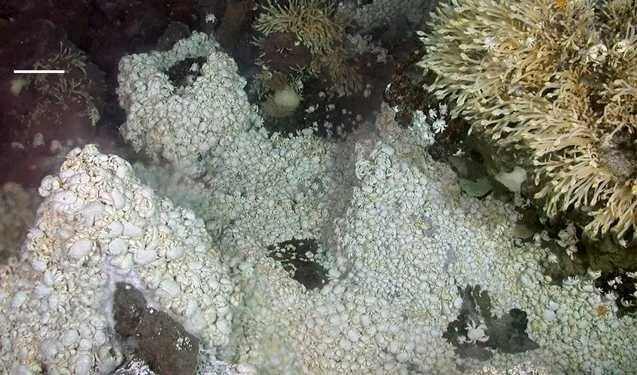
The water pressure at the lowest point of the Mariana Trench is 108.6 MPa, that is, 1072 times higher than normal atmospheric pressure. A vertebrate animal simply cannot survive in such monstrous conditions. But, oddly enough, mollusks have taken root here. How their shells withstand such colossal water pressure is unclear. The discovered mollusks are an incredible example of “survival”. They exist next to serpentine hydrothermal vents. Serpentine contains hydrogen and methane, which not only do not pose a threat to the “population” found here, but also contribute to the formation of living organisms in such a seemingly aggressive environment. But hydrothermal springs also emit gas that is lethal to mollusks - hydrogen sulfide. But “cunning” and life-hungry mollusks have learned to process hydrogen sulfide into protein, and continue, as they say, to live happily in the Mariana Trench.
Another incredible mystery of a deep-sea object is the Champagne hydrothermal spring, named after the famous French (and not only) alcoholic drink. It's all about the bubbles that “bubble” in the waters of the source. Of course, these are by no means bubbles of your favorite champagne - these are liquid carbon dioxide. Thus, the only underwater source of liquid carbon dioxide in the whole world is located precisely in the Mariana Trench. Such sources are called “white smokers”; their temperature is lower than the ambient temperature, and vapors similar to white smoke are always present around them. Thanks to these sources, hypotheses were born about the origin of all life on earth in water. Low temperature, abundance of chemicals, colossal energy - all this created excellent conditions for ancient representatives of flora and fauna.
The temperature in the Mariana Trench is also very favorable - from 1 to 4 degrees Celsius. “Black smokers” took care of this. Hydrothermal springs, the antipode of “white smokers,” contain a large amount of ore substances, and therefore they are dark in color. These springs are located here at a depth of about 2 kilometers and spew out water whose temperature is about 450 degrees Celsius. I immediately remember a school physics course, from which we know that water boils at 100 degrees Celsius. So what's going on? Is the spring spewing boiling water? Fortunately, no. It's all about the colossal water pressure - it is 155 times higher than on the surface of the Earth, so H2O does not boil, but it significantly “heats up” the waters of the Mariana Trench. The water of these hydrothermal springs is incredibly rich in various minerals, which also contributes to the comfortable habitat of living creatures.
Incredible facts
How many more mysteries and incredible wonders does this incredible place conceal? A bunch of. At a depth of 414 meters, the Daikoku volcano is located here, which served as further evidence that life originated here, at the deepest point of the globe. In the crater of the volcano, underwater, there is a lake of pure molten sulfur. In this “cauldron,” sulfur bubbles at a temperature of 187 degrees Celsius. The only known analogue of such a lake is located on Jupiter’s satellite Io. There is nothing else like it on Earth. Only in space. It is no wonder that most hypotheses about the origin of life from water are associated precisely with this mysterious deep-sea object in the vast Pacific Ocean.
Let's remember a little school biology course. The simplest living creatures are amoebas. Tiny, single-celled, they can only be seen through a microscope. They reach, as it is written in textbooks, a length of half a millimeter. Giant toxic amoebas 10 centimeters long were discovered in the Mariana Trench. Can you imagine this? Ten centimeters! That is, this single-celled living creature can be clearly seen with the naked eye. Isn't this a miracle? As a result of scientific research, it was established that amoebas acquired such gigantic sizes for their class of single-celled organisms by adapting to the “unsweetened” life at the bottom of the sea. Cold water, coupled with its colossal pressure and the absence of sunlight, contributed to the “growth” of amoebas, which are called xenophyophores. The incredible abilities of xenophyophores are quite surprising: they have adapted to the effects of most destructive substances - uranium, mercury, lead. And they live in this environment, just like mollusks. In general, the Mariana Trench is a miracle of miracles, where everything living and nonliving is perfectly combined, and the most harmful chemical elements that can kill any organism not only do not harm living things, but, on the contrary, promote survival.
The local bottom has been studied in some detail and is not of particular interest - it is covered with a layer of viscous mucus. There is no sand there, there are only the remains of crushed shells and plankton that have been lying there for thousands of years, and due to water pressure have long since turned into thick grayish-yellow mud. And the calm and measured life of the seabed is disturbed only by the bathyscaphes of researchers that descend here from time to time. 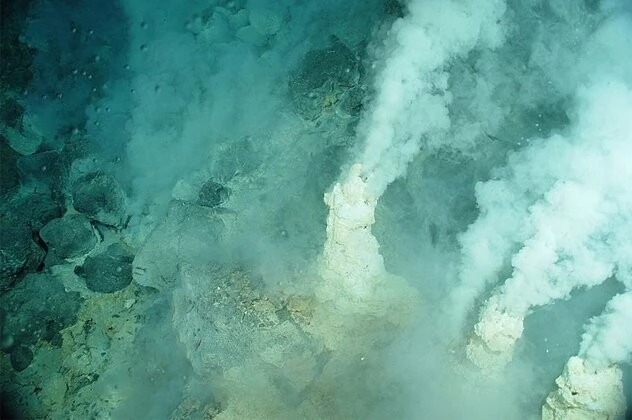
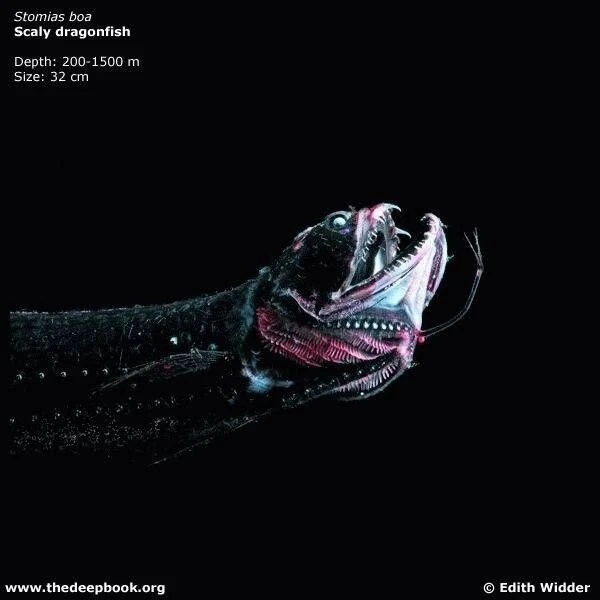
Inhabitants of the Mariana Trench 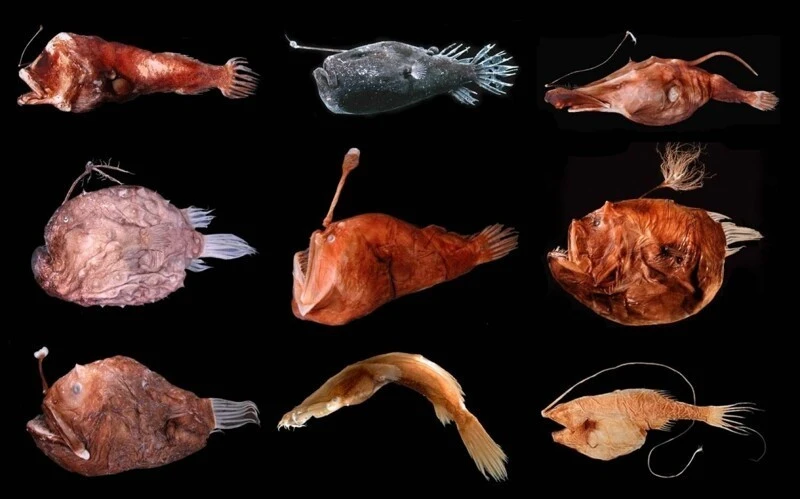
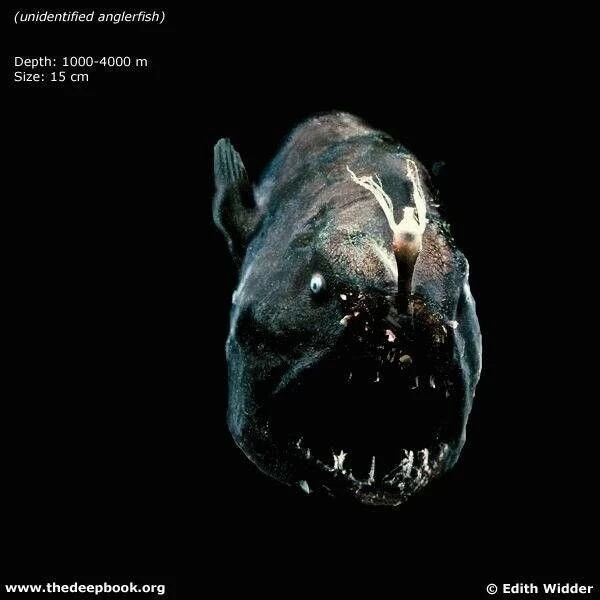
Research continues
Everything secret and unknown has always attracted man. And with each revealed secret, new mysteries on our planet did not become fewer. All this fully applies to the Mariana Trench.
At the end of 2011, researchers discovered unique natural stone formations in it, shaped like bridges. Each of them stretched from one end to the other for as much as 69 km. Scientists had no doubt: this is where the tectonic plates – the Pacific and the Philippine – come into contact, and stone bridges (four in total) were formed at their junction. True, the very first of the bridges - Dutton Ridge - was opened in the late 80s of the last century. He impressed then with his size and height, which were the size of a small mountain. At its highest point, located just above the Challenger Deep, this deep-sea “ridge” reaches two and a half kilometers.
Why did nature need to build such bridges, and even in such a mysterious and inaccessible place for people? The purpose of these objects still remains unclear. In 2012, James Cameron, the creator of the legendary film Titanic, dived into the Mariana Trench. Unique equipment and powerful cameras installed on his DeepSea Challenge bathyscaphe made it possible to film the majestic and deserted “bottom of the Earth.” It is unknown how long he would have been observing local landscapes if some problems had not arisen on the device. In order not to risk his life, the researcher was forced to rise to the surface. 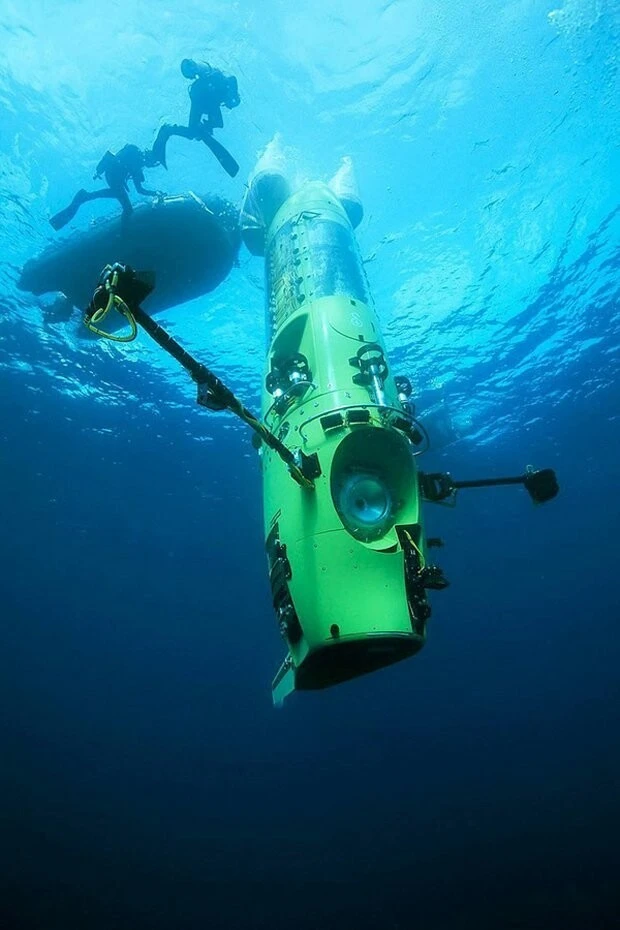
Together with The National Geographic, the talented director created the documentary film “Challenging the Abyss.” In his story about the dive, he called the bottom of the depression “the border of life.” Emptiness, silence, and nothing, not the slightest movement or disturbance of the water. No sunlight, no shellfish, no algae, much less sea monsters. But this is only at first glance. Over twenty thousand different microorganisms were found in the bottom soil samples taken by Cameron. Great amount. How do they survive under such incredible water pressure? Still a mystery. Among the inhabitants of the depression, a shrimp-like amphipod was also discovered that produces a unique chemical substance that scientists are testing as a vaccine against Alzheimer's disease.
While staying at the deepest point not only of the world's oceans, but of the entire Earth, James Cameron did not encounter any terrible monsters, or representatives of extinct animal species, or an alien base, not to mention any incredible miracles. The feeling that he was completely alone here was a real shock. The ocean floor seemed deserted and, as the director himself said, “lunar... lonely.” The feeling of complete isolation from all humanity was such that it cannot be expressed in words. However, he still tried to do this in his documentary. Well, you probably shouldn’t be surprised that the Mariana Trench is silent and shocking with its desolation. After all, she simply sacredly guards the secret of the origin of all life on Earth... 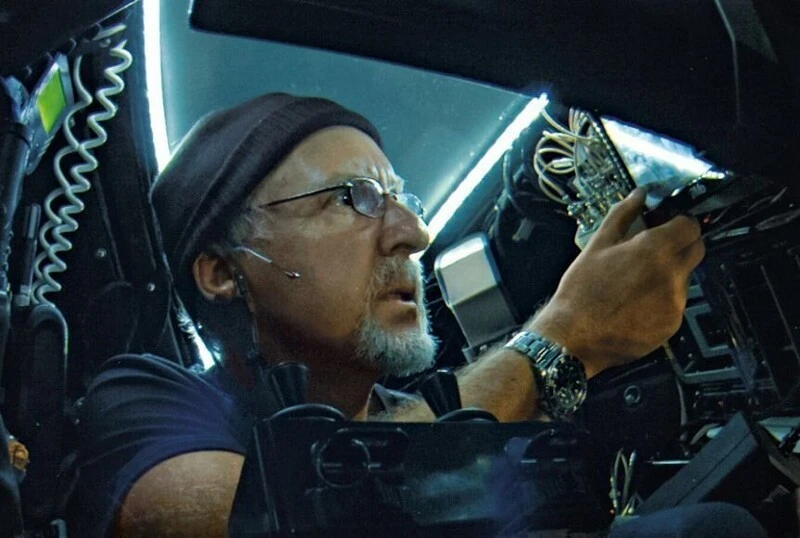
0 comments