Ground parrot: Refused to fly, and there are poisonous predators around. But he learned to run like crazy (8 photos)
I don’t know about you, but I perceive Australia as a giant laboratory for breeding monsters. Where are the most poisonous snakes? Here! Where are the biggest crocodiles? Here! Where are the most dangerous spiders? Here too! All normal animals improve running, flying and other musculoskeletal skills so that their butt is away from the fangs of the above-mentioned meat-eaters. Everything except the ground parrot. 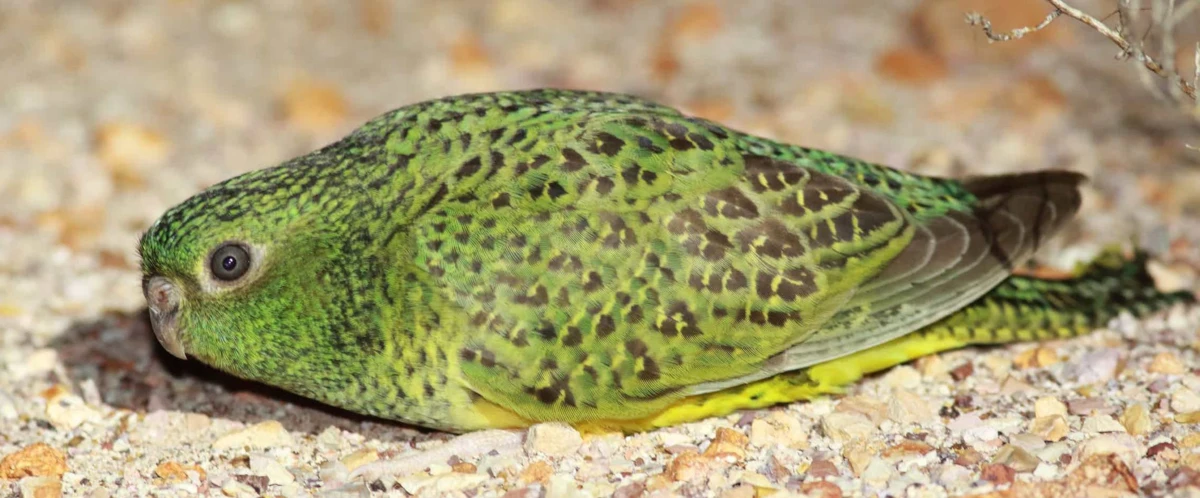
These birds reek of masochism. They have virtually no flying skills. But they settled in the swamps of southern Australia - at the epicenter of the most terrible animals on this continent. The number of poisonous and predatory creatures per unit area here is off the charts. 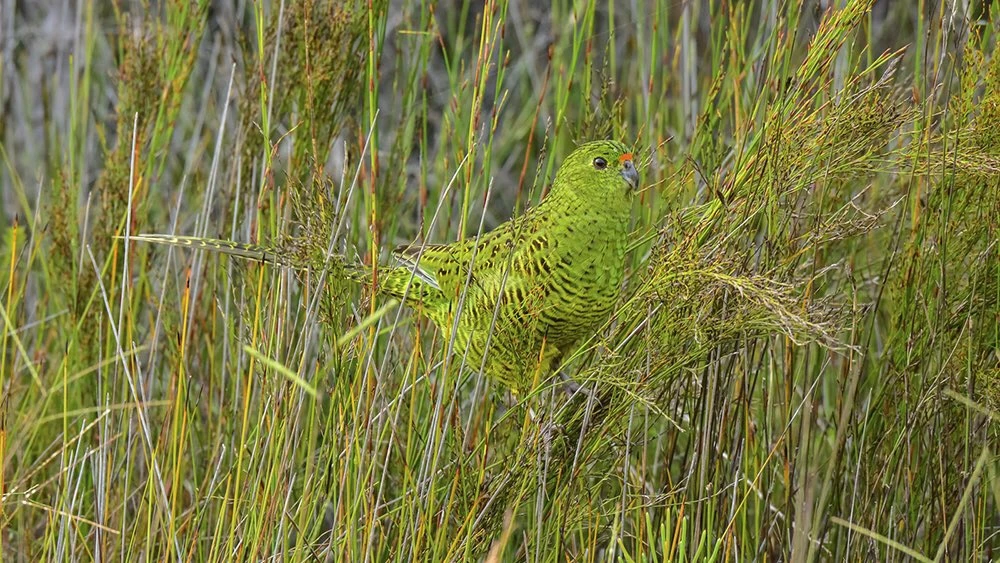
Given their registration, ground parrots are almost certainly adrenaline junkies. Every day of a bird is a game of survival. And the parrot gives predators a big head start. The 30-centimeter bird has nothing to fight off numerous enemies. The hooked beak, like that of an eagle, is suitable only for dismembering fruits and berries. Even the claws are almost useless. Long and straight, they more closely resemble uncut human nails. 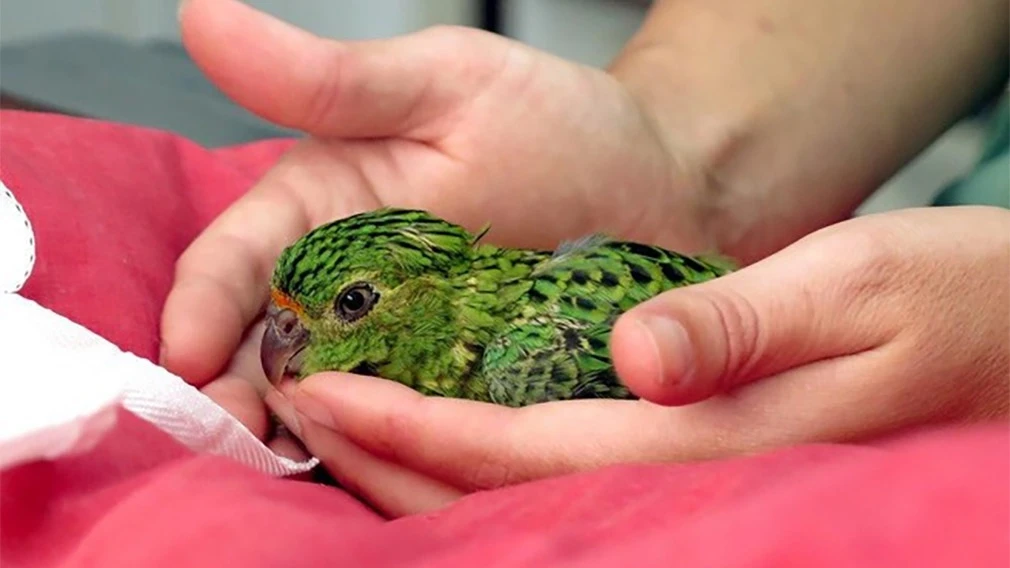
Not only predators, but also poachers hunt for the parrot. This handsome guy, for example, was seized in the Bryansk region.
How can an awkward bird escape from the alpha predators of the continent? Escape! The ground parrot may not be a great flyer, but he puts on excellent races. The pedestrian parrot deftly maneuvers among the thickets and runs into the mud and swamps without fear. Long, widely spaced fingers and low weight (no more than 300 grams) allow you to pass where even light predators drown. 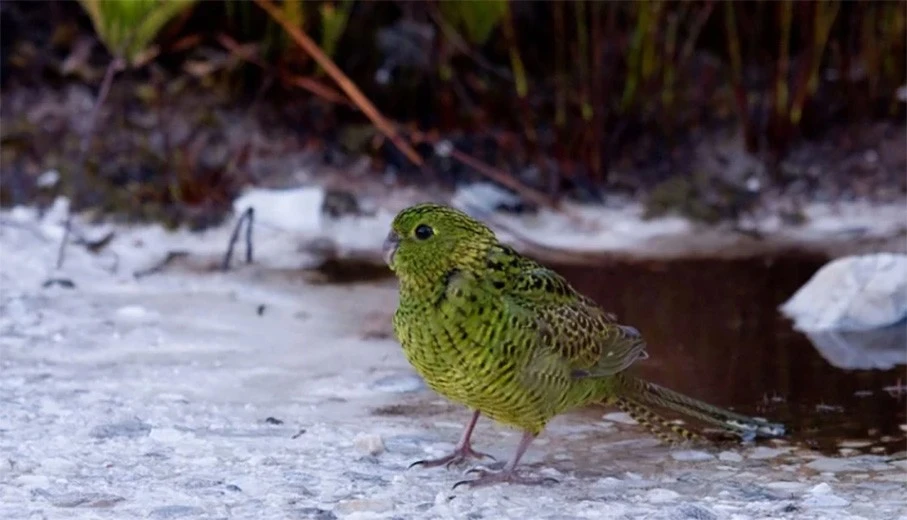
The ground parrot is not afraid to face its fears. Be like an earth parrot.
A reckless parrot remembers that it can fly only when it is catastrophically close to failure. Our hero's performance in the air is simply disgusting: he is unable to get off the ground without a running start and overcomes no more than 200 meters at a time. Even landing is not easy for them. The bird simply slows down until its chest hits the ground. 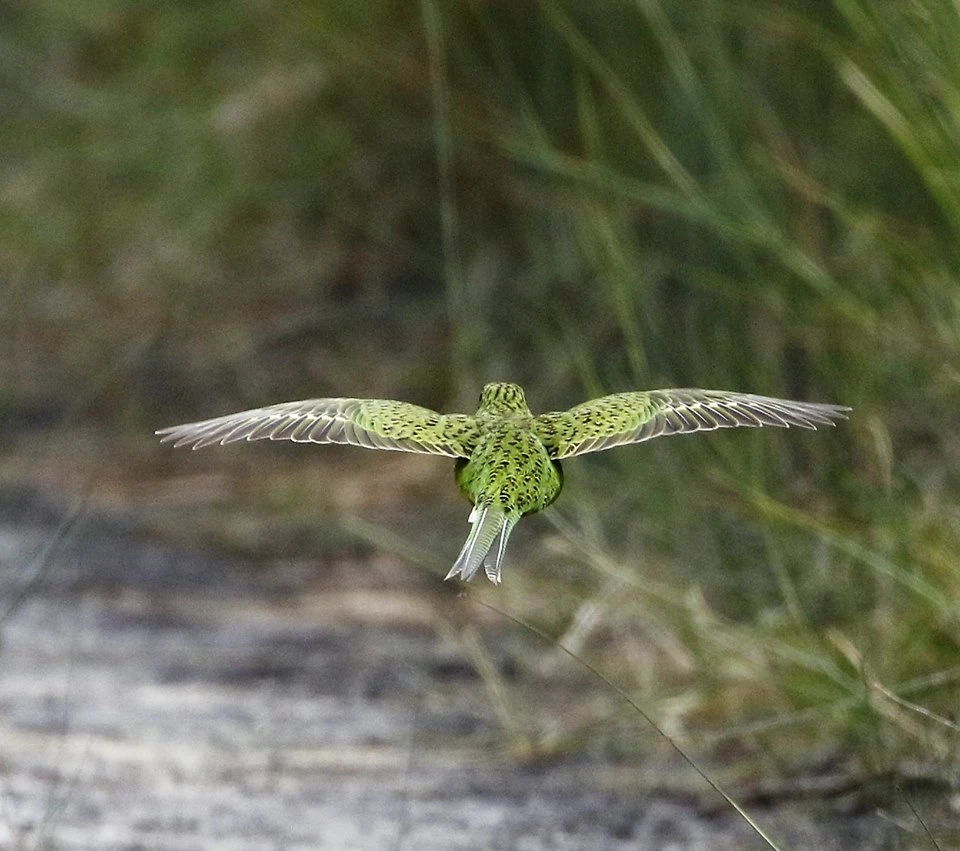
If the parrot survived, we can consider that his day was automatically a success. He will share his vivid impressions at the family hearth with his soulmate. Adult birds live in pairs. Any depression under a snag or hummock can become a home for an earthen parrot. For some reason, I sincerely envy these birds for the simplicity of solving the housing problem. 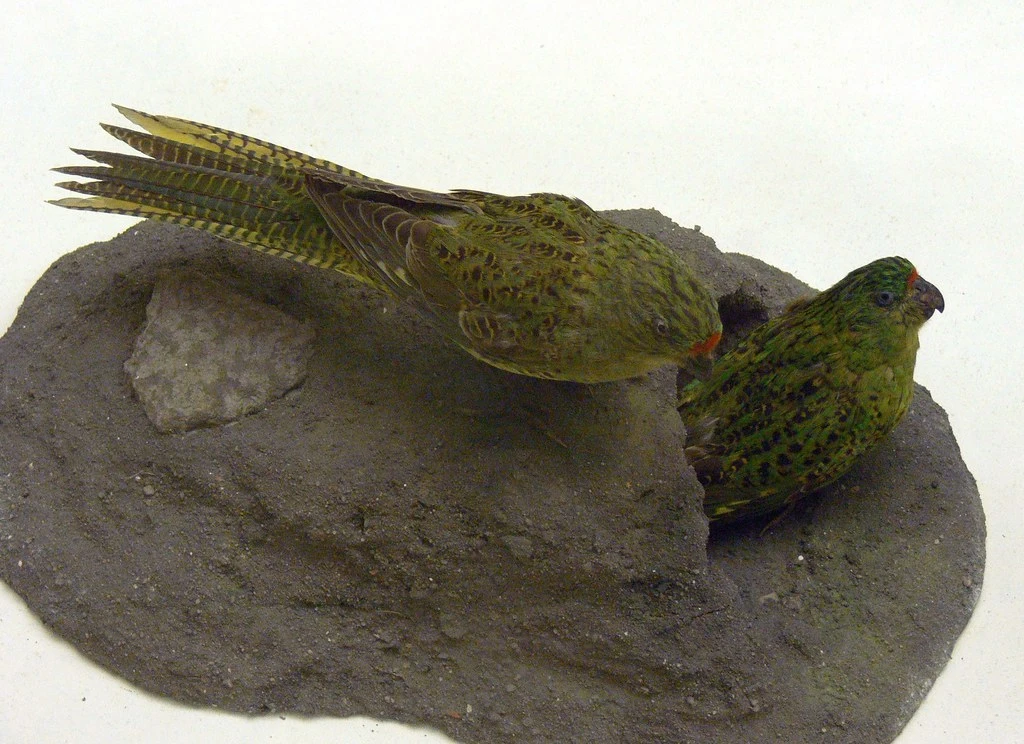
For most of the year, the bird house is empty. But from September to December, from 4 to 6 small eggs appear in it. In anticipation of a new addition, parents do some spring cleaning. They thoroughly clean the apartment and cover the floors with fresh leaves. The family couple shares all the burdens of repairs and childcare equally. Fortunately, you won’t have to watch the chicks for long: after 3 weeks the chicks will hatch. Over the next 2-3 months, newborns will eat a lot, sleep a lot and scream a lot. 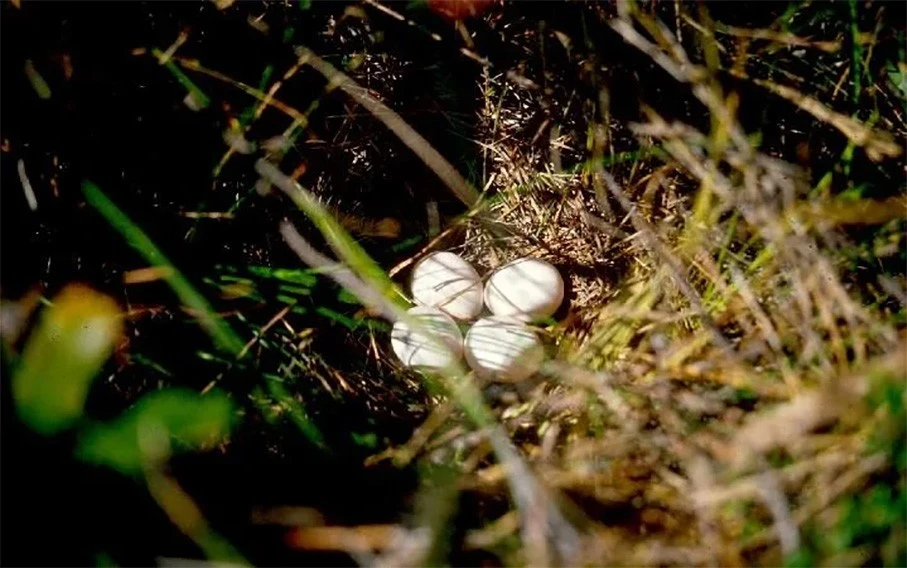
A family nest for future adrenaline junkies.
When the little thing grows to the size of its parents and learns to run, it will be faced with a rather difficult choice: to remain under its parents’ wing or to join the flock of its peers. But the first mating season will put everything in its place. A parrot in love will leave both family and friends to continue its stray family. 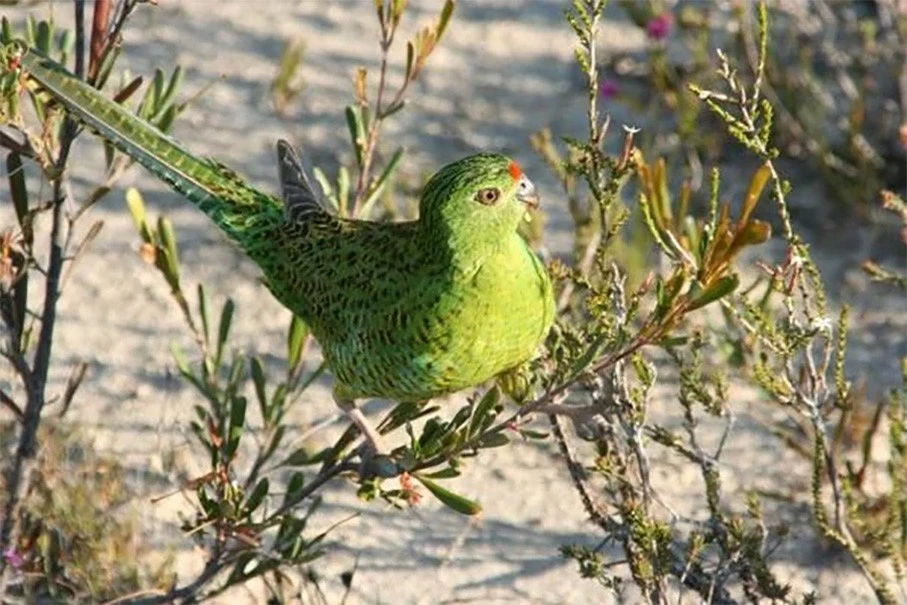
Since parrots live only in dense thickets and among swamps, their numbers are greatly affected by forest fires. In open areas, birds are completely defenseless.
My rating for the earthen parrot: 7 desperate races through the swamp out of 10. Fast, daring and reckless adrenaline junkies - that’s what these earthen parrots are.